Darrell Seale · Travels / Countries / Egypt

Egypt

Pyramids, temples and tombs, with the Red Sea next door. Cairo and Luxor before or after a dive trip.

  • 3 trips2014, 2017, 2024
  • Cairo + Luxoron land
  • Red Sealiveaboard
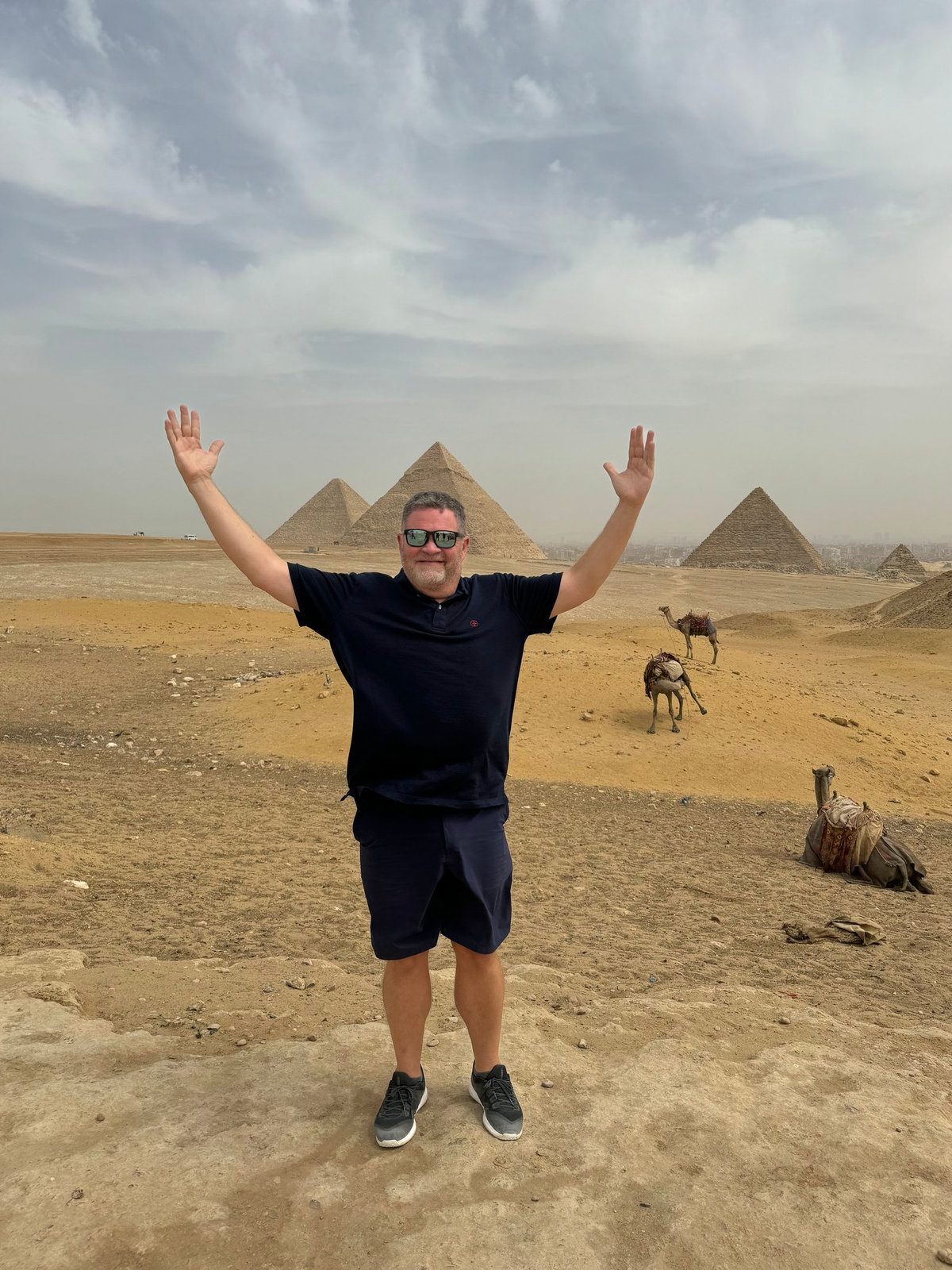
Darrell Seale with arms raised in front of the pyramids of Giza, Egypt (March 2024)

Egypt is one of the easiest places in the world to pair diving with history. The best Red Sea liveaboards leave from Hurghada, Safaga and Port Ghalib, and Cairo and Luxor are a short domestic flight away, so two or three days before or after the boat covers the pyramids and the temples of ancient Thebes.

I've been three times. The first was in 2014. In September 2017 I spent a week on the Red Sea Aggressor diving the Brothers and Daedalus, then went straight to Luxor for the temples on both banks of the Nile. In March 2024 I went back for a longer look at Cairo, Giza, Saqqara and Luxor.

With only a couple of days, split them. Give Luxor a full day for the West Bank (the Valley of the Kings, the Temple of Hatshepsut and the Colossi of Memnon) and an afternoon for Karnak and Luxor Temple. In Cairo, start early at Saqqara and Giza before the heat and the crowds, and save the museum for the afternoon.

Giza and Saqqara

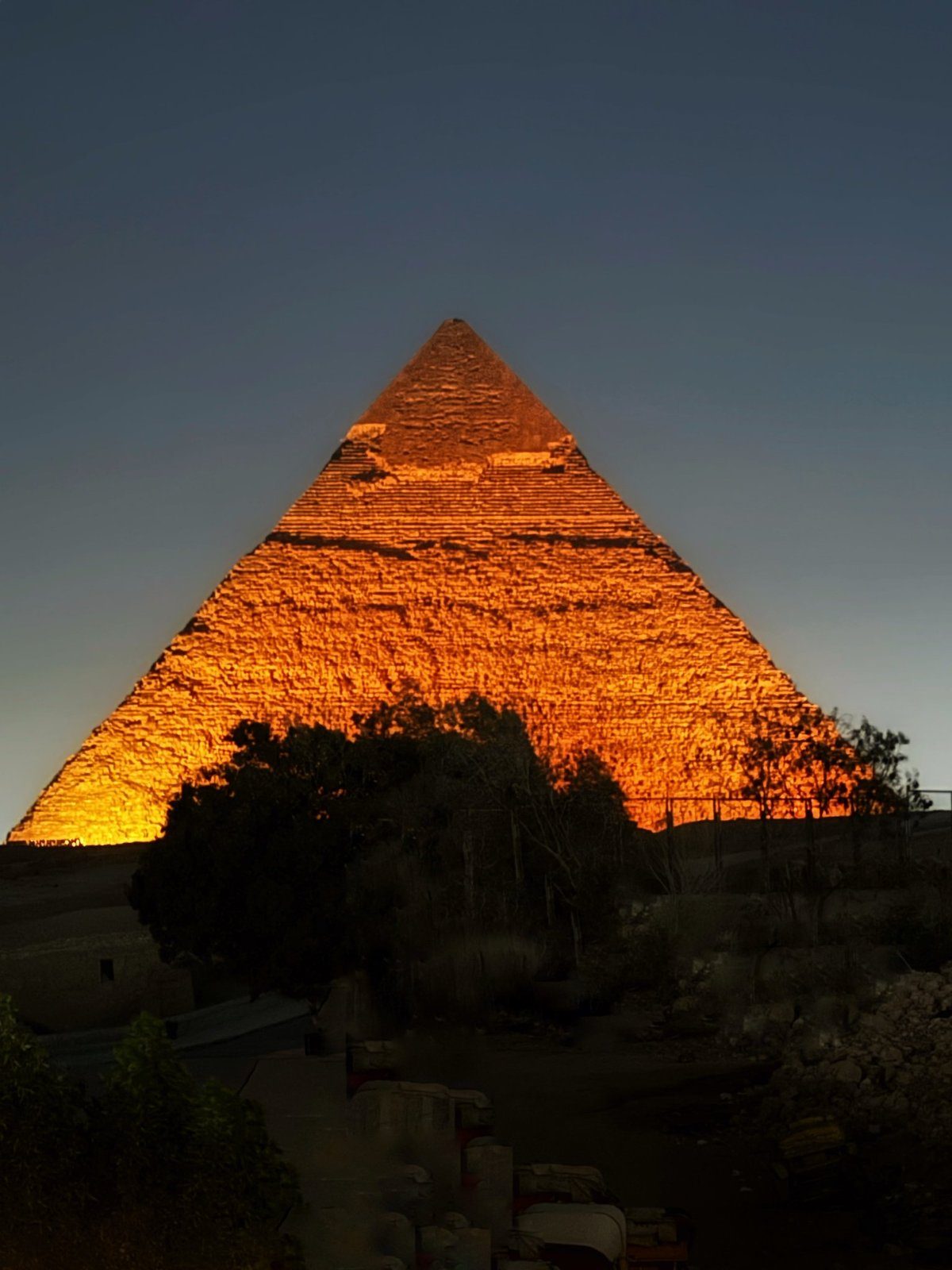
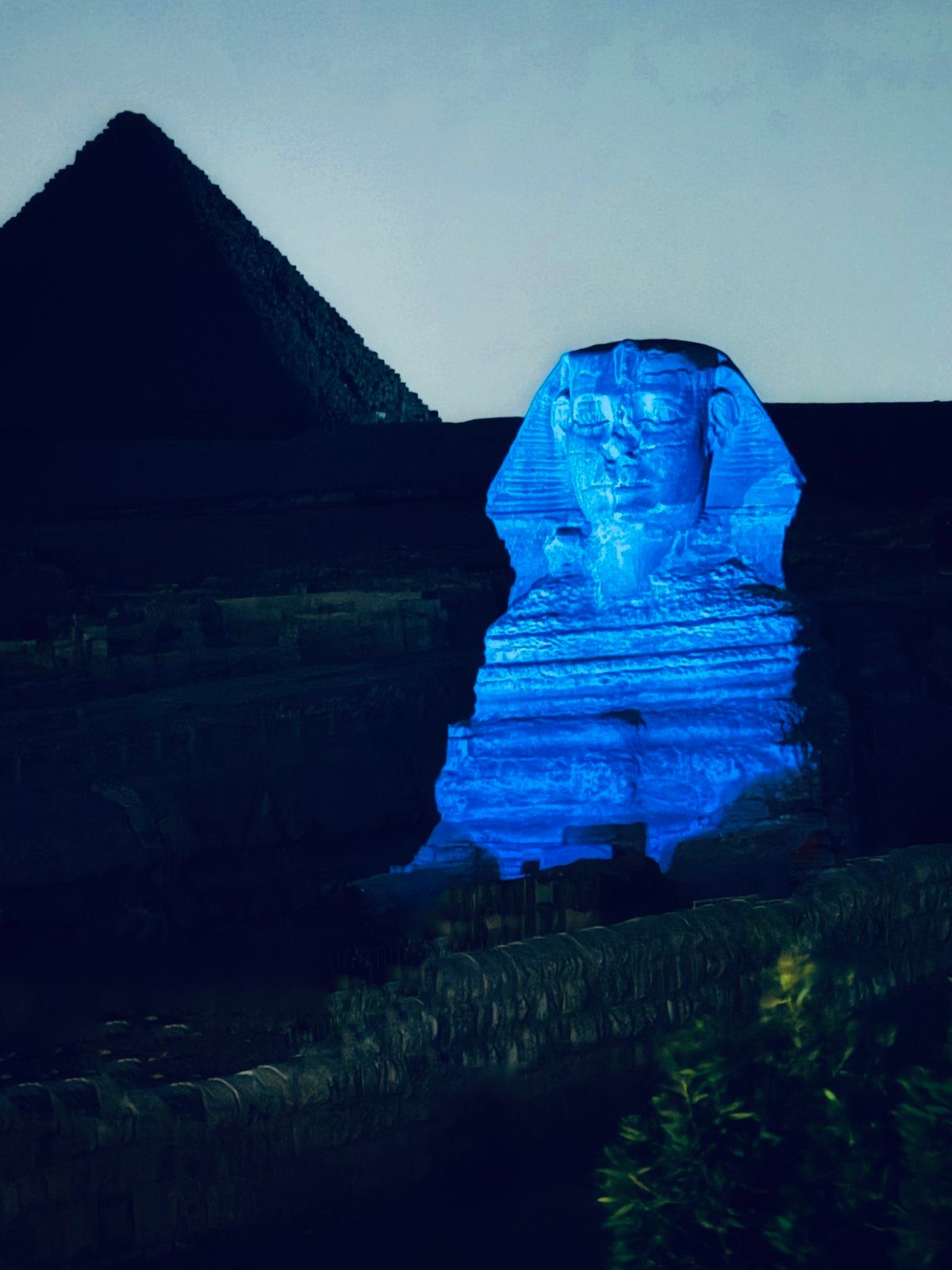
The pyramids are bigger than you expect, even when you know what to expect. At Saqqara, south of Giza, the Step Pyramid of Djoser is older than any of them: about 4,700 years old and the first large building ever made of cut stone. Giza is busier but just as good at dawn or after dark, when the pyramids and the Sphinx are lit up.
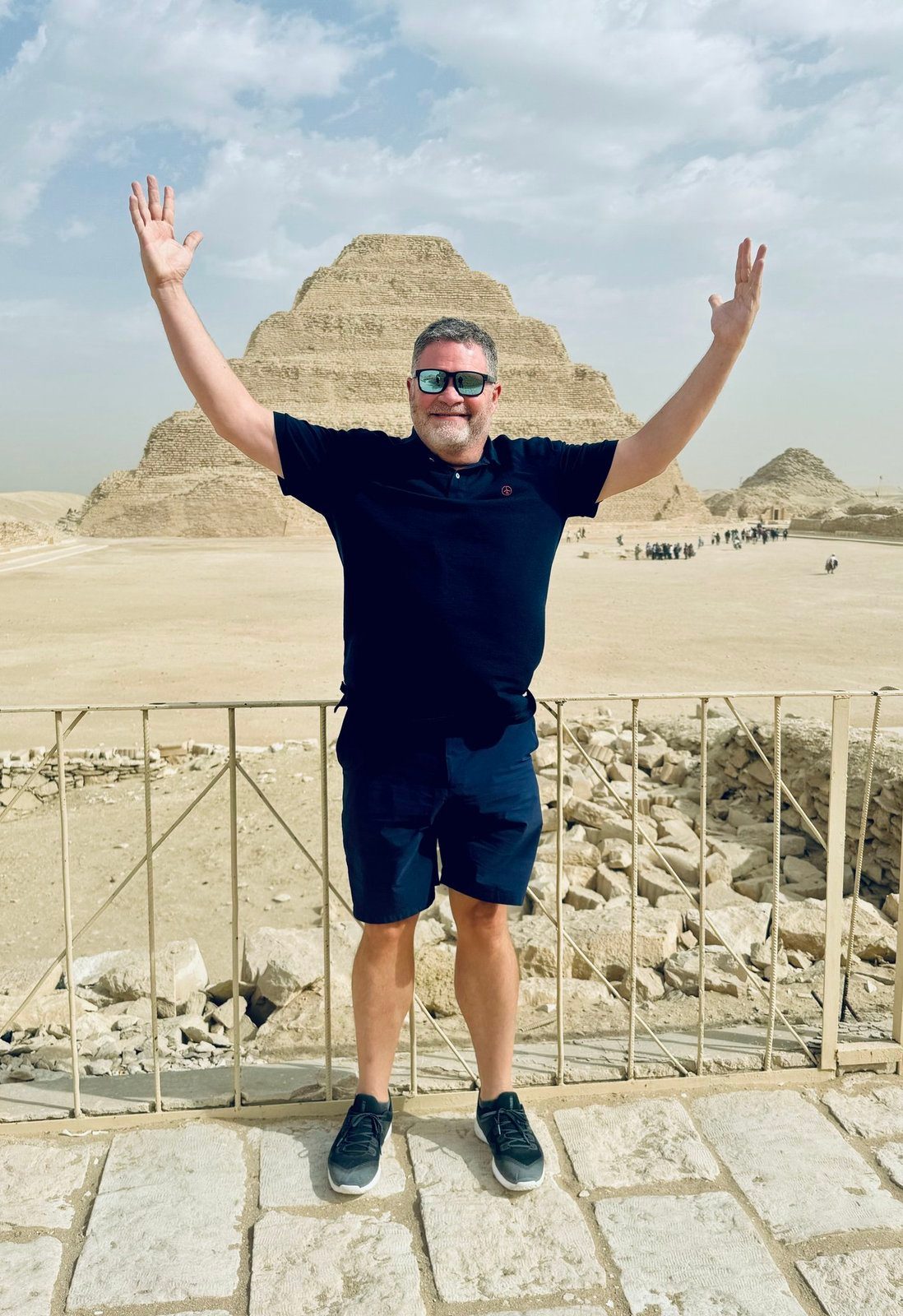
Darrell Seale at the Step Pyramid of Djoser, Saqqara, Egypt
Saqqara. The Step Pyramid of Djoser, the oldest of them all.
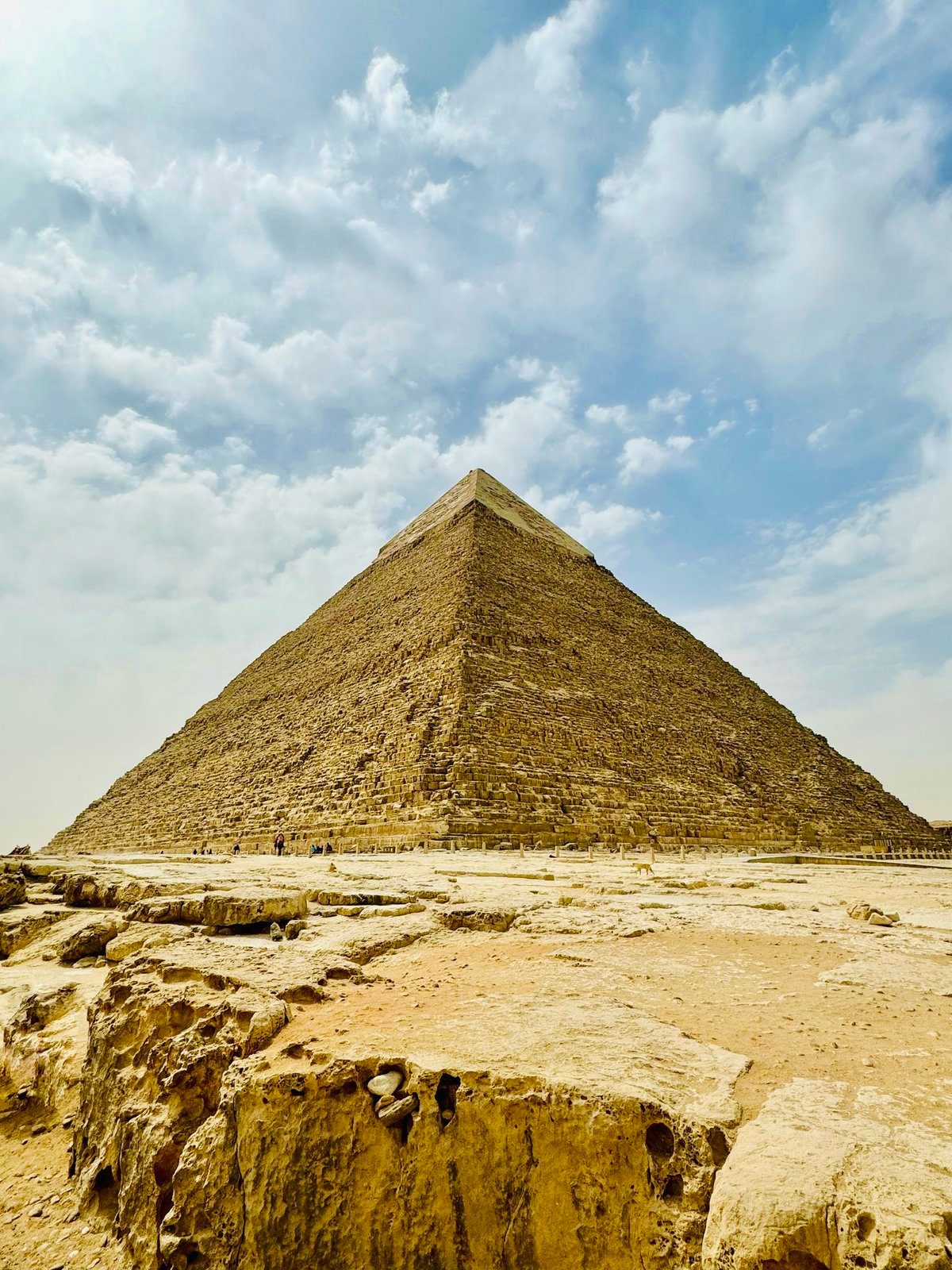
A pyramid at Giza under a cloudy sky
Giza. Still enormous up close.
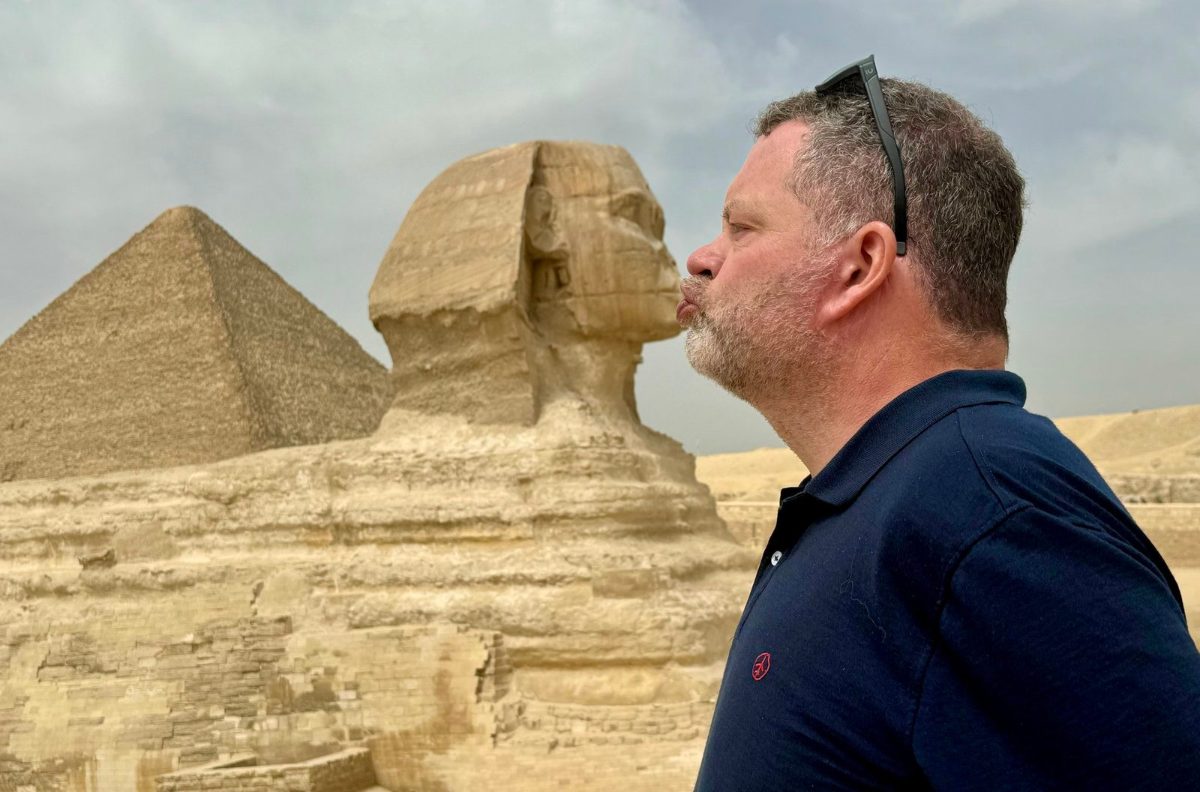
Darrell Seale lining up a photo to kiss the Great Sphinx of Giza
A kiss for the Sphinx. Every visitor has to try one.
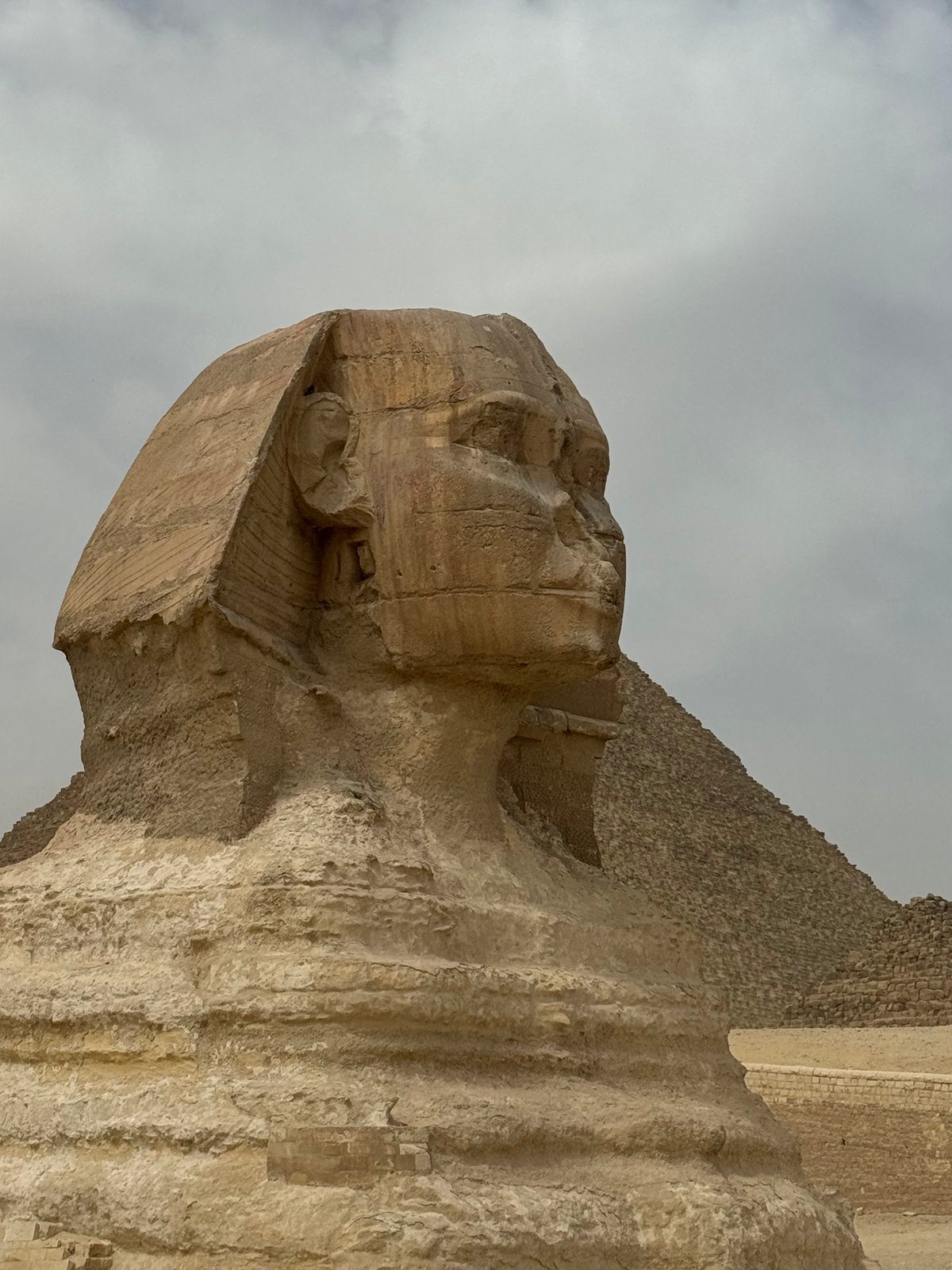
Close view of the head of the Great Sphinx of Giza
The Sphinx. Face to face.
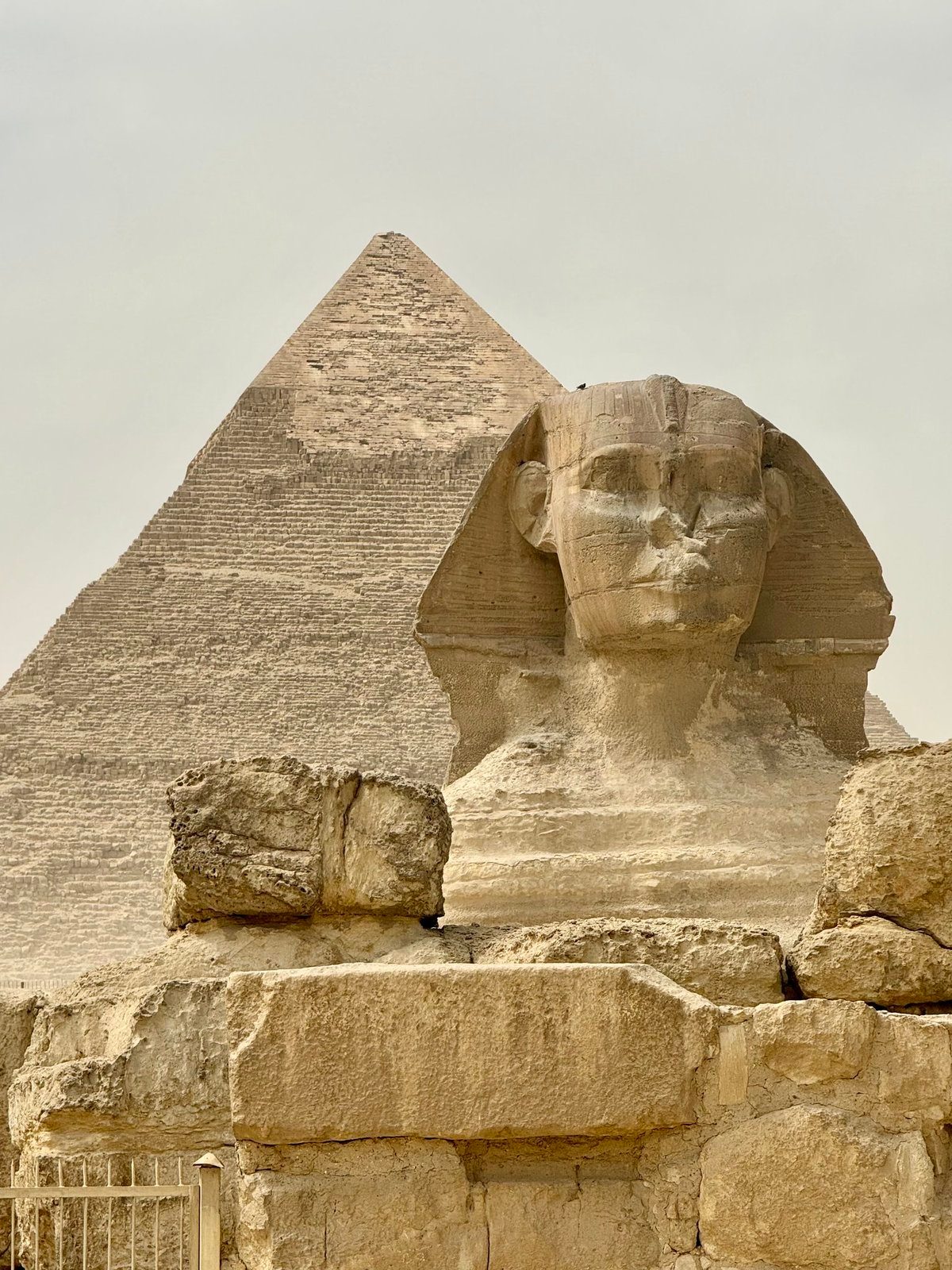
The Great Sphinx with a pyramid behind it at Giza
By day. The Sphinx with a pyramid behind.
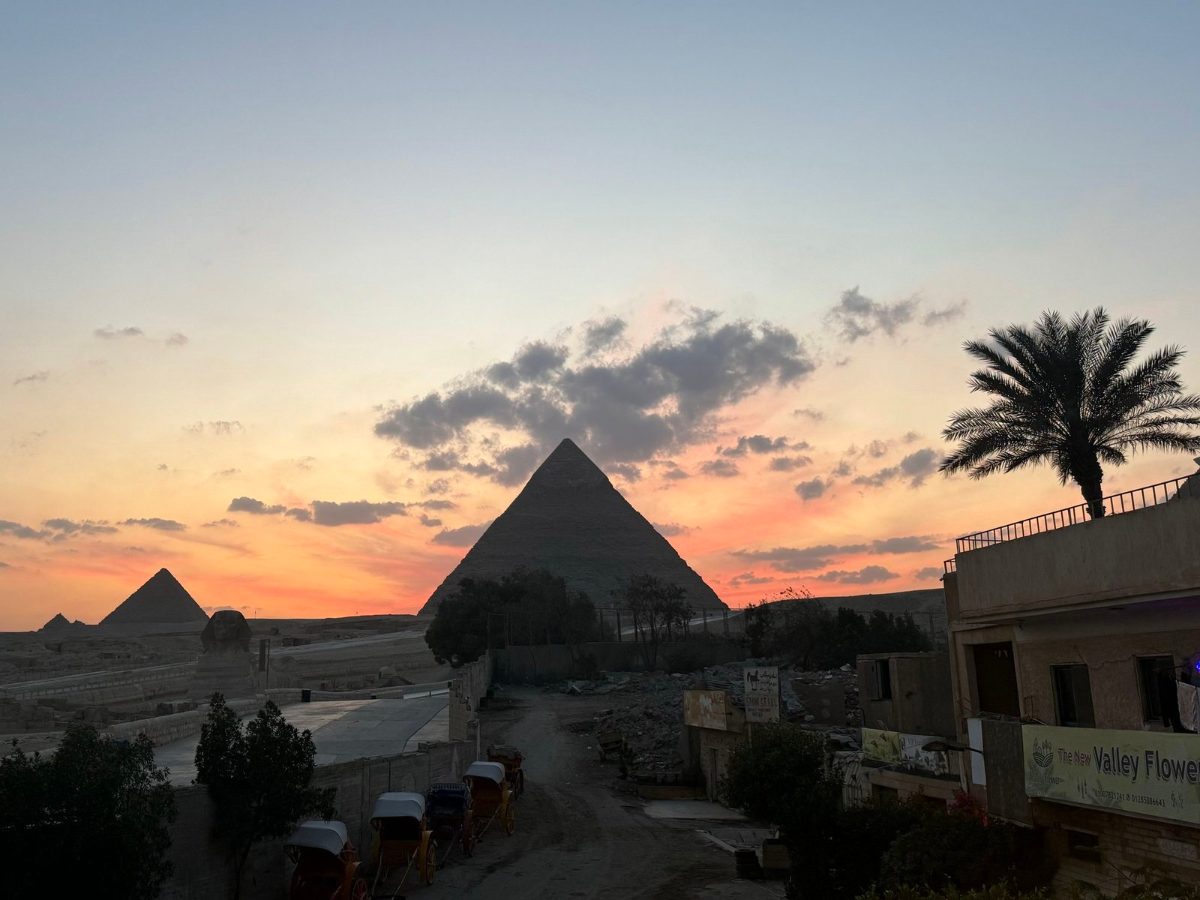
The pyramids of Giza at dusk behind palm trees
Dusk. The pyramids from the edge of town.
A pyramid at Giza lit up at night
After dark. Lit up at night.
The Great Sphinx of Giza lit blue at night
Night light. The Sphinx lit blue in the evening.

Inside the pyramids and tombs

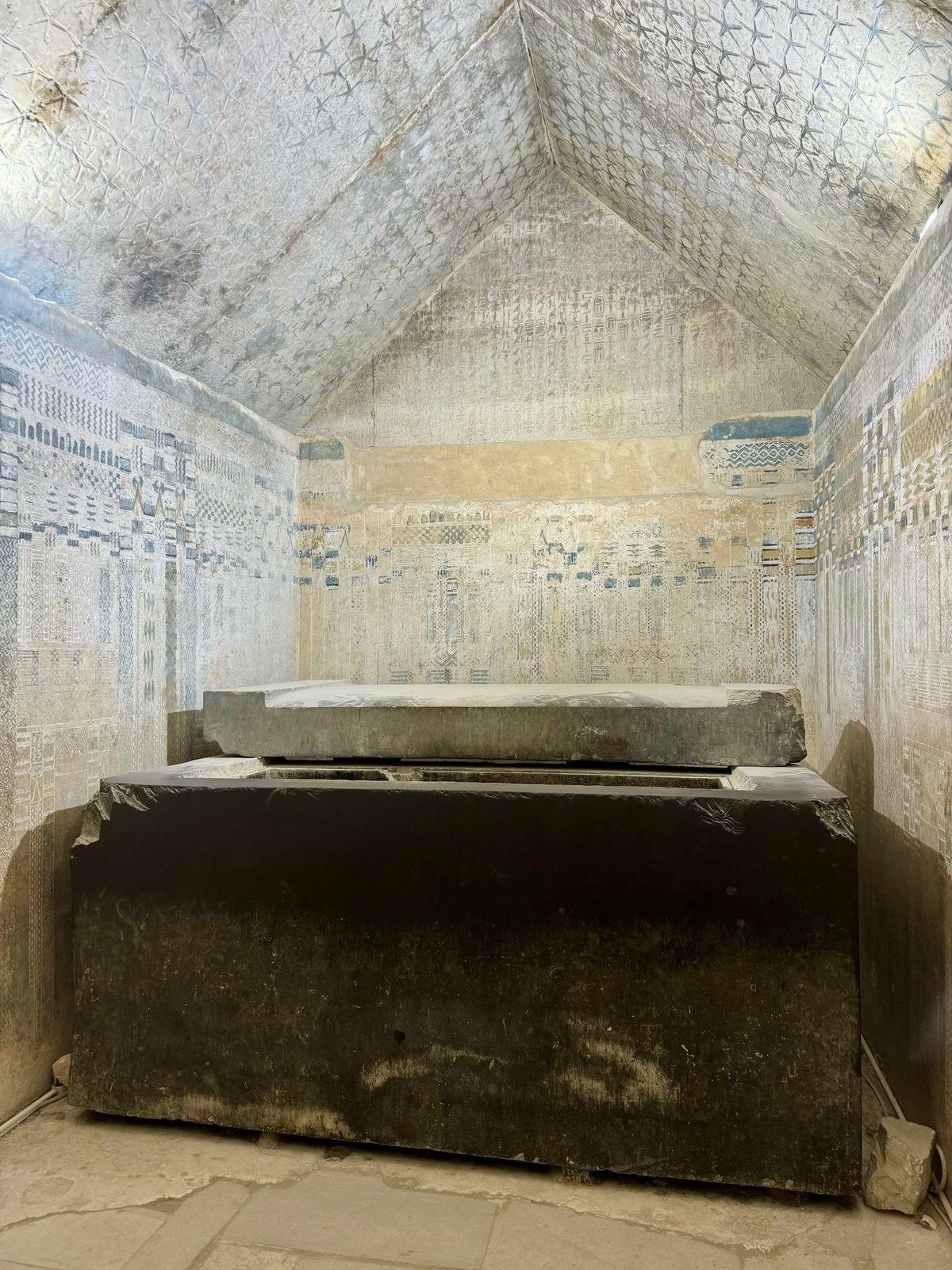
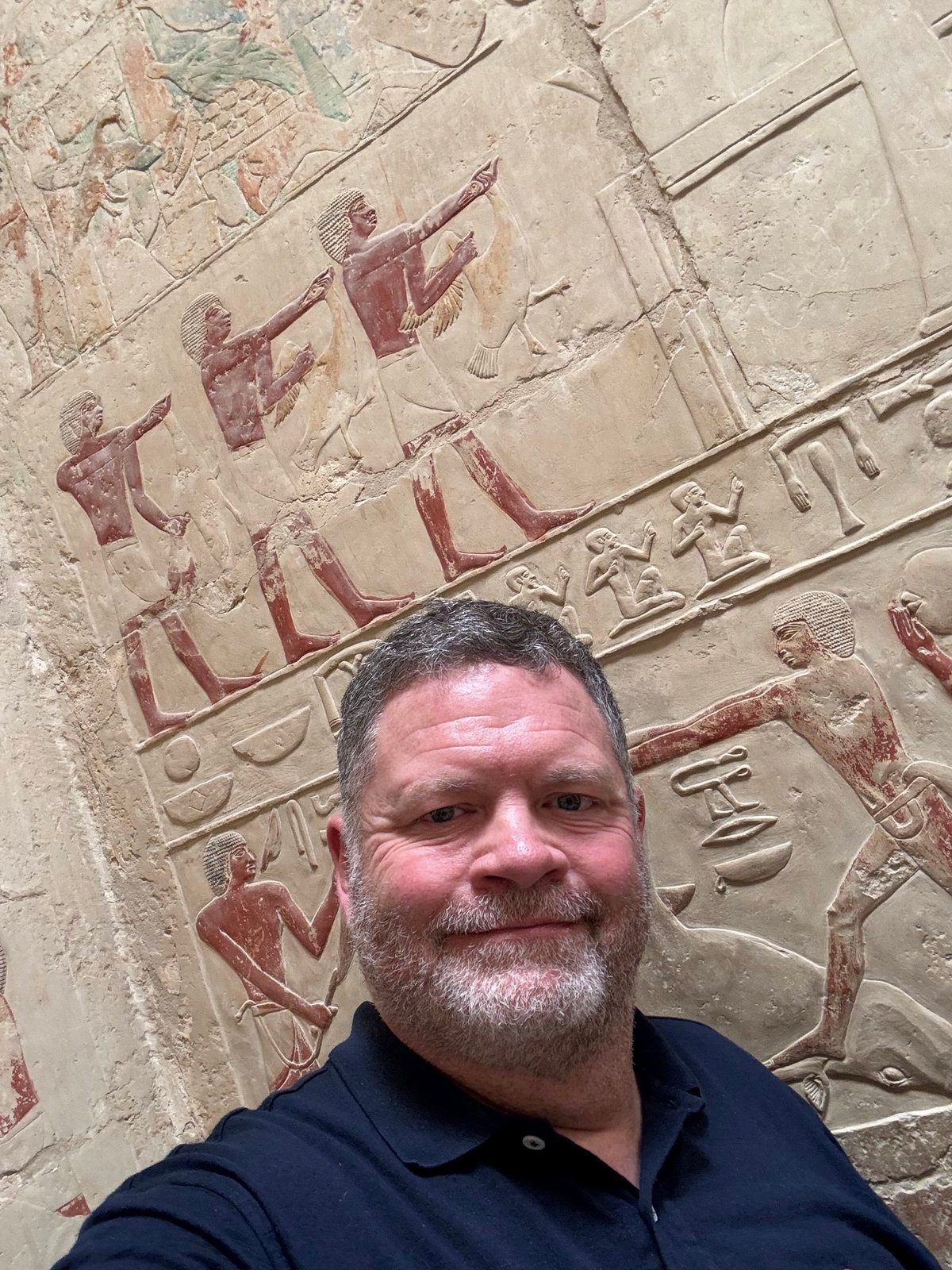
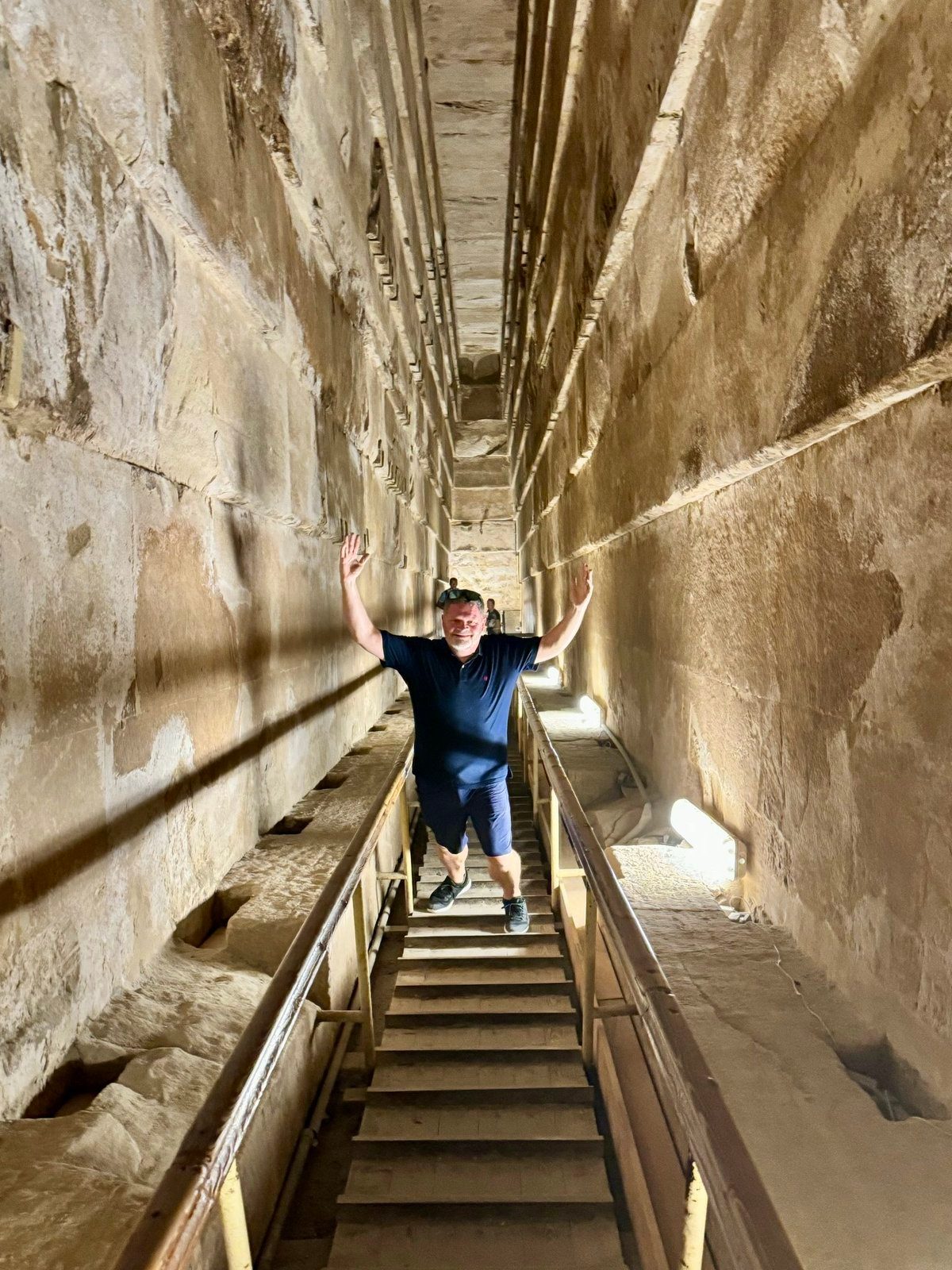
Going inside is worth the extra ticket. In the Great Pyramid of Khufu you climb a low, steep ascending passage, bent nearly double, before it opens into the Grand Gallery, a tall, narrow corridor of fitted stone blocks that leads up to the King's Chamber and its granite sarcophagus. It is hot, humid and a real climb. Around Saqqara, the older tombs are just as good: burial chambers lined with columns of carved, blue-painted hieroglyphs, and the tombs of officials covered in reliefs of everyday life, from farming and fishing to boat building.
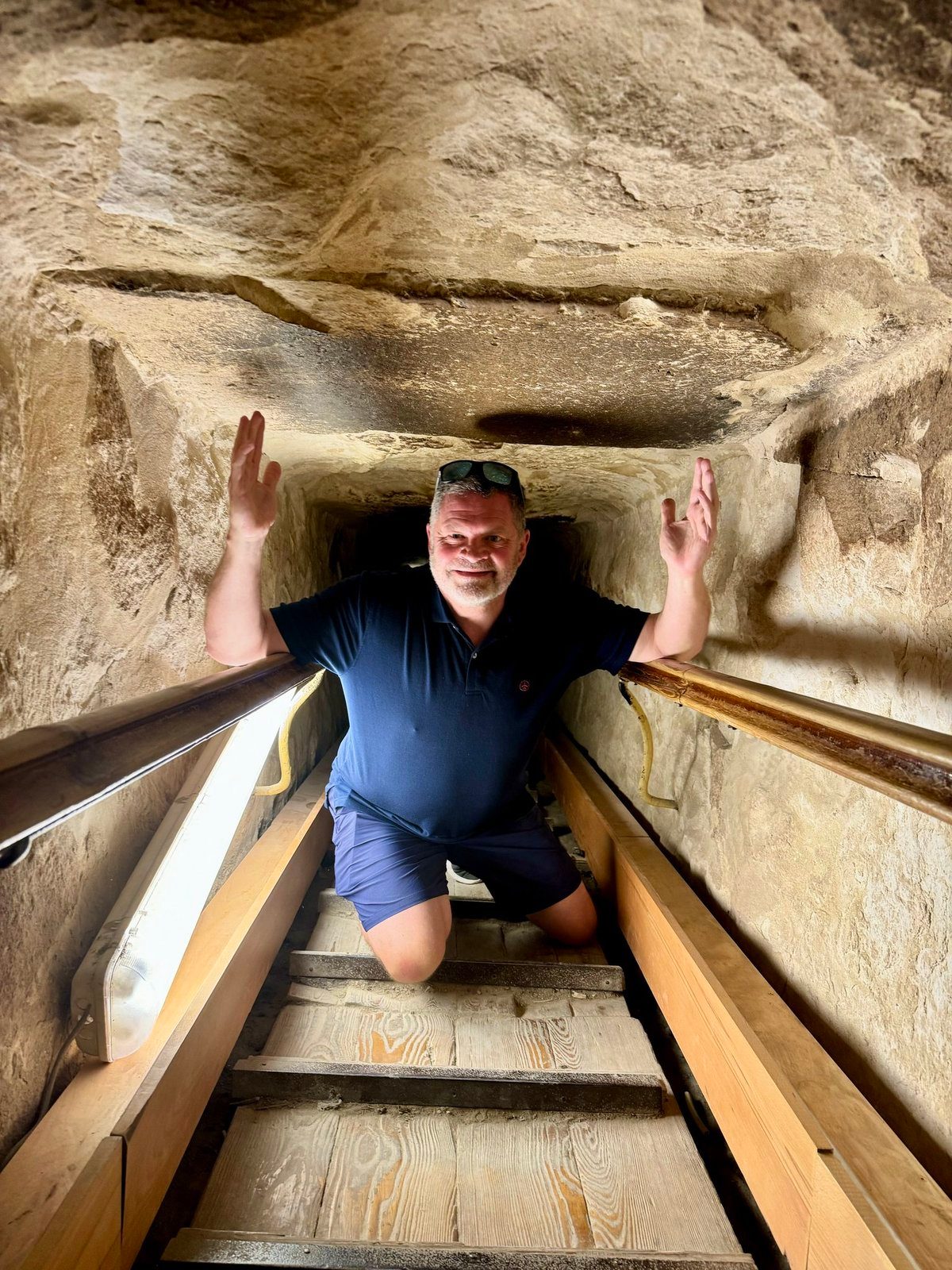
Darrell Seale crouching in the low ascending passage inside the Great Pyramid of Giza
Going up. The low ascending passage in the Great Pyramid.
Darrell Seale in the Grand Gallery inside the Great Pyramid of Giza
The Grand Gallery. Fitted stone overhead, the King's Chamber ahead.
Columns of blue-painted hieroglyphs on a burial chamber wall near Saqqara
Carved and painted. Hieroglyphs covering a burial chamber wall.
Stone burial chamber with a dark sarcophagus near Saqqara
Burial chamber. The sarcophagus is still in place.
Darrell Seale in front of painted reliefs inside a tomb at Saqqara
Tomb reliefs. Everyday life carved in stone at Saqqara.
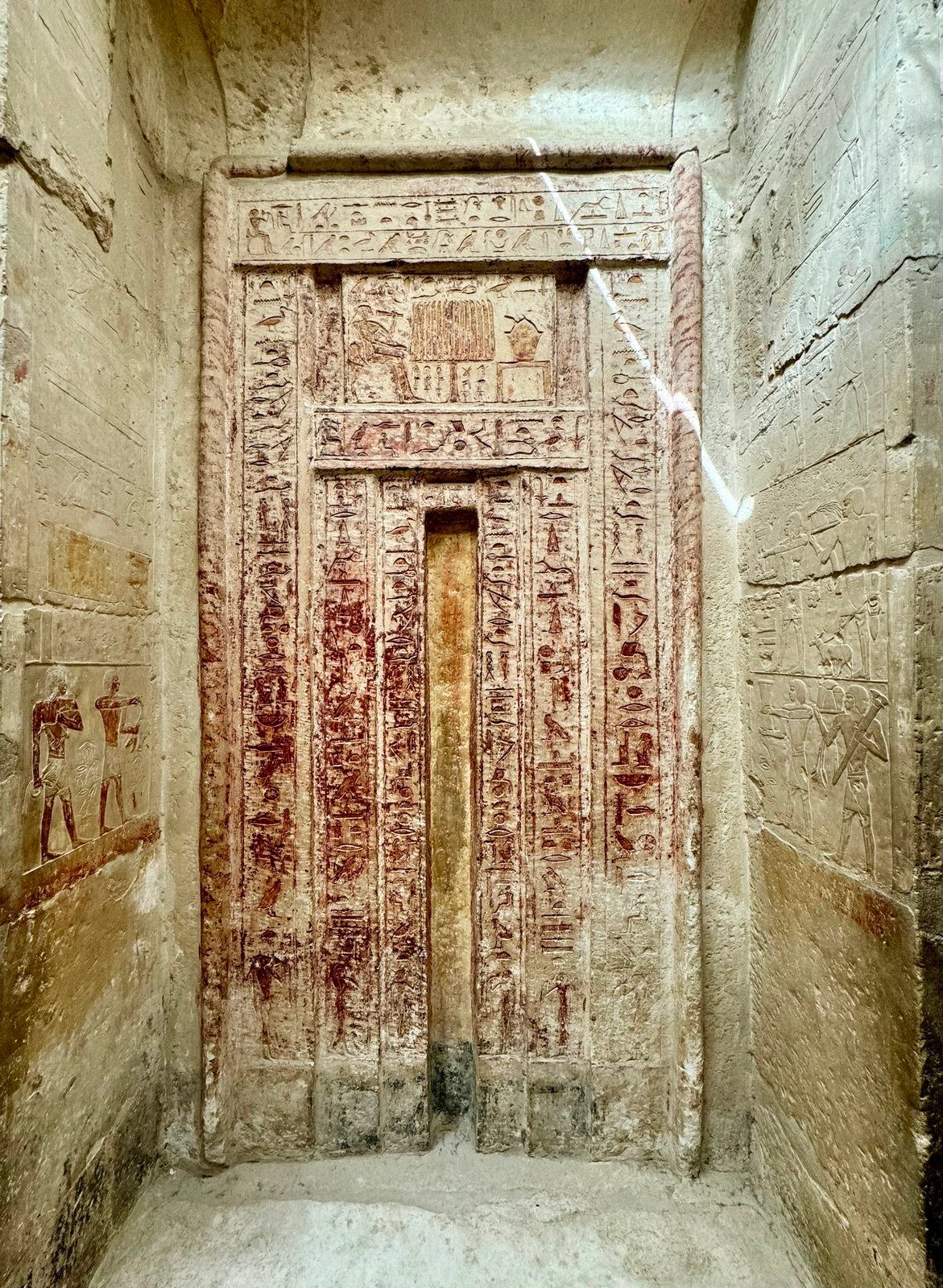
Carved false door inside a tomb at Saqqara
False door. Still in place inside the tomb.

The Egyptian Museum

The Egyptian Museum on Tahrir Square has been the home of Egypt's antiquities for more than a century. Plan on a few hours and still expect to miss things: coffins, statues, carved stone and objects from daily life fill room after room.
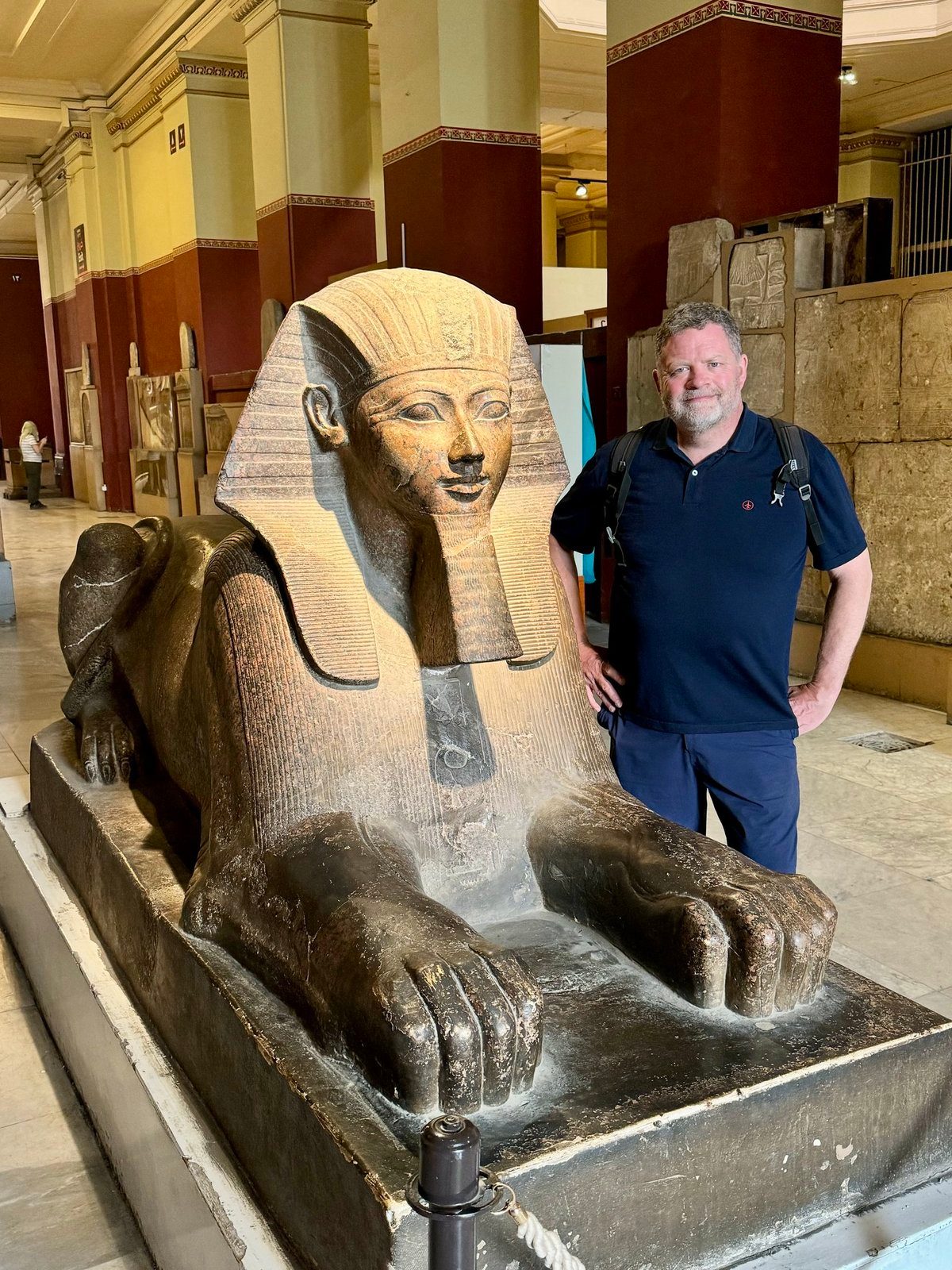
Darrell Seale next to a granite sphinx statue in the Egyptian Museum, Cairo
Another sphinx. A smaller one indoors.
Gilded and painted ancient Egyptian coffin in the Egyptian Museum, Cairo
Gilded coffin. Still bright after thousands of years.
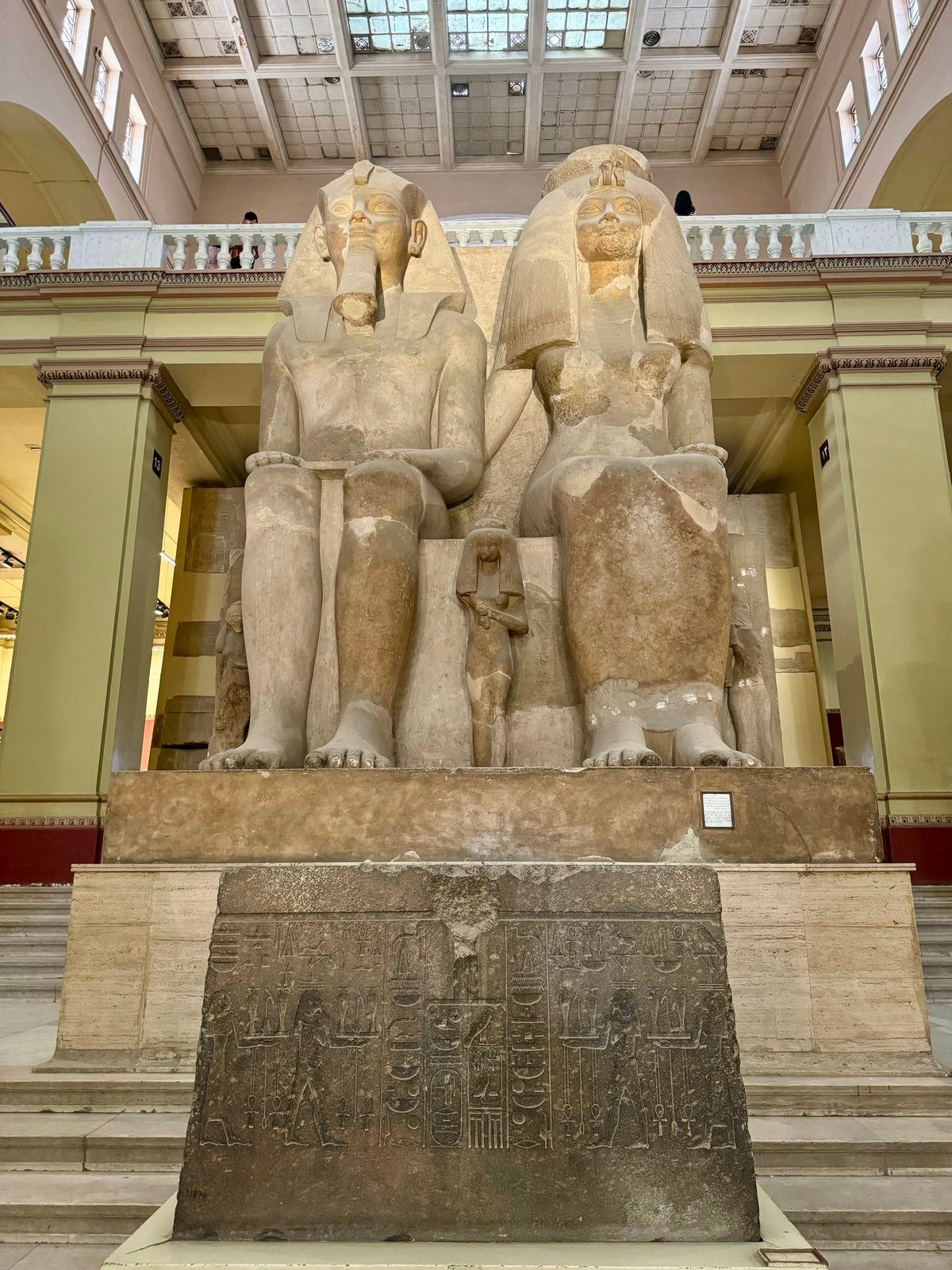
Colossal seated statues in the main hall of the Egyptian Museum, Cairo
The main hall. Colossal seated statues.
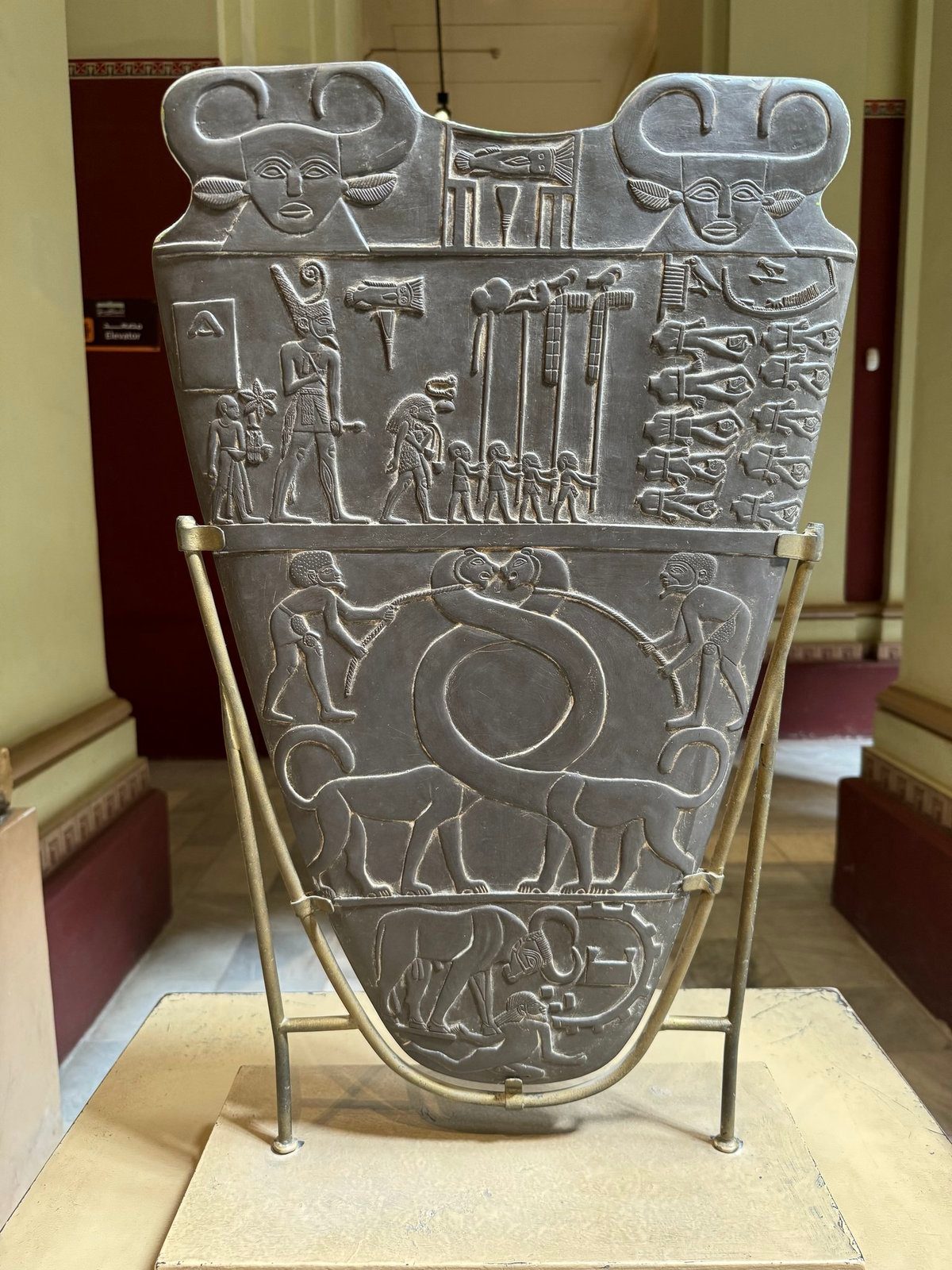
Carved ceremonial stone palette on display in the Egyptian Museum, Cairo
Carved palette. Some of the oldest carving in the building.
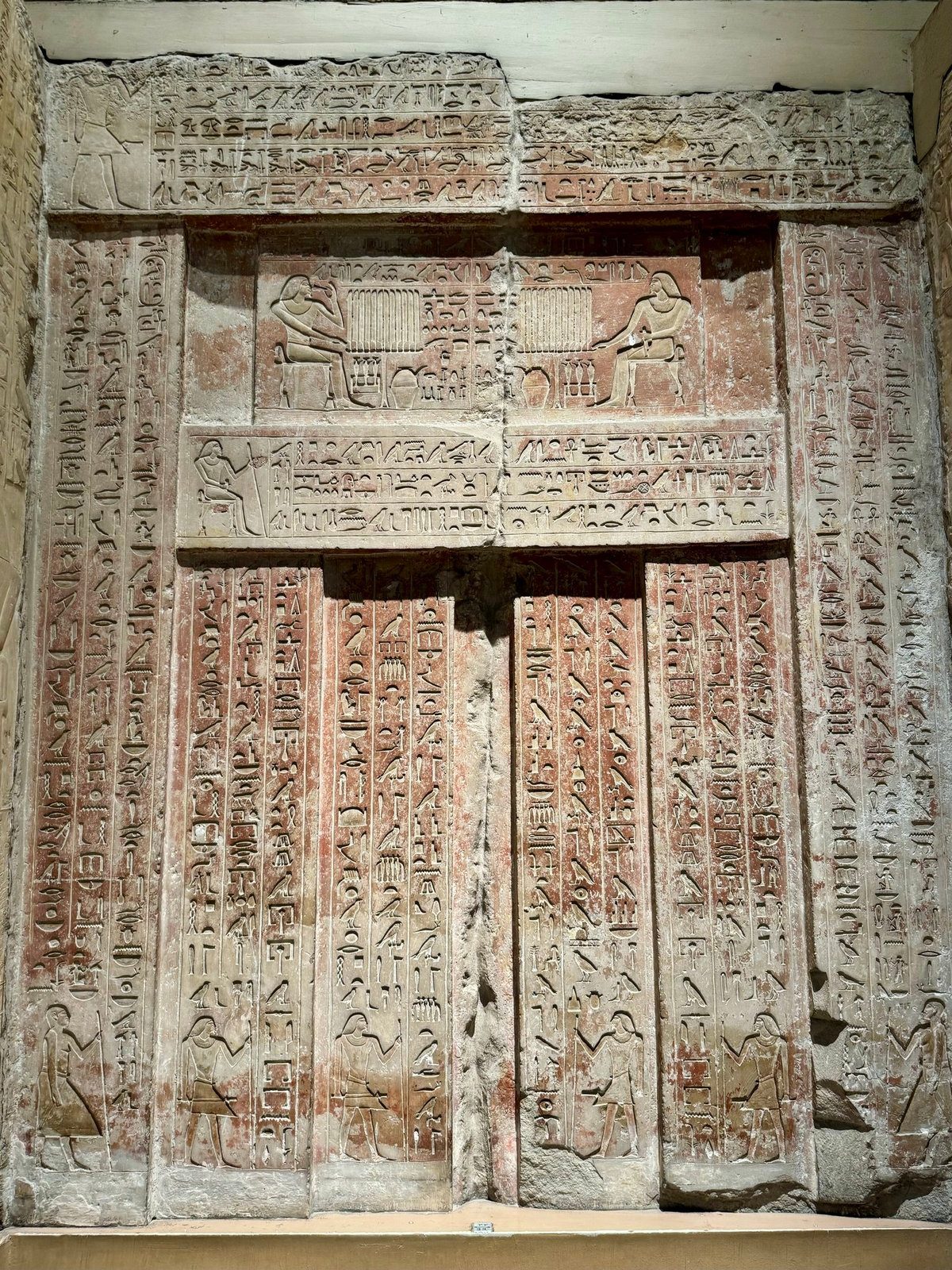
Carved stone false door from an ancient Egyptian tomb, Egyptian Museum
False door. A doorway for the spirit of the dead.
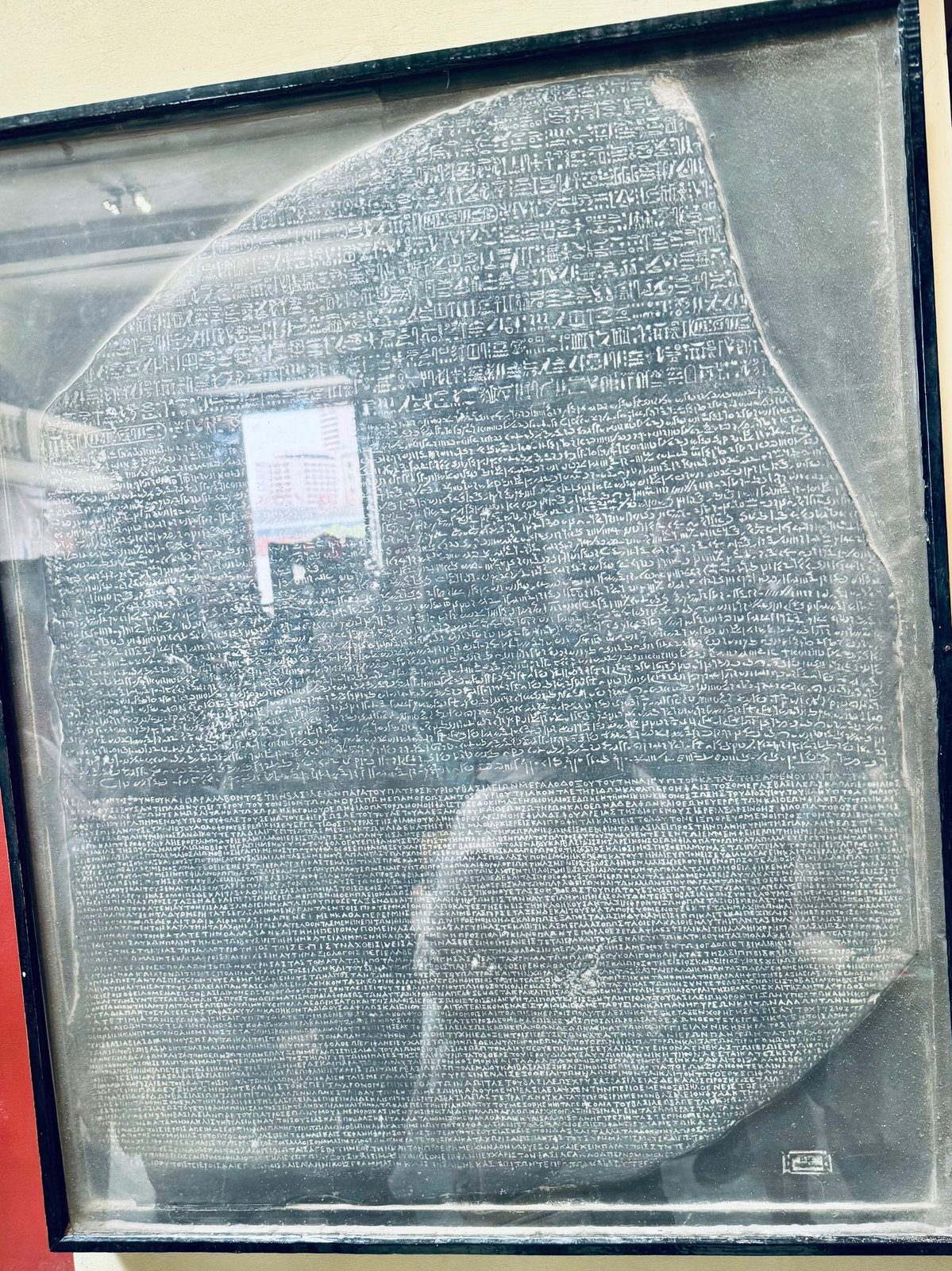
Replica of the Rosetta Stone in the Egyptian Museum, Cairo, with hieroglyphic, demotic and Greek text
Rosetta Stone. A replica; the original is in the British Museum in London.

Karnak and Luxor Temple

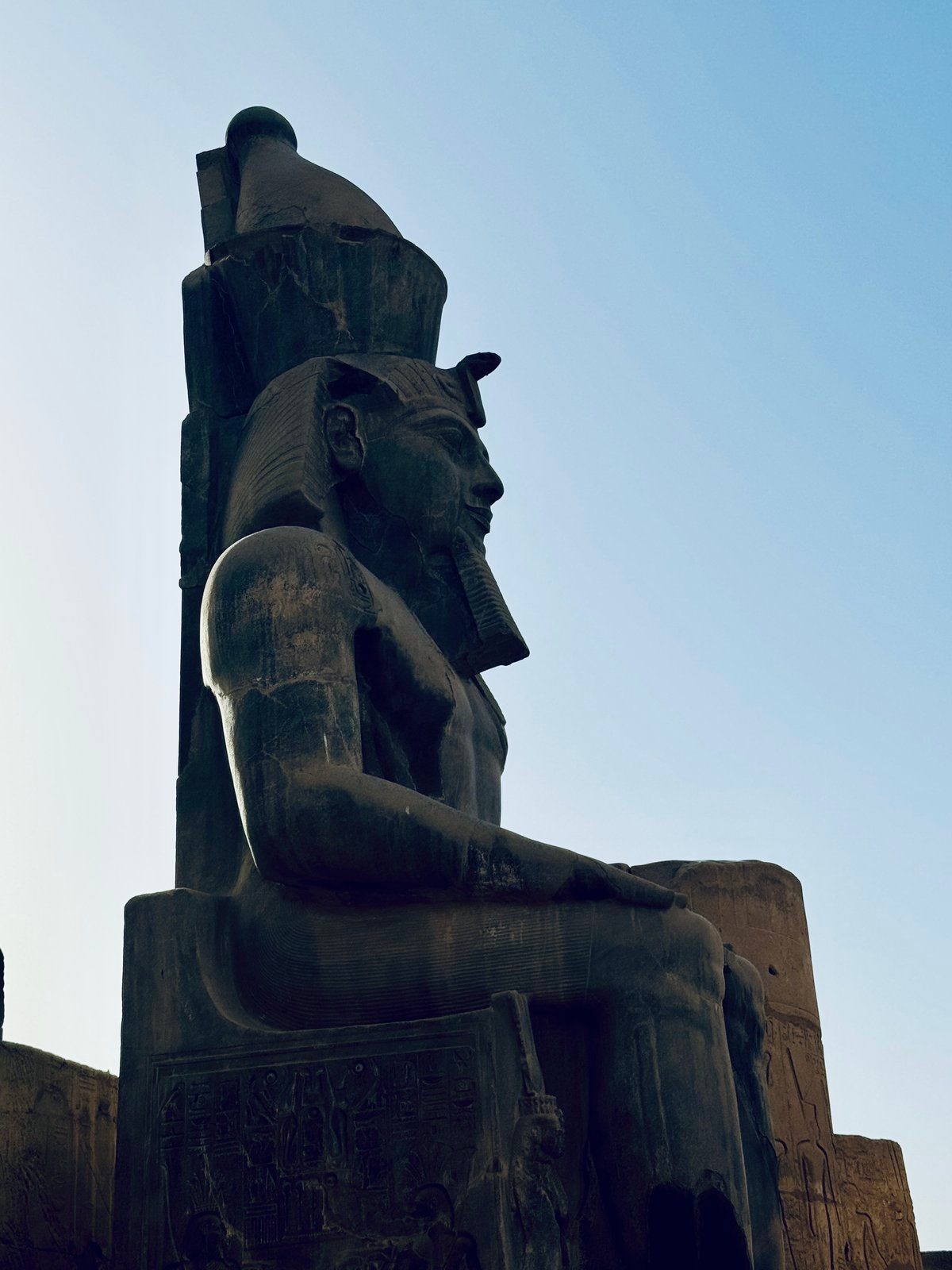
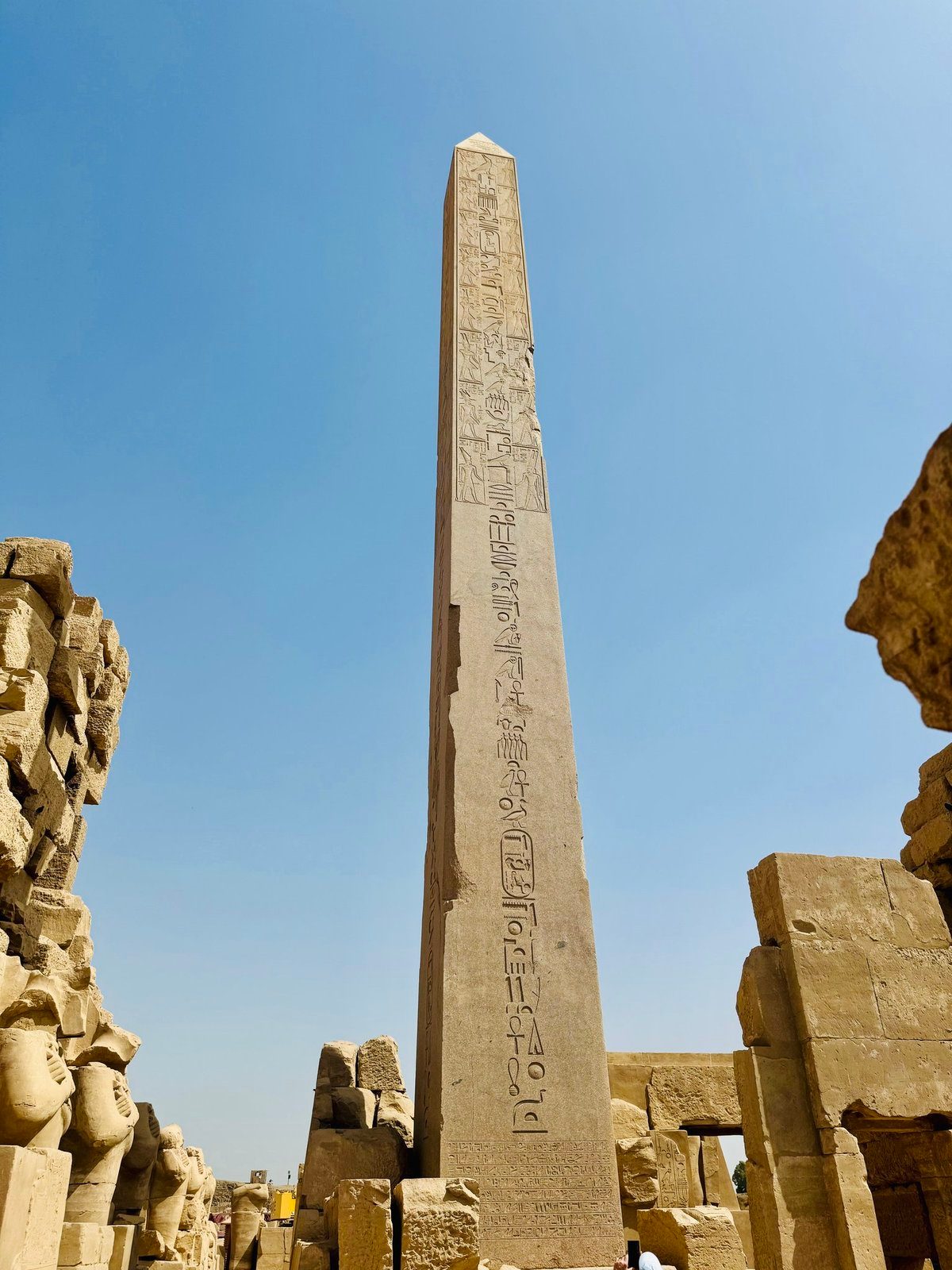
Luxor sits on the site of ancient Thebes. On the East Bank, Karnak is the largest temple complex in Egypt; its hypostyle hall is a forest of 134 giant columns, and you feel very small walking through it. A short drive south, Luxor Temple has seated statues of Ramesses II at its entrance and one of its original obelisks still standing.
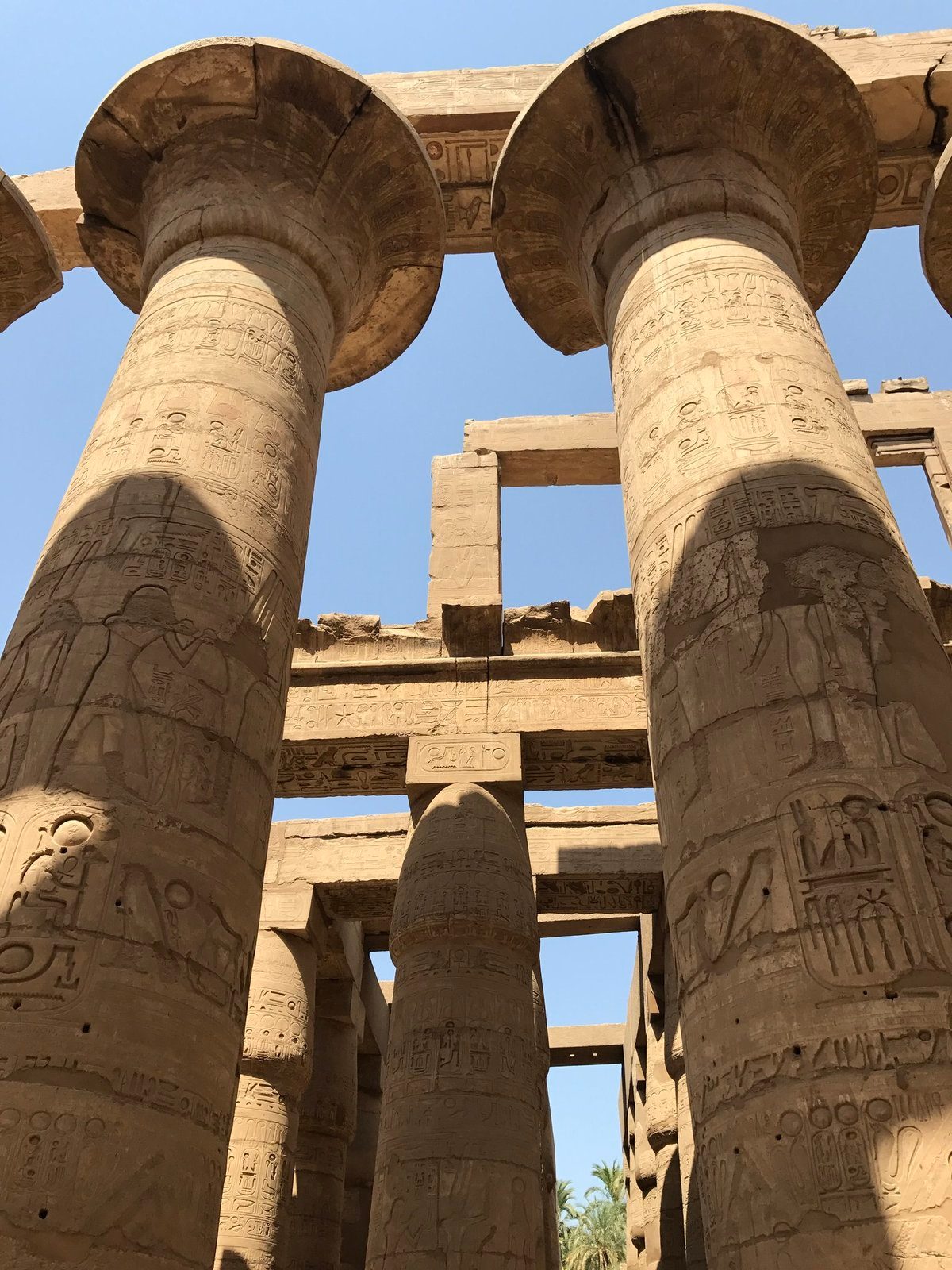
Massive carved columns of the hypostyle hall at Karnak, Luxor
Hypostyle hall. Karnak, September 2017.
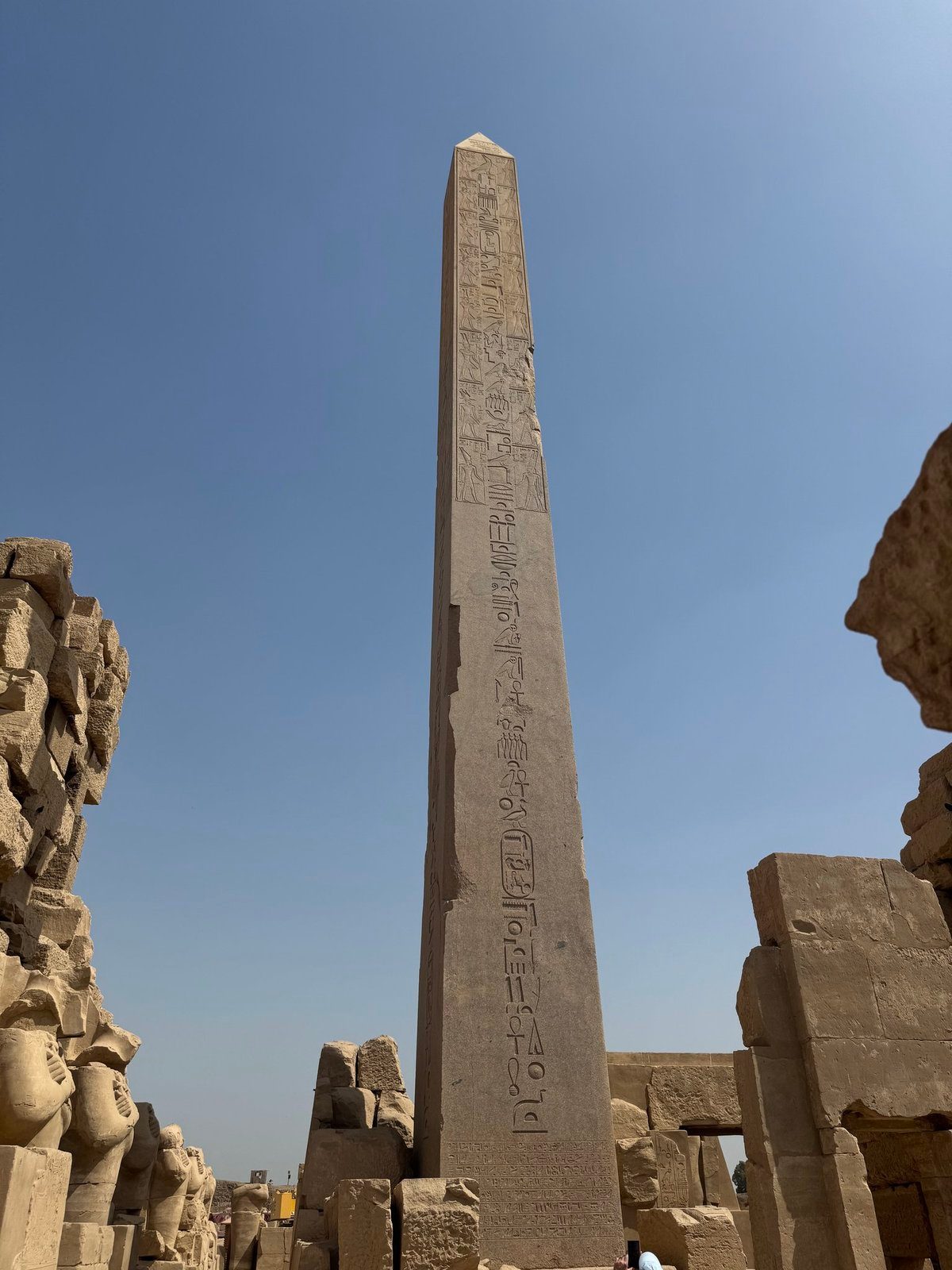
Granite obelisk at Karnak against a blue sky
Obelisk. Karnak, March 2024.
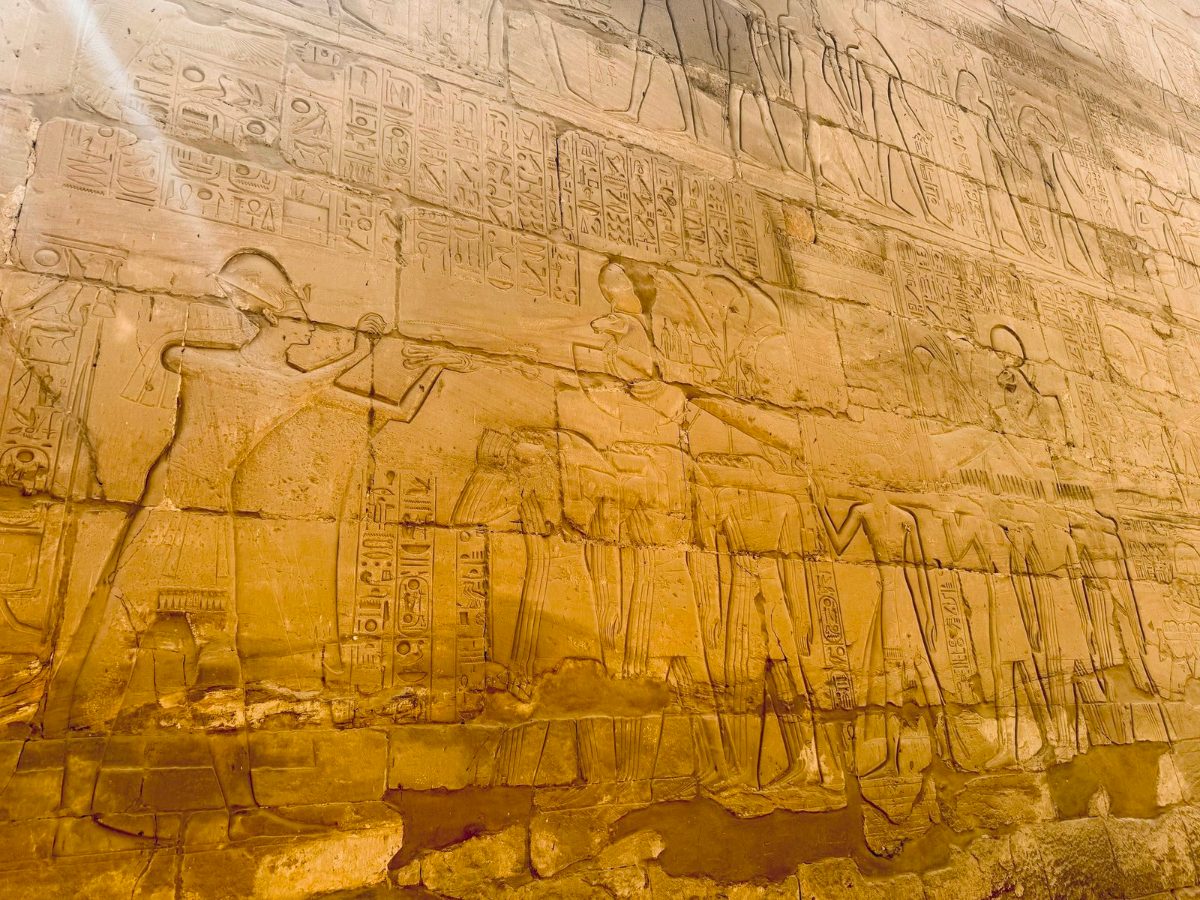
Carved relief on a sunlit wall at Karnak
Carved in stone. Every wall tells a story.
Obelisk rising between temple walls at Karnak
Looking up. Another obelisk at Karnak.
Seated statue of Ramesses II at Luxor Temple
Ramesses II. Guarding Luxor Temple.
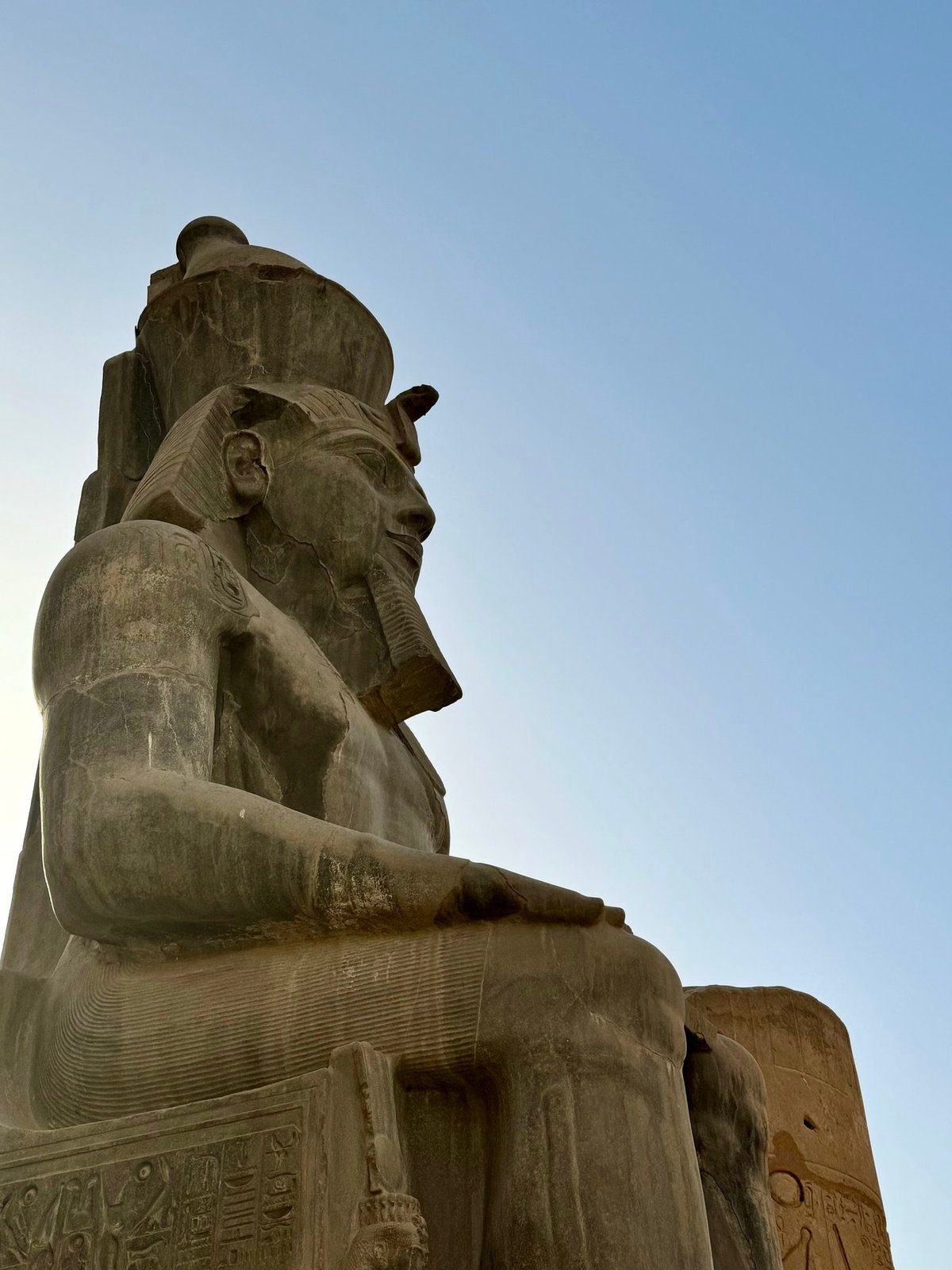
Colossal seated pharaoh statue at Luxor Temple against a blue sky
Colossal. Seated statue at Luxor Temple.

The West Bank

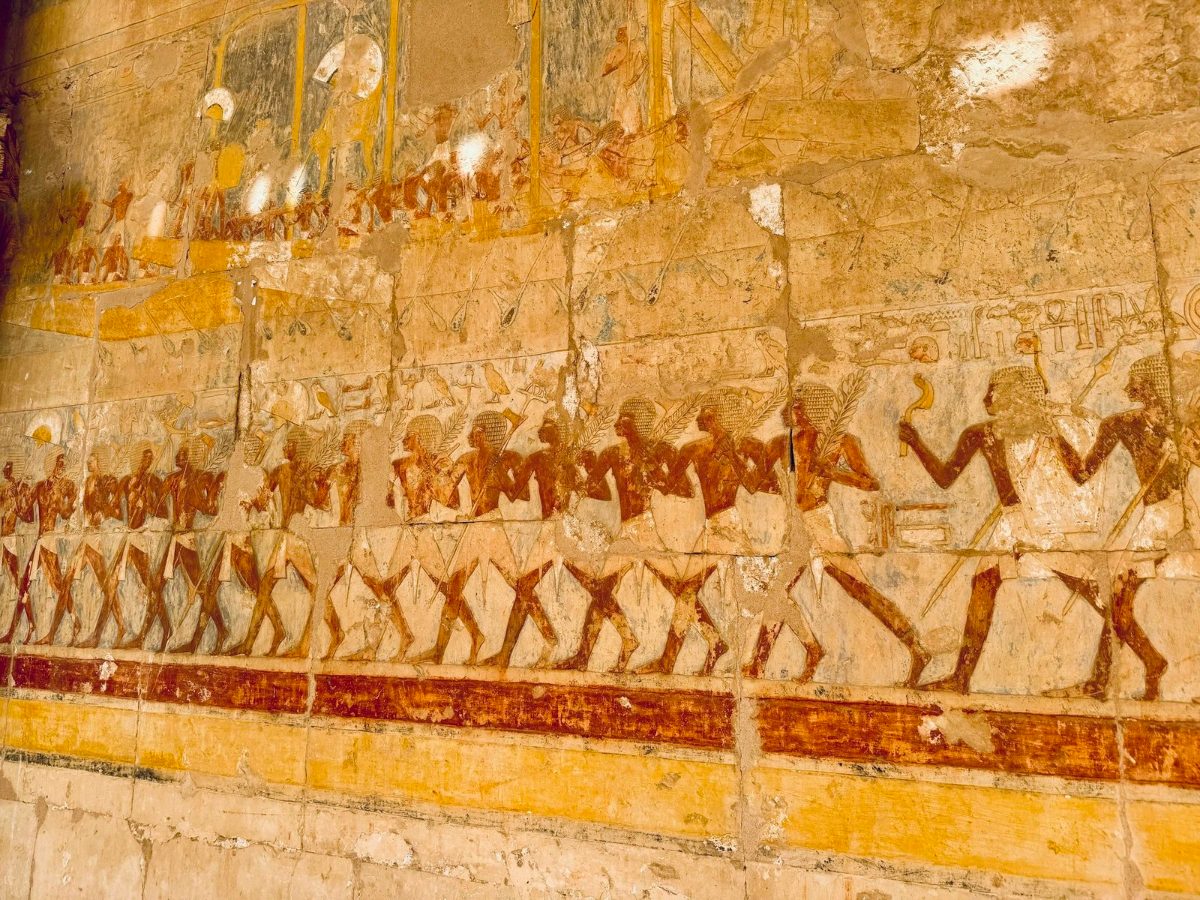
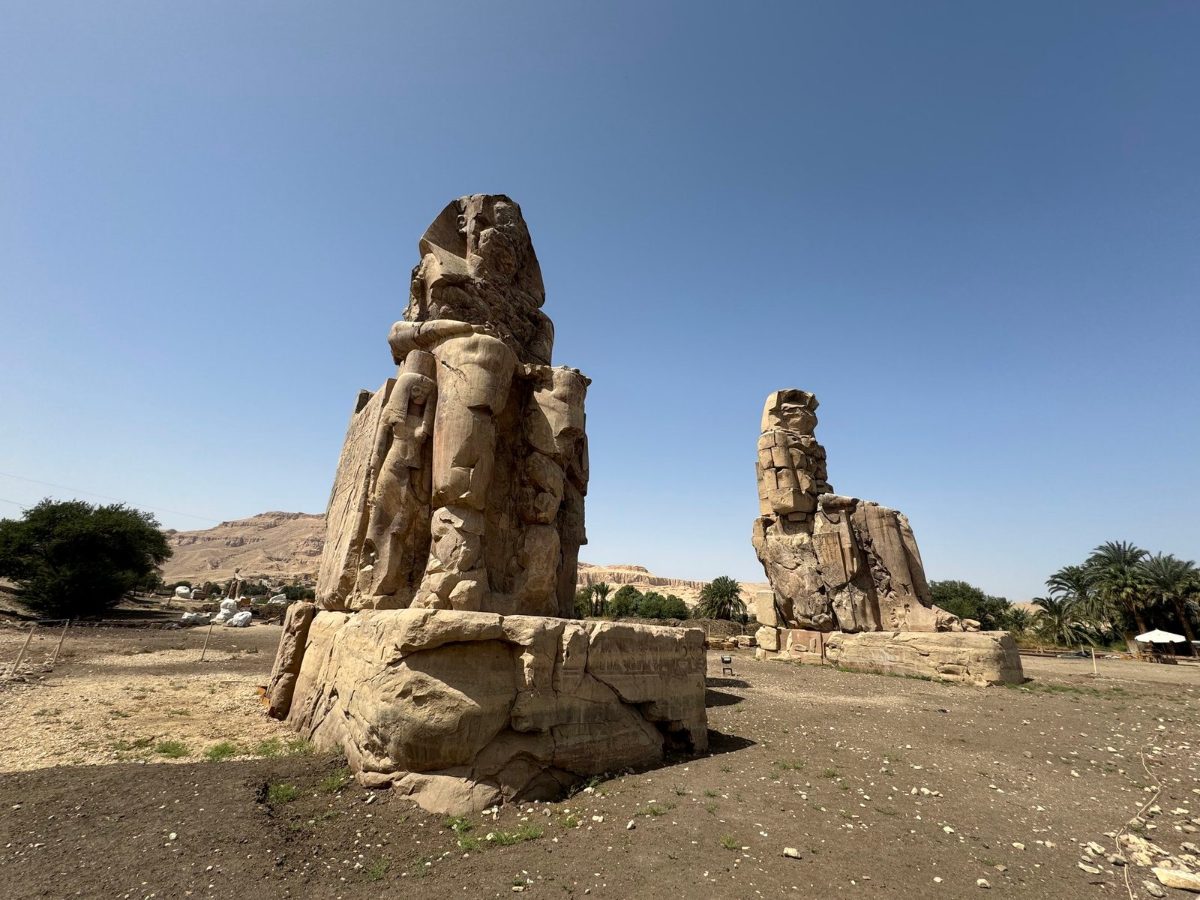
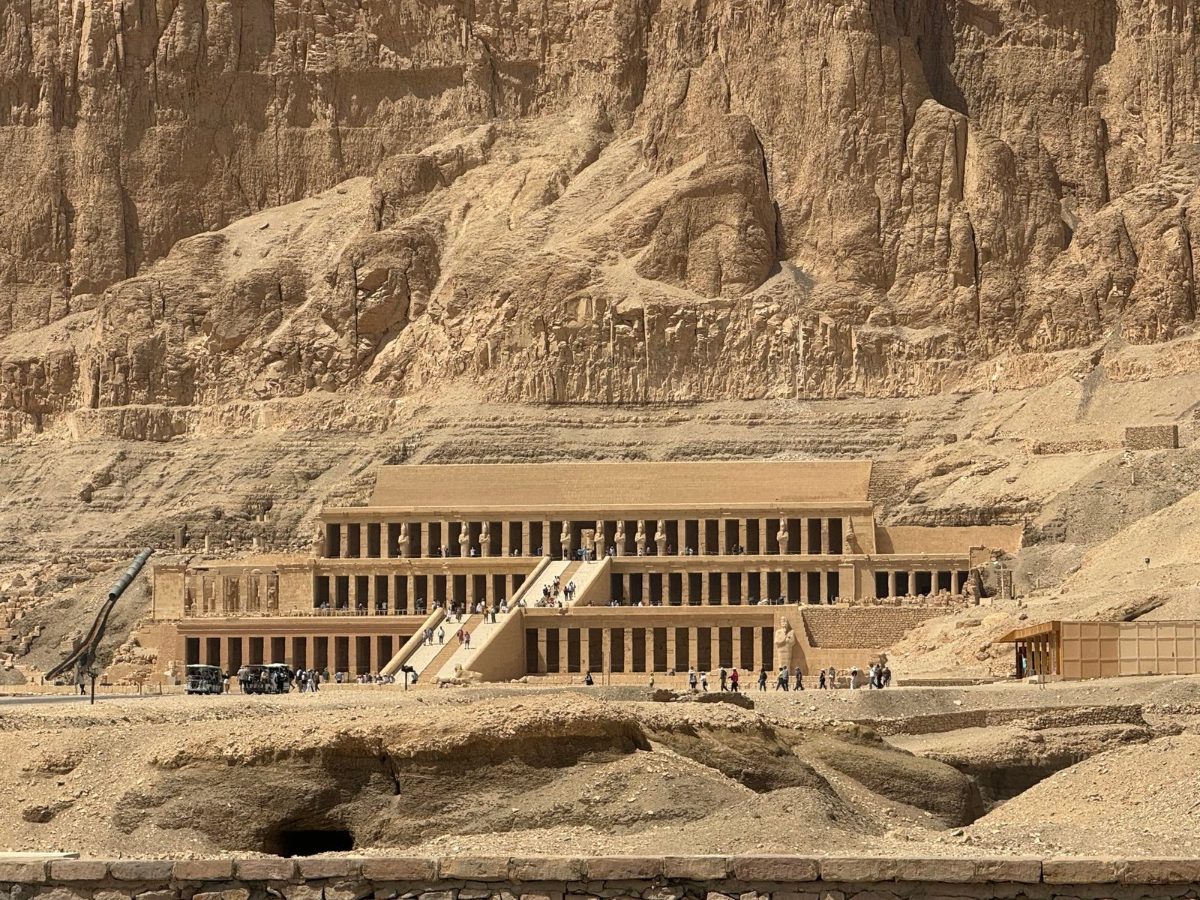
Across the Nile, the West Bank was the city of the dead. The Temple of Hatshepsut is built in terraces into the cliffs at Deir el-Bahari, and much of its painted relief still has its color. On the way back to the river, the Colossi of Memnon, two giant statues of Amenhotep III, have sat on the plain for about 3,400 years.
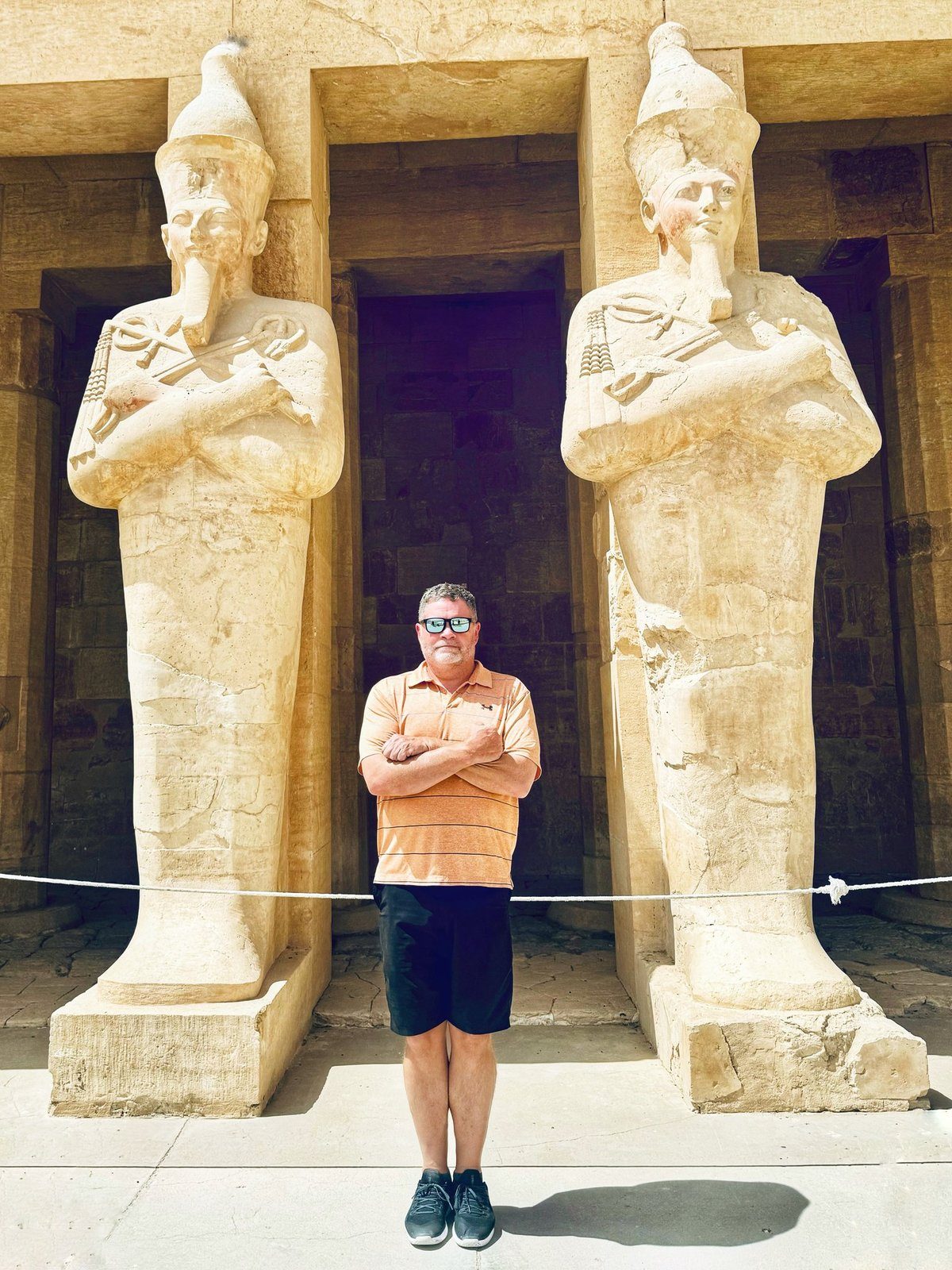
Darrell Seale between Osiris statues at the Temple of Hatshepsut, Luxor
Hatshepsut. Between the Osiris statues at her temple.
Terraced Mortuary Temple of Hatshepsut below the cliffs of Deir el-Bahari
Deir el-Bahari. Hatshepsut's terraced temple under the cliffs.
Painted relief of a procession at the Temple of Hatshepsut
Procession. Painted relief, March 2024.
Painted vulture relief on a ceiling at the Temple of Hatshepsut
Still colored. A painted vulture, 2017.
Painted wall reliefs inside a tomb in the Valley of the Kings
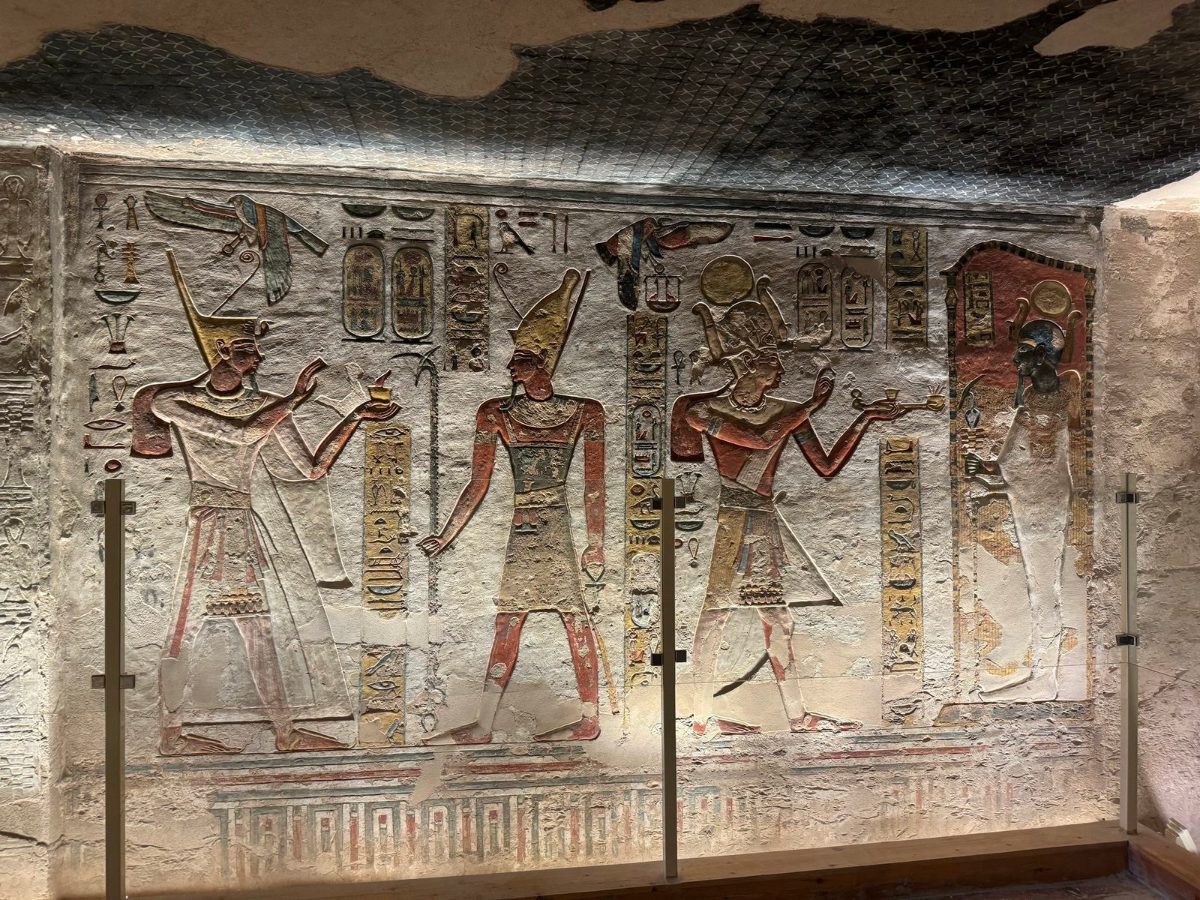
Valley of the Kings. Inside a royal tomb.
The Colossi of Memnon on the West Bank of Luxor
Colossi of Memnon. Two giant seated statues of Amenhotep III.

The Valley of the Kings

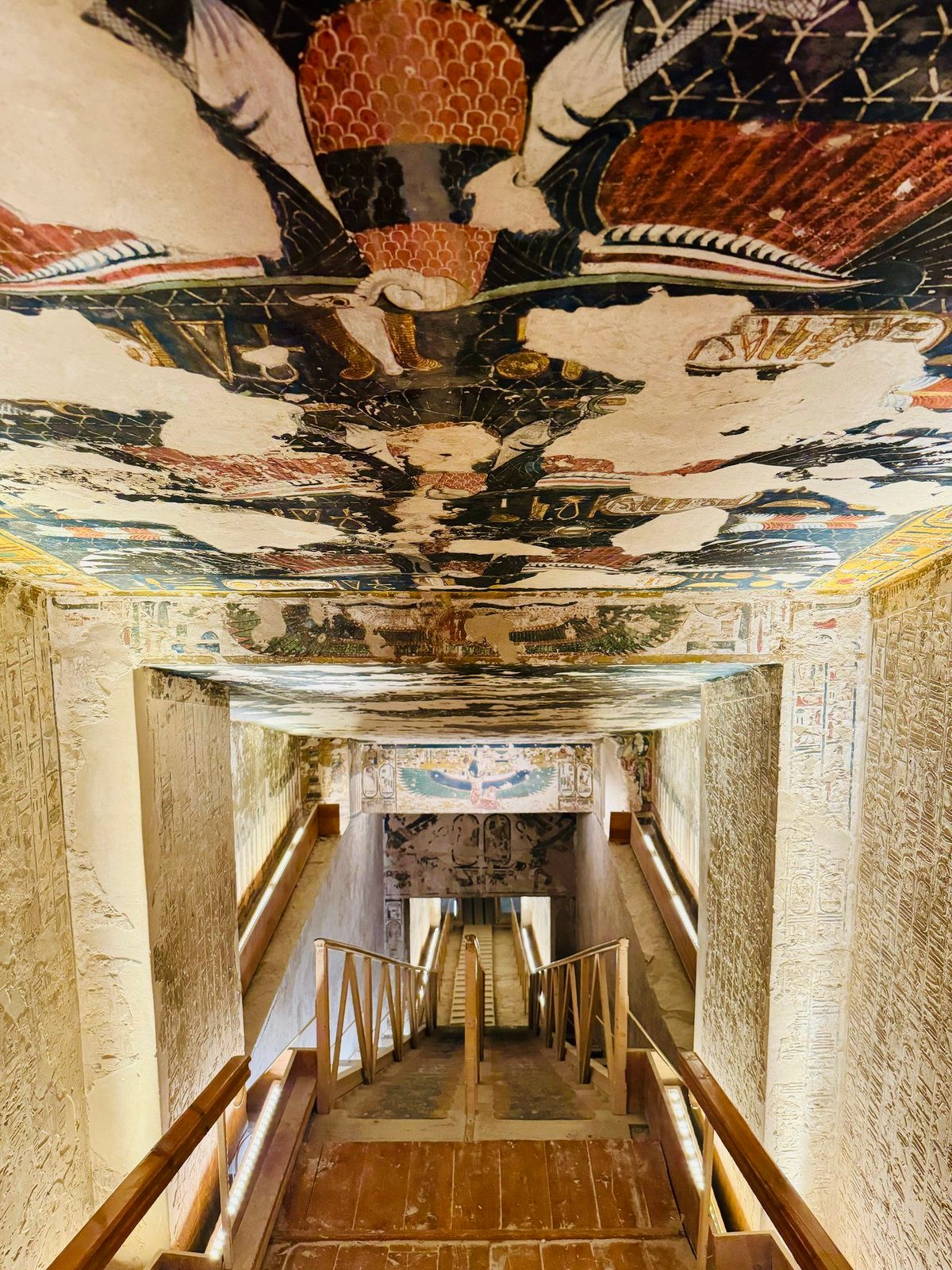
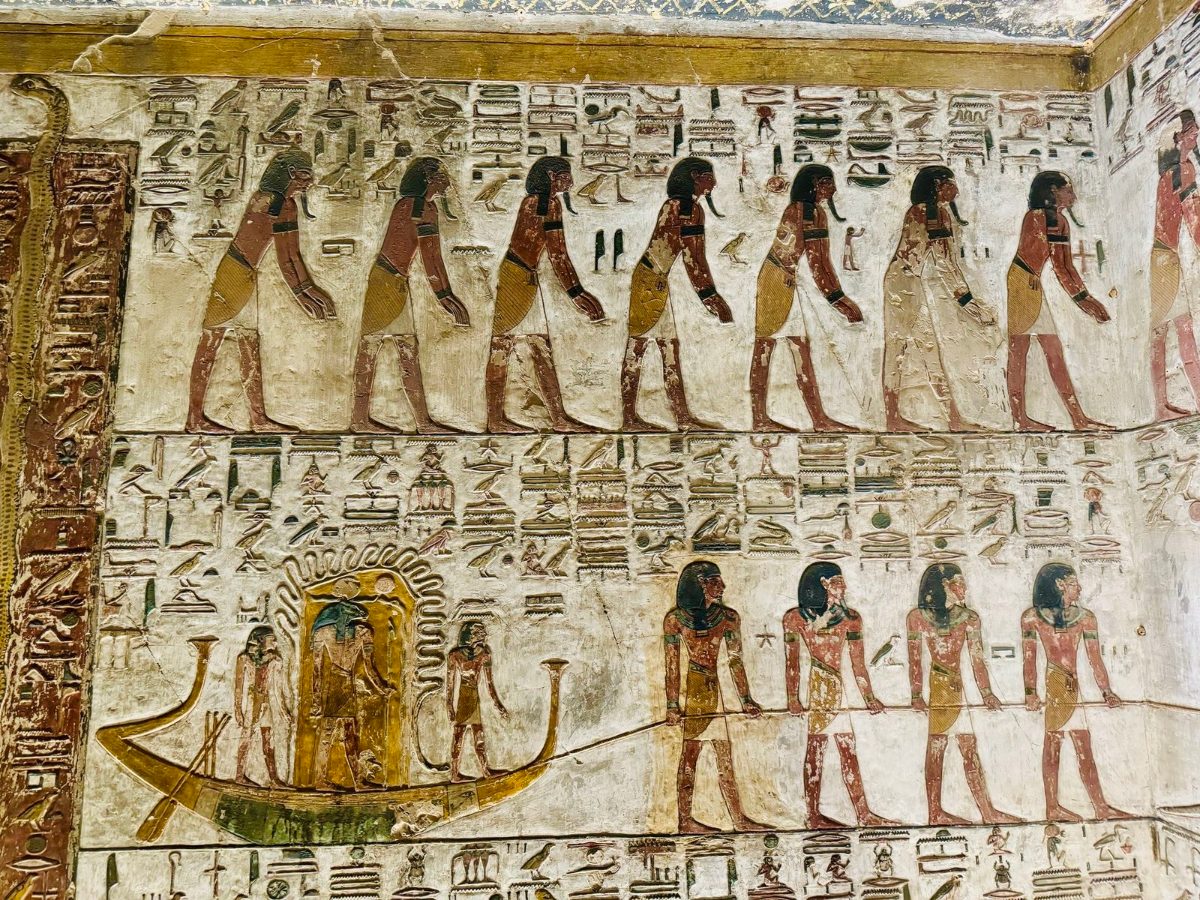
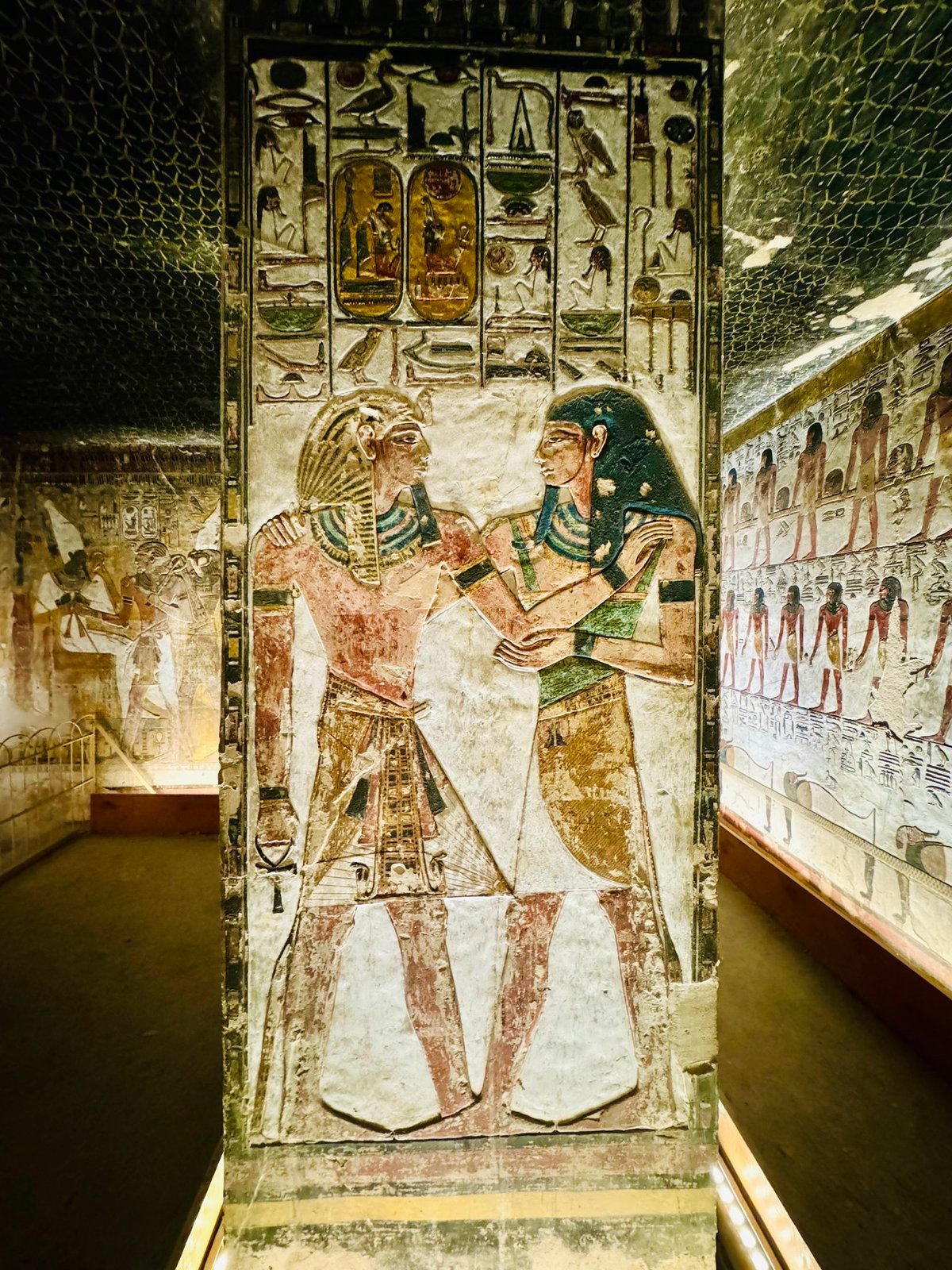
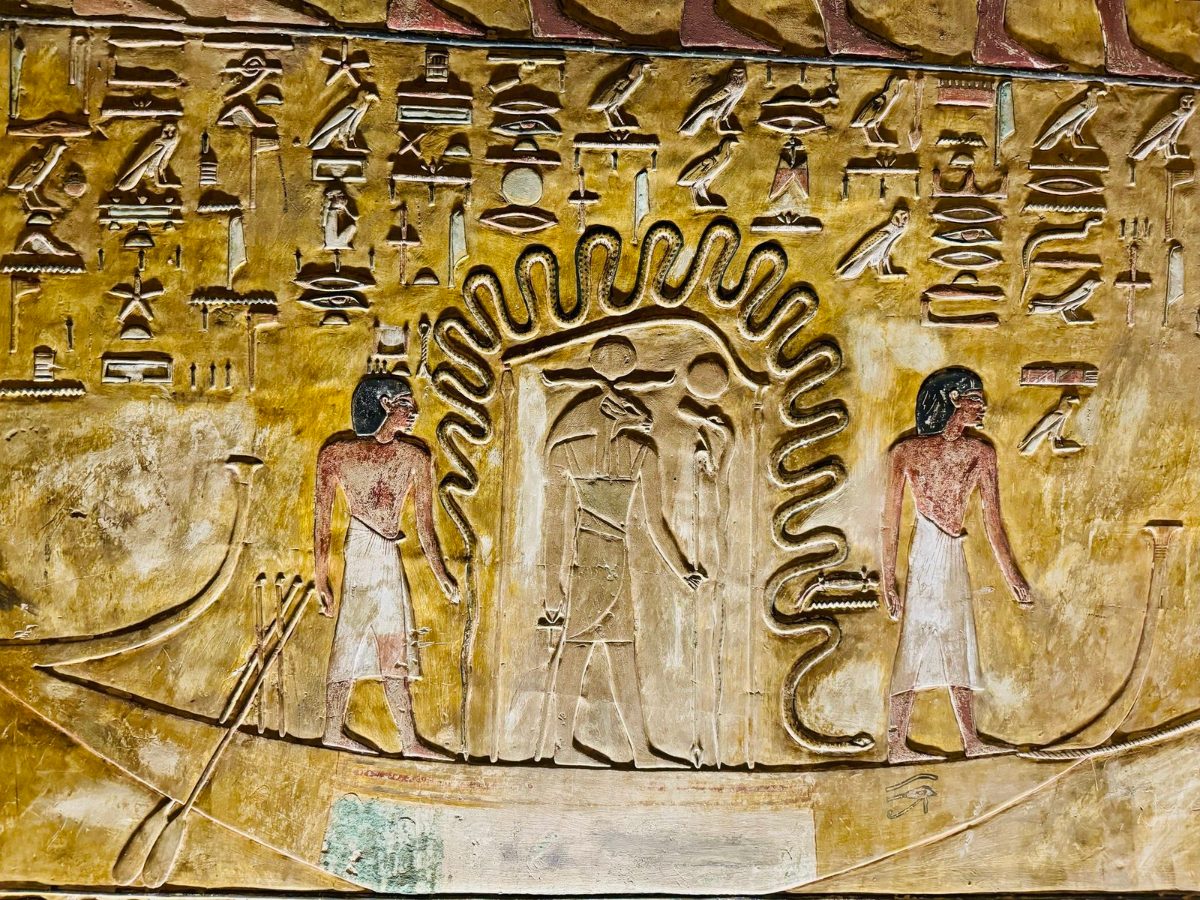
The Valley of the Kings holds more than 60 tombs cut into the hills, built for the pharaohs of the New Kingdom. From the outside there is not much to see, just doorways in a dusty valley, but inside, the corridors slope down past walls and ceilings painted with gods, processions, serpents and the boats that carried the king through the underworld. The colors are still bright after more than 3,000 years. A standard ticket covers a few tombs, and the best ones are worth paying extra for.
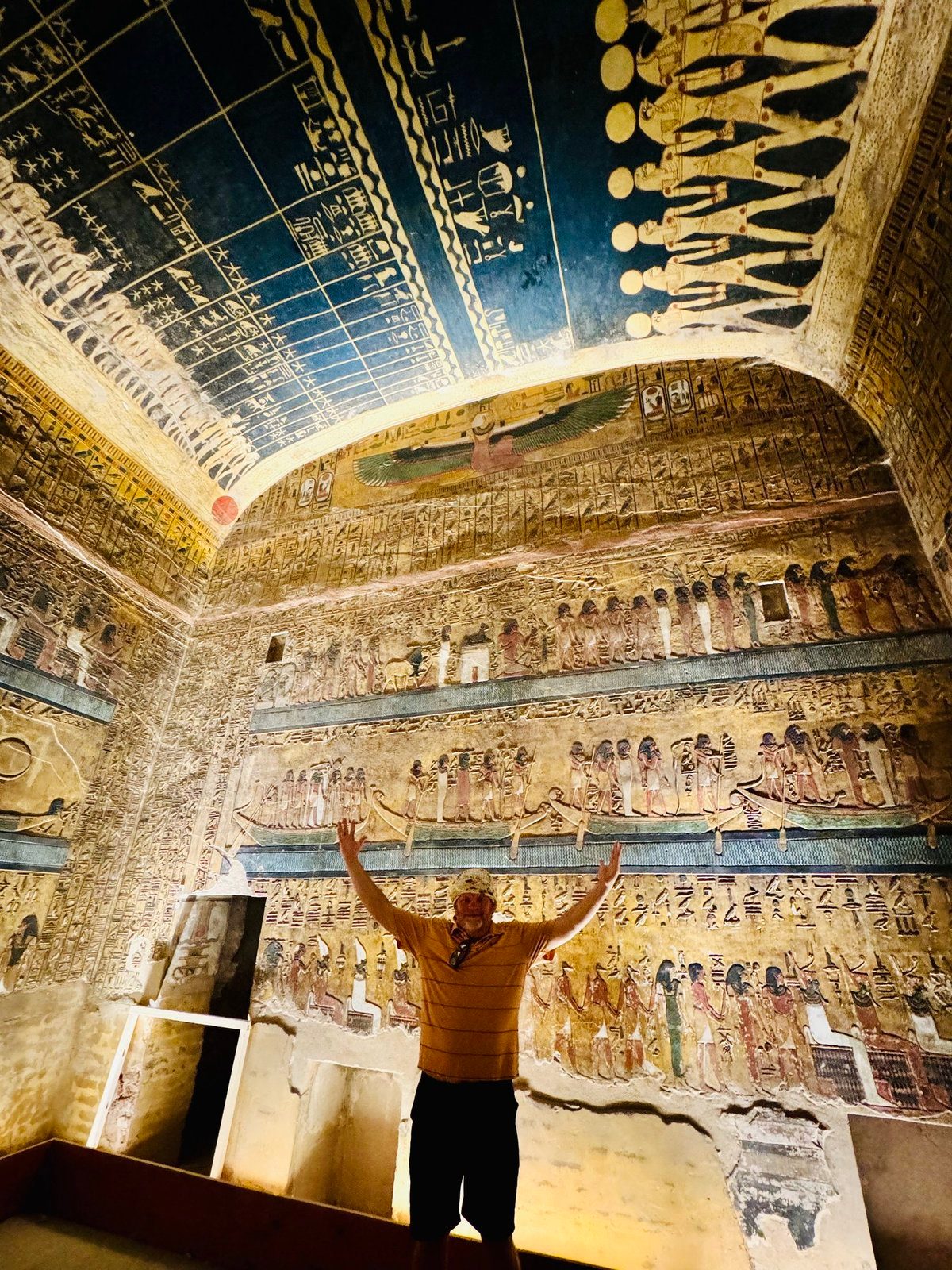
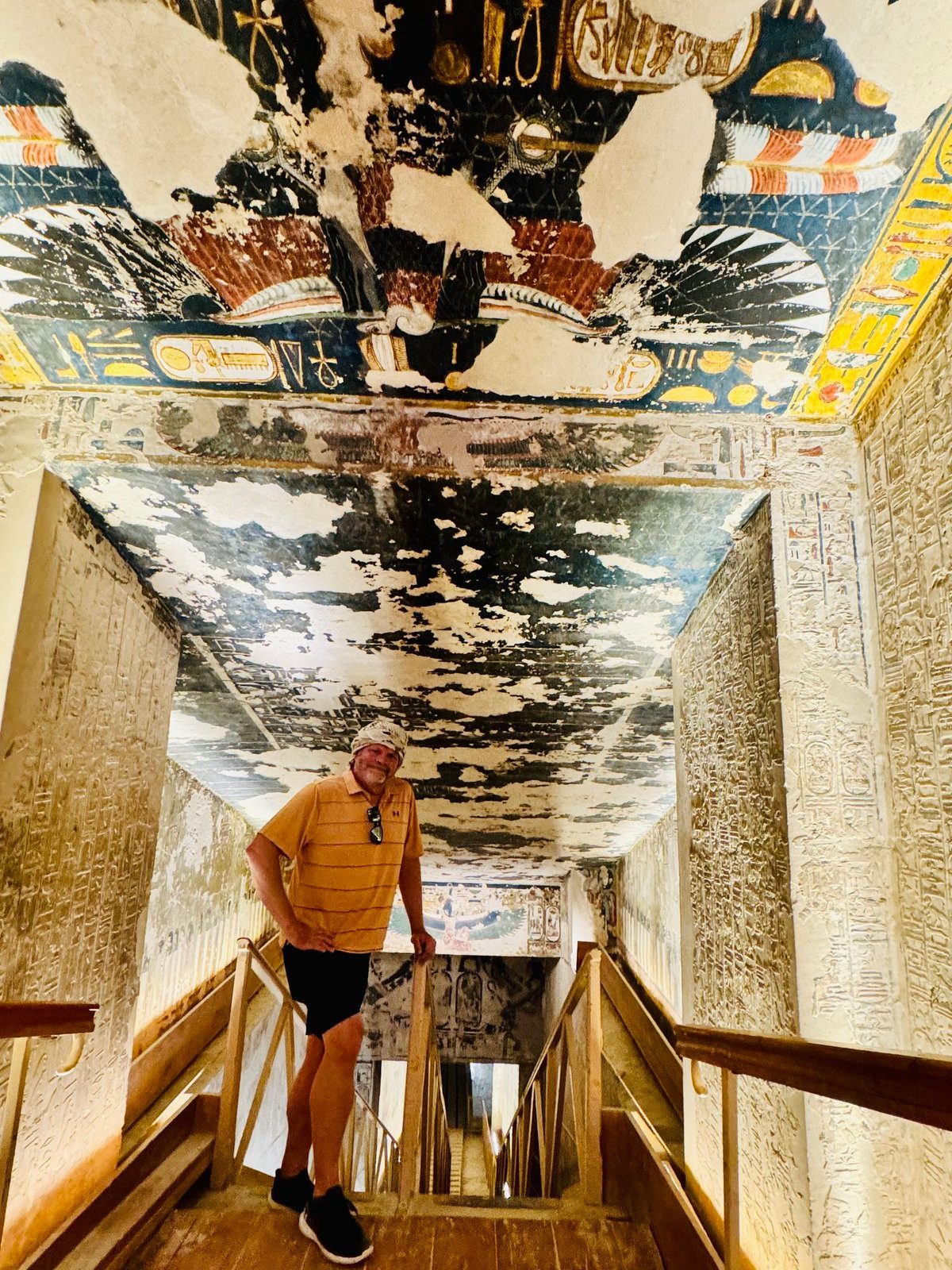
Darrell Seale under a painted blue ceiling in a tomb in the Valley of the Kings
The burial chamber. Under a painted night sky.
Darrell Seale in a painted tomb corridor in the Valley of the Kings
Going down. Corridors slope deep into the hill.
Painted ceiling and walls of a tomb corridor in the Valley of the Kings
Painted ceilings. Color from floor to ceiling.
Painted procession and sacred boat on a tomb wall in the Valley of the Kings
The journey. A procession and the sacred boat.
Painted pillar showing a pharaoh and a goddess in a tomb in the Valley of the Kings
Pharaoh and goddess. Painted on a burial chamber pillar.
Painted serpent and figures on a tomb wall in the Valley of the Kings
The serpent. Scenes from the underworld.

The Red Sea

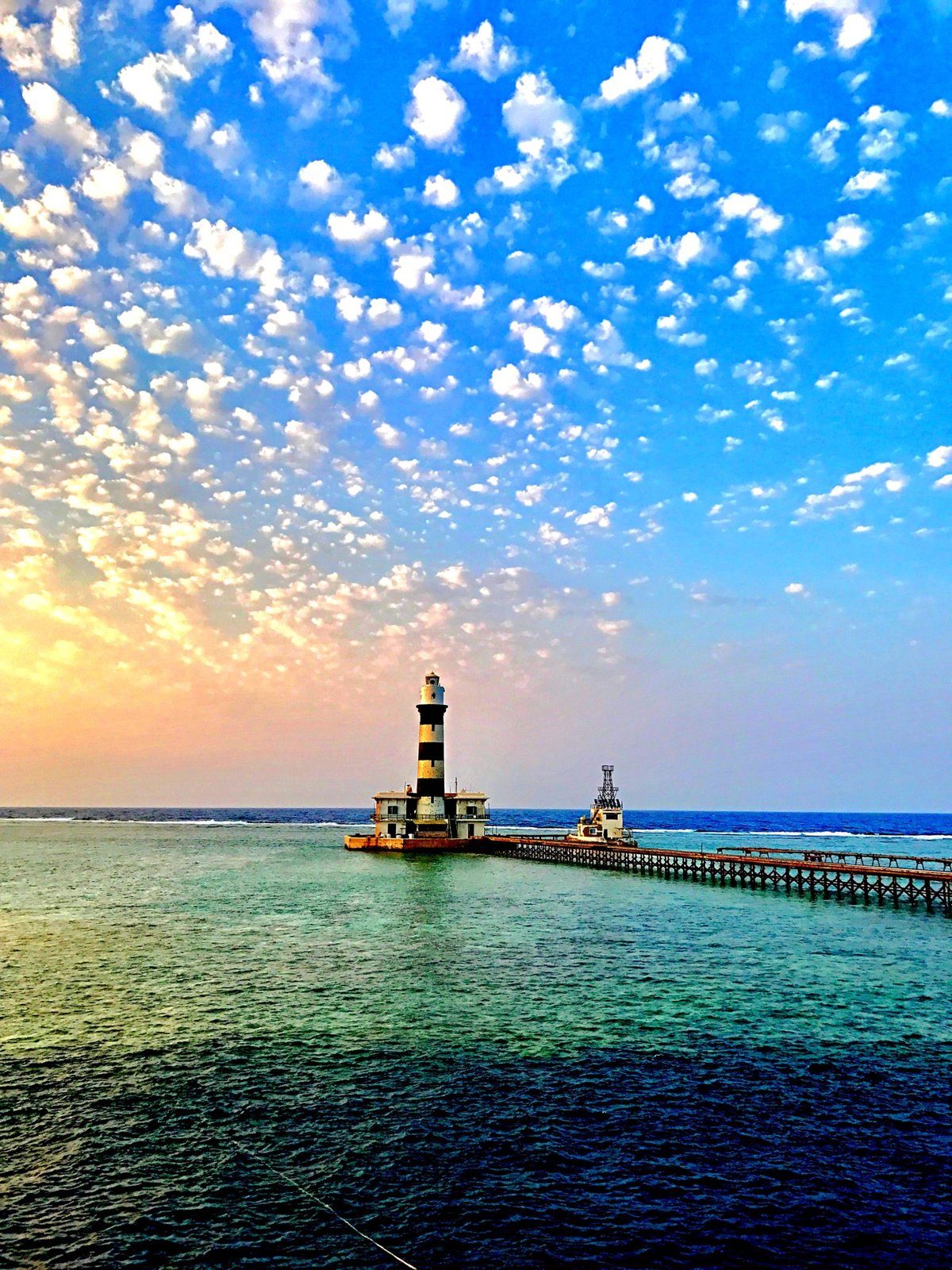
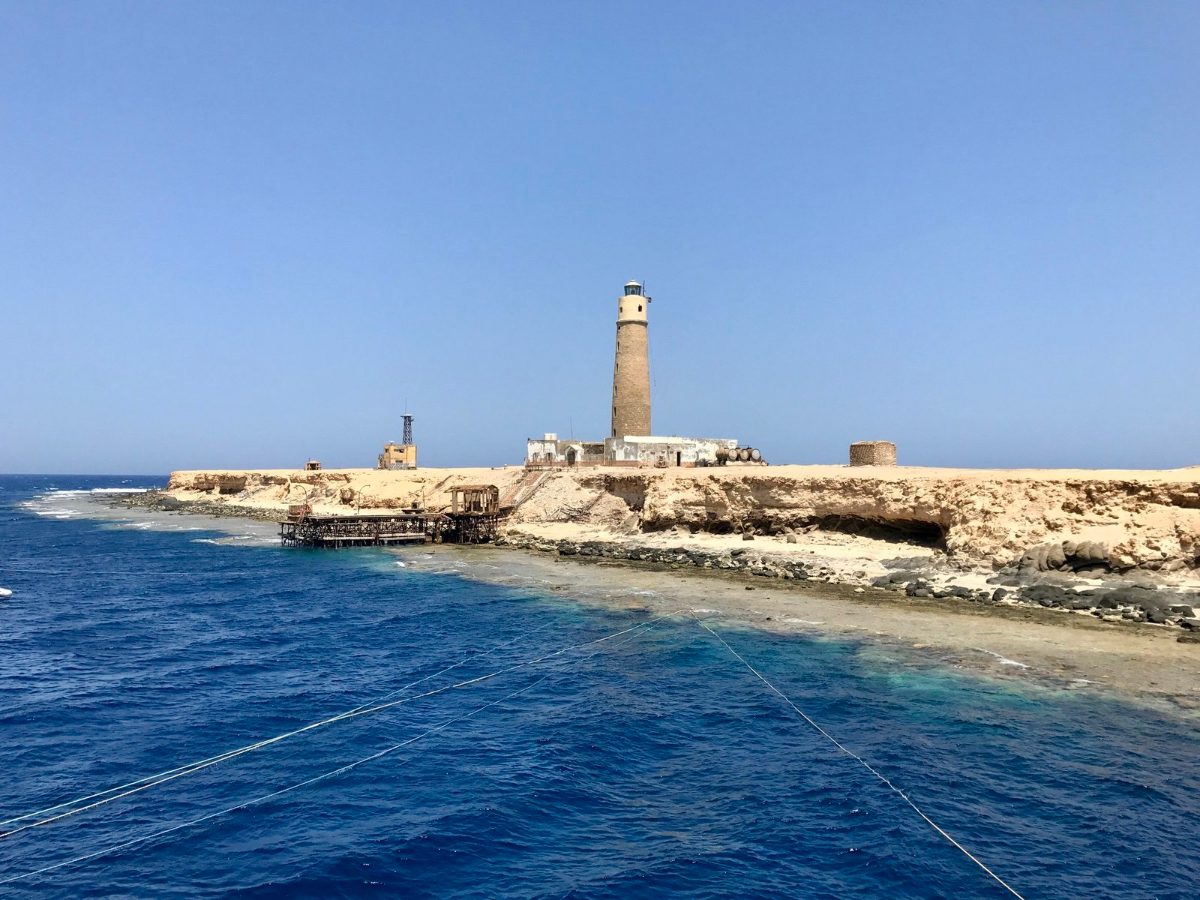
September 2017: a week on the Red Sea Aggressor out of Port Ghalib, diving the offshore reefs of the Brothers and Daedalus. The lighthouses are the only buildings for miles.
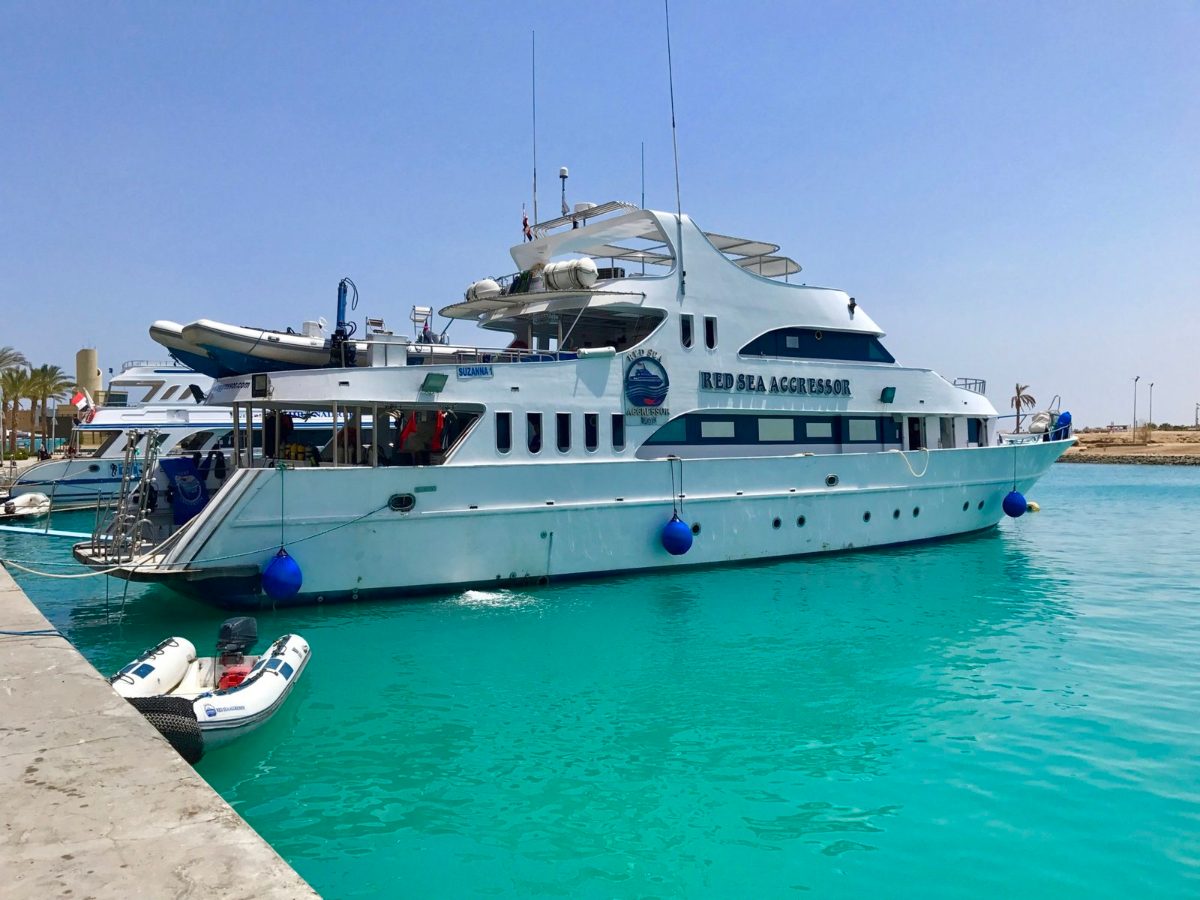
Red Sea Aggressor liveaboard dive boat moored in turquoise water
The boat. Red Sea Aggressor, September 2017.
Lighthouse on Big Brother island in the Red Sea
The Brothers. The lighthouse on Big Brother.
Lighthouse and jetty at Daedalus Reef under a dramatic sky
Daedalus Reef. Far offshore, famous for sharks.
Diving the Red Sea: the Brothers and Daedalus →

Good to know

  • AirportsCairo (CAI), Luxor (LXR), Hurghada (HRG), Marsa Alam (RMF)
  • Liveaboard portsHurghada, Safaga, Port Ghalib
  • Before or after divingFly to Luxor or Cairo for 2–3 days of temples and pyramids
  • Best time on landOctober to April, when the heat is easier
  • Group dive tripsDive Outdoors (Redding, CA) runs a Red Sea liveaboard from Hurghada in May 2027. See the trip.
  • My visits2014, September 2017, March 2024