Darrell Seale · Travels / Countries / Cambodia

Cambodia

Two trips ten years apart. In November 2016 I spent a few days on the coast near Sihanoukville. In November 2026 I came back for the temples of Angkor and the capital, Phnom Penh.

  • 2016 + 2026two trips
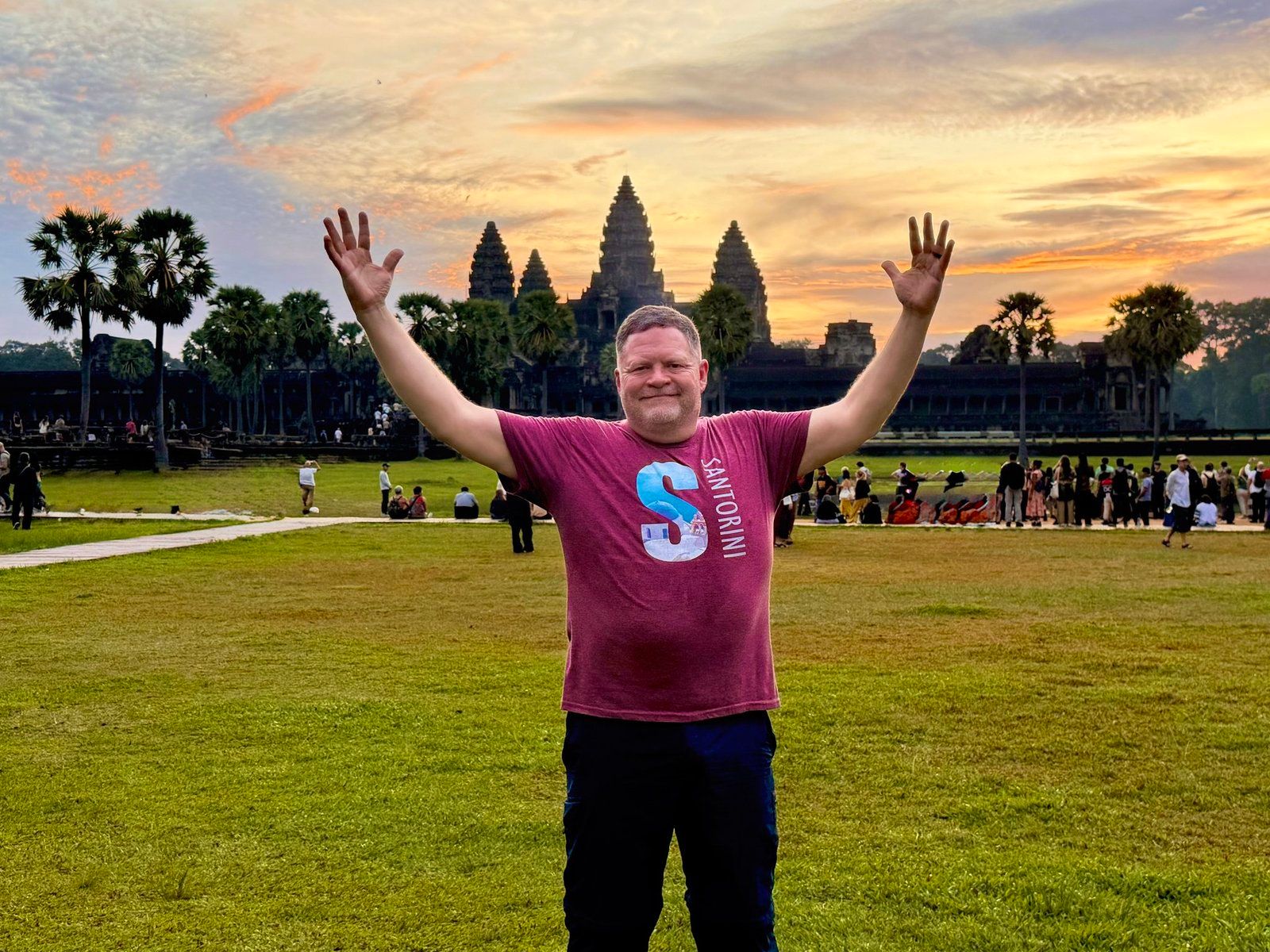
  • Sunriseat Angkor Wat, 13 Nov 2026
  • 12th centurywhen Angkor Wat was built
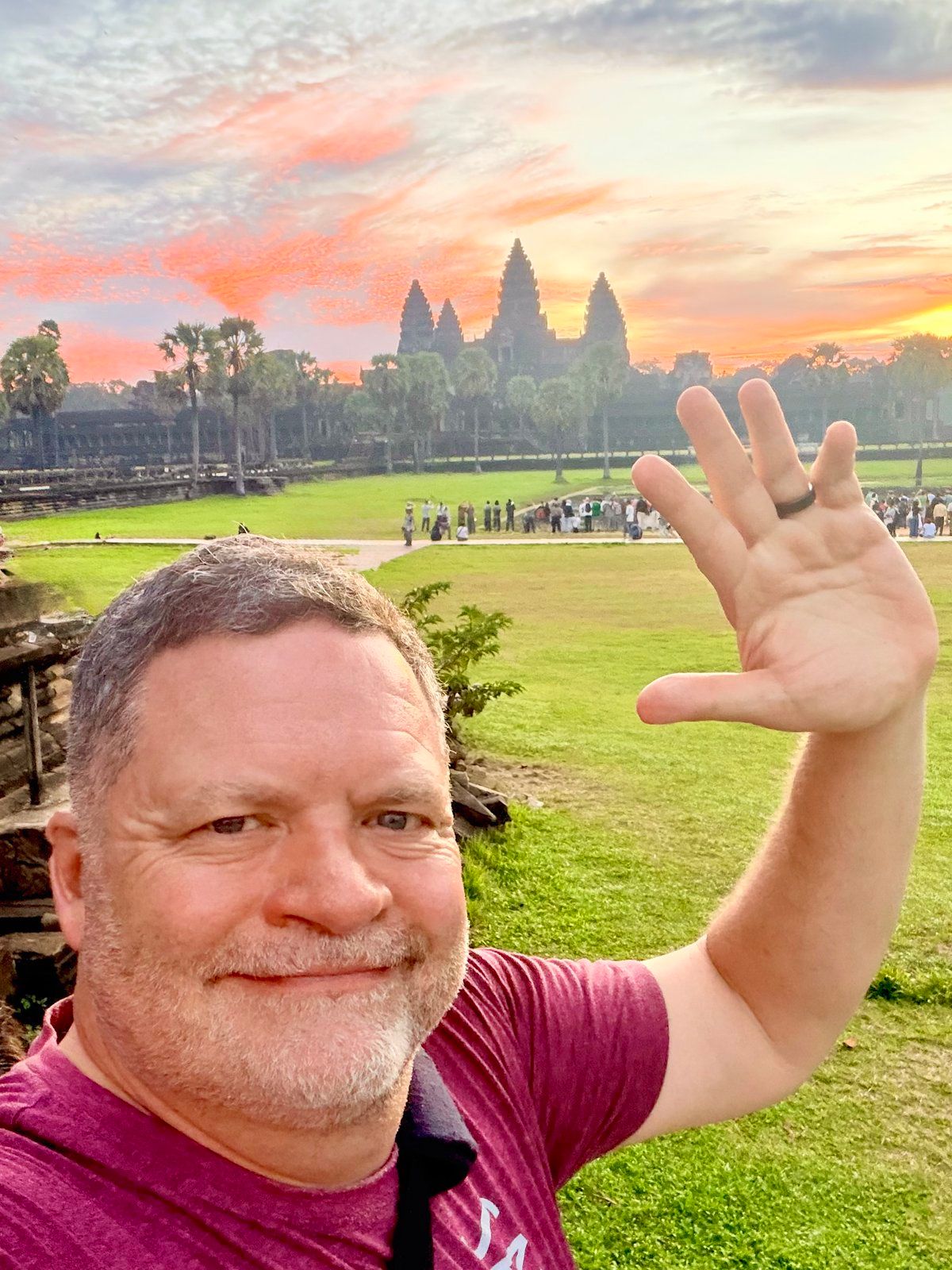
Darrell Seale with arms raised in front of Angkor Wat at sunrise, Cambodia, November 2026

Cambodia was the heart of the Khmer Empire, which between the 9th and 15th centuries built hundreds of temples across the plains north of the Tonlé Sap lake. The ruins of its capital, Angkor, are spread over some 400 square kilometers outside the town of Siem Reap and have been a UNESCO World Heritage Site since 1992.

My first visit, in November 2016, was not about temples at all. I spent three days on the southern coast, at Otres Beach near Sihanoukville and farther east near Ream, with empty beaches, dirt roads and sunsets over the Gulf of Thailand.

In November 2026 I came back to see what I had missed. On 13 November I was at Angkor Wat before dawn to watch the sun come up behind its five towers, then walked through Angkor Wat itself, Ta Prohm, Ta Keo and the Bayon. The next day I did the grand circuit: Preah Khan, Neak Pean, Ta Som, East Mebon and Pre Rup, and finished with sunset from the hilltop temple of Phnom Bakheng.

On 15 November I flew from Siem Reap to Phnom Penh for the Royal Palace and Silver Pagoda, the National Museum and the riverfront, and for a sobering morning at Tuol Sleng, the school the Khmer Rouge turned into a prison, and at the killing fields of Choeung Ek. On 17 November I flew on to Laos.

Sunrise at Angkor Wat

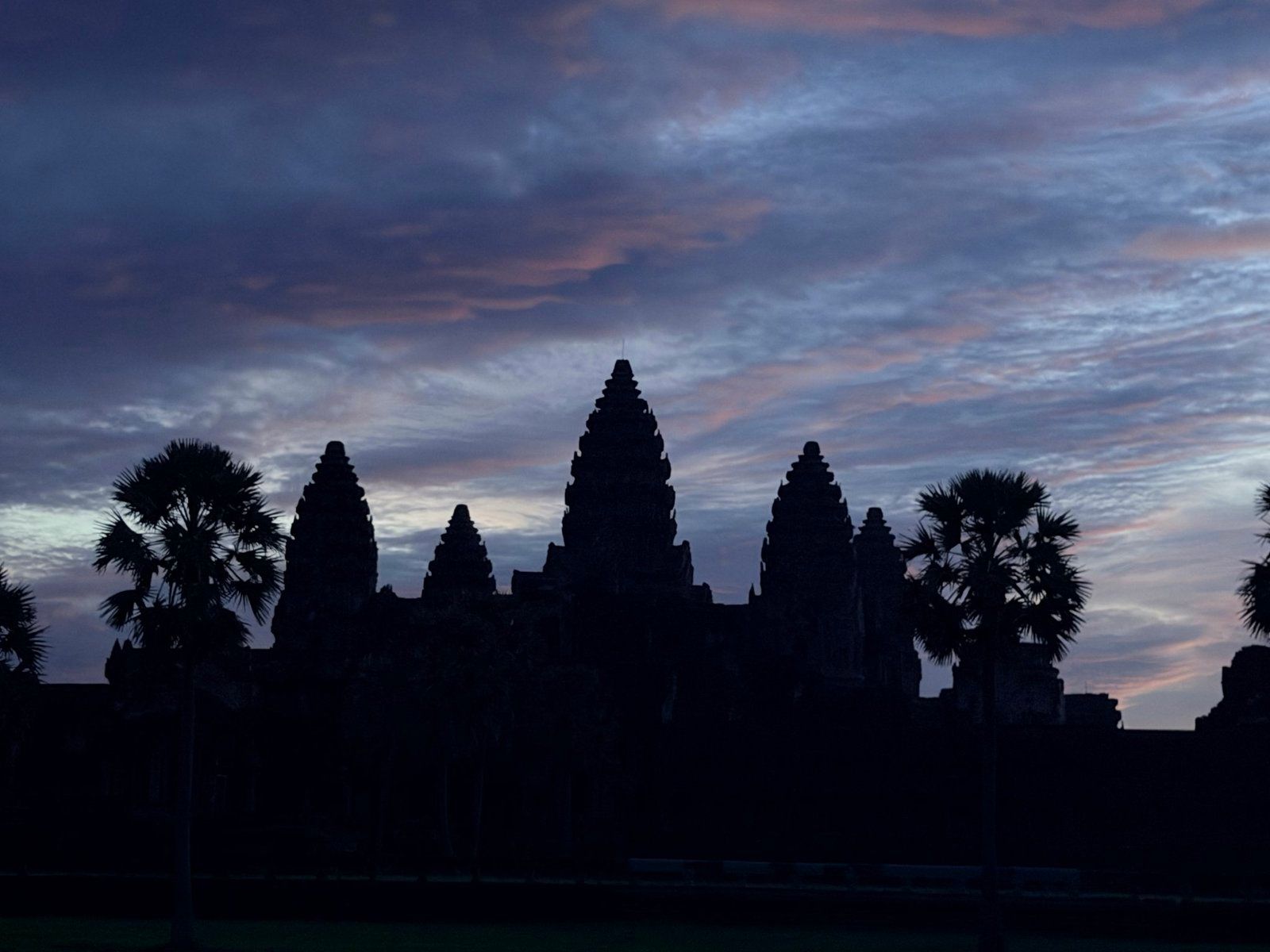
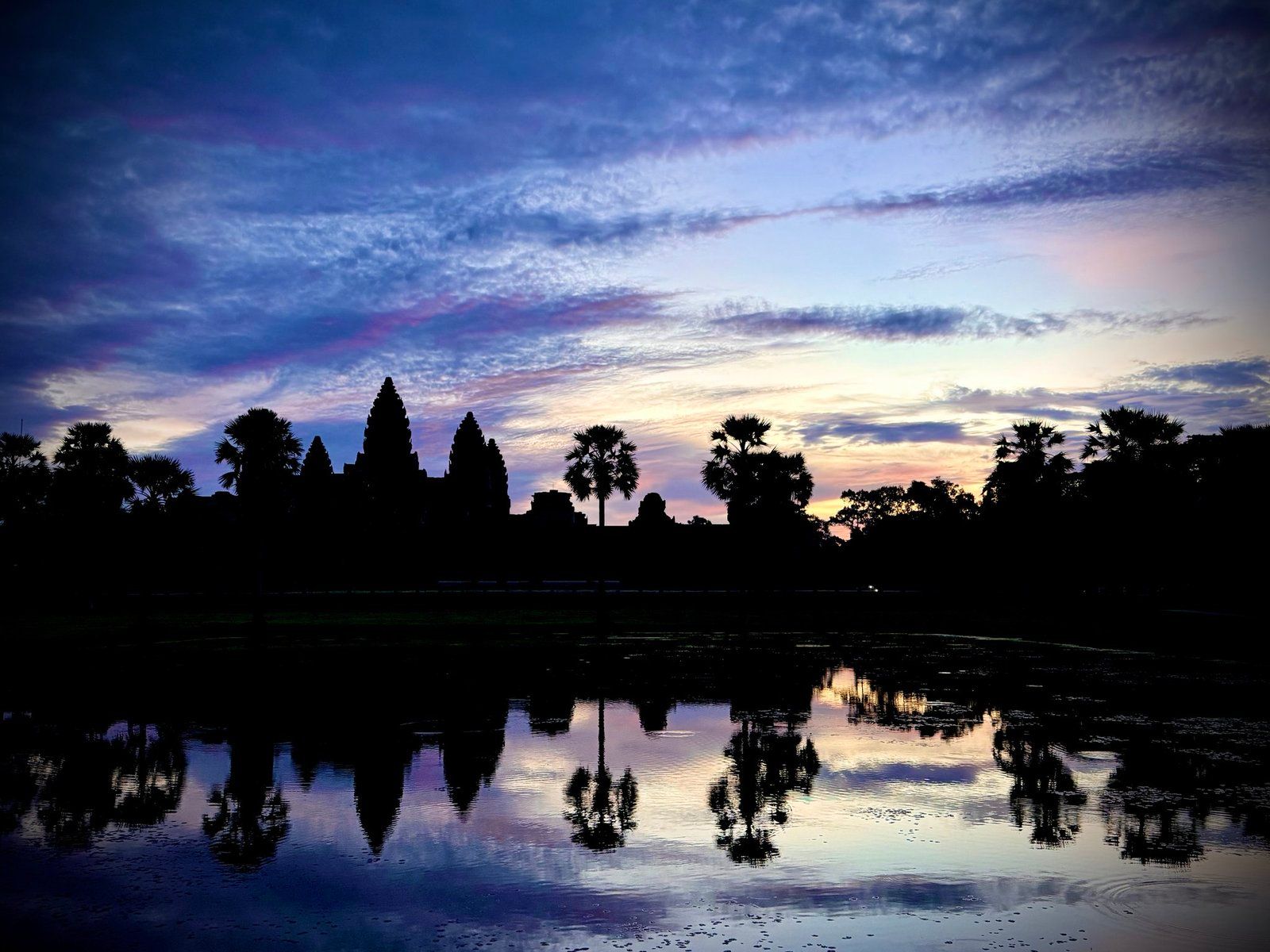
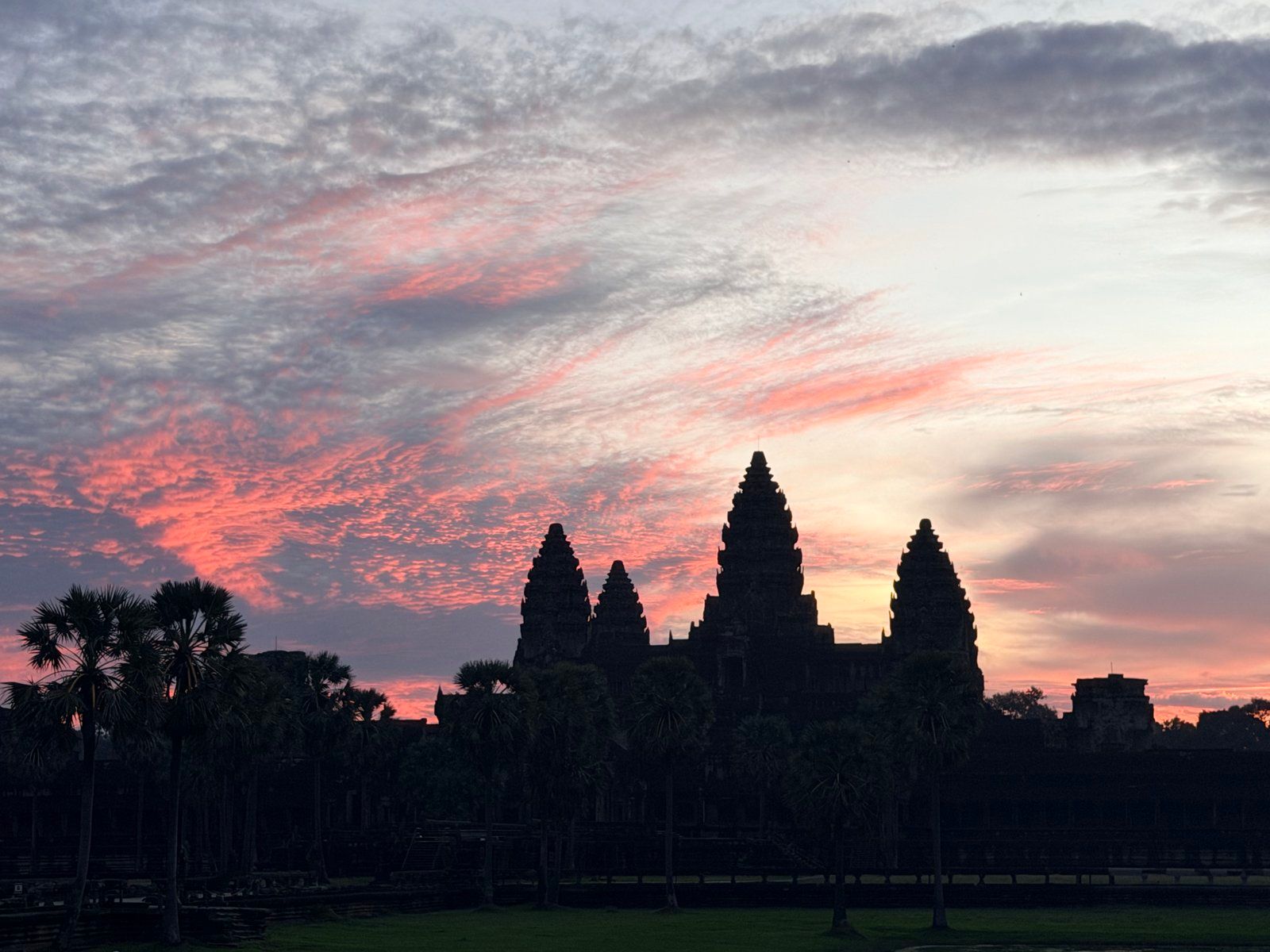
Angkor Wat faces west, so at dawn the sun rises behind its towers. The crowd gathers at the reflecting pools in the dark; by 6:30 the sky had gone from deep blue to pink and gold.
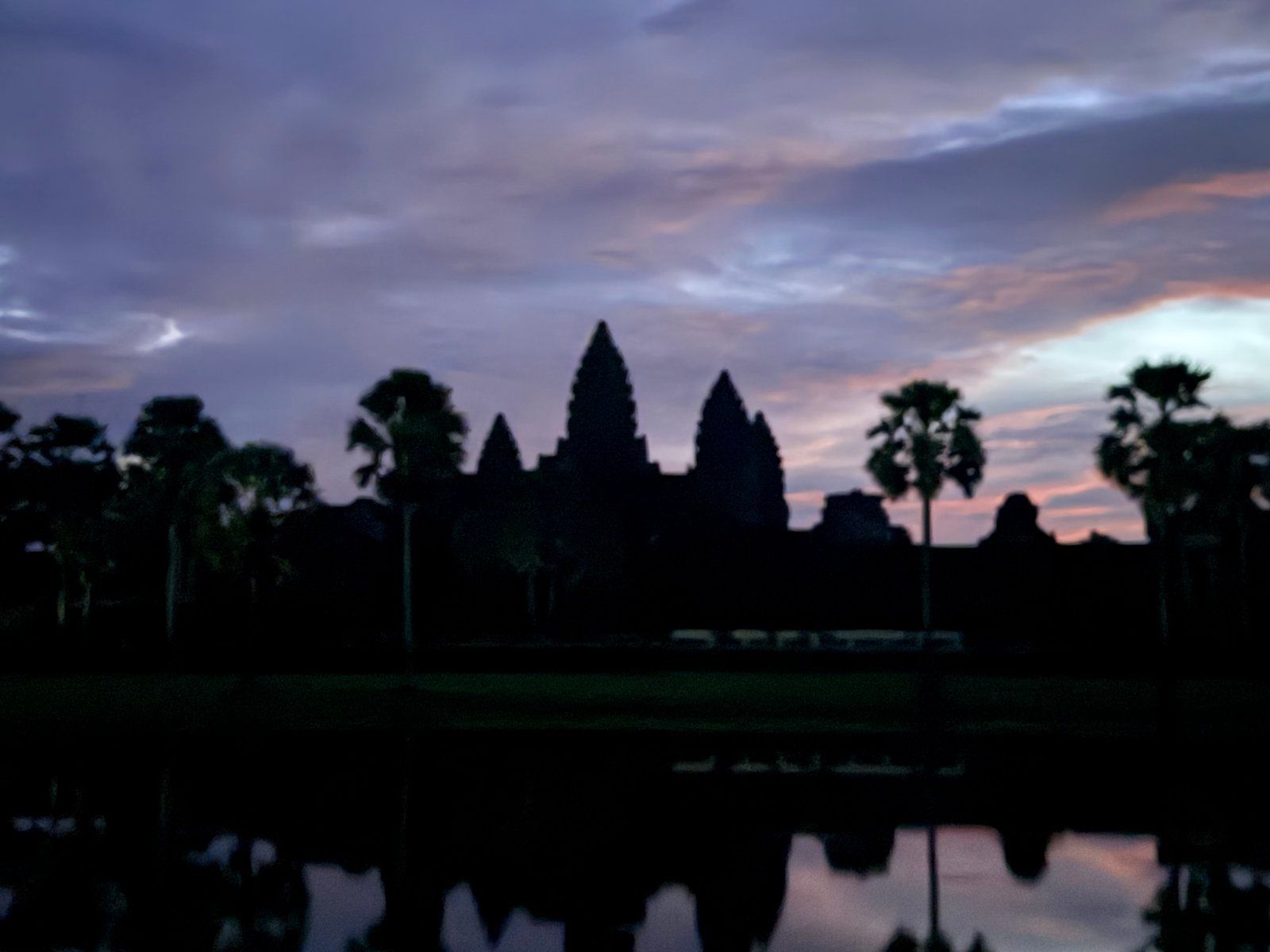
Angkor Wat silhouetted at dawn and reflected in the pool, November 2026
First light. Angkor Wat and its reflection, 13 Nov 2026.
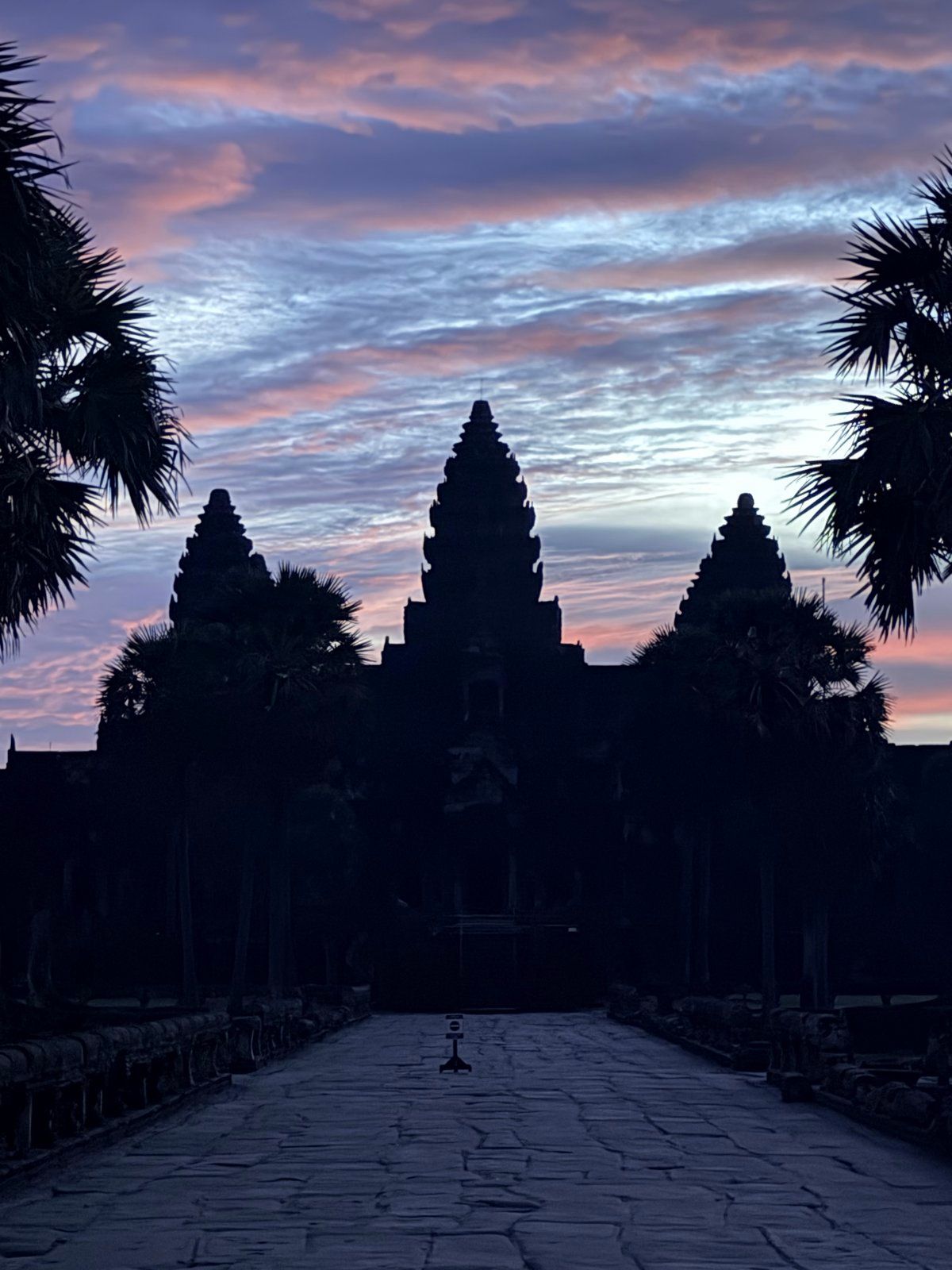
The causeway leading to Angkor Wat at dawn
The causeway. The western approach before sunrise.
The five towers of Angkor Wat silhouetted against a blue dawn sky
Five towers. Meant to evoke the peaks of Mount Meru.
Angkor Wat mirrored in the reflecting pool at dawn
Mirror image. The north reflecting pool.
Pink sunrise sky over Angkor Wat
Sunrise. The sky turns pink and gold.
Darrell Seale smiling in front of Angkor Wat after sunrise
Darrell Seale. Made it in time, 13 Nov 2026.

Inside Angkor Wat

Built in the early 12th century for King Suryavarman II, Angkor Wat is the largest religious monument in the world. Its galleries are lined with carved reliefs and its central towers rise in steep tiers.
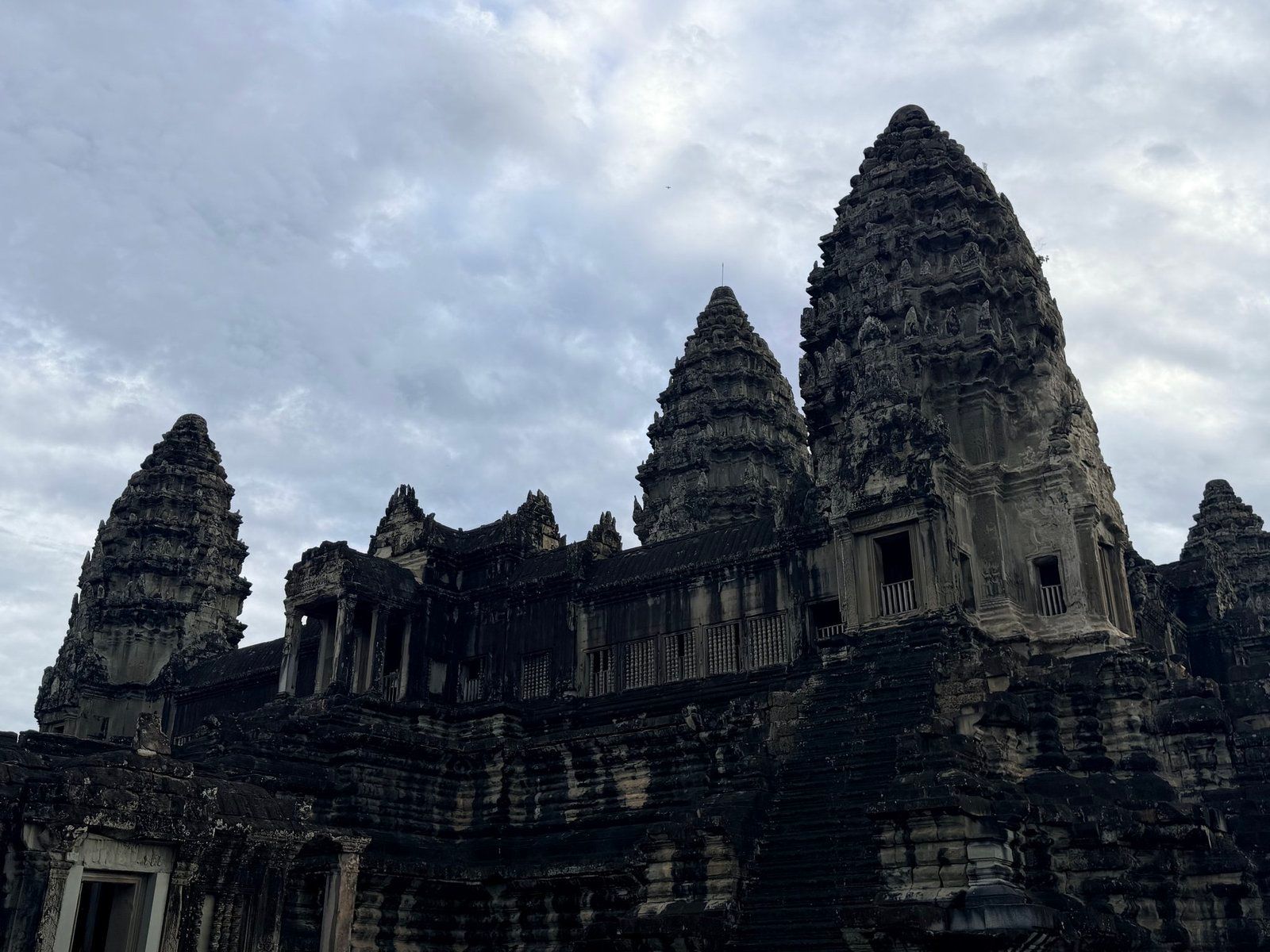
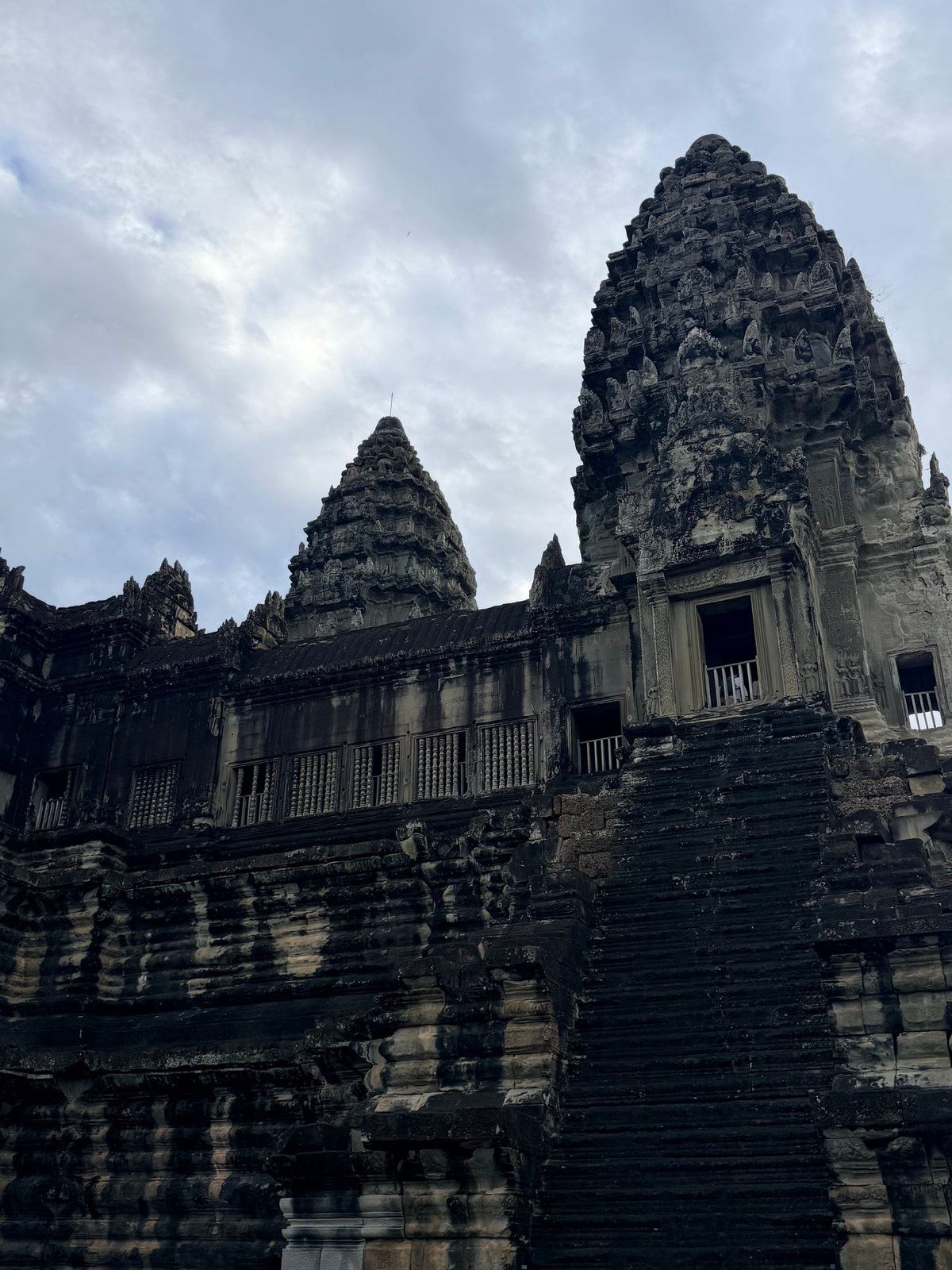
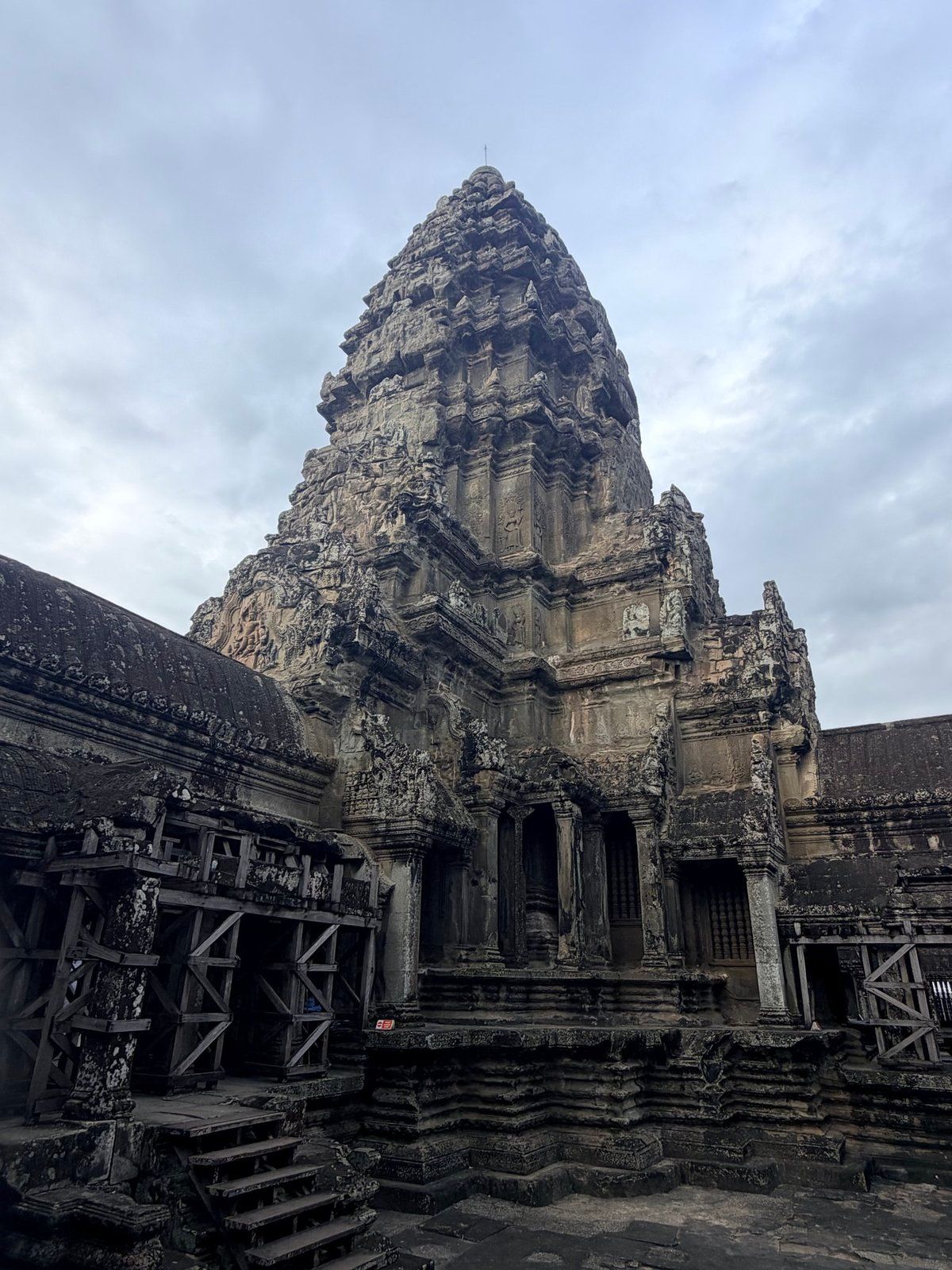
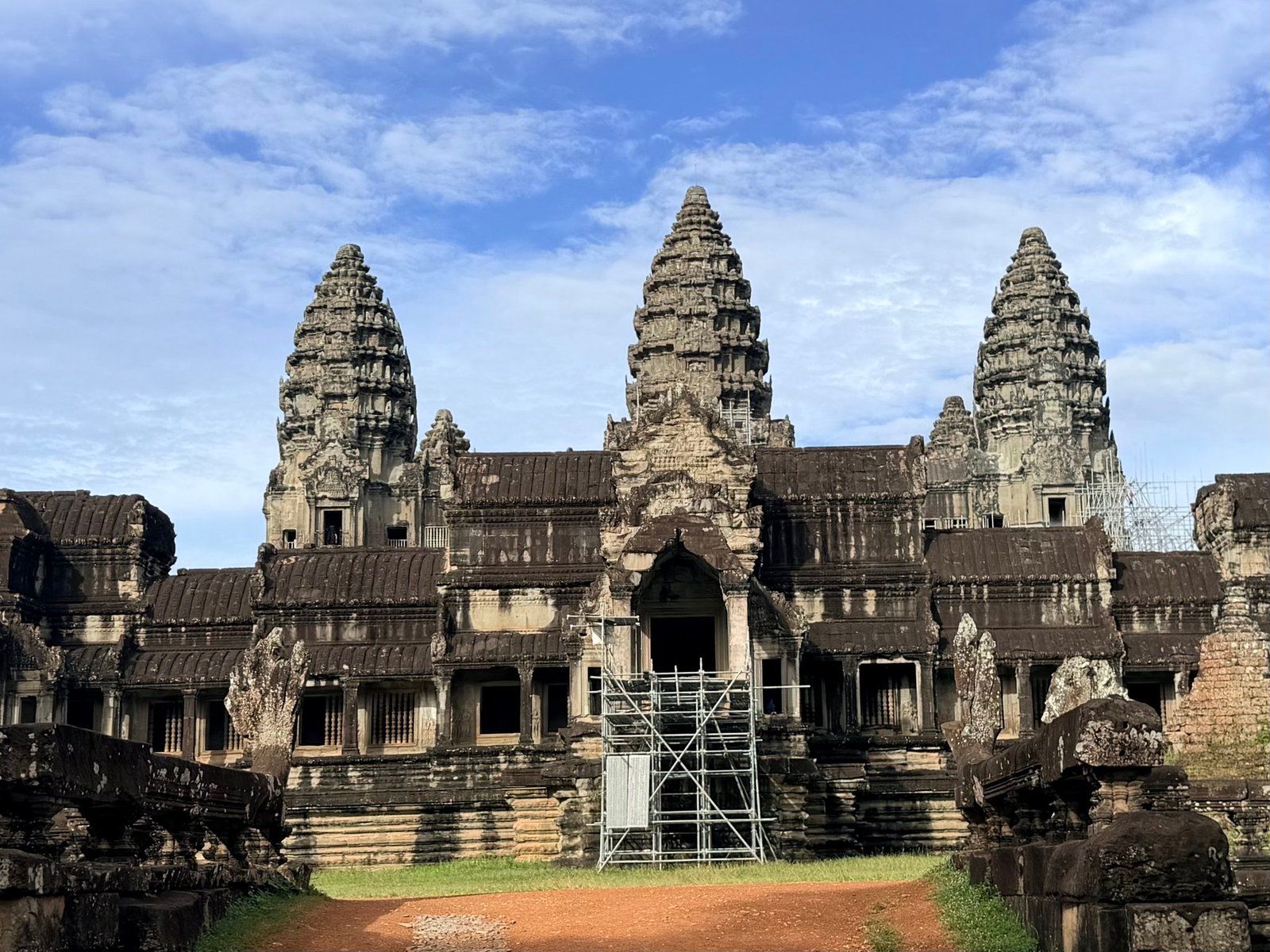
The central towers of Angkor Wat under a blue sky
The central towers. From the inner courtyard.
Angkor Wat towers rising above the galleries
Galleries. Tiers of stone rising to the center.
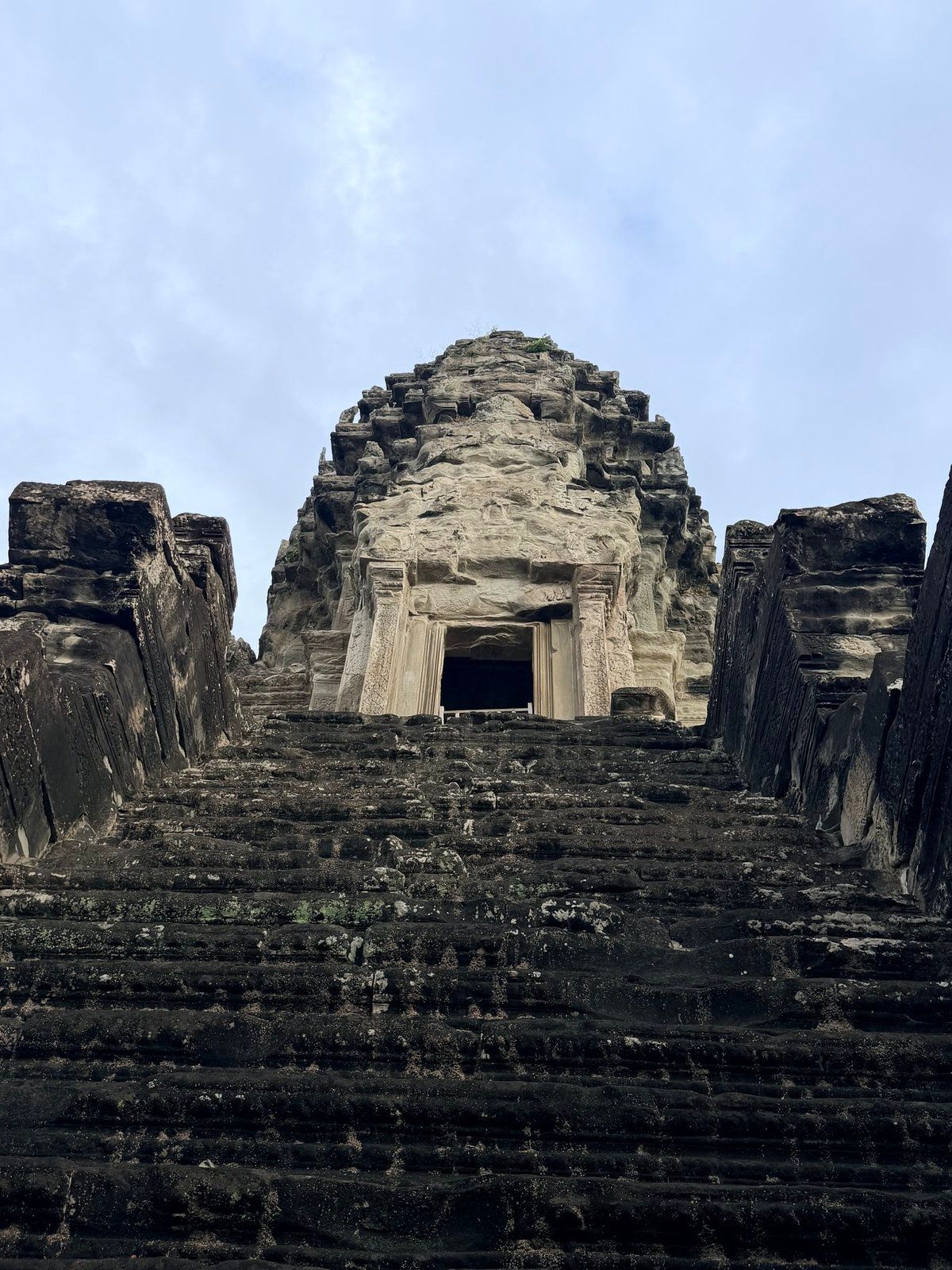
Steep stone tower on the upper terrace of Angkor Wat
The upper terrace. Steep steps and lotus-bud towers.
Close view of a carved Angkor Wat tower
Up close. Every surface is carved.
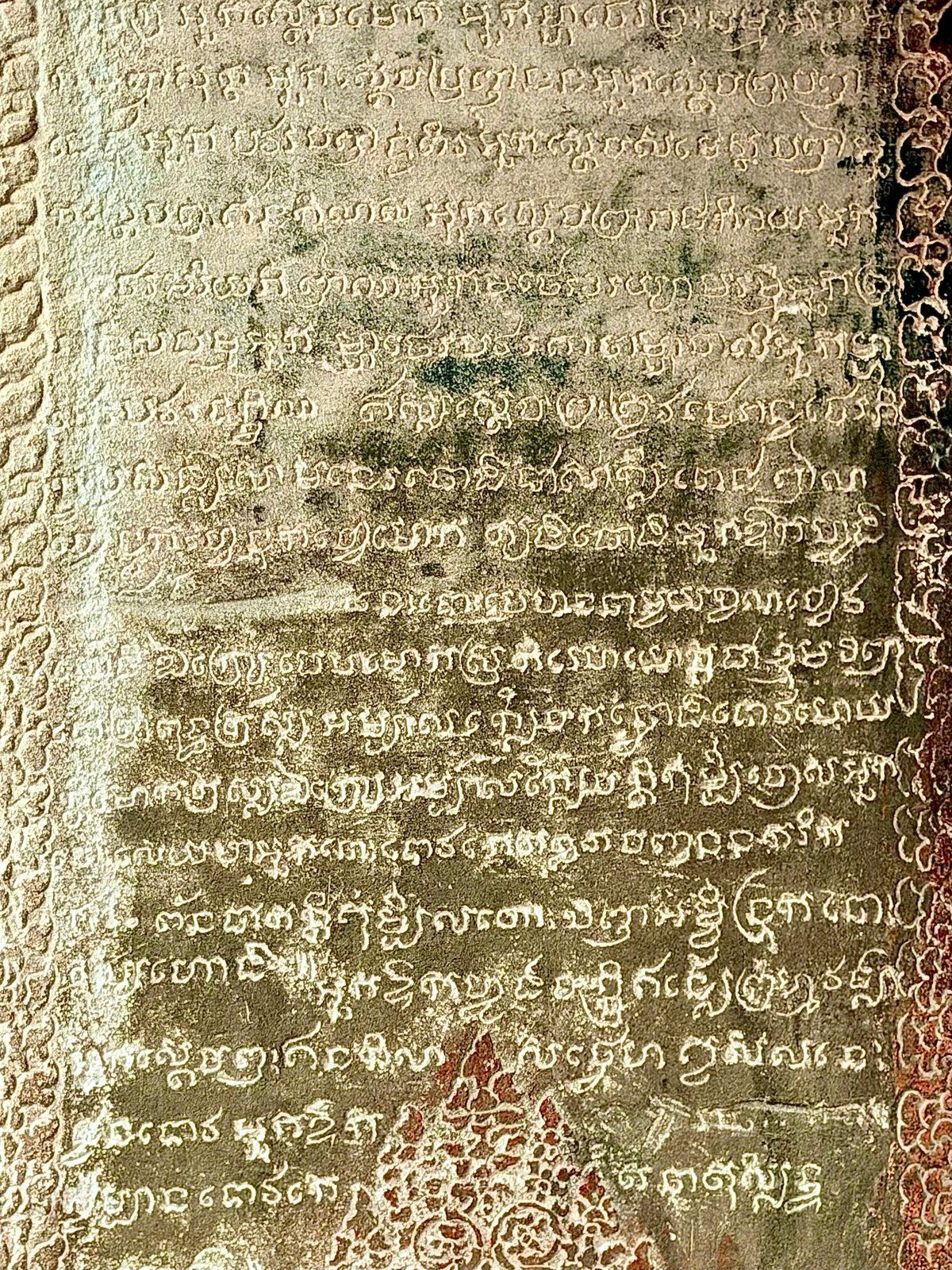
Old Khmer inscription carved on a stone door frame at Angkor Wat
Inscription. Old Khmer script on a door frame.
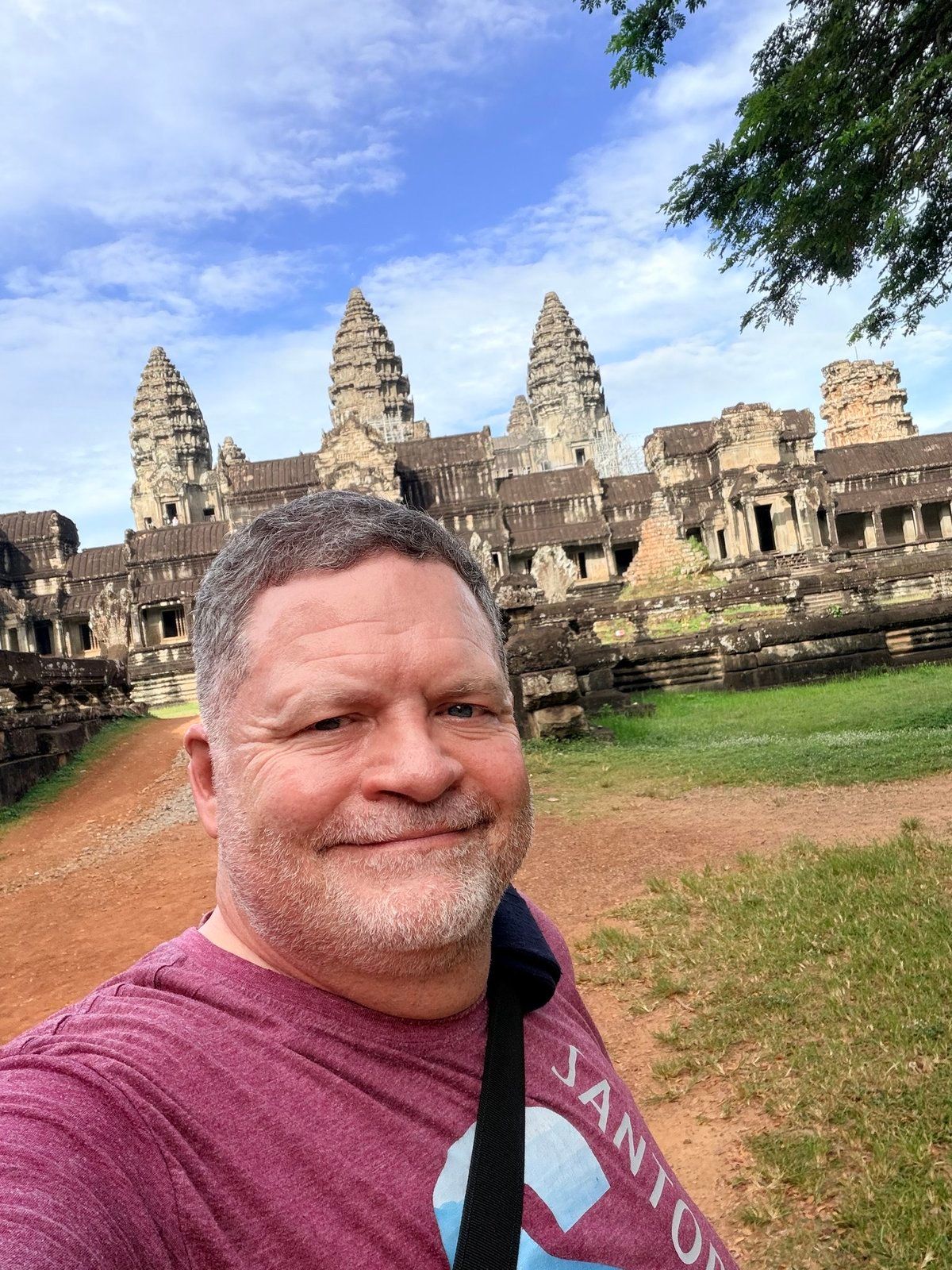
Darrell Seale in front of the towers of Angkor Wat
Darrell Seale. Angkor Wat, morning of 13 Nov 2026.
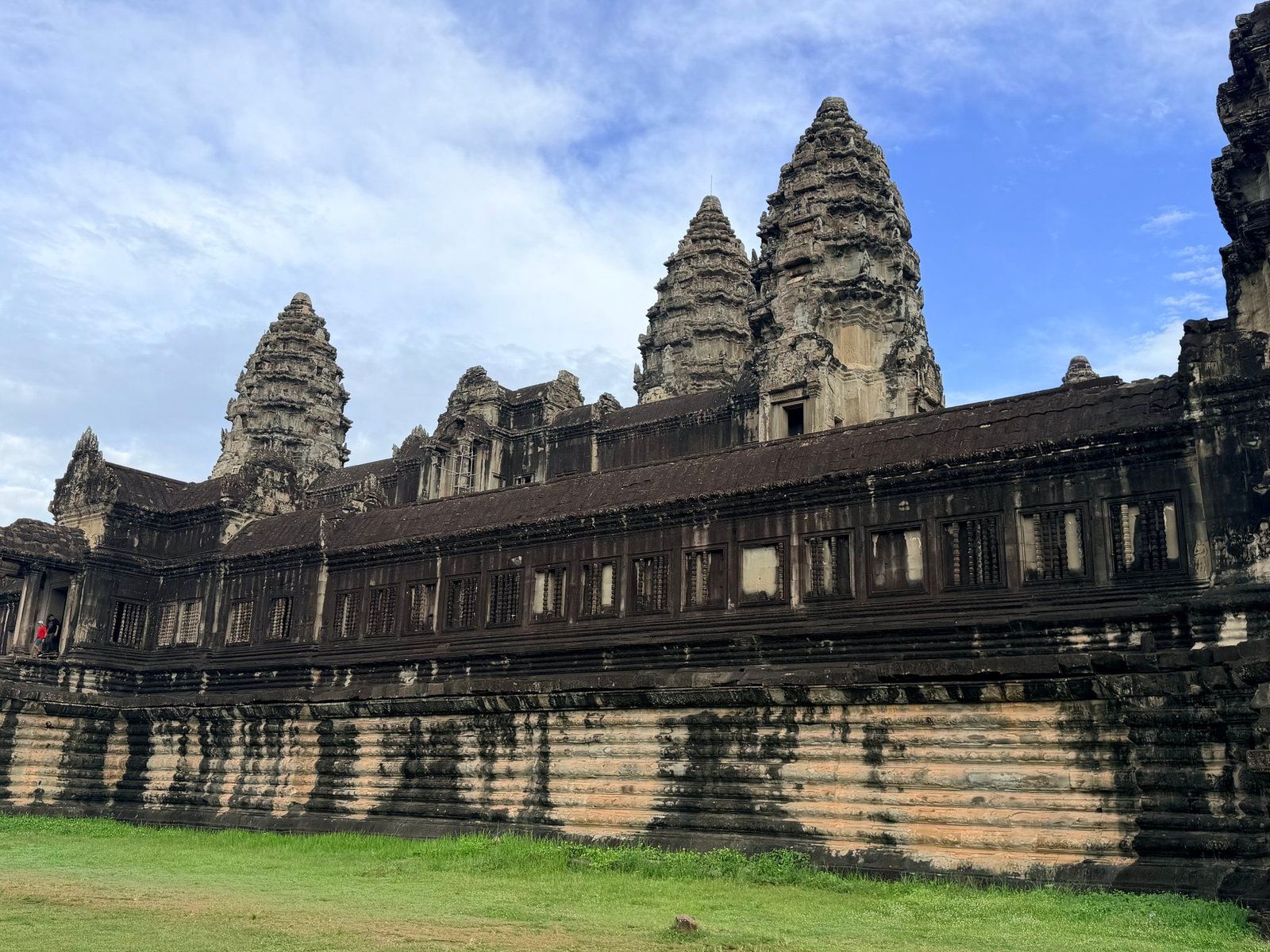
The long carved outer gallery and towers of Angkor Wat
Outer gallery. Carved galleries run all the way around.
The towers of Angkor Wat from the western entrance
The west entrance. Morning, 13 Nov 2026.

Ta Prohm, Ta Keo and the Bayon

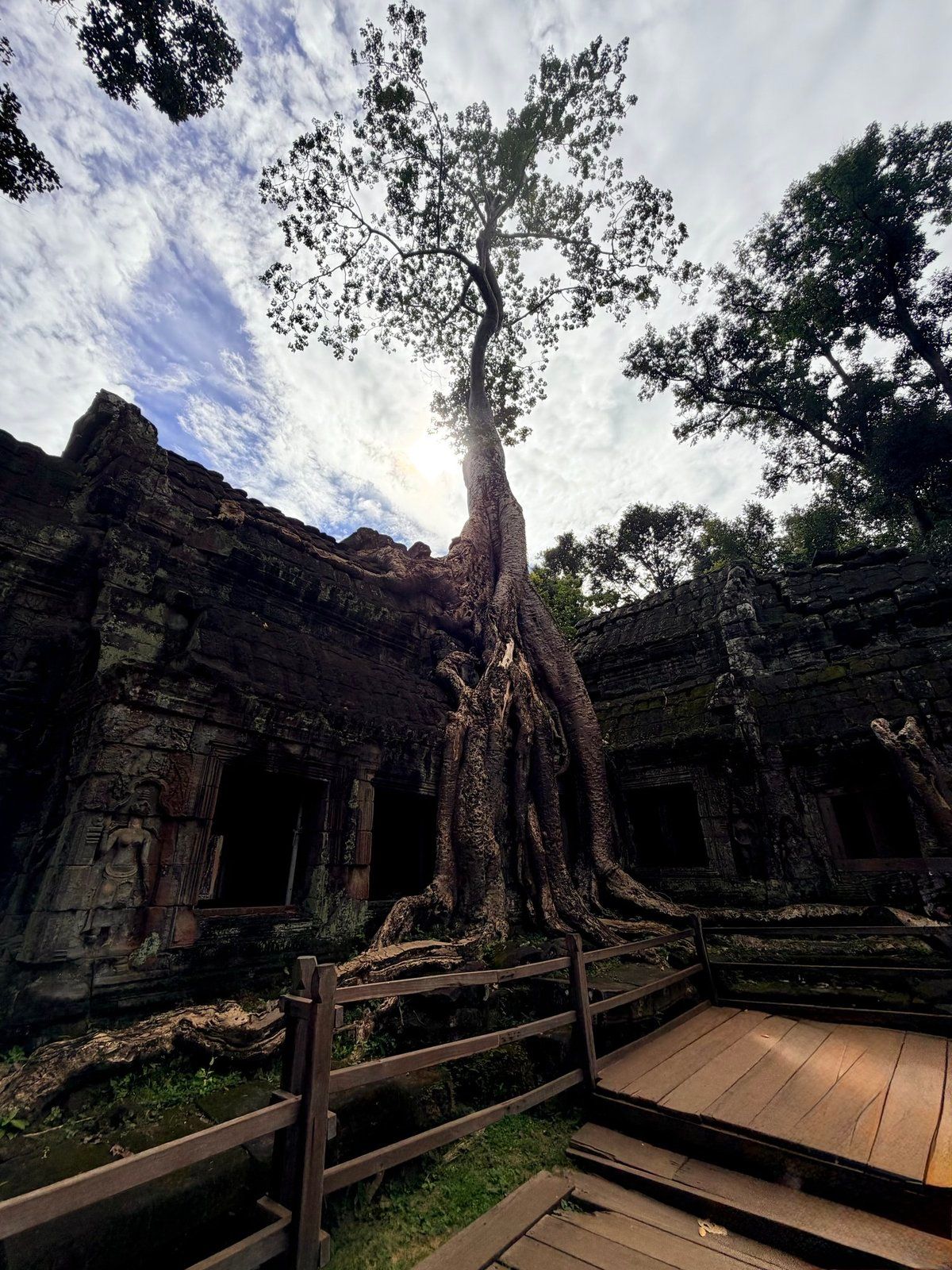
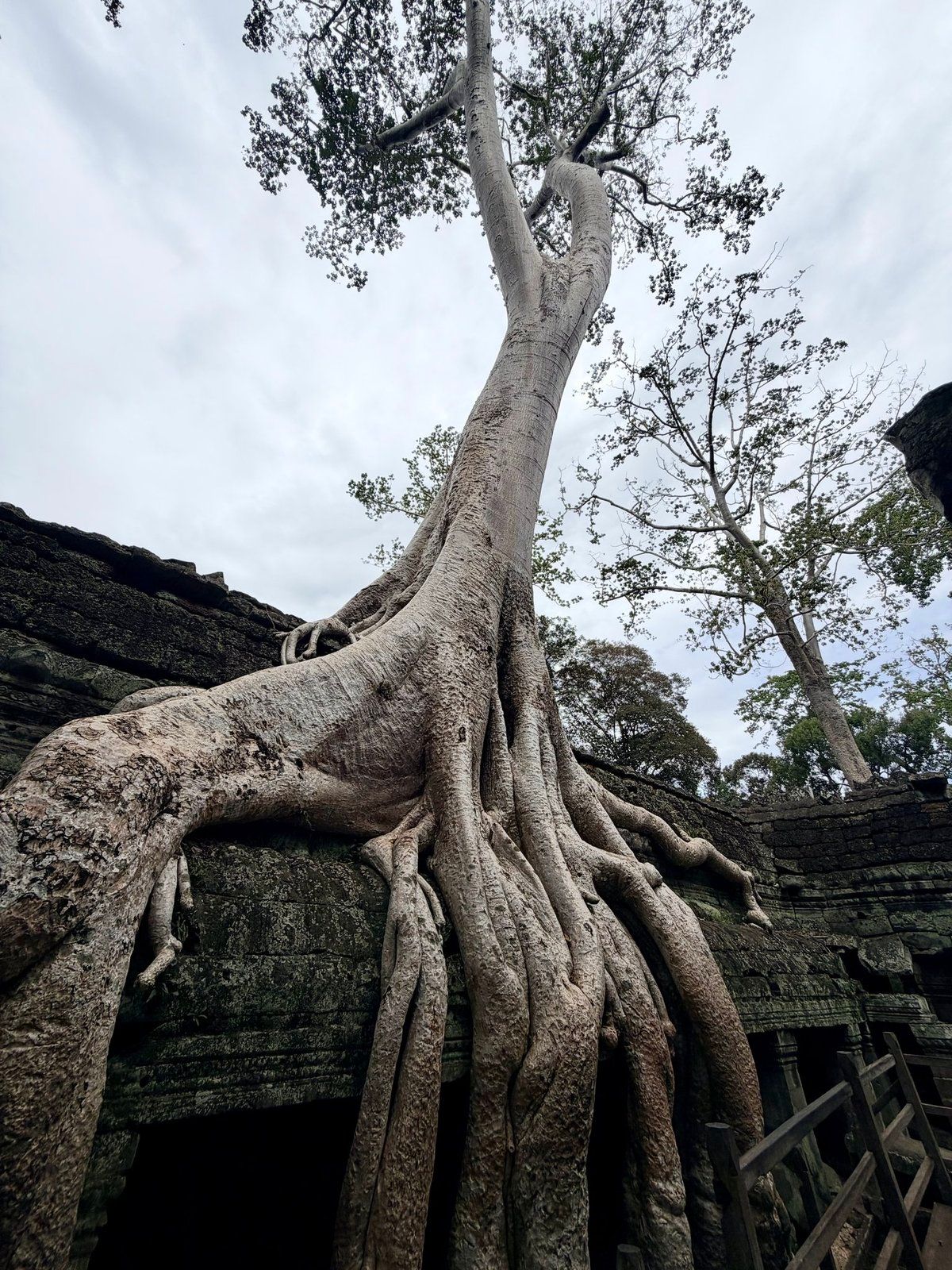
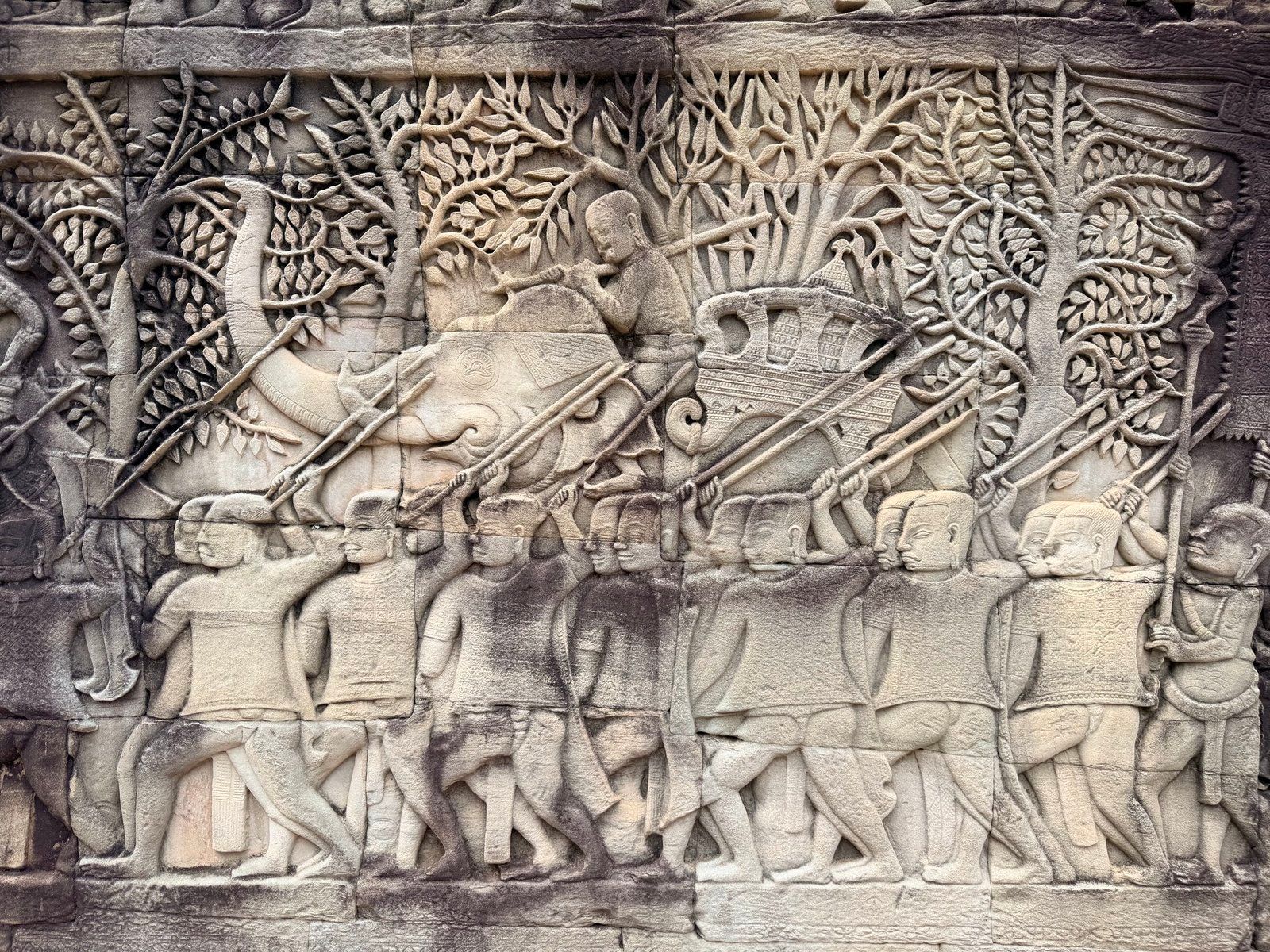
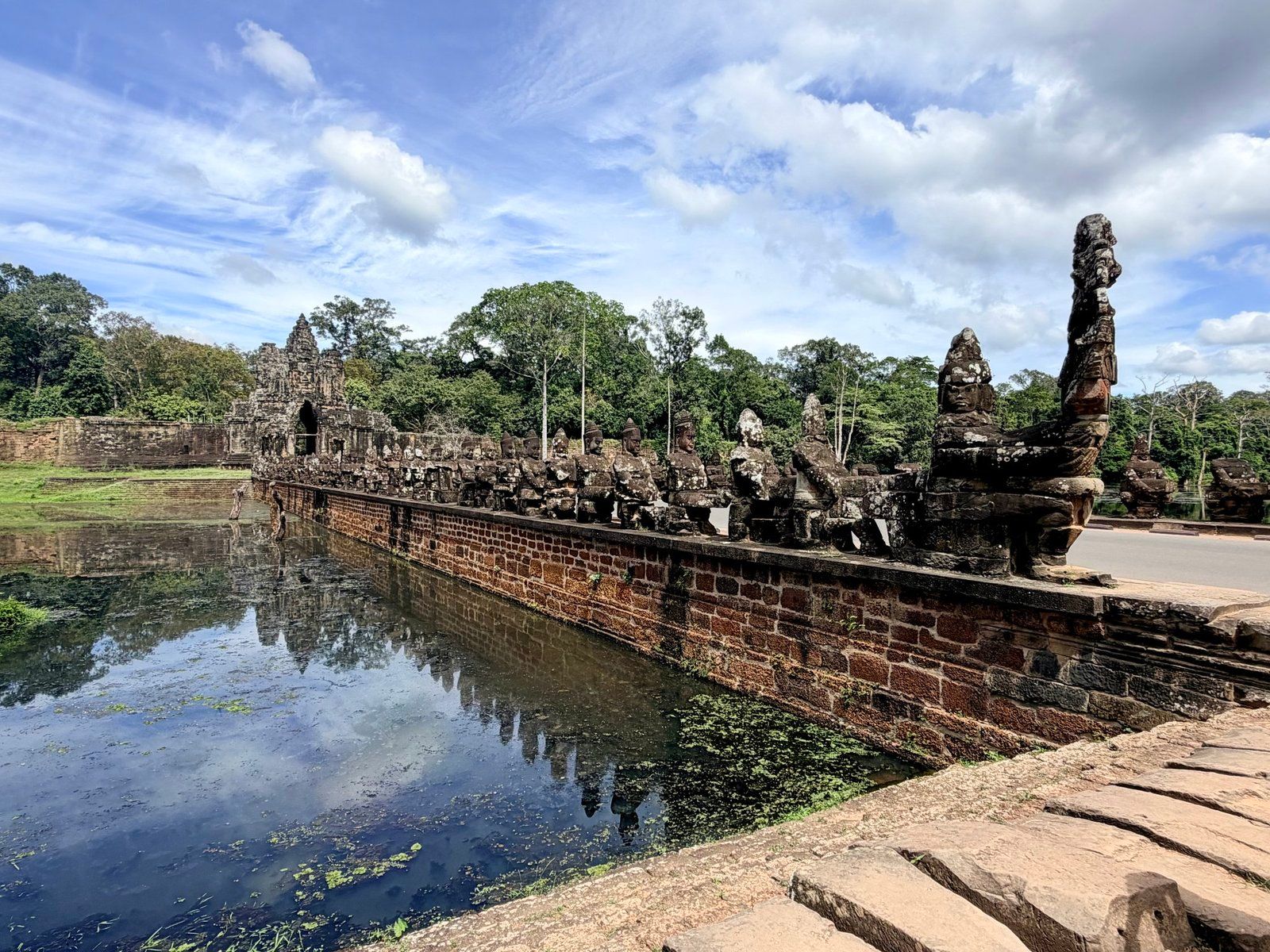
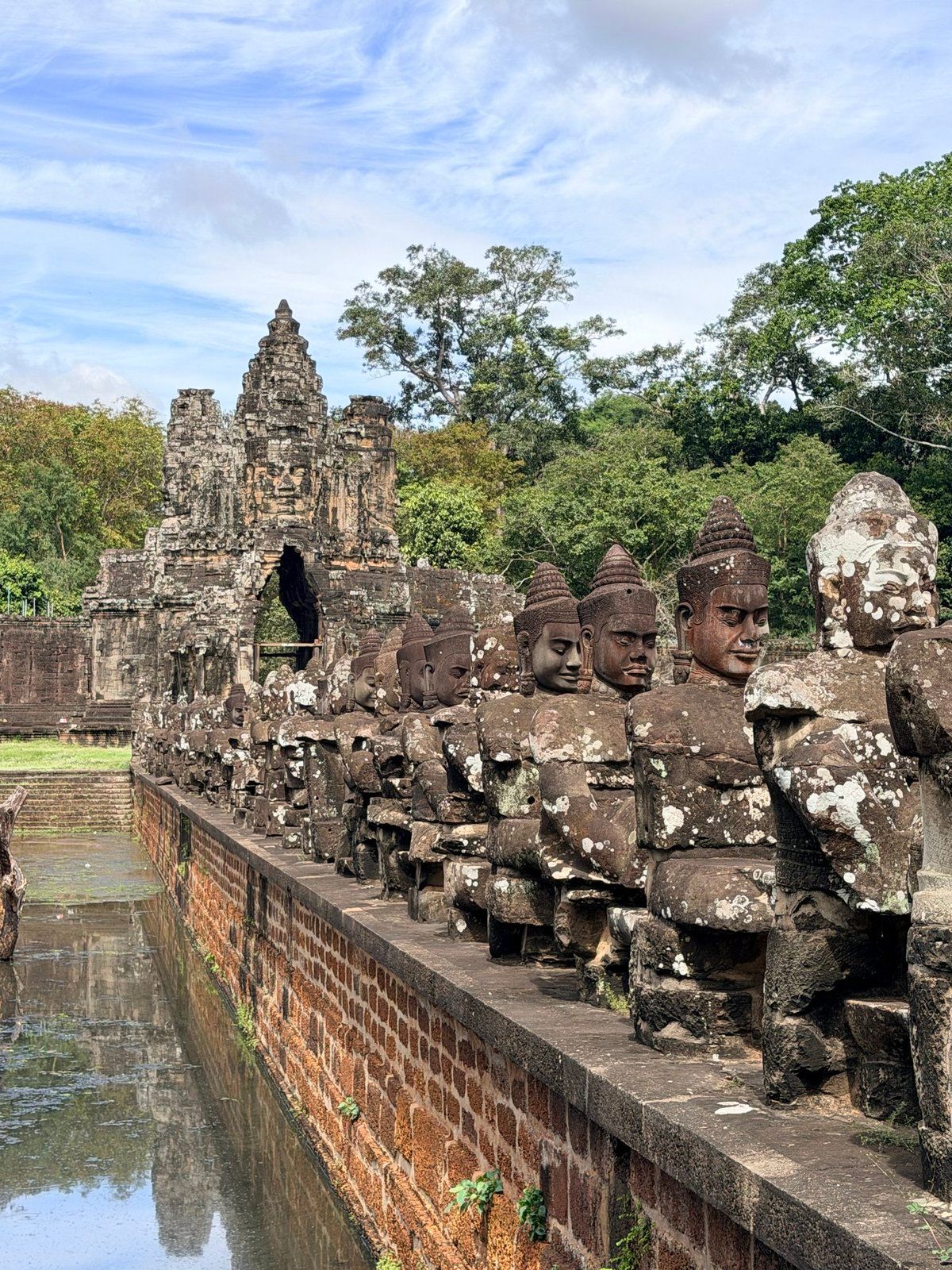
Ta Prohm, from the late 12th century, was left largely as it was found, with silk-cotton and strangler fig trees growing out of its walls. Nearby Ta Keo, from the late 10th century, was never finished. The Bayon, at the center of Angkor Thom, is the temple of stone faces. I left Angkor Thom through the South Gate, where the causeway is lined with stone gods and demons holding a giant naga.
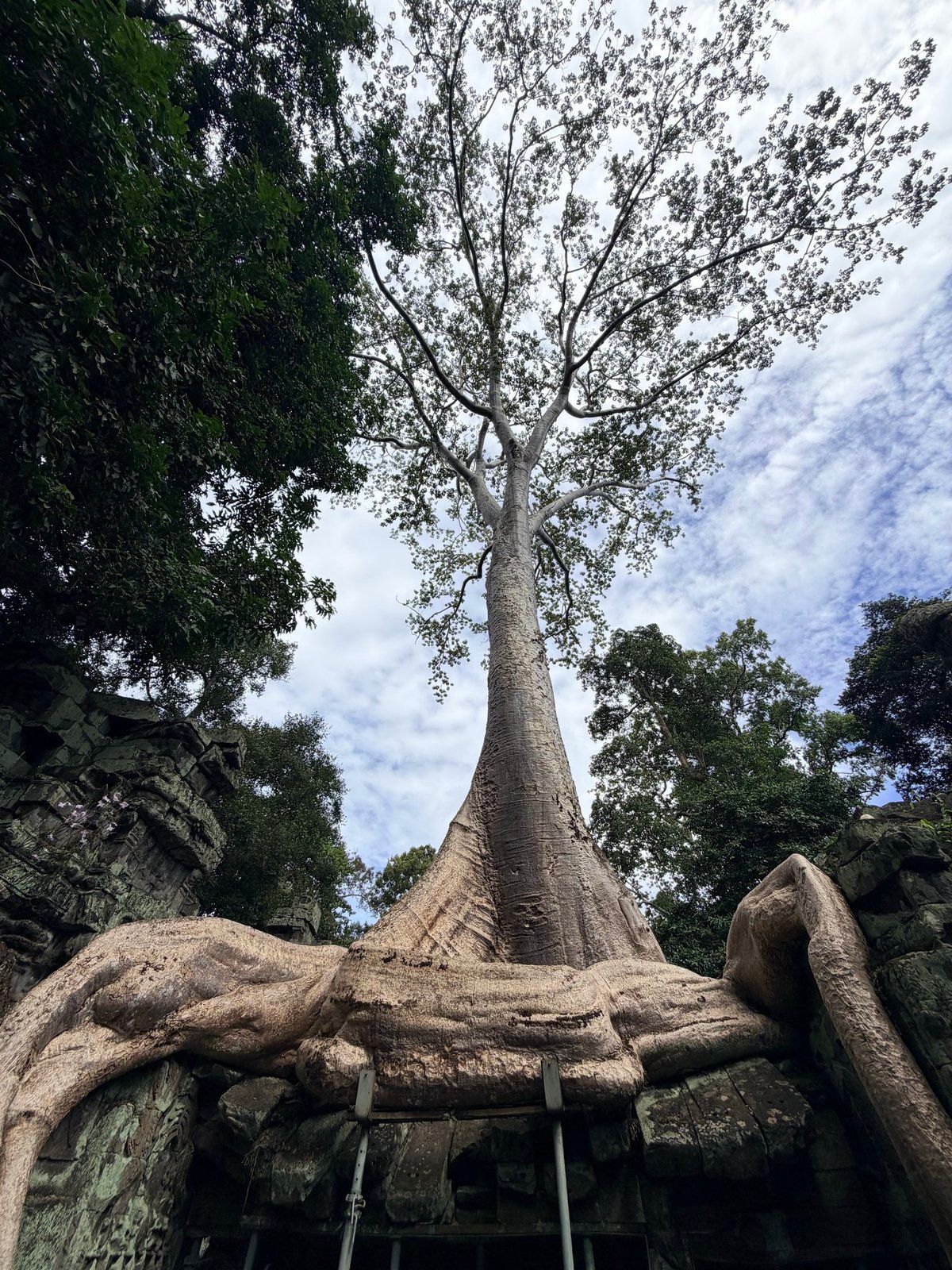
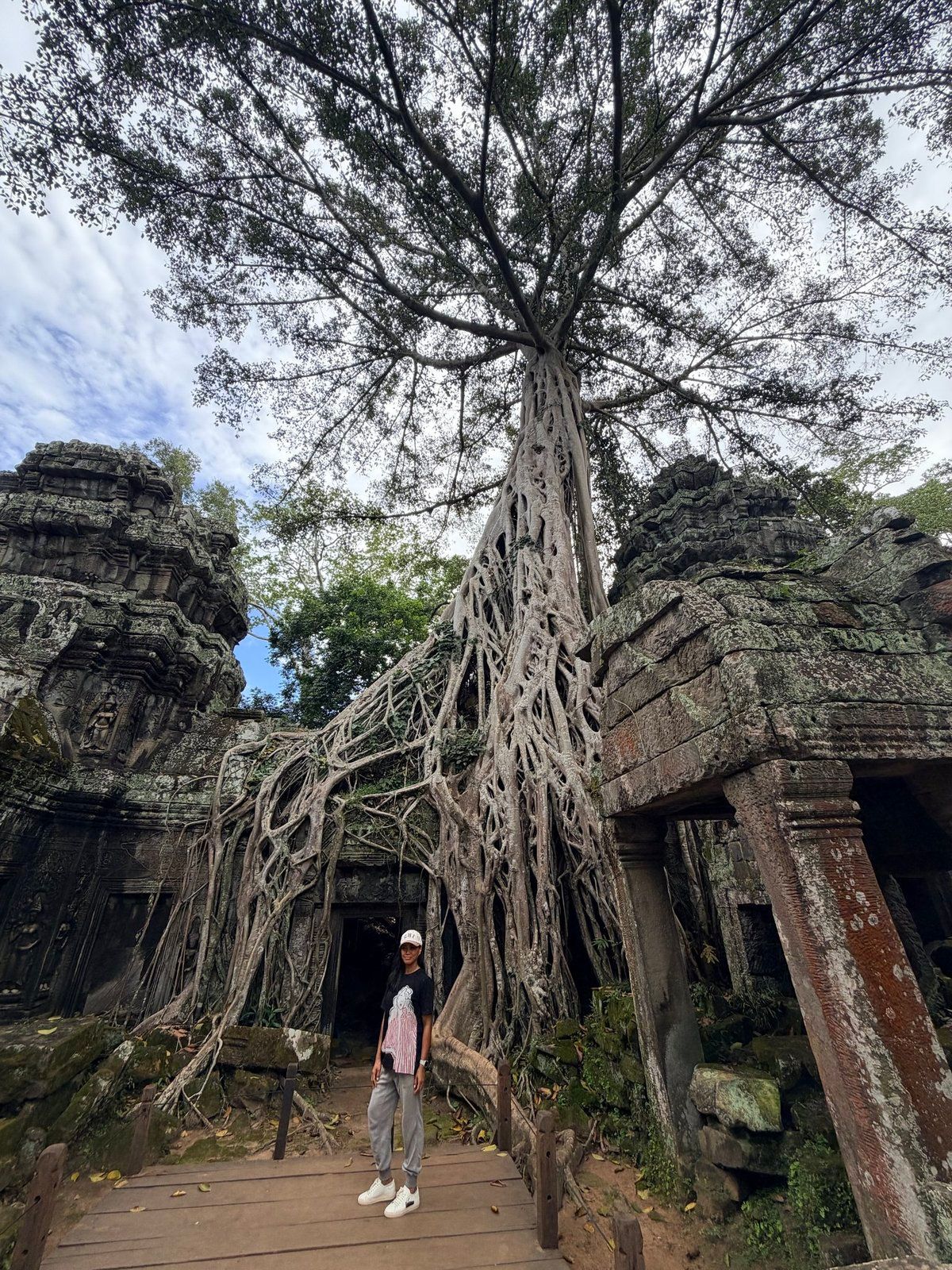
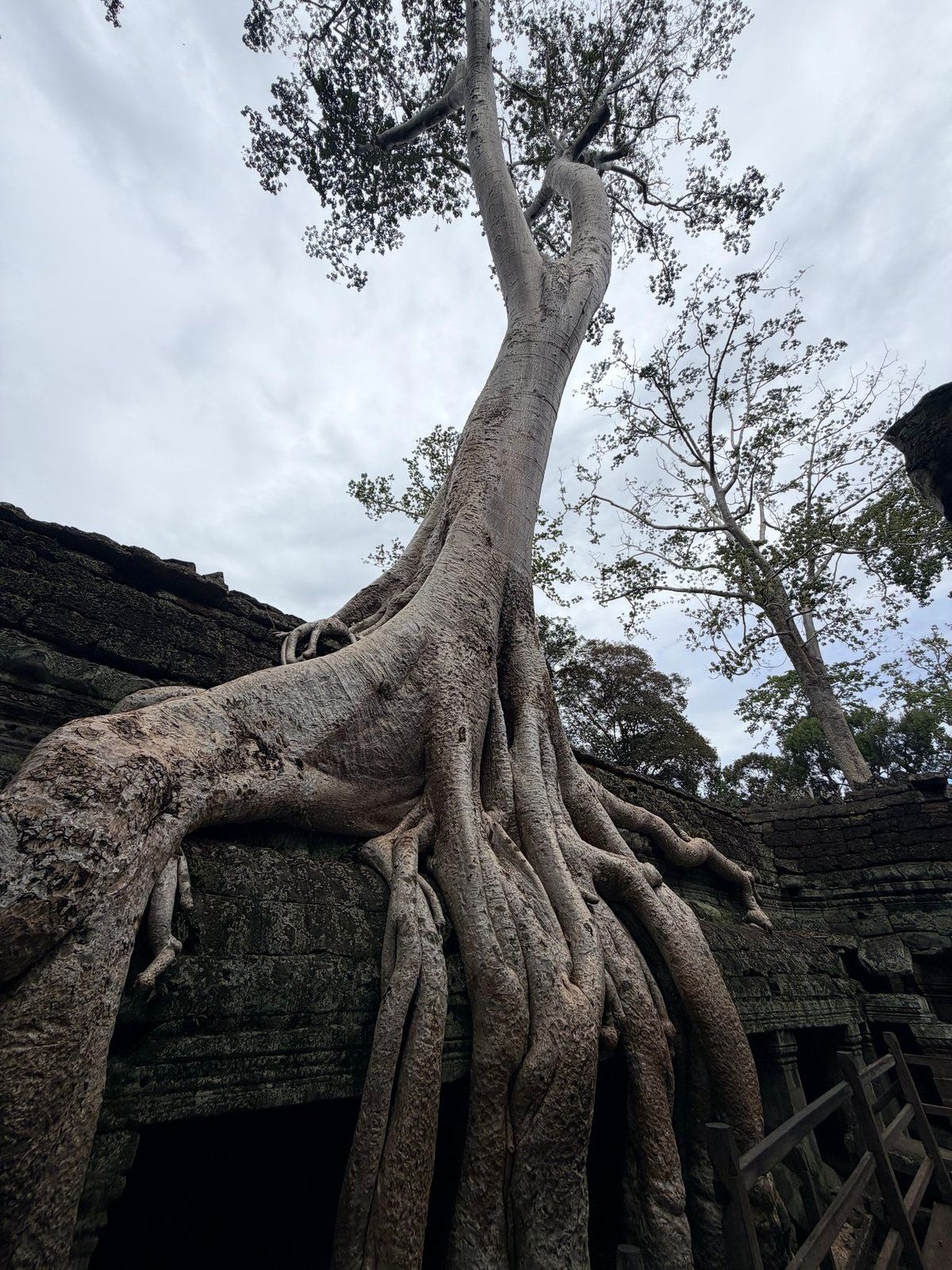
Giant tree roots spilling over the stone walls of Ta Prohm
Ta Prohm. The jungle temple.
Ta Prohm. A short walk through the ruins, 13 Nov 2026.
A huge tree growing on top of a ruined gallery at Ta Prohm
Roots and stone. Trees grow right out of the walls.
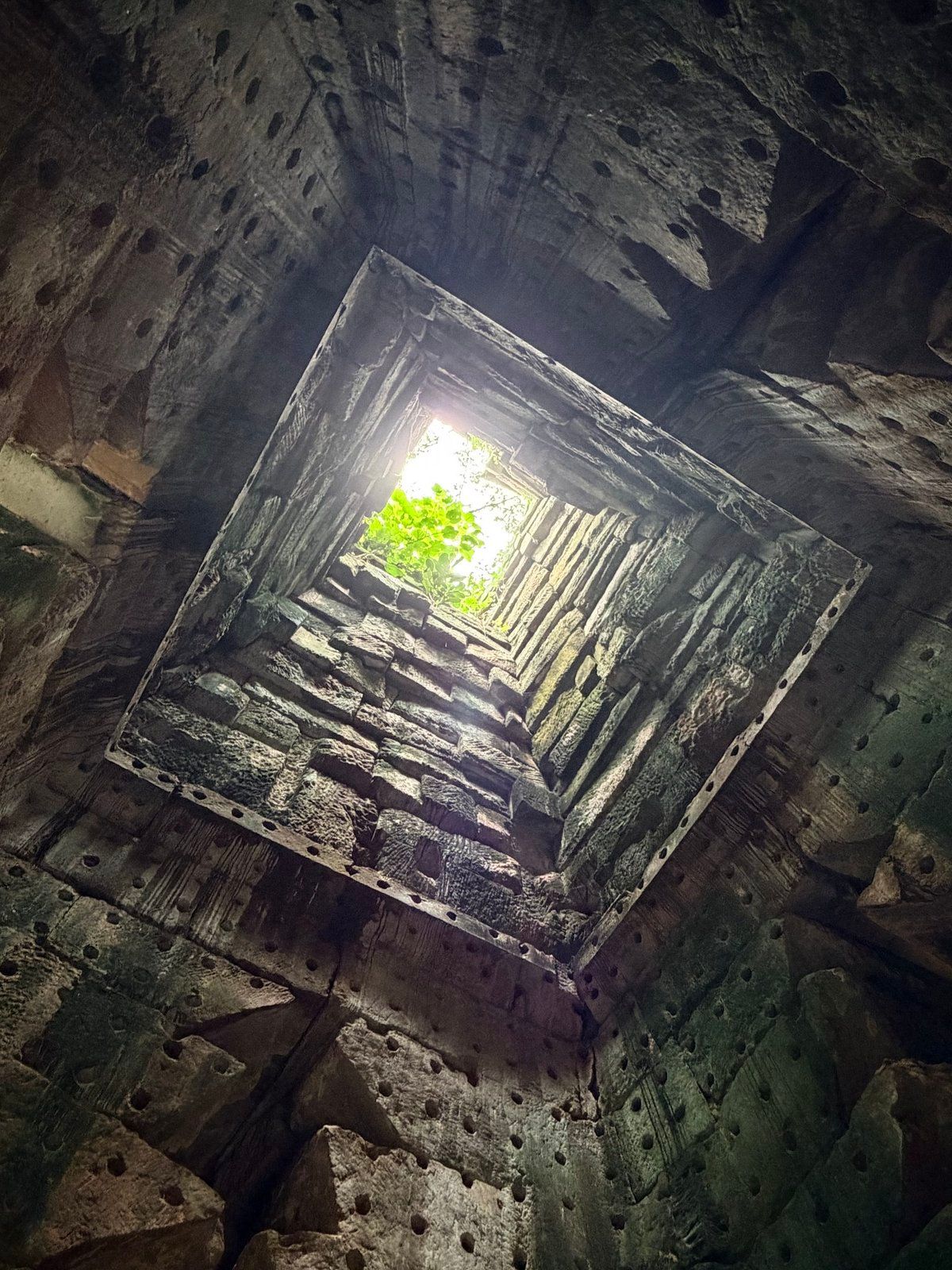
Looking up through the inside of a stone tower at Ta Prohm toward the light
Looking up. Inside a tower at Ta Prohm.
Twisted roots wrapping a collapsed corner of Ta Prohm
Holding on. Roots wrap the ruins.
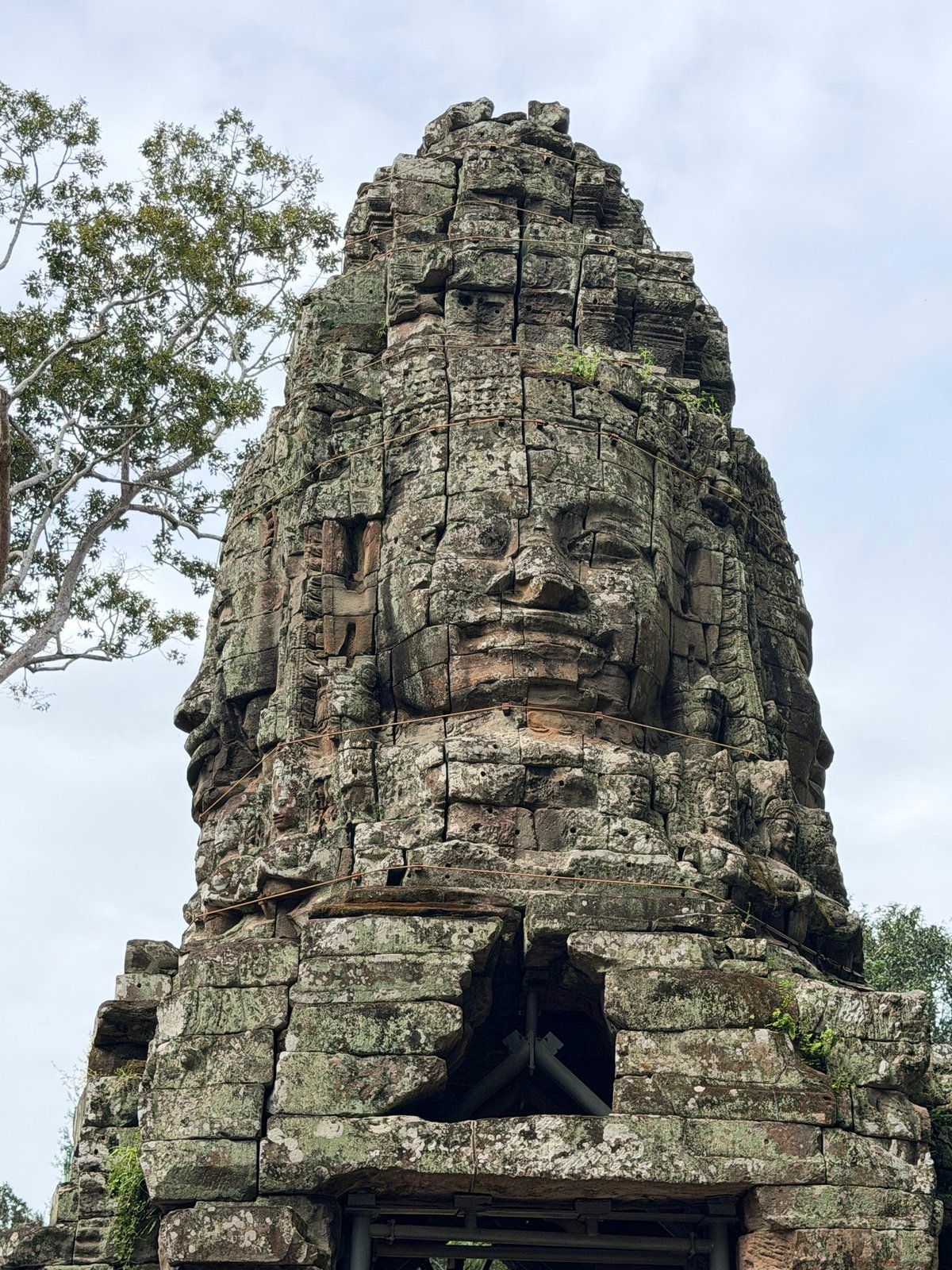
A carved face tower at the west gate of Ta Prohm
Face tower. Ta Prohm's west gate.
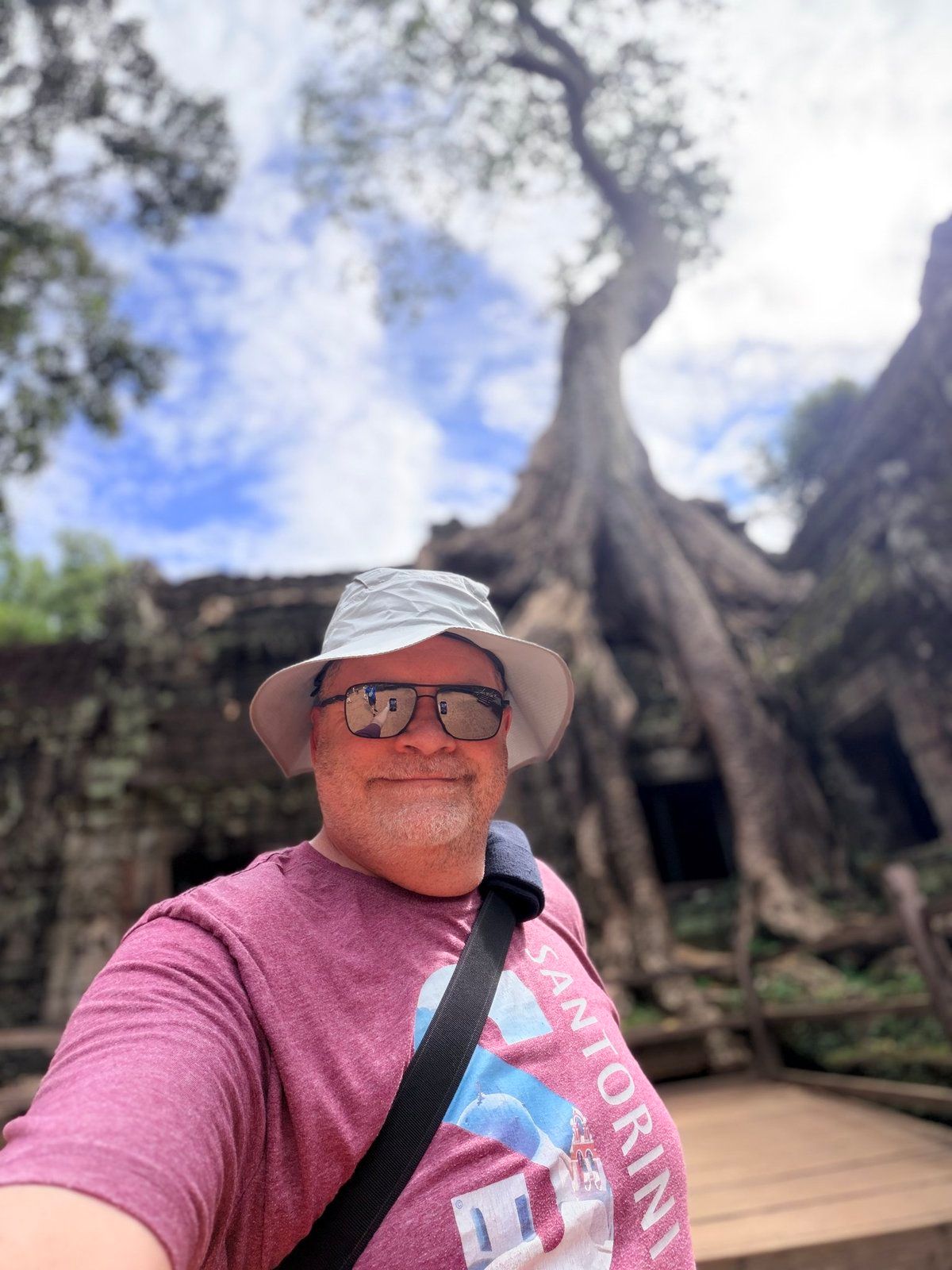
Darrell Seale in front of tree roots at Ta Prohm
Darrell Seale. At Ta Prohm, 13 Nov 2026.
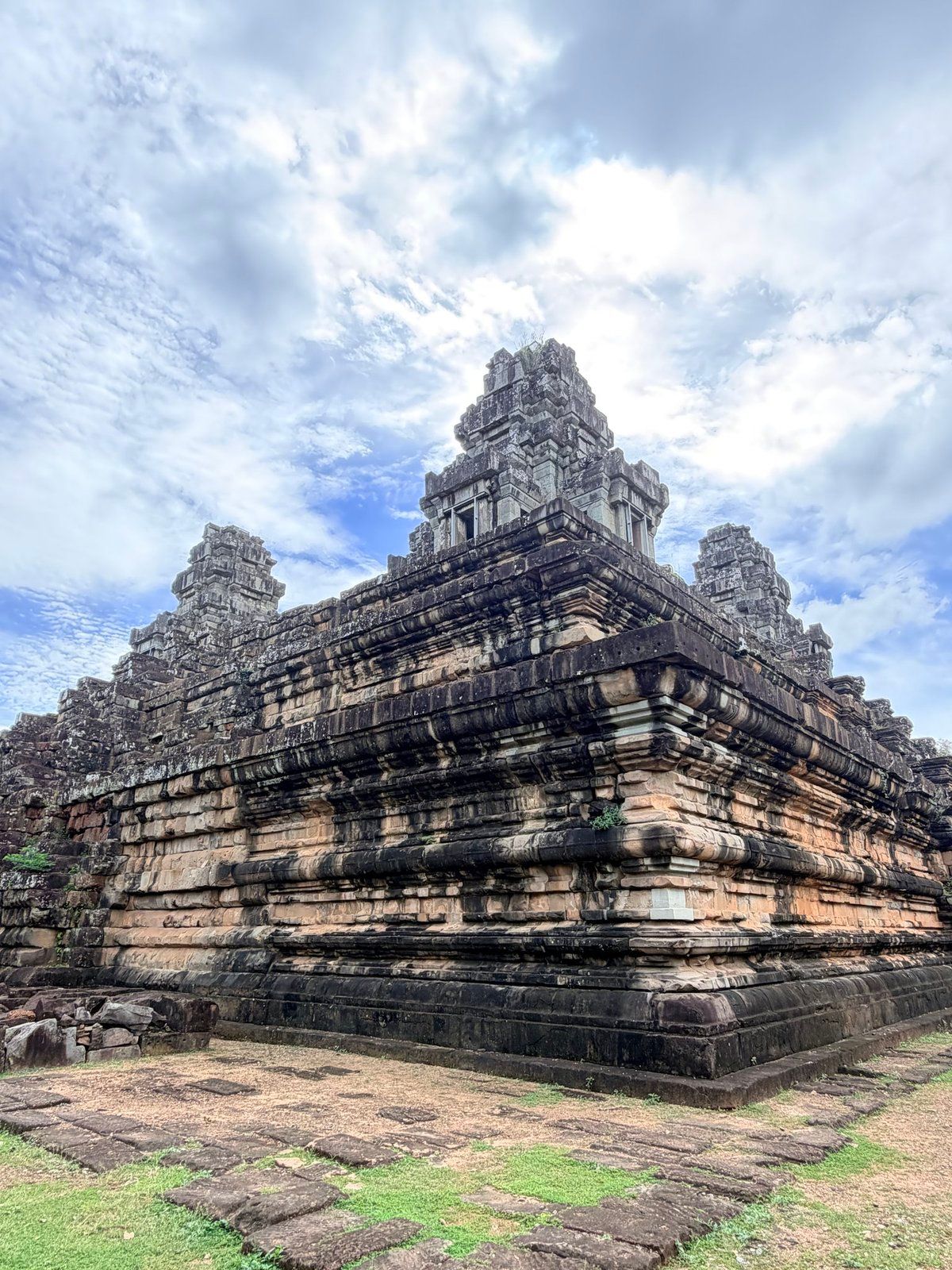
The stepped pyramid of Ta Keo temple
Ta Keo. A temple-mountain never finished.
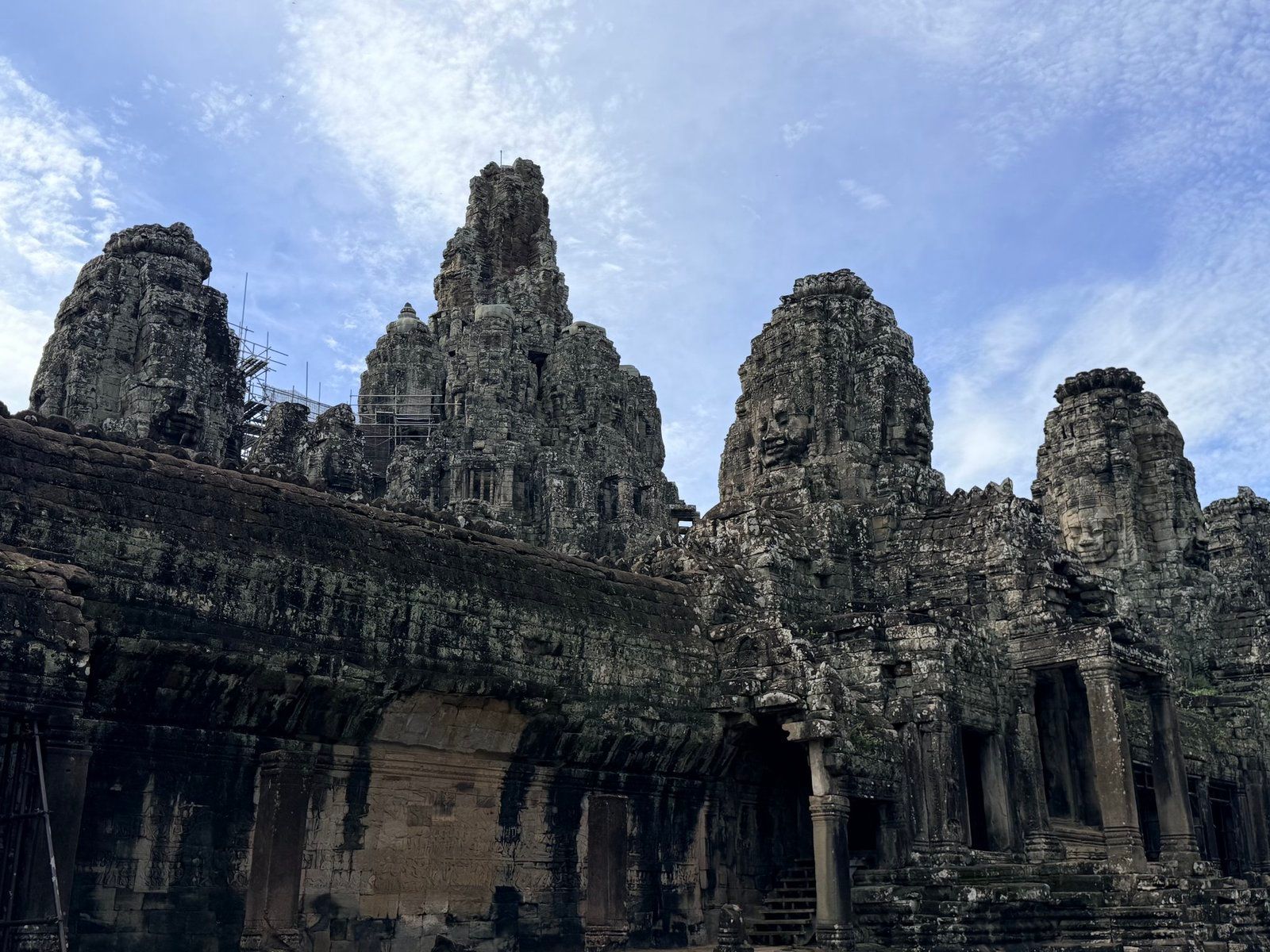
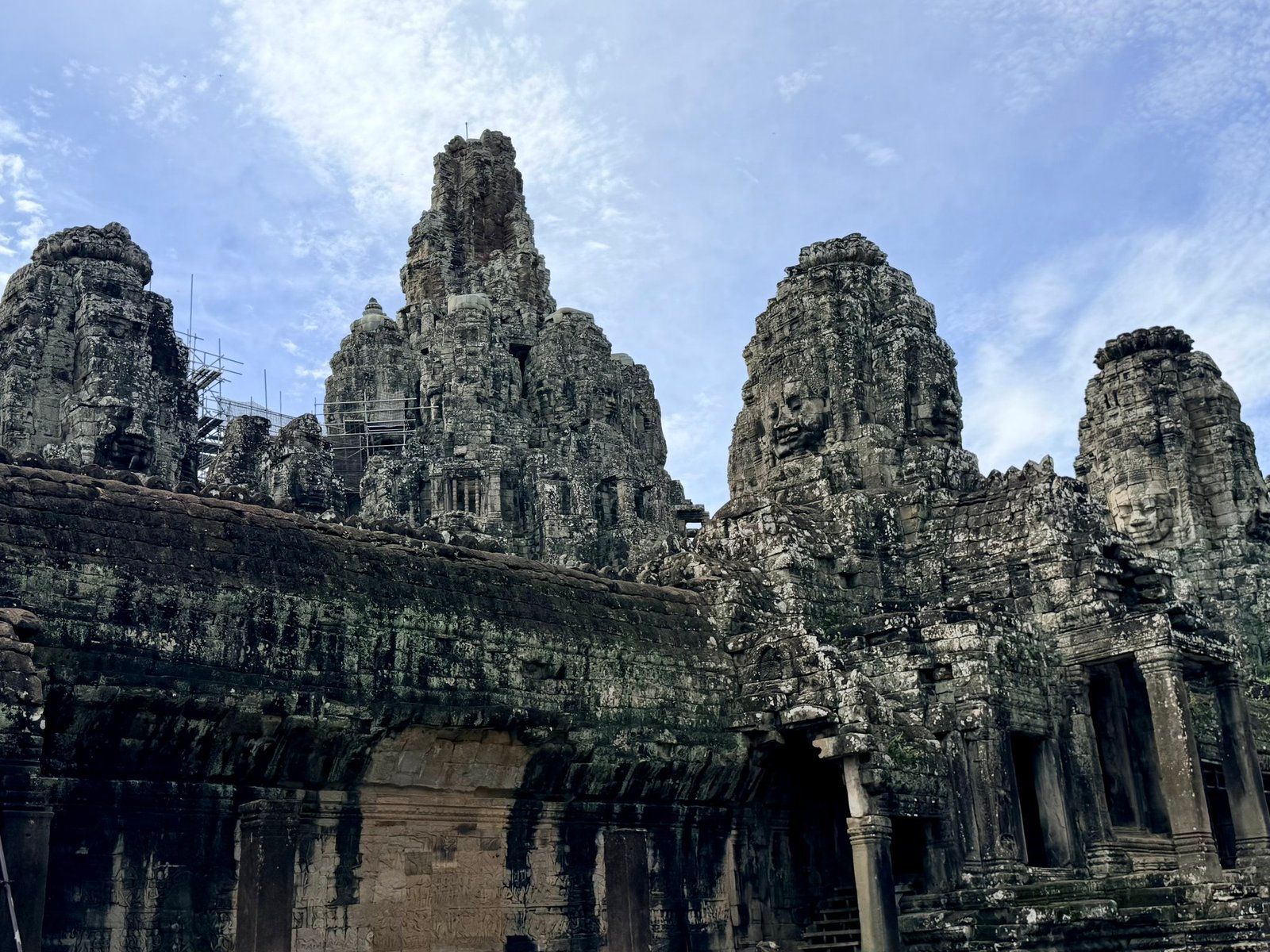
The towers of the Bayon temple in Angkor Thom
The Bayon. At the heart of Angkor Thom.
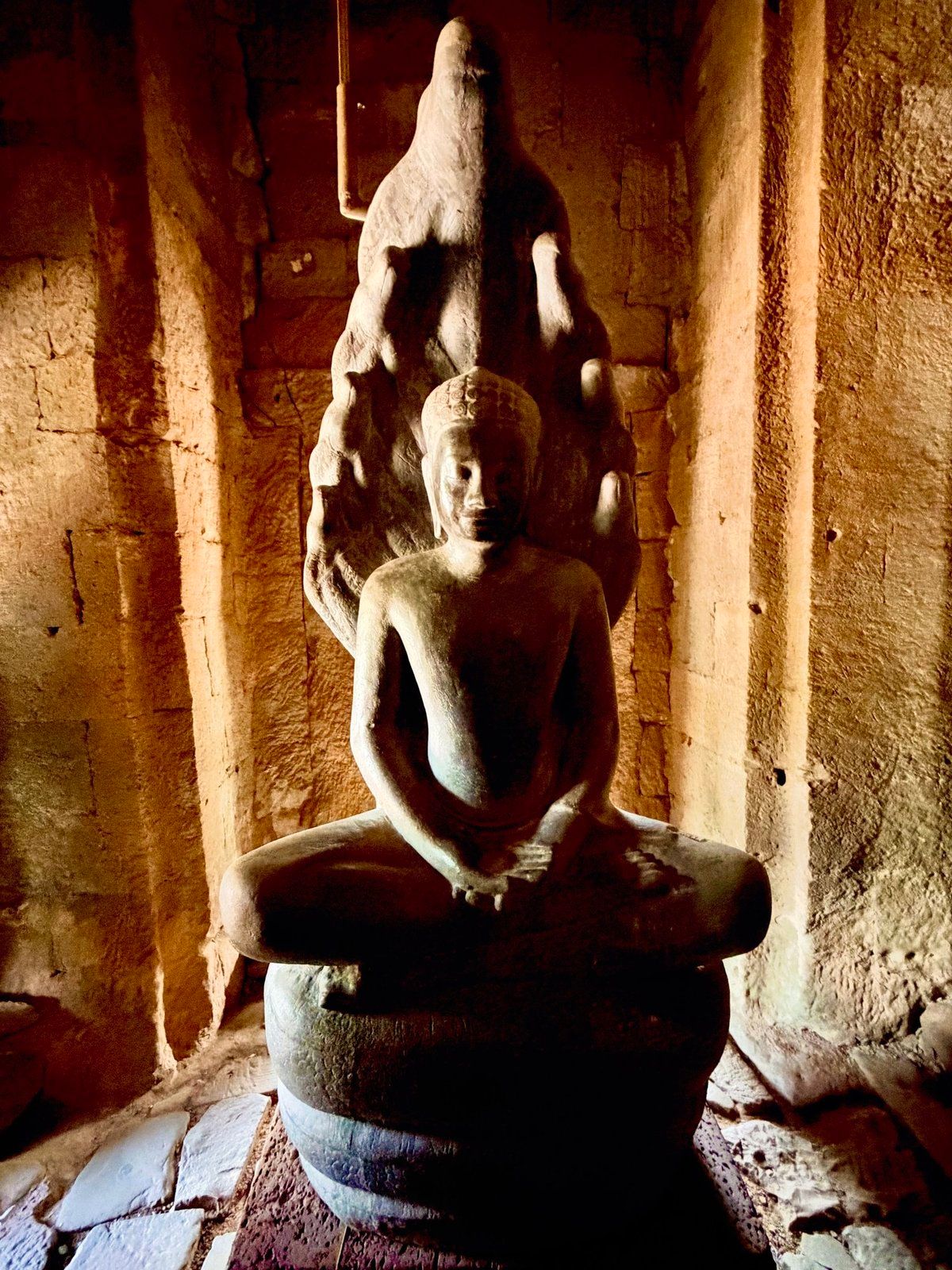
A seated Buddha sheltered by a many-headed naga, Angkor Thom
Buddha and naga. A shrine near the Bayon.
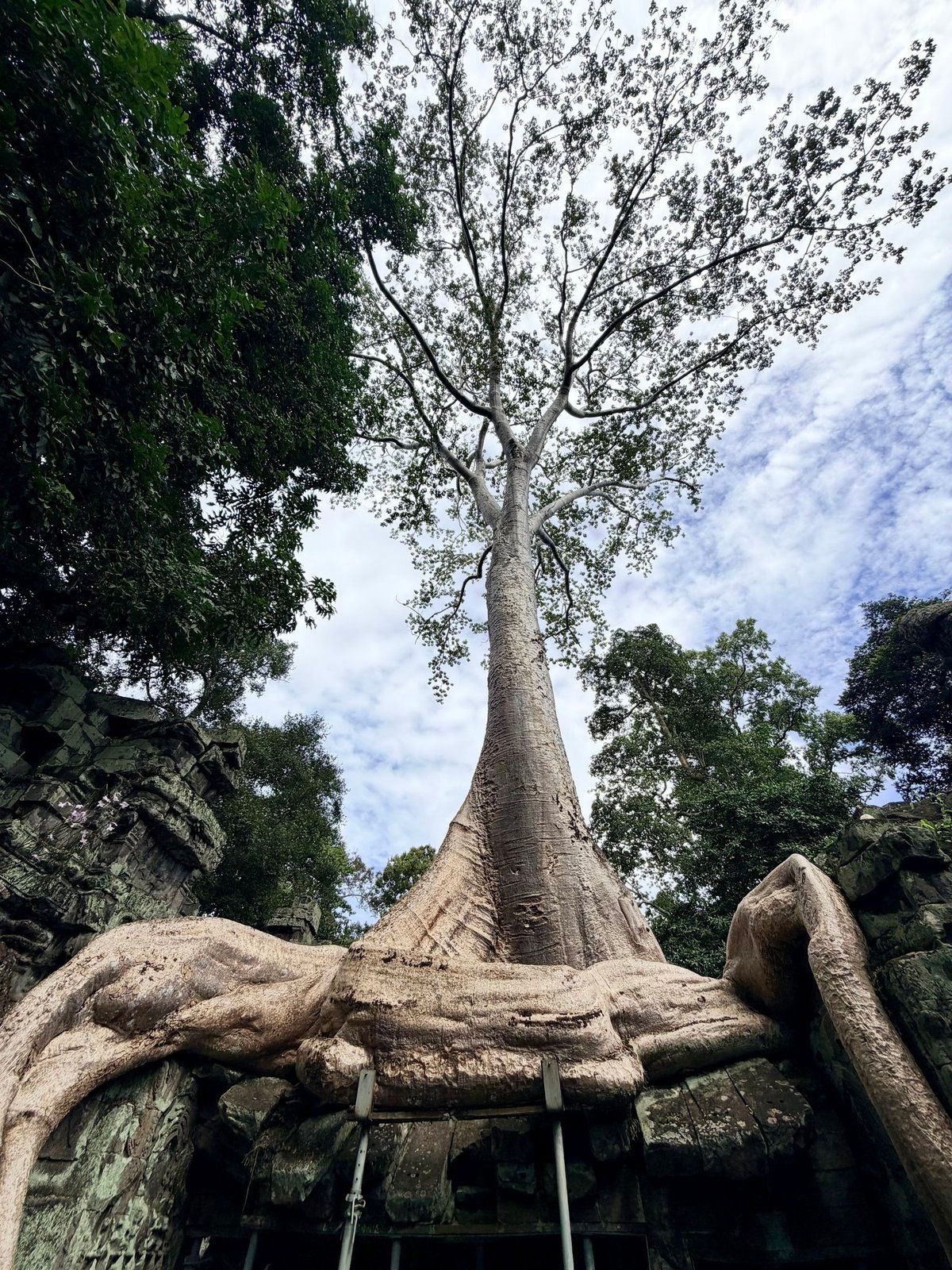
A towering silk-cotton tree rising from the ruins of Ta Prohm
Silk-cotton tree. Roots over the walls.
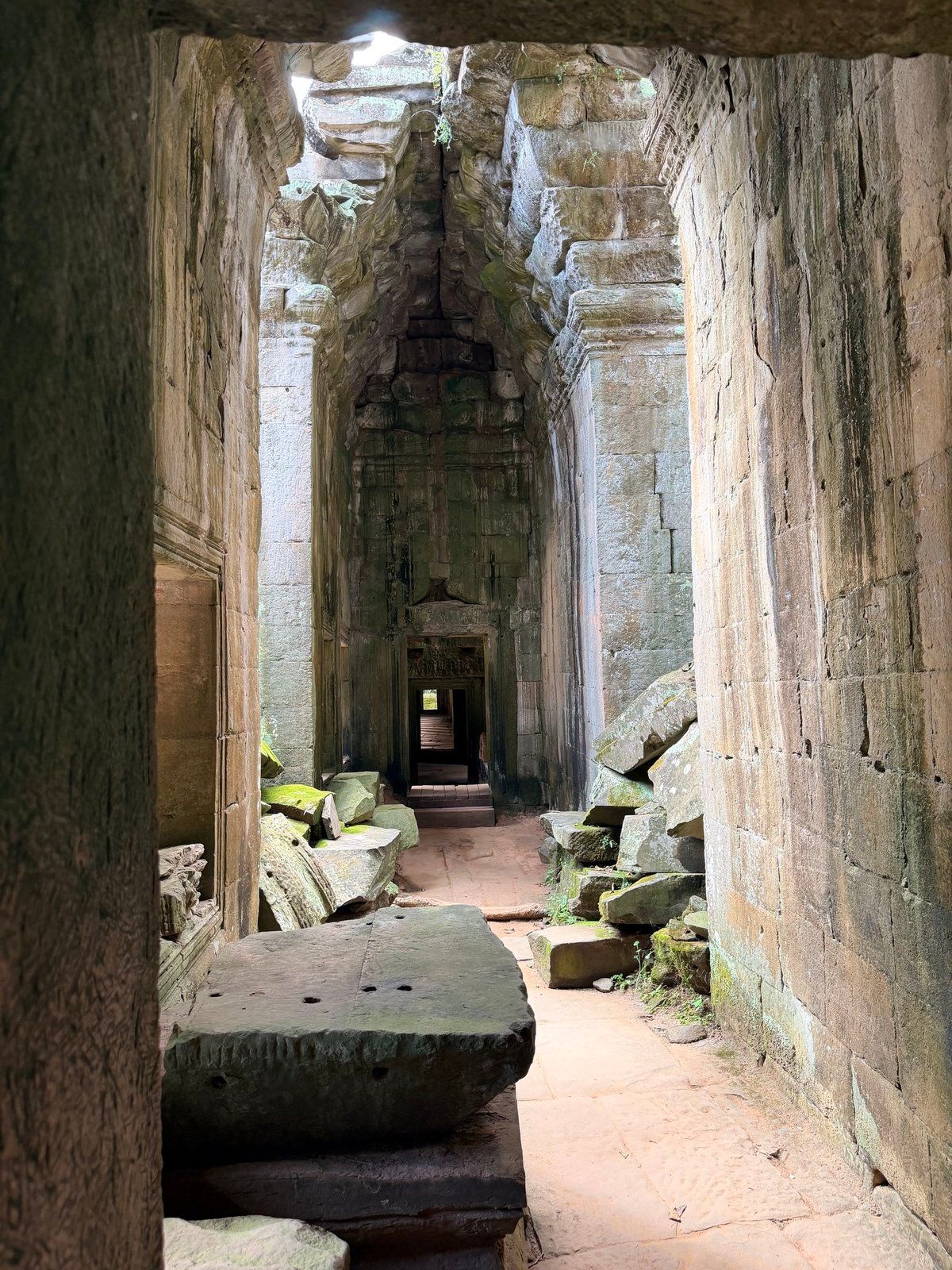
A long stone corridor inside Ta Prohm
Corridors. Deep inside Ta Prohm.
Giant tree roots draped over a gallery roof at Ta Prohm
Giant roots. The trees are winning.
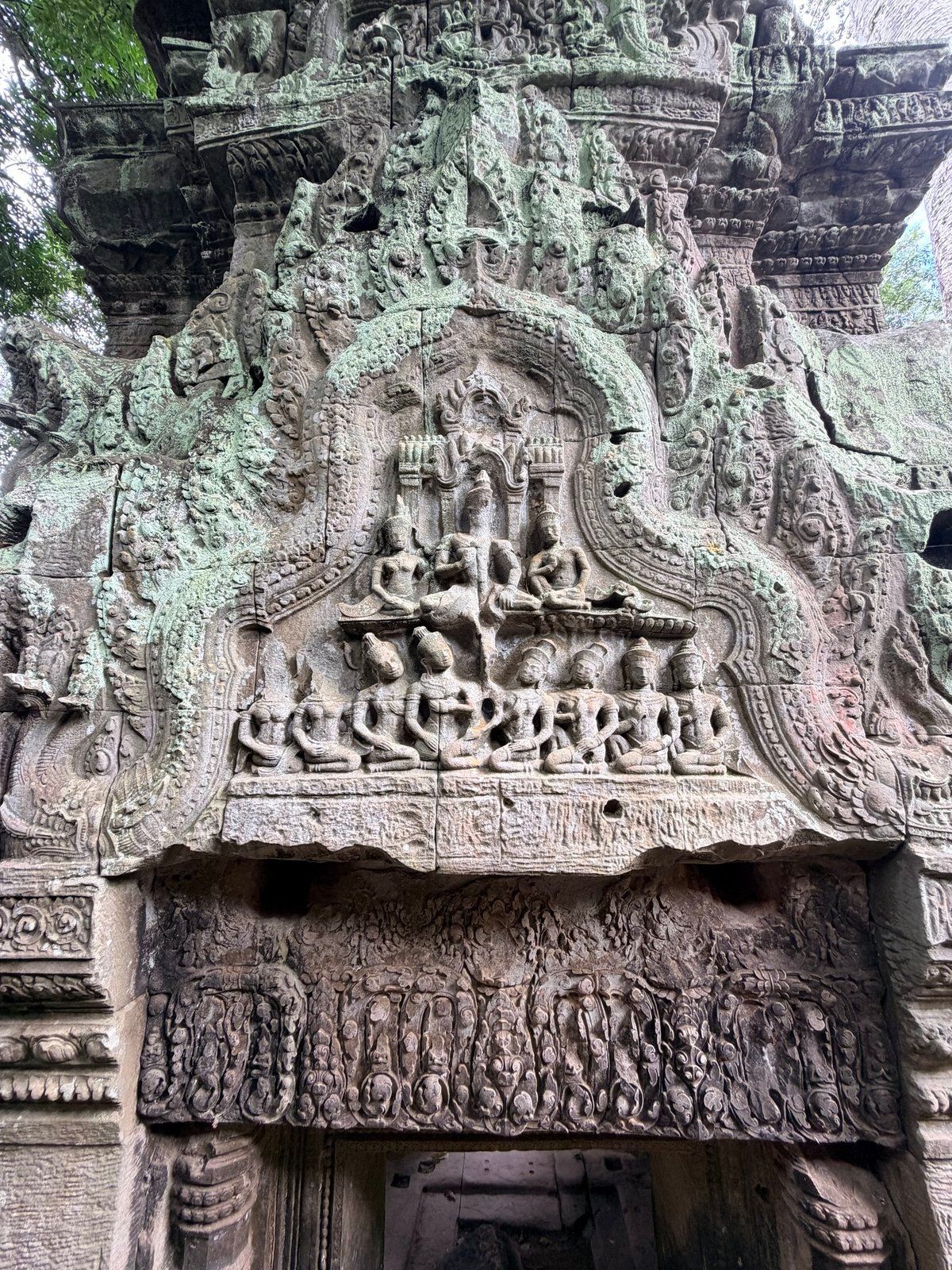
A finely carved stone pediment over a doorway at Ta Prohm
Carved pediment. Detail over a doorway.
A tree trunk growing out of a collapsed gallery at Ta Prohm
Tree and stone. Ta Prohm, 13 Nov 2026.
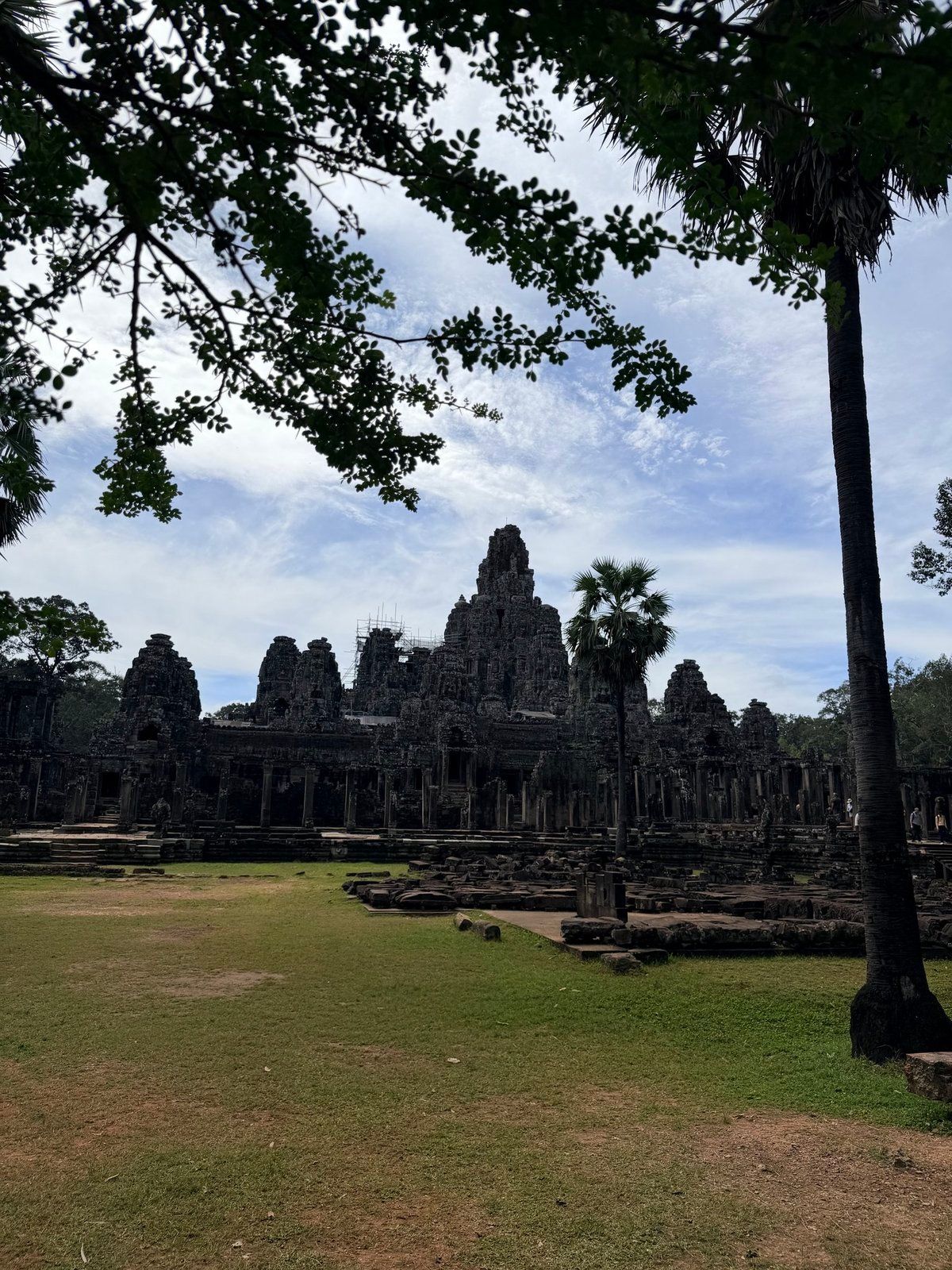
The towers of the Bayon above the trees
The Bayon. Angkor Thom, 13 Nov 2026.
Stone faces on the towers of the Bayon
The faces. Some 200 of them, all smiling.
Carved bas-relief panel on a gallery wall of the Bayon
Bas-reliefs. Scenes of daily life and battle.
The Bayon. Along the carved galleries.
The moat outside the South Gate of Angkor Thom
The moat. Outside the South Gate.
The South Gate causeway of Angkor Thom lined with stone figures holding a naga
South Gate. Gods and demons holding the naga.

The grand circuit

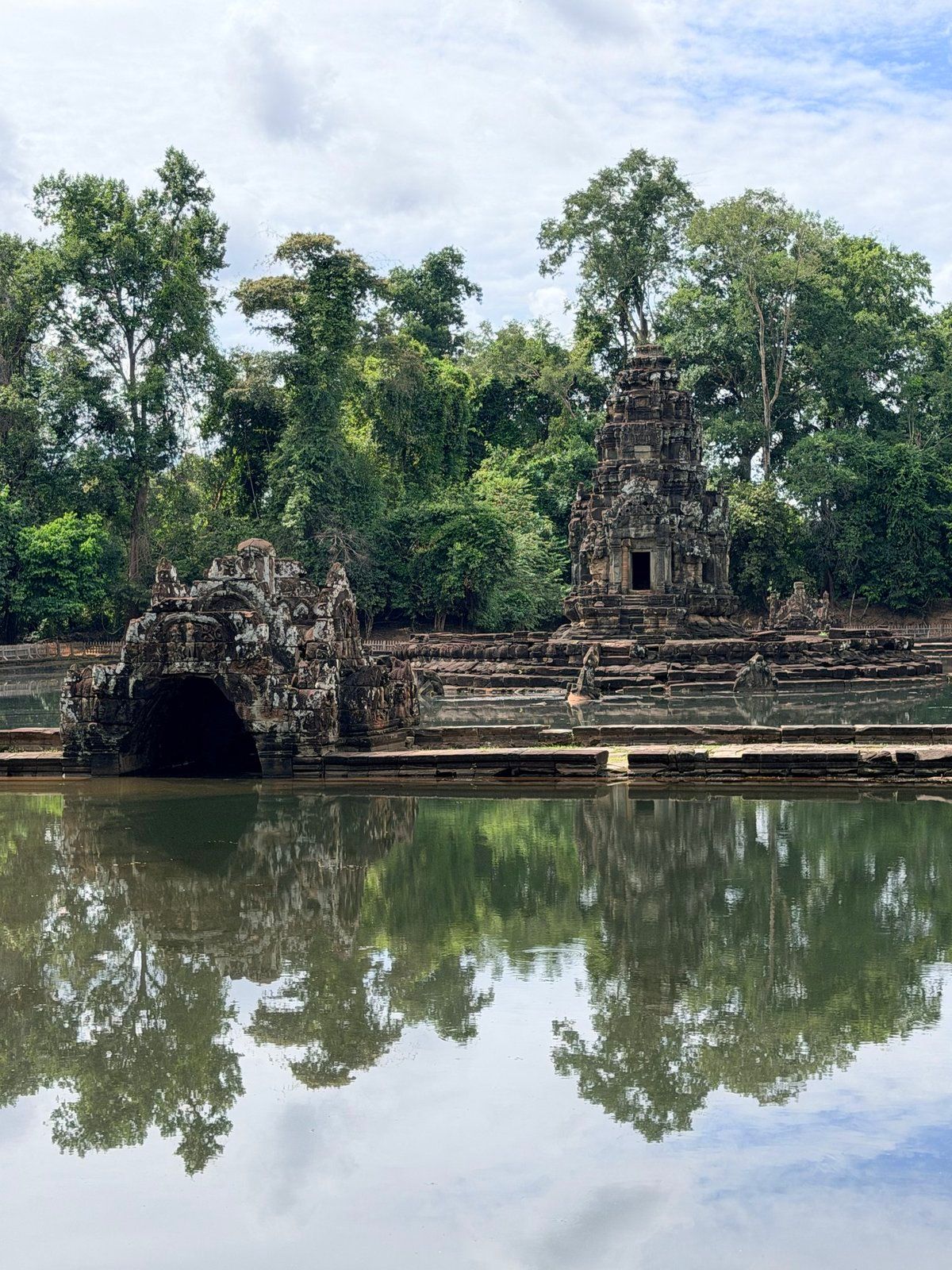
On 14 November I took the longer loop through the temples east and north of Angkor Thom: Preah Khan, the island shrine of Neak Pean, Ta Som, and the 10th-century temple-mountains of East Mebon and Pre Rup.
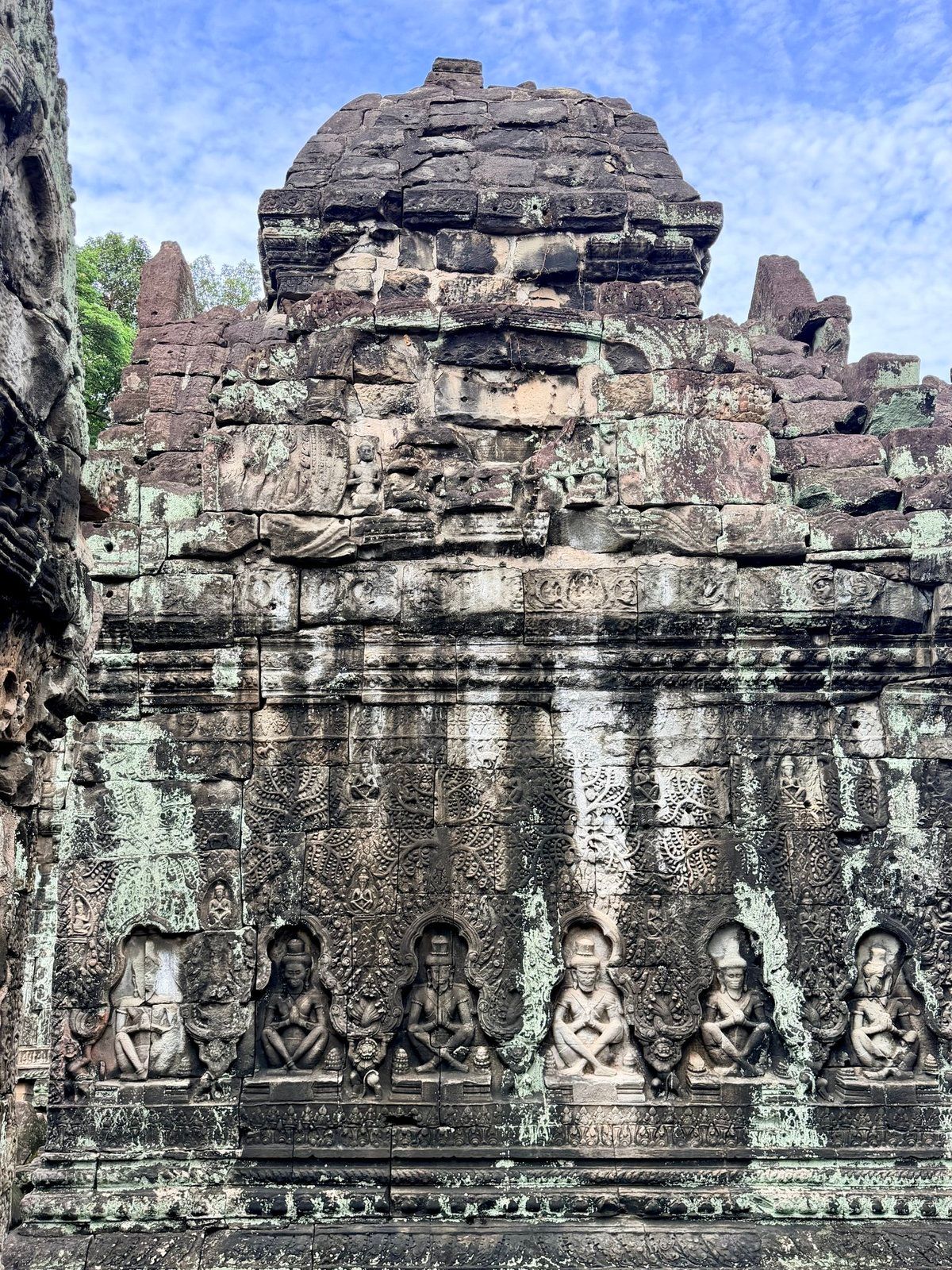
Carved stone walls and towers at Preah Khan
Preah Khan. A 12th-century temple complex.
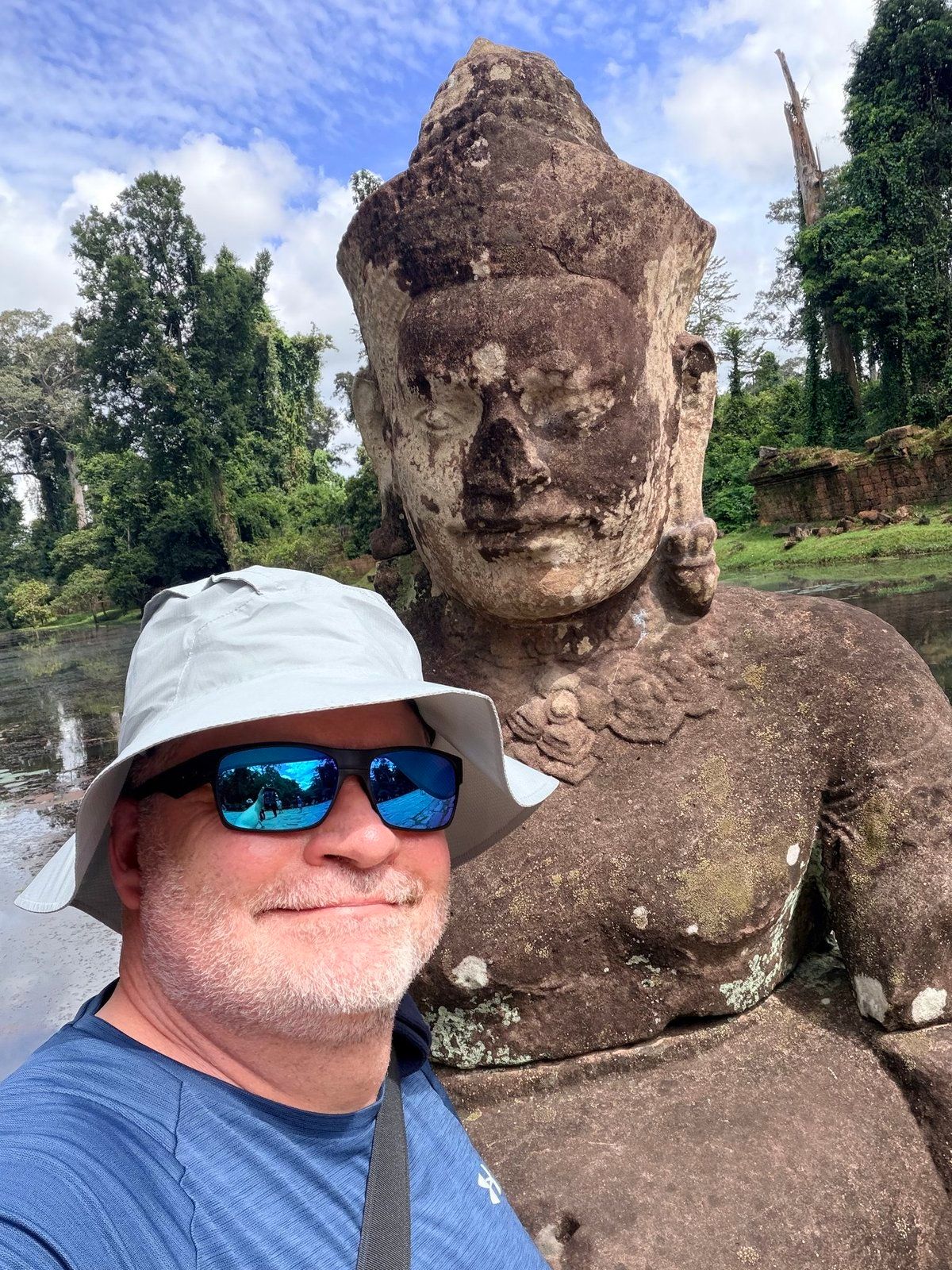
Darrell Seale beside a stone guardian figure at Preah Khan
Guardians. Darrell Seale at Preah Khan, 14 Nov 2026.
The still pond around the island shrine of Neak Pean
Neak Pean. A shrine set in an artificial pond.
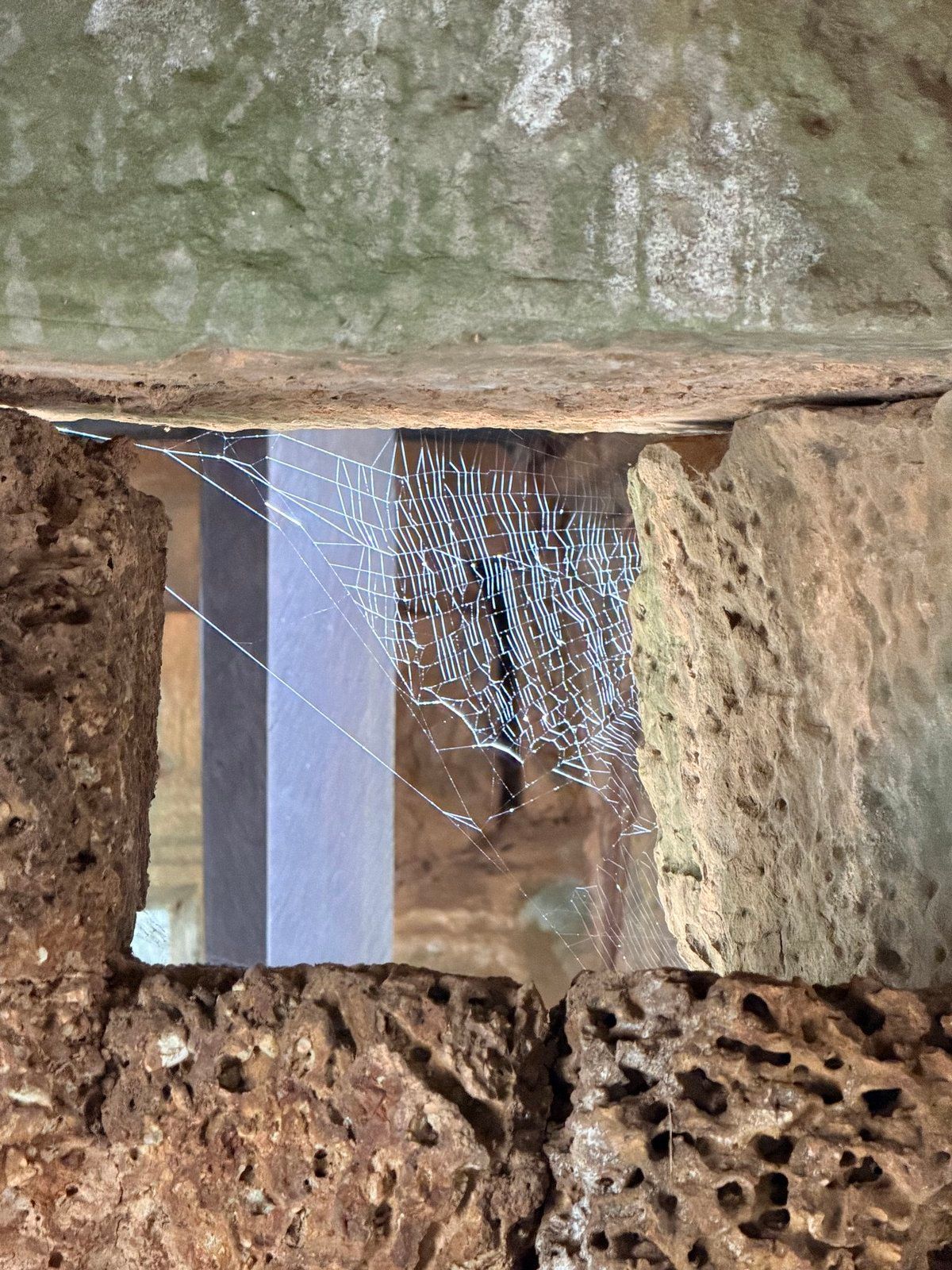
Looking through a collapsed doorway at Ta Som
Ta Som. A small temple at the edge of the forest.
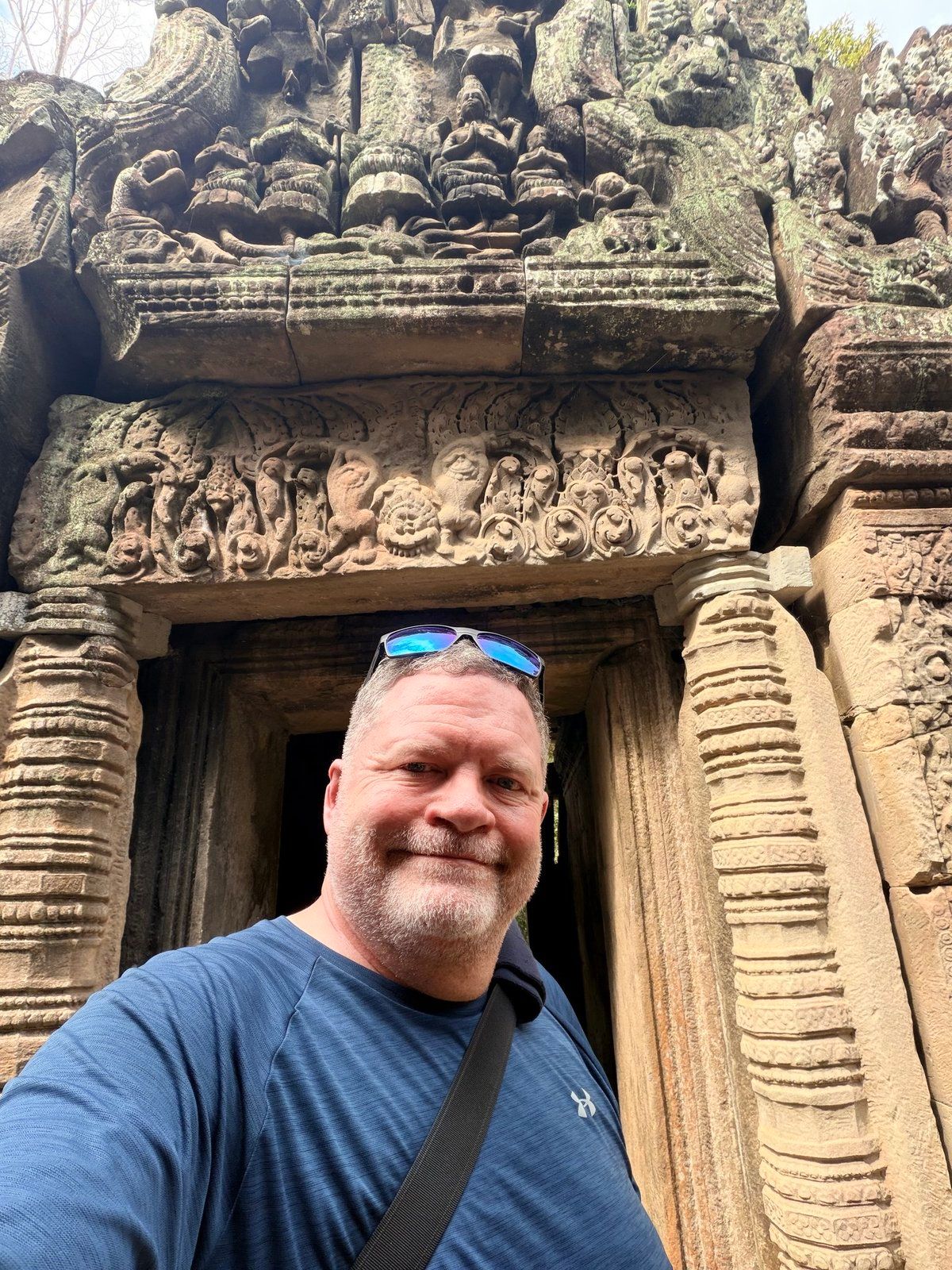
Darrell Seale in a carved doorway at Ta Som
Darrell Seale. In a doorway at Ta Som.
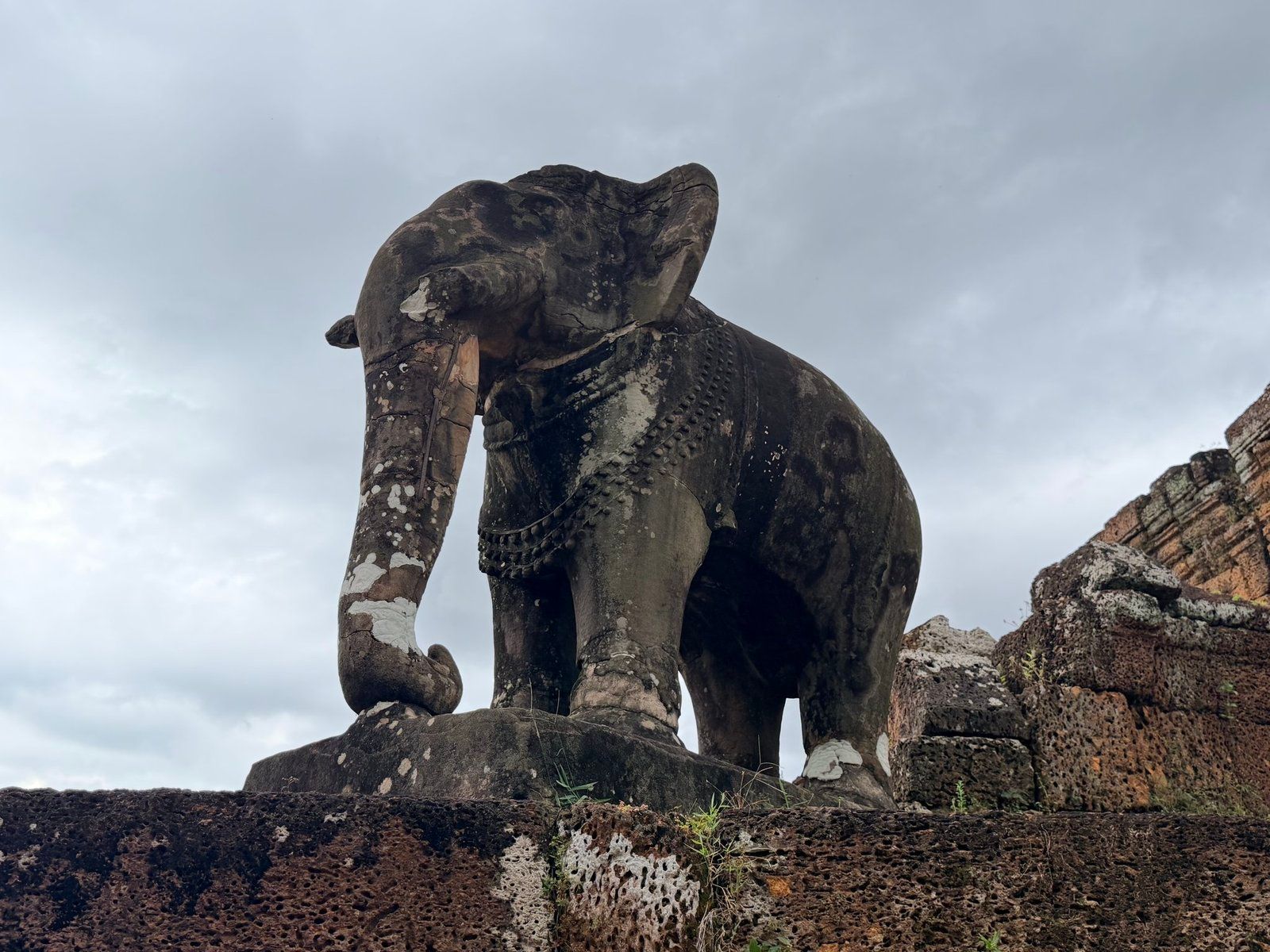
A stone elephant standing at a corner of East Mebon temple
East Mebon. Stone elephants guard the corners.
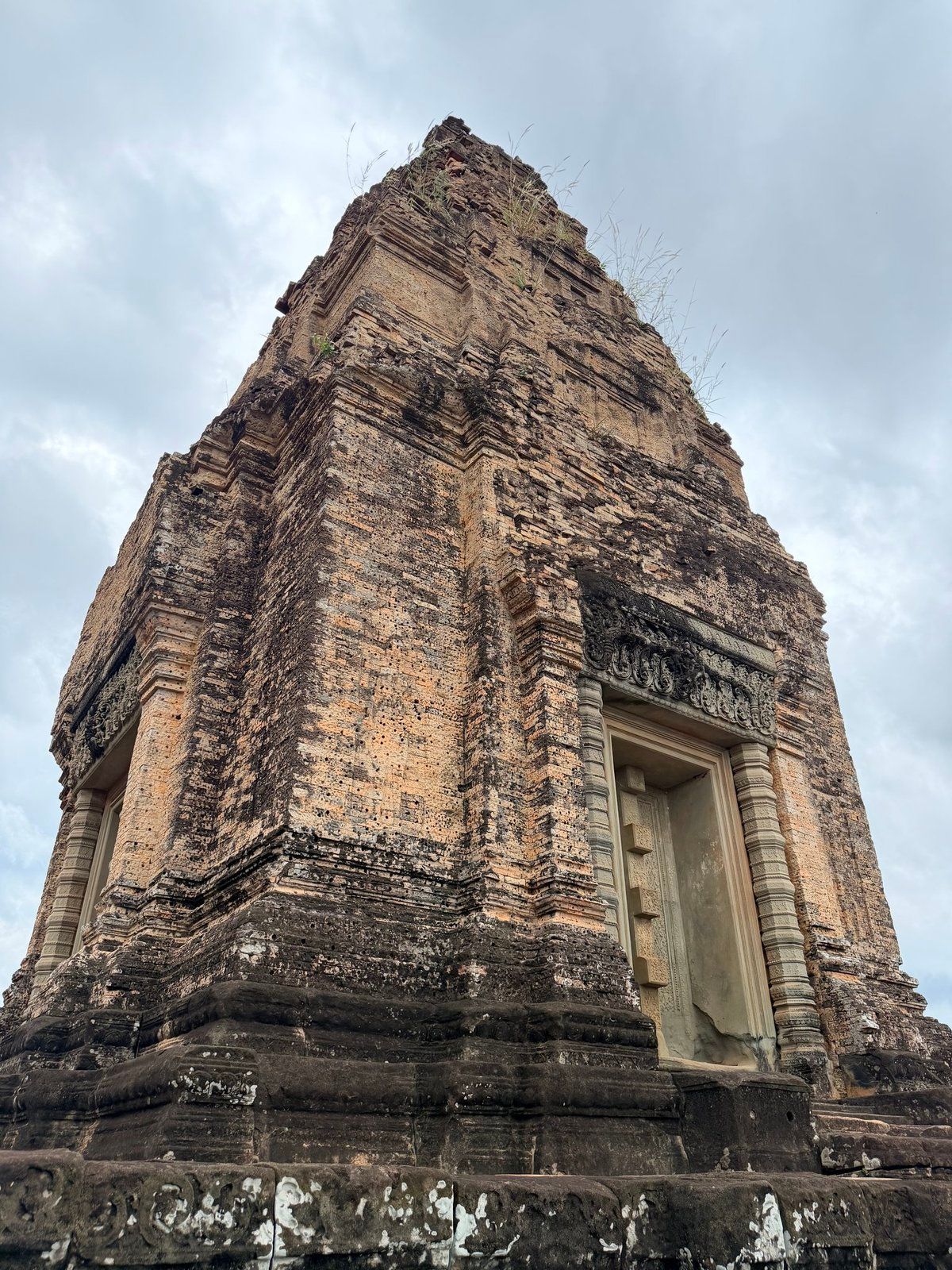
A brick tower at East Mebon temple
Brick towers. East Mebon, from the 950s.
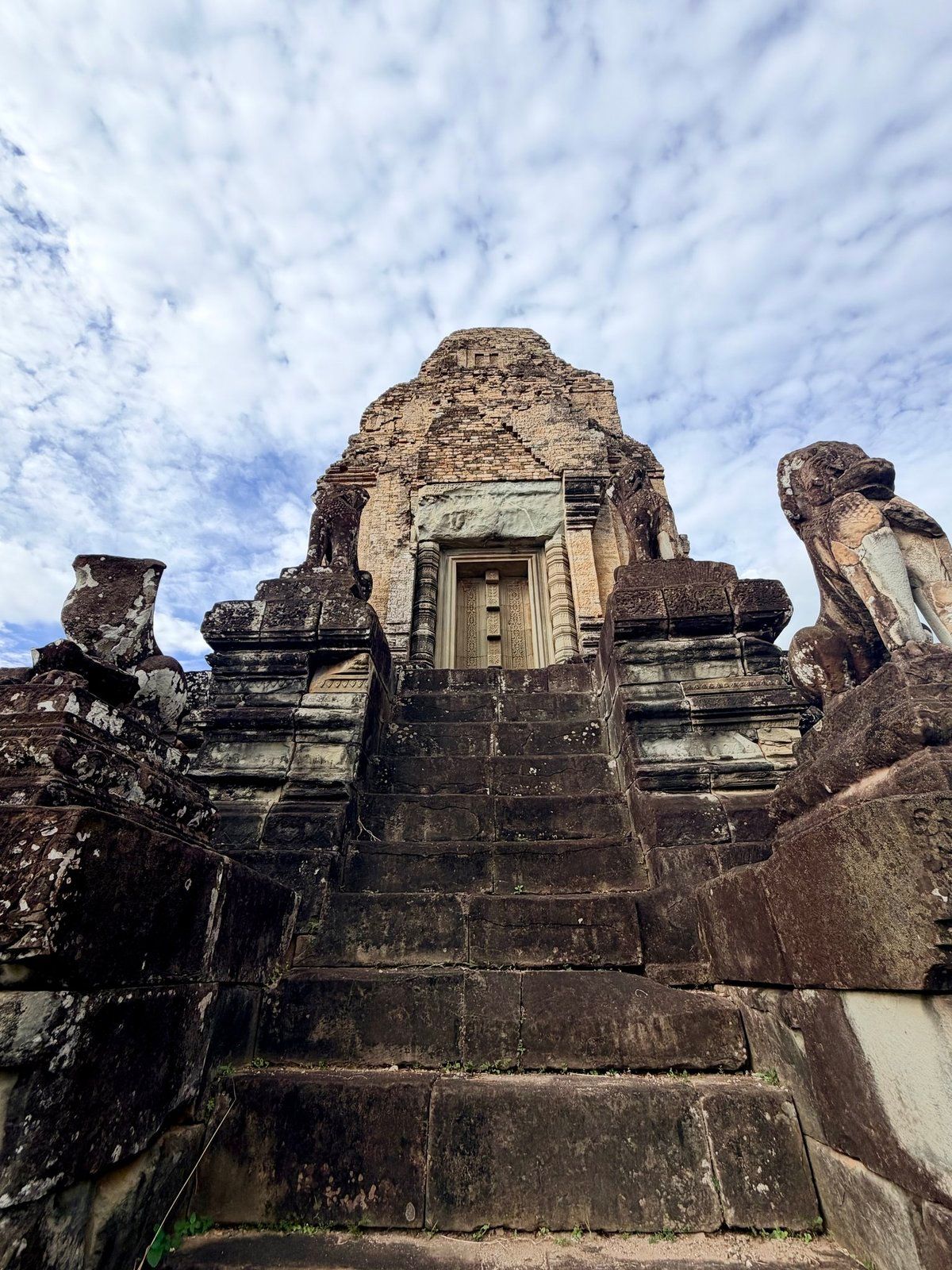
Steep steps up the temple-mountain of Pre Rup
Pre Rup. Dedicated in 961.
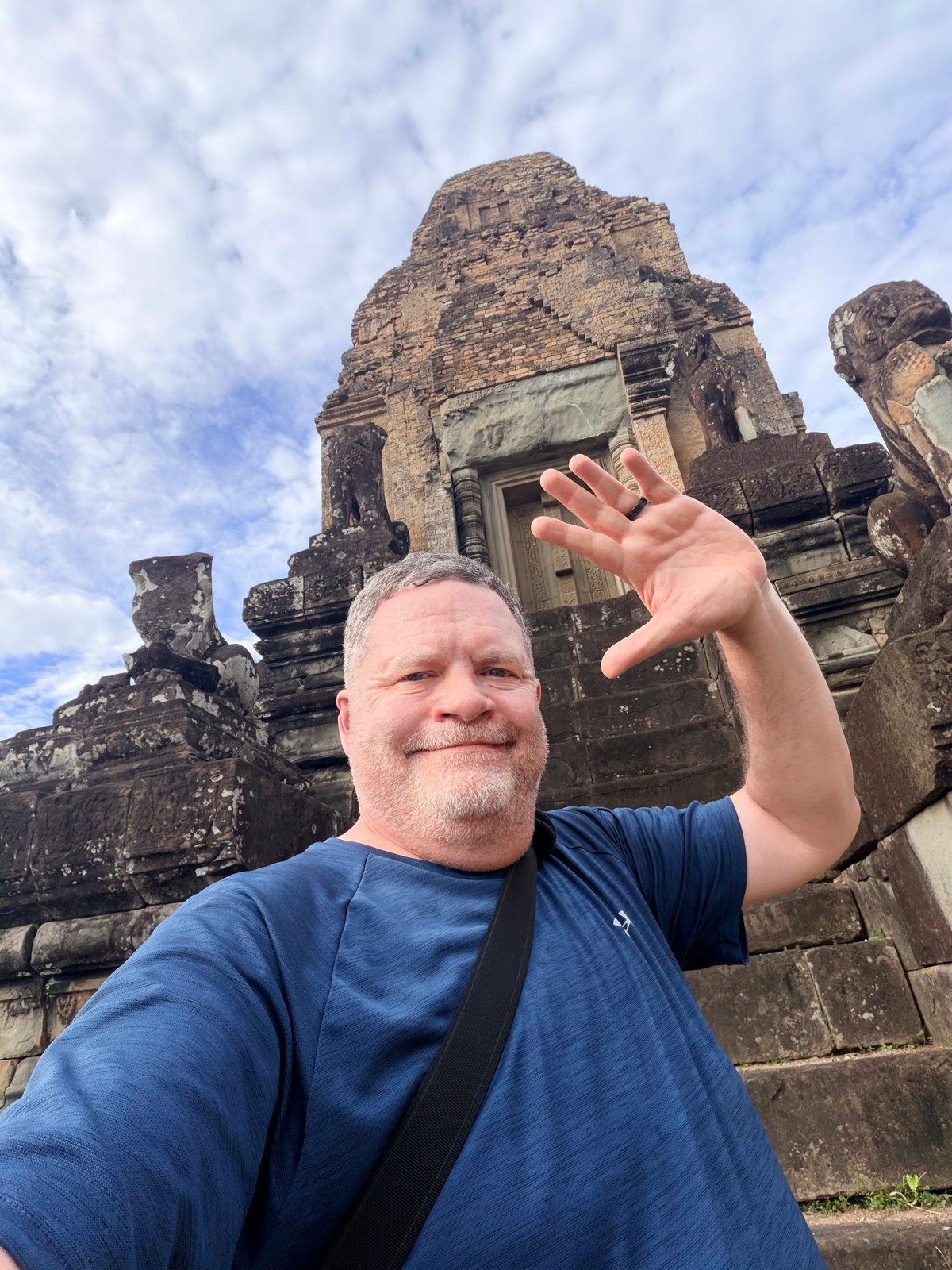
Darrell Seale waving on top of Pre Rup temple
Darrell Seale. On top of Pre Rup, 14 Nov 2026.
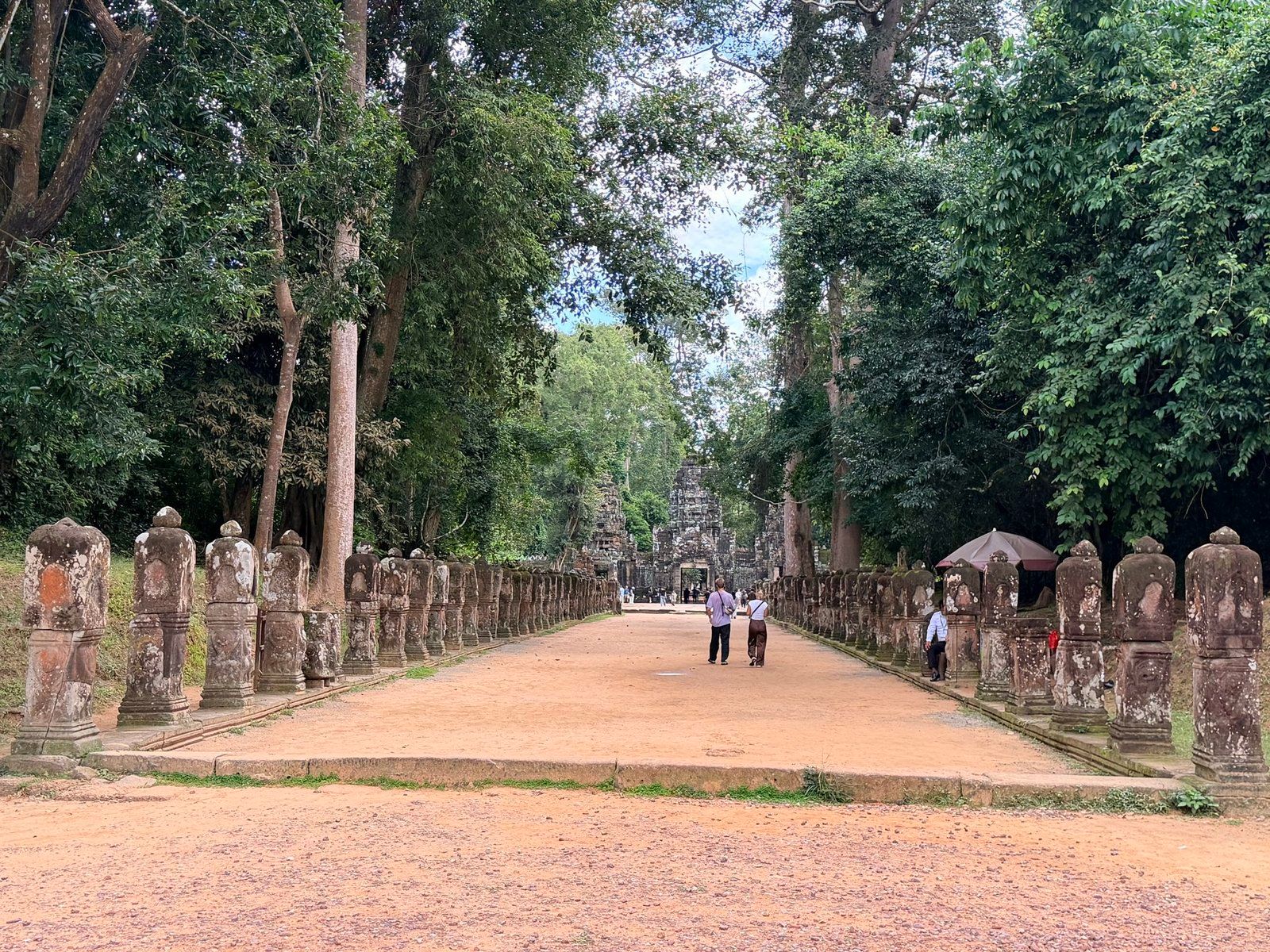
The causeway into Preah Khan lined with stone figures
Preah Khan. The approach, 14 Nov 2026.
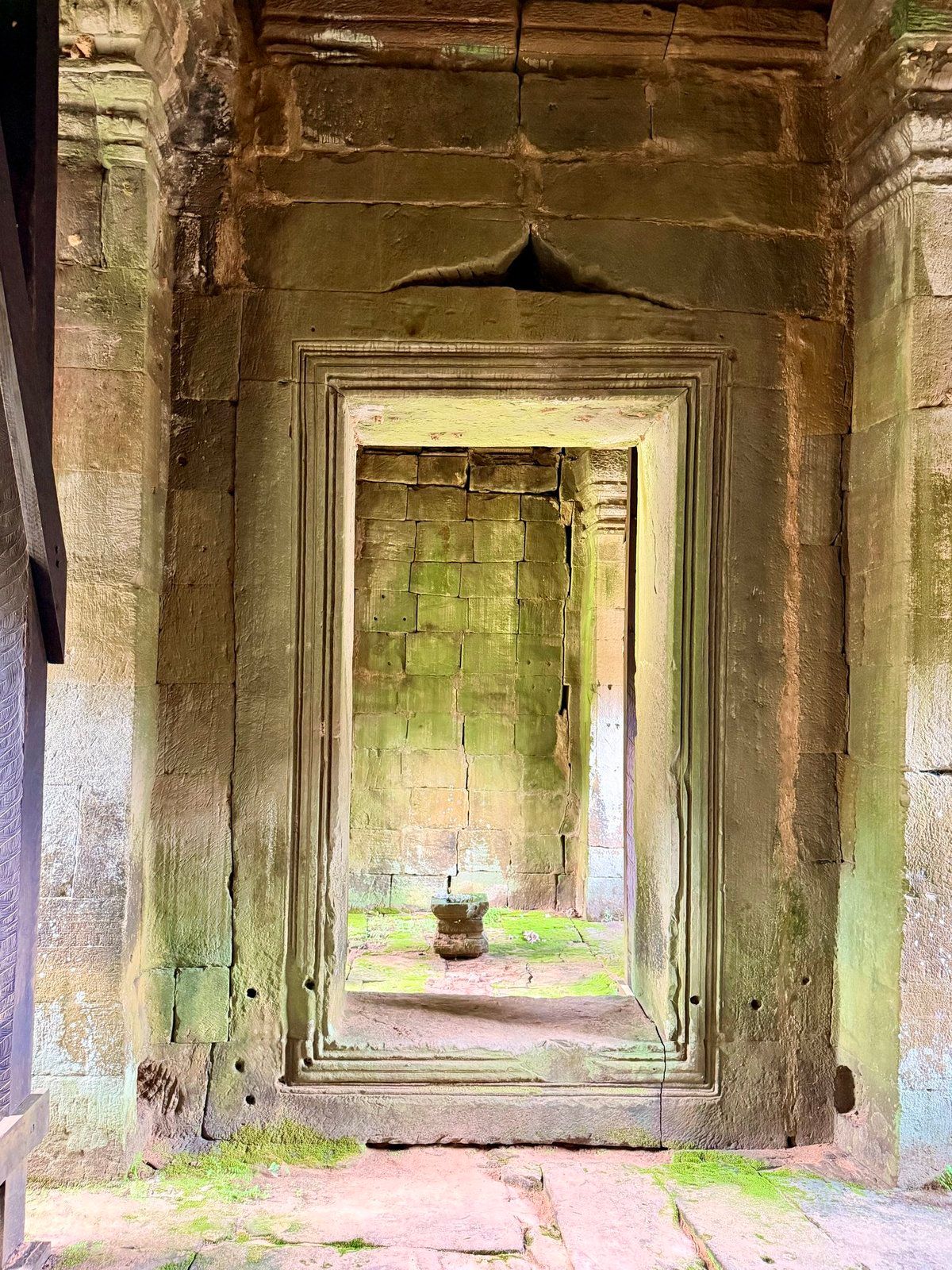
A long line of doorways through Preah Khan
Doorways. Room after room.
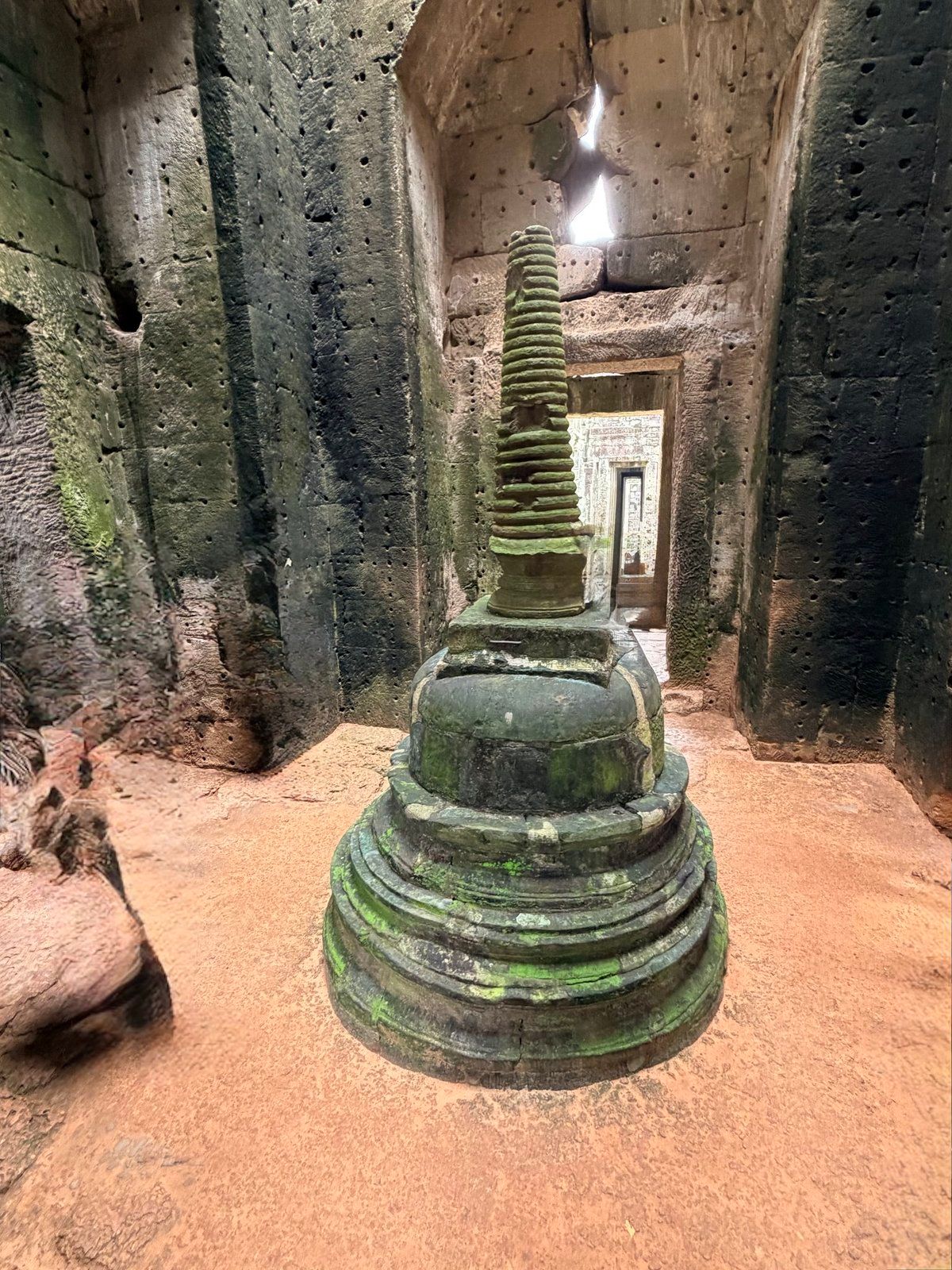
A stone stupa in the center of Preah Khan
The stupa. At the heart of Preah Khan.
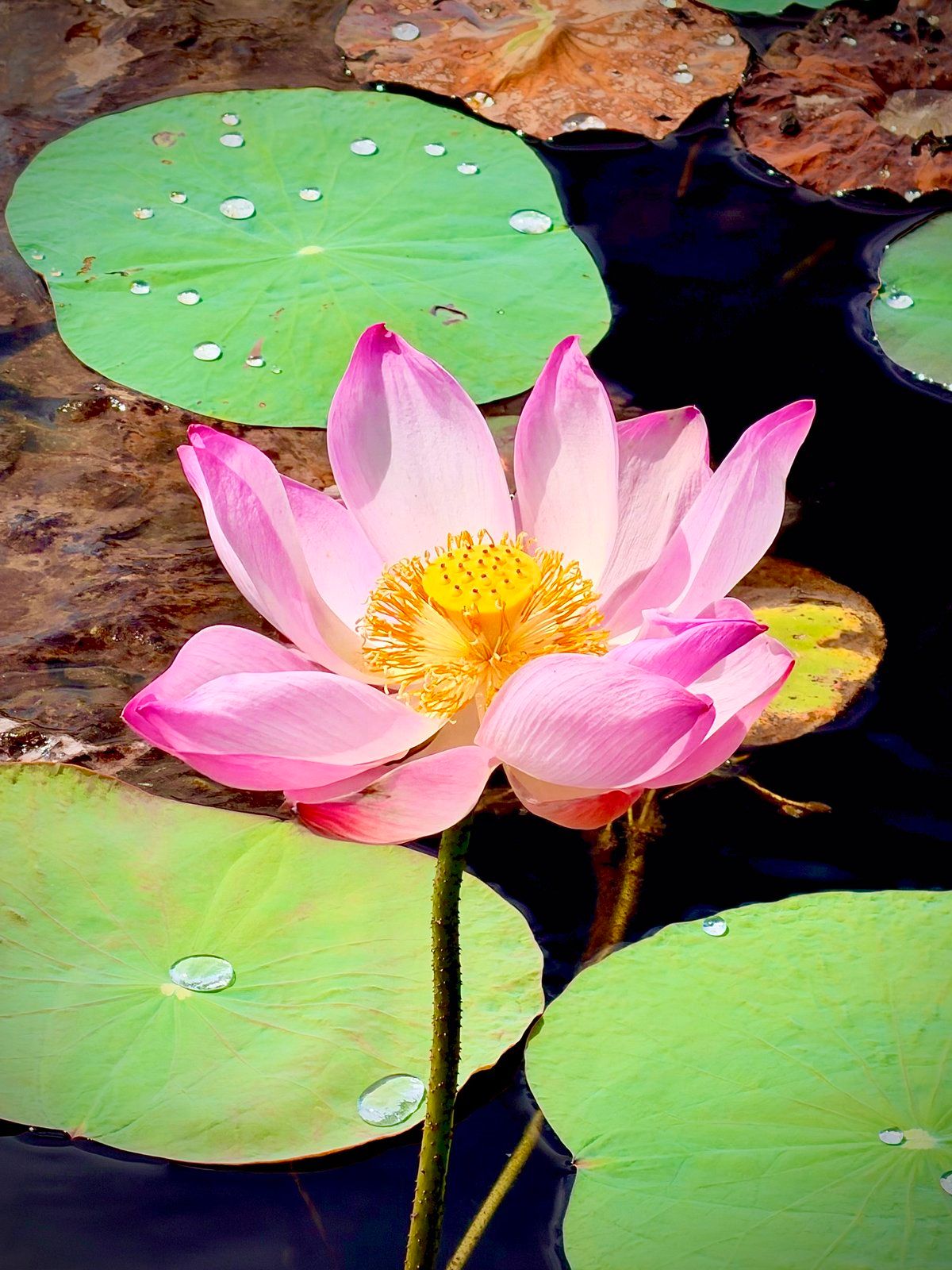
A pink lotus flower among lily pads at Neak Pean
Lotus. On the way to Neak Pean.
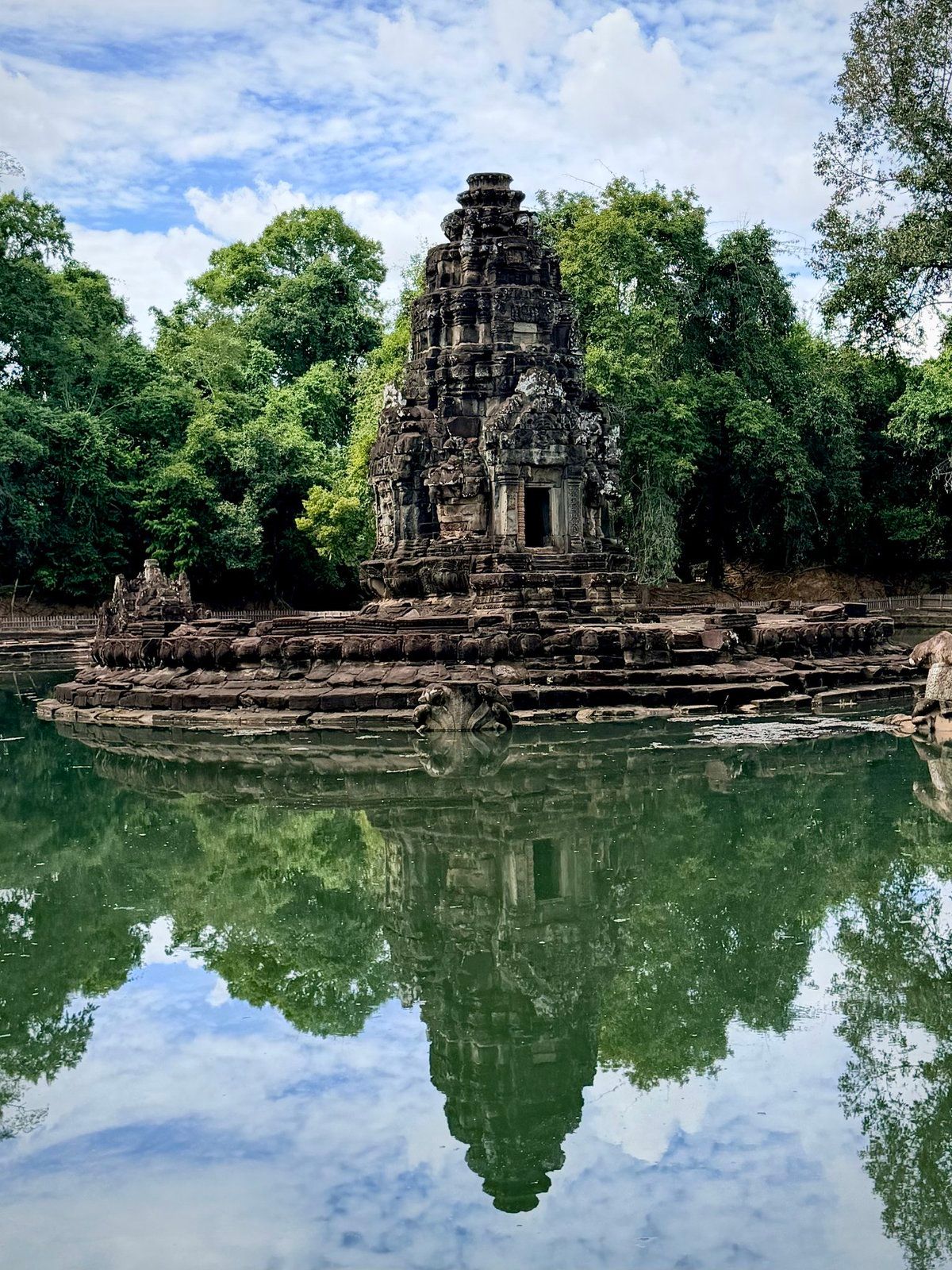
A temple tower reflected in still water at Neak Pean
Reflections. Neak Pean.
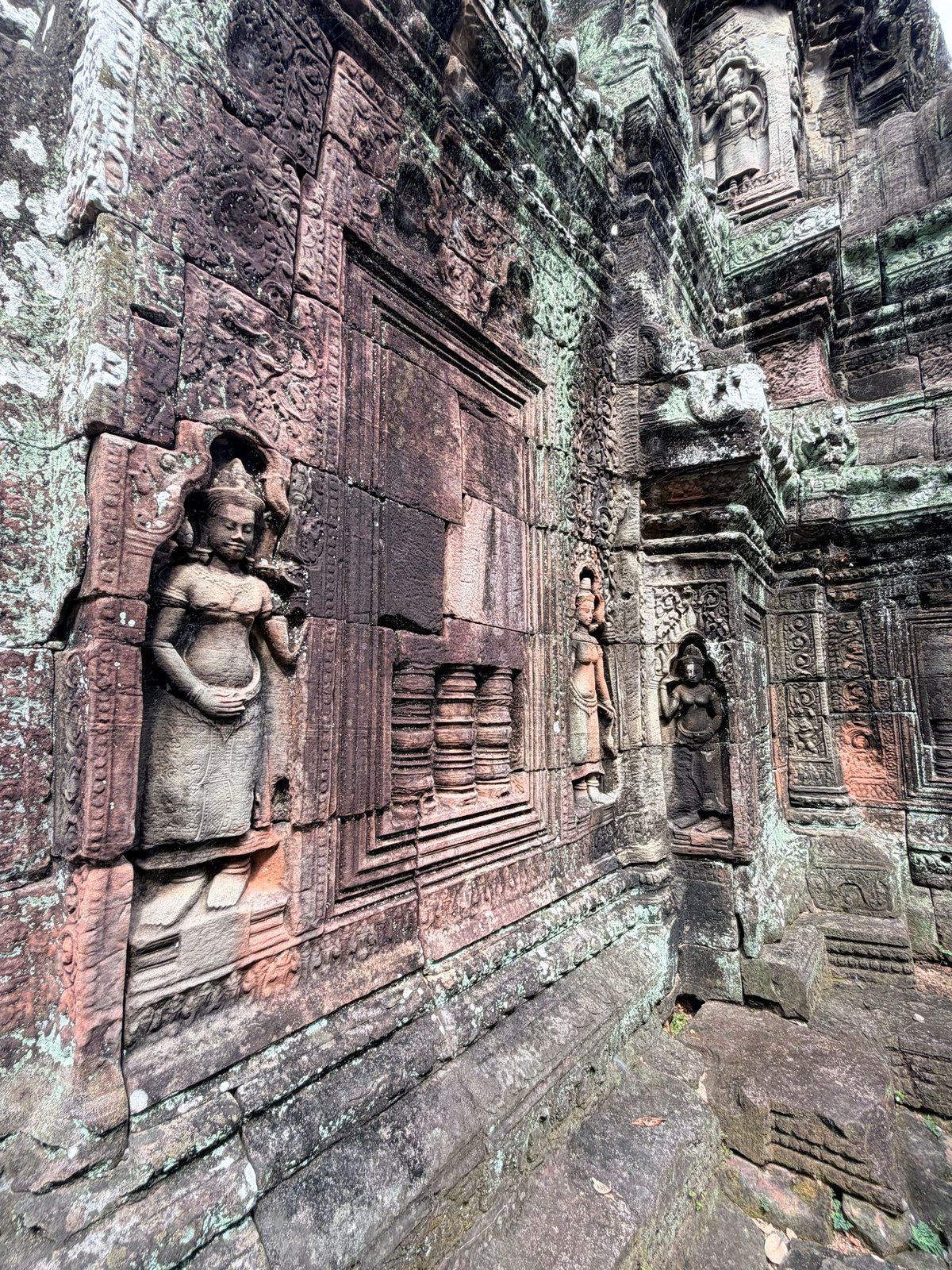
Carved female devatas on the walls of Ta Som
Devatas. Carved guardians at Ta Som.
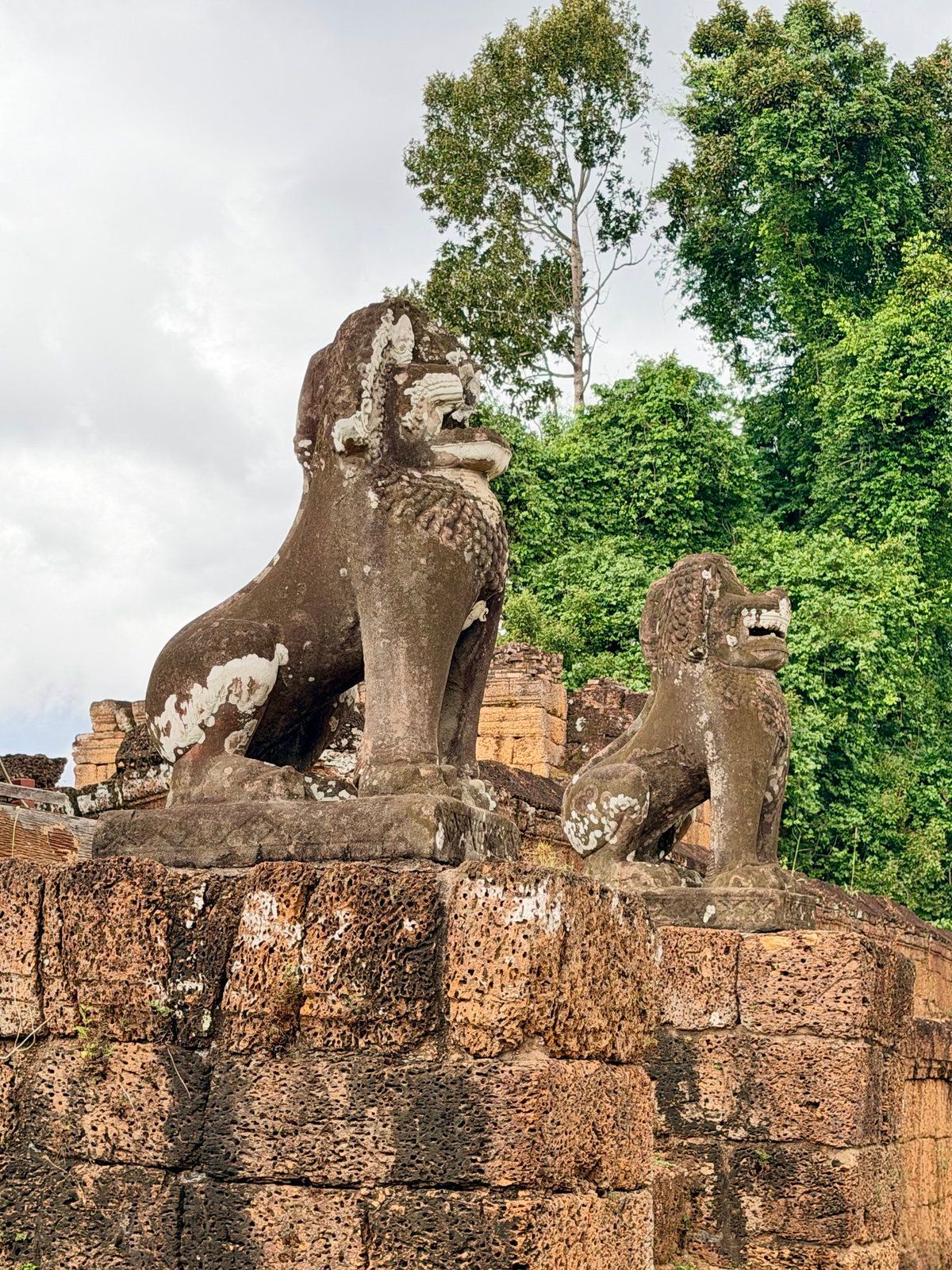
A stone lion guarding the steps of East Mebon
Stone lions. East Mebon.
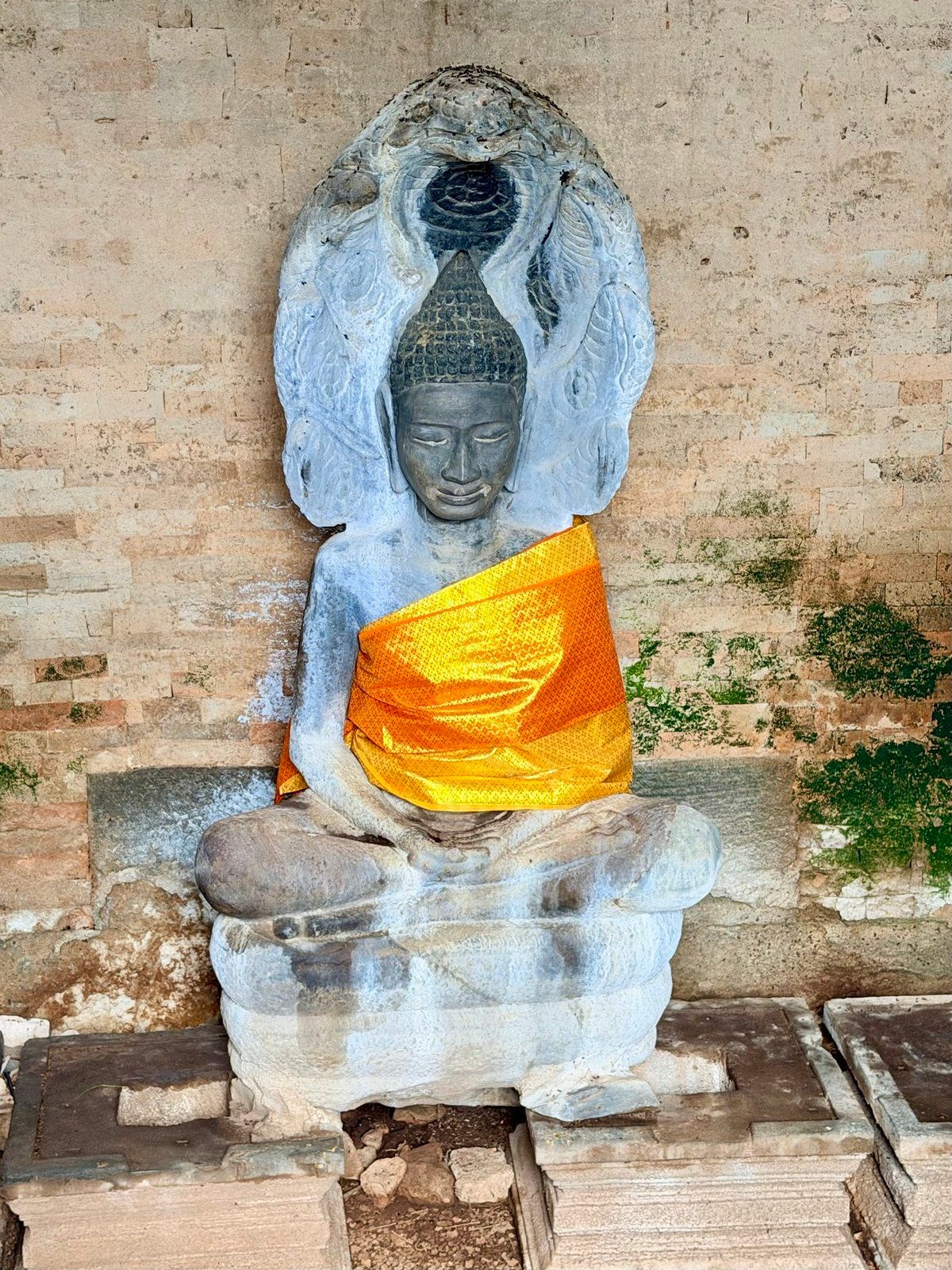
A seated Buddha sheltered by a naga and draped in saffron cloth, East Mebon
Buddha. Draped in saffron at East Mebon.
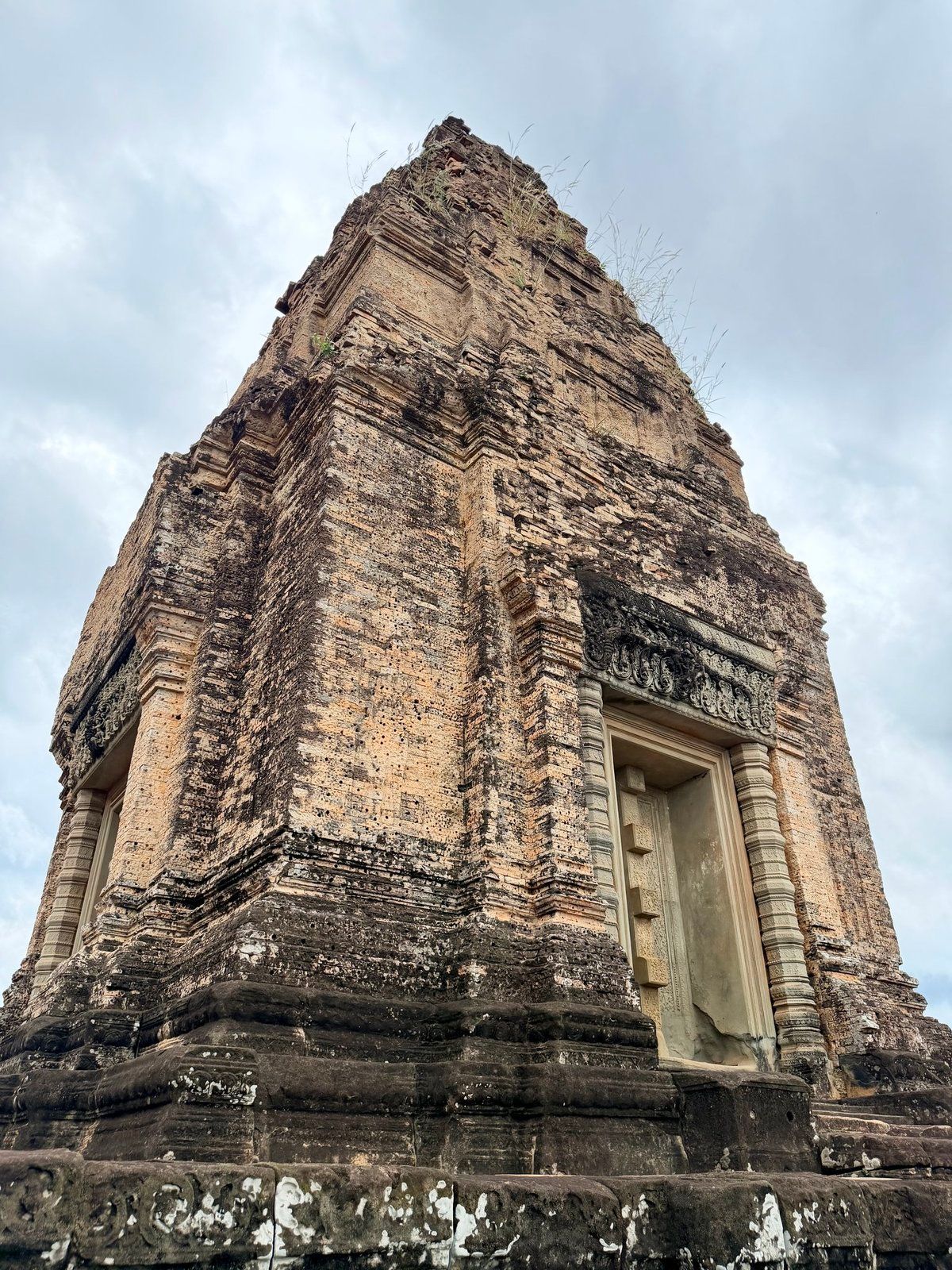
A tall brick tower at East Mebon under a cloudy sky
Brick and sandstone. East Mebon.

Sunset from Phnom Bakheng

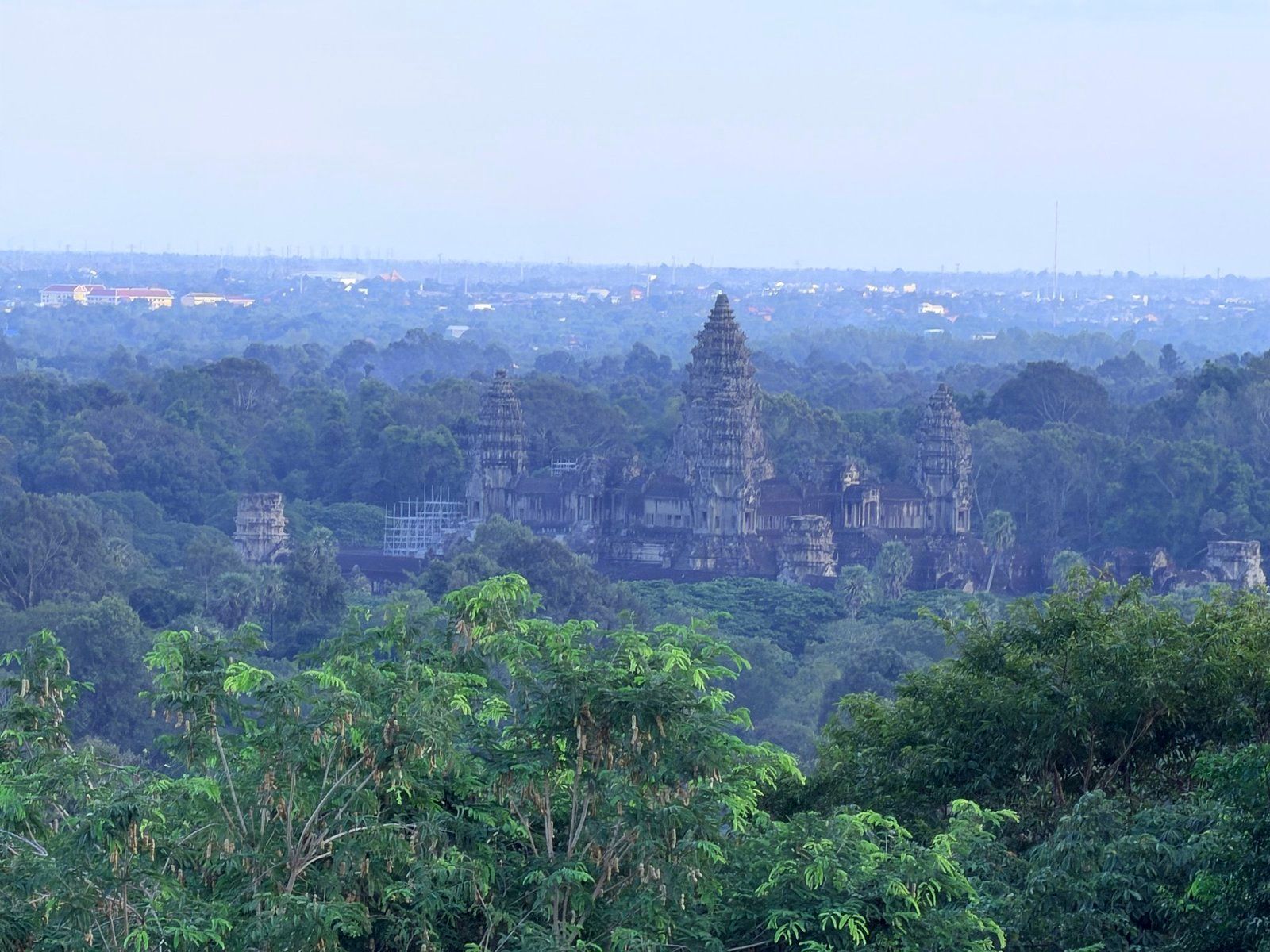
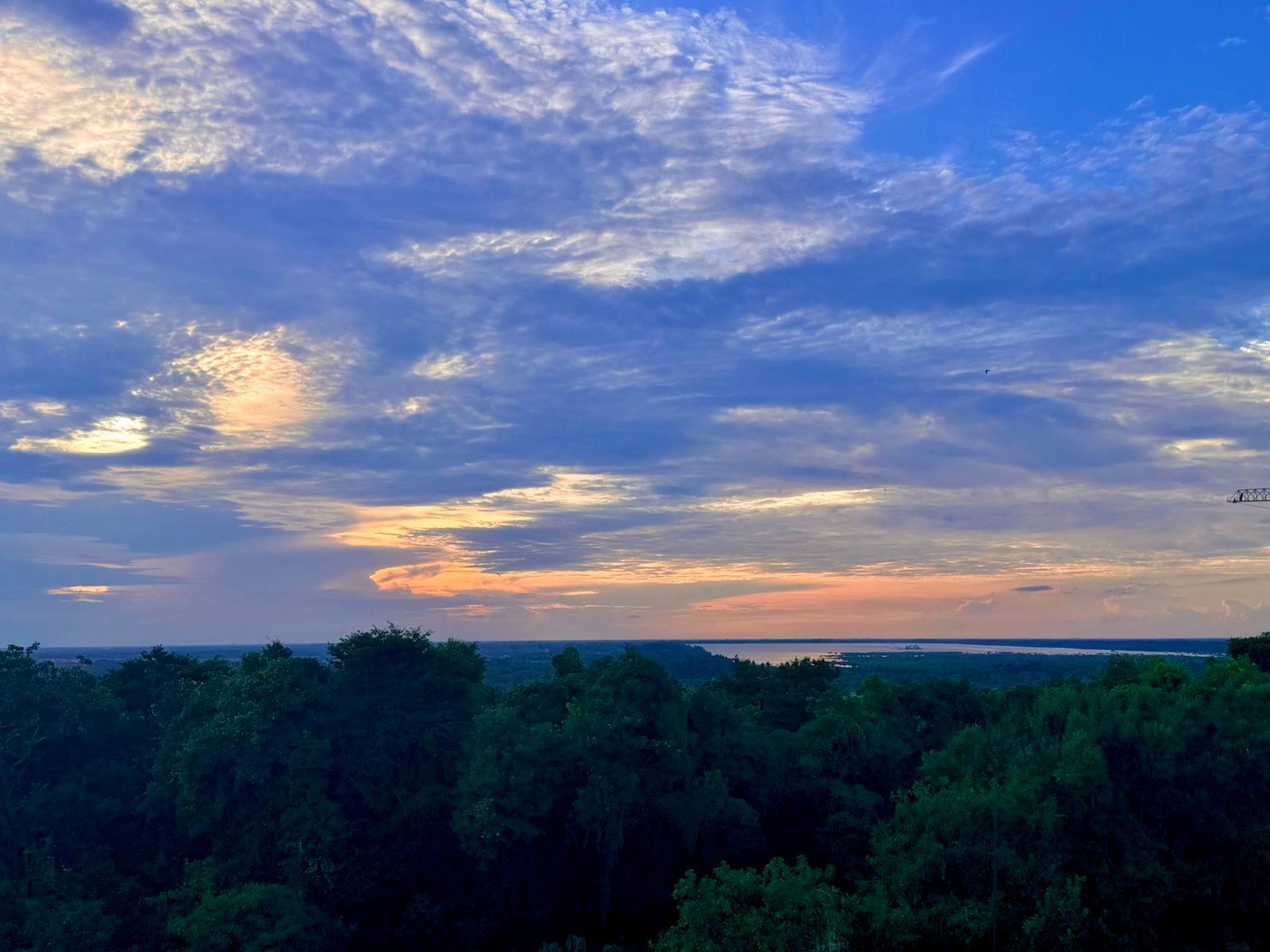
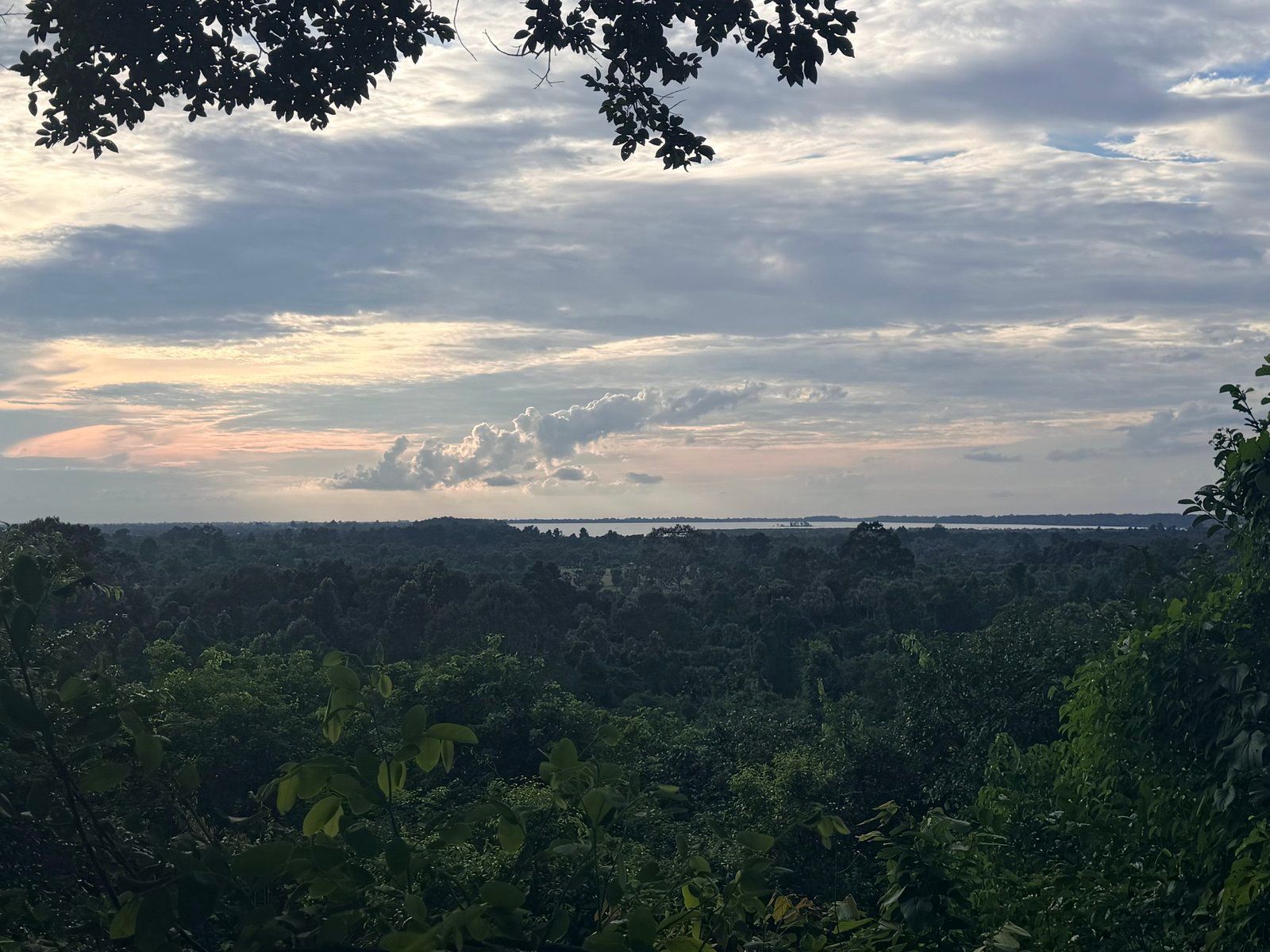
Phnom Bakheng, built in the late 9th century on the only real hill near Angkor, is the classic sunset spot: the forest runs to the horizon in every direction, with Angkor Wat's towers poking above the trees.
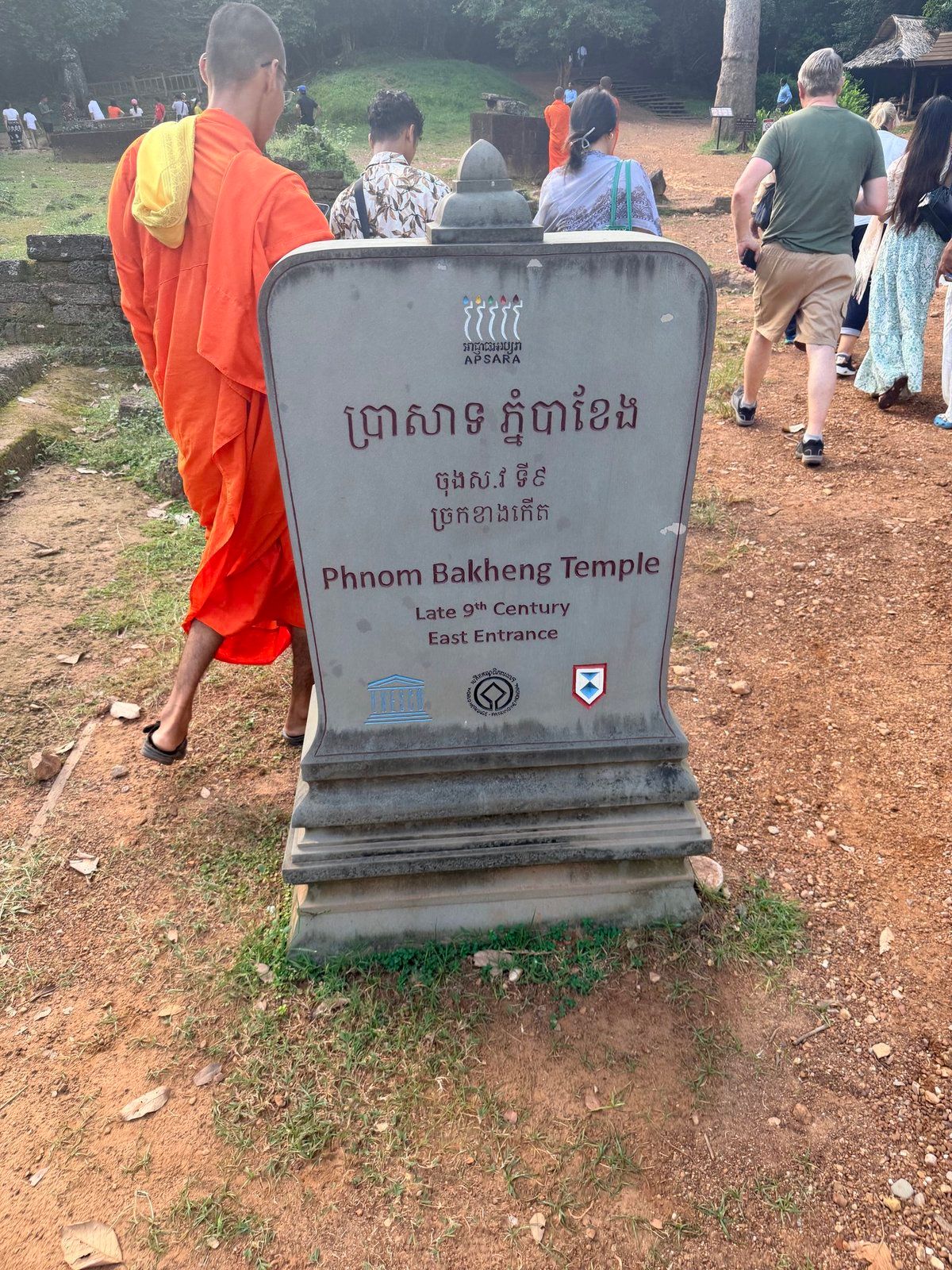
The Phnom Bakheng Temple sign on the path up the hill
Phnom Bakheng. The path up for sunset, 14 Nov 2026.
Late-afternoon view over the forest from Phnom Bakheng
From the top. Forest to the horizon, 14 Nov 2026.
The ruined summit temple of Phnom Bakheng
Phnom Bakheng. The temple on the hill.
Angkor Wat seen in the distance above the trees from Phnom Bakheng
Angkor Wat. Its towers above the forest.
Sunset over the forest from Phnom Bakheng
Sunset. From Phnom Bakheng, 14 Nov 2026.

Phnom Penh

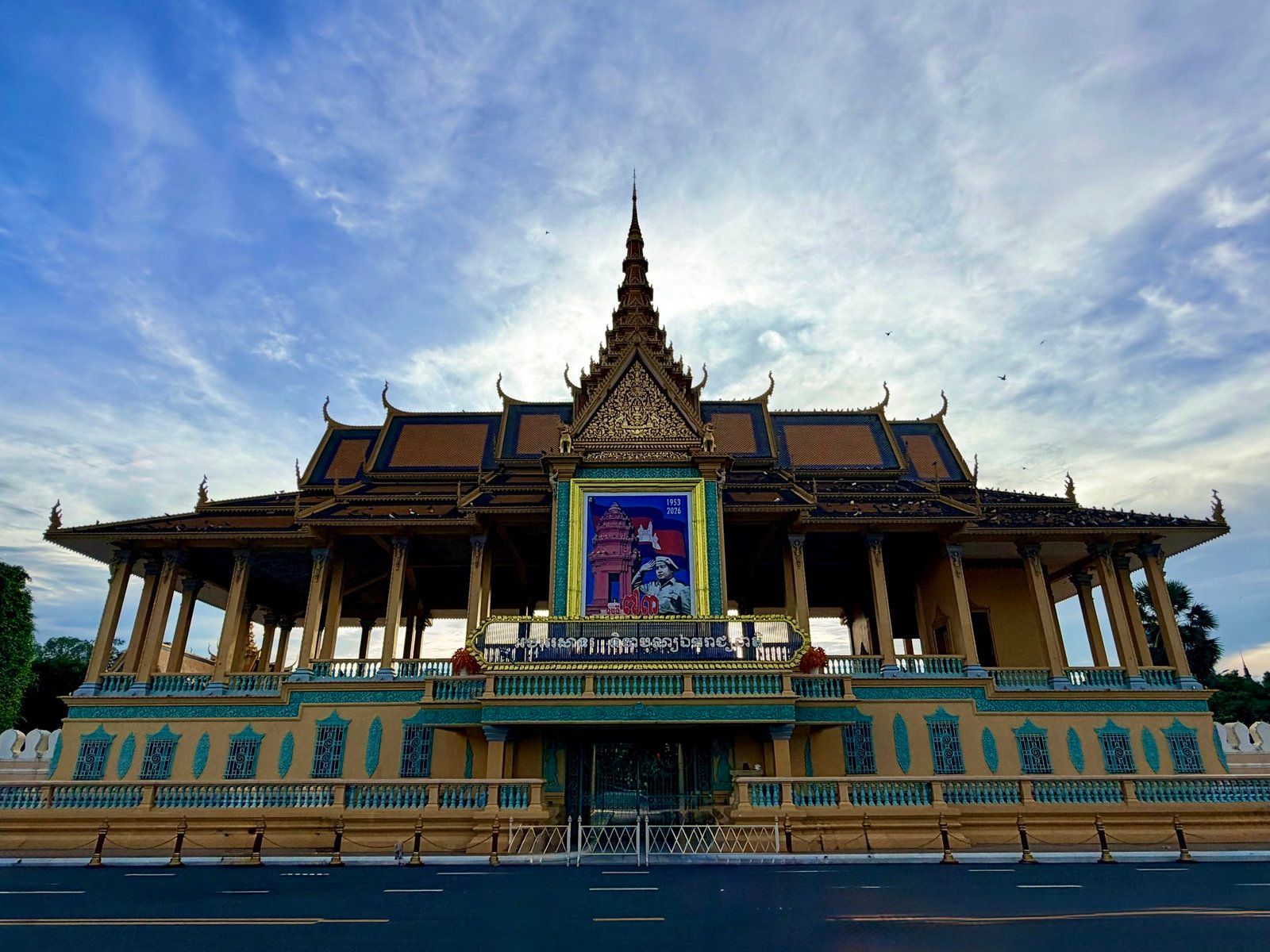
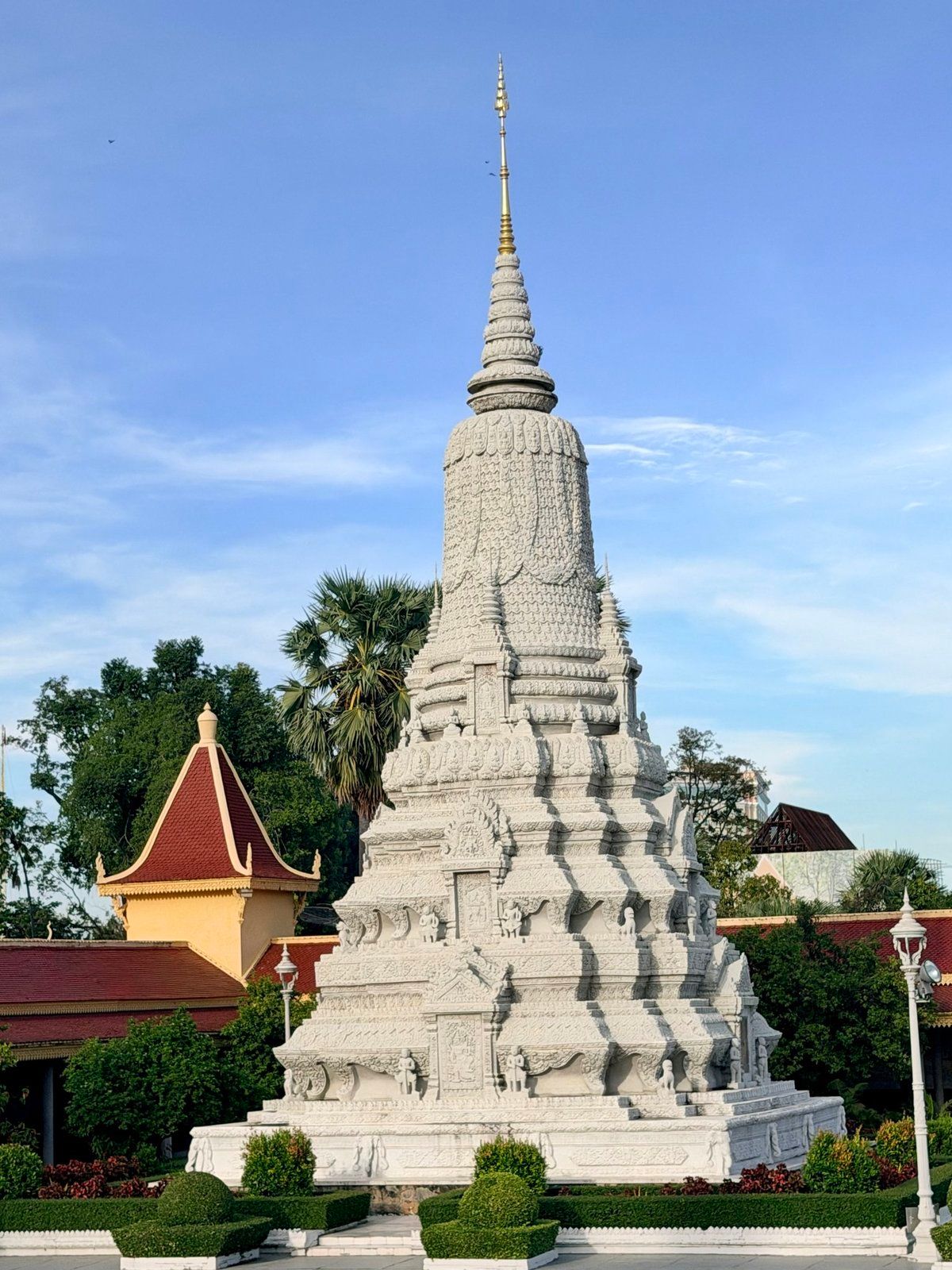
Cambodia's capital sits where the Tonlé Sap river meets the Mekong. The Royal Palace, built from the 1860s, is still the king's residence; next to it, the Silver Pagoda is named for the silver tiles on its floor.
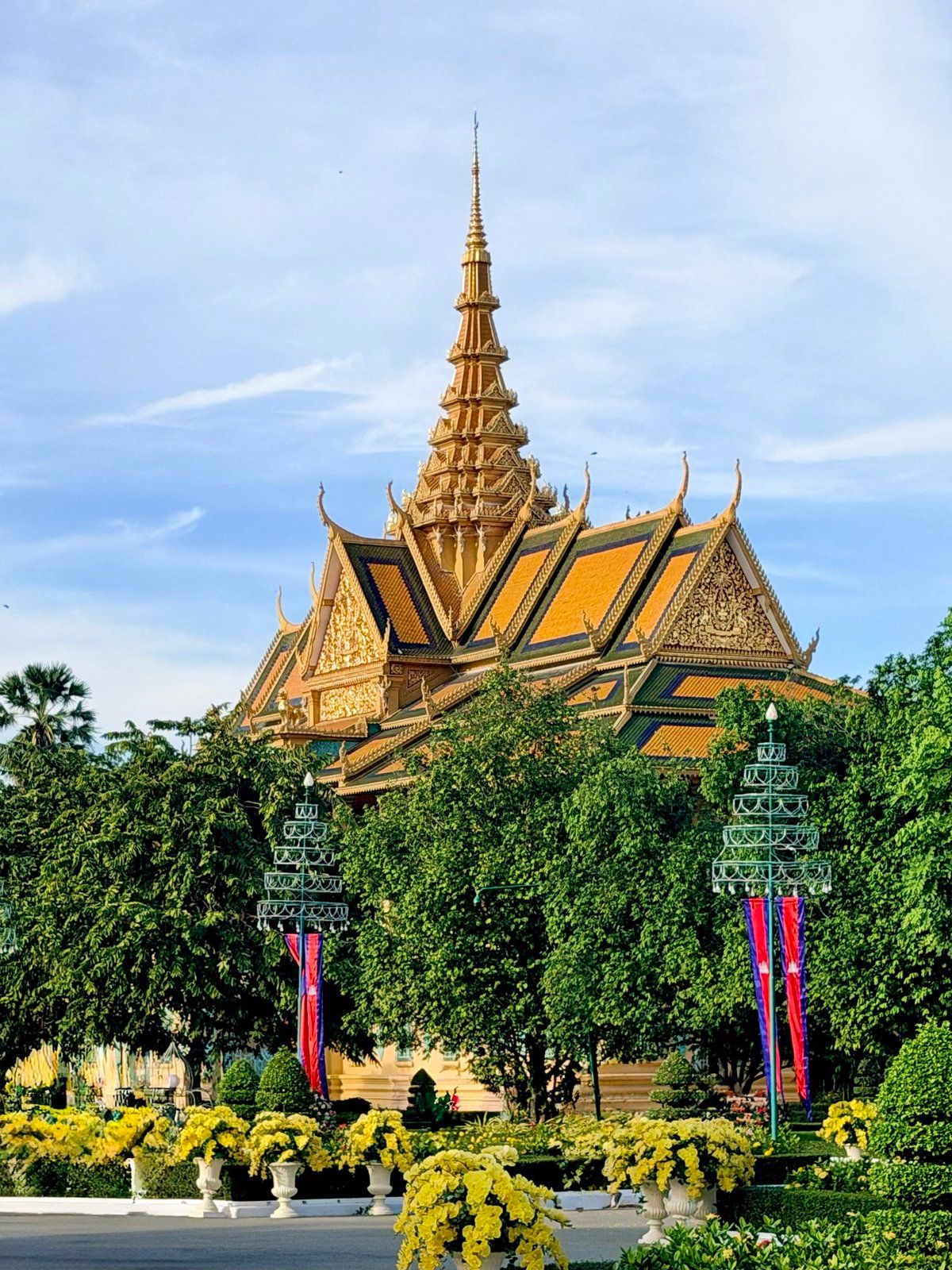
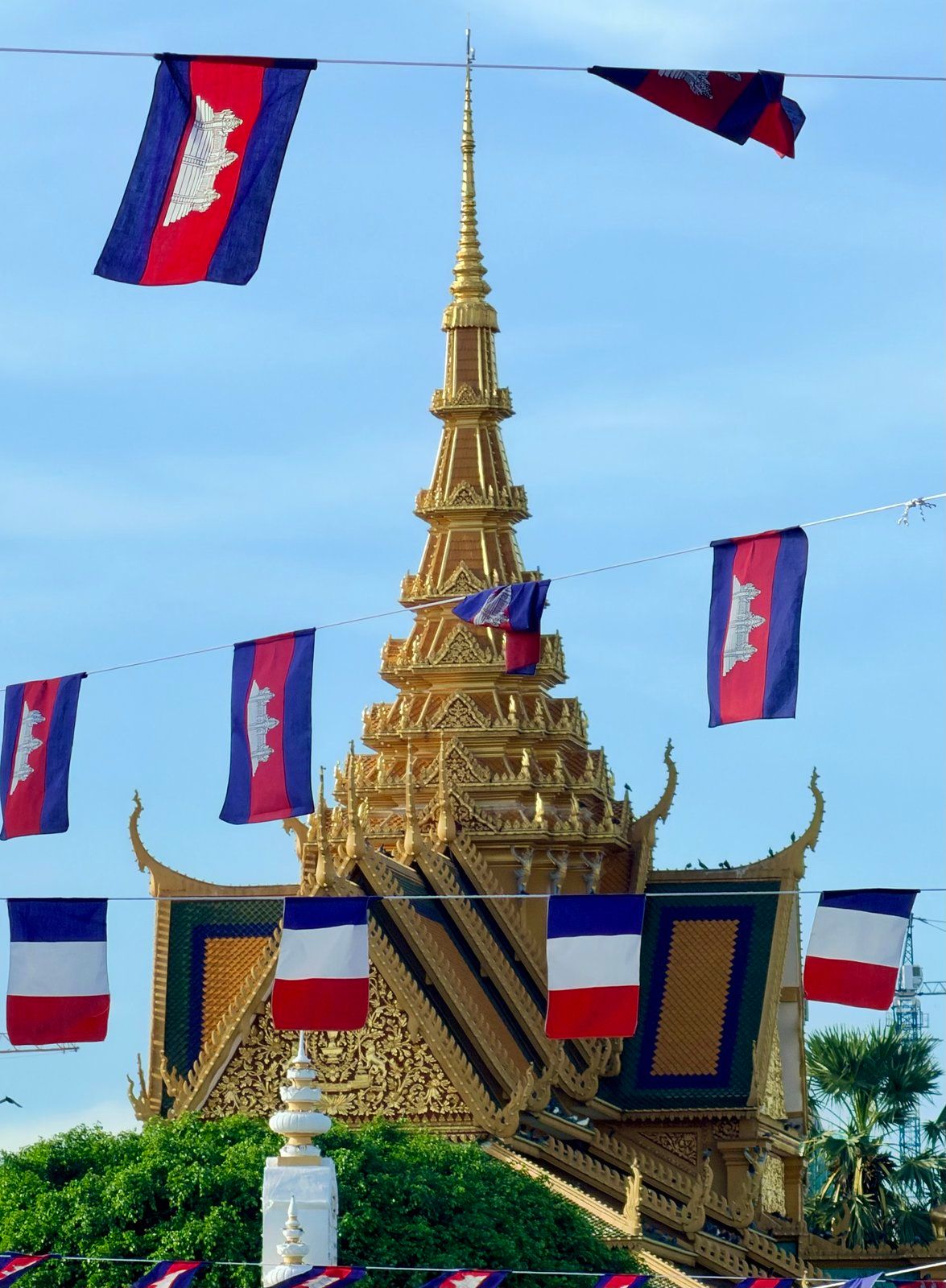
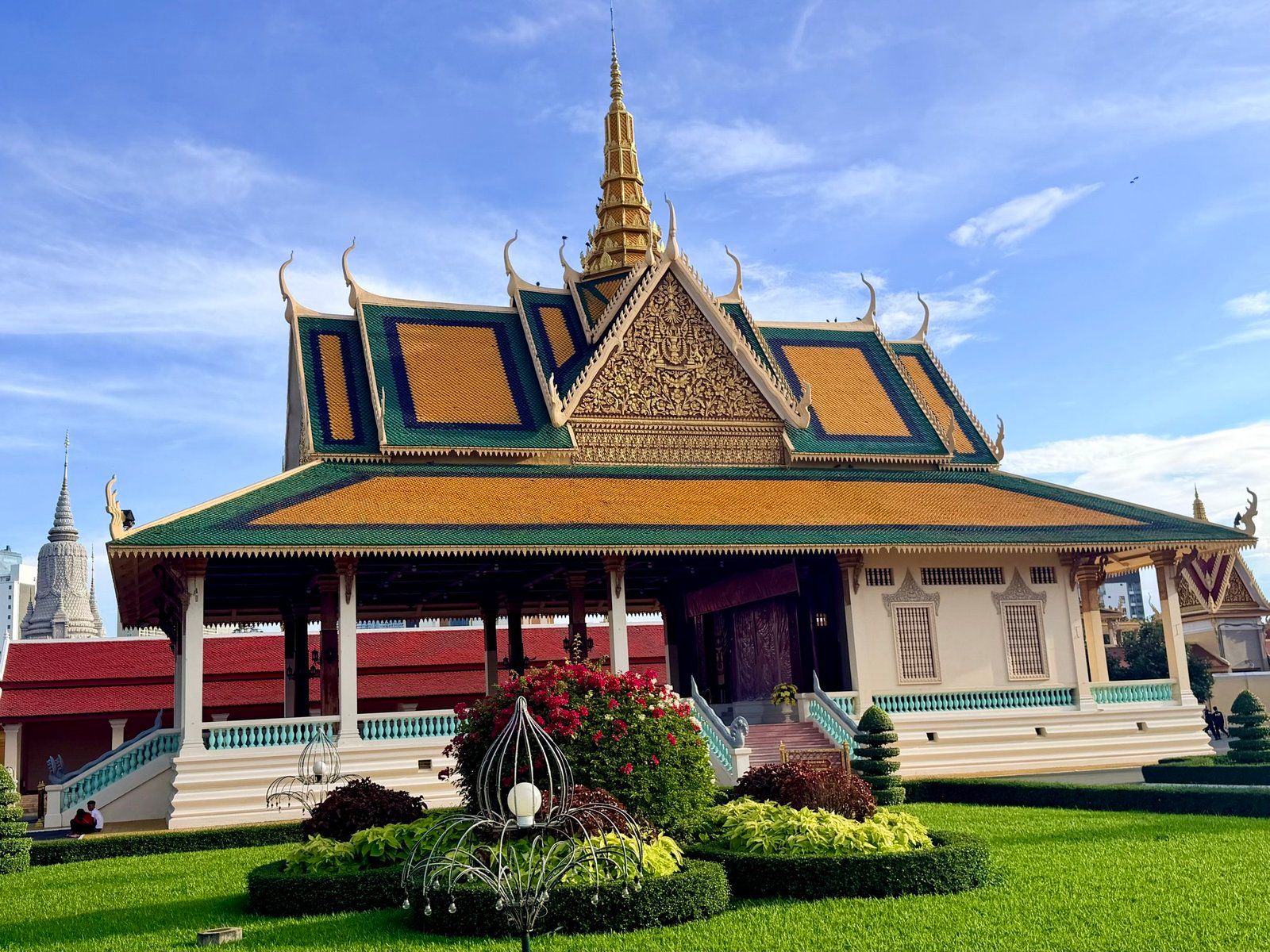
Royal Palace. Late afternoon, 15 Nov 2026.
The Throne Hall of the Royal Palace, Phnom Penh
Royal Palace. The Throne Hall, 15 Nov 2026.
A golden spire at the Royal Palace with Cambodian flags
Spires and flags. At the palace gates.
A pavilion in the Royal Palace grounds, Phnom Penh
Palace grounds. Pavilions and lawns.
A white stupa in the Silver Pagoda compound
Silver Pagoda. Stupas in the compound.
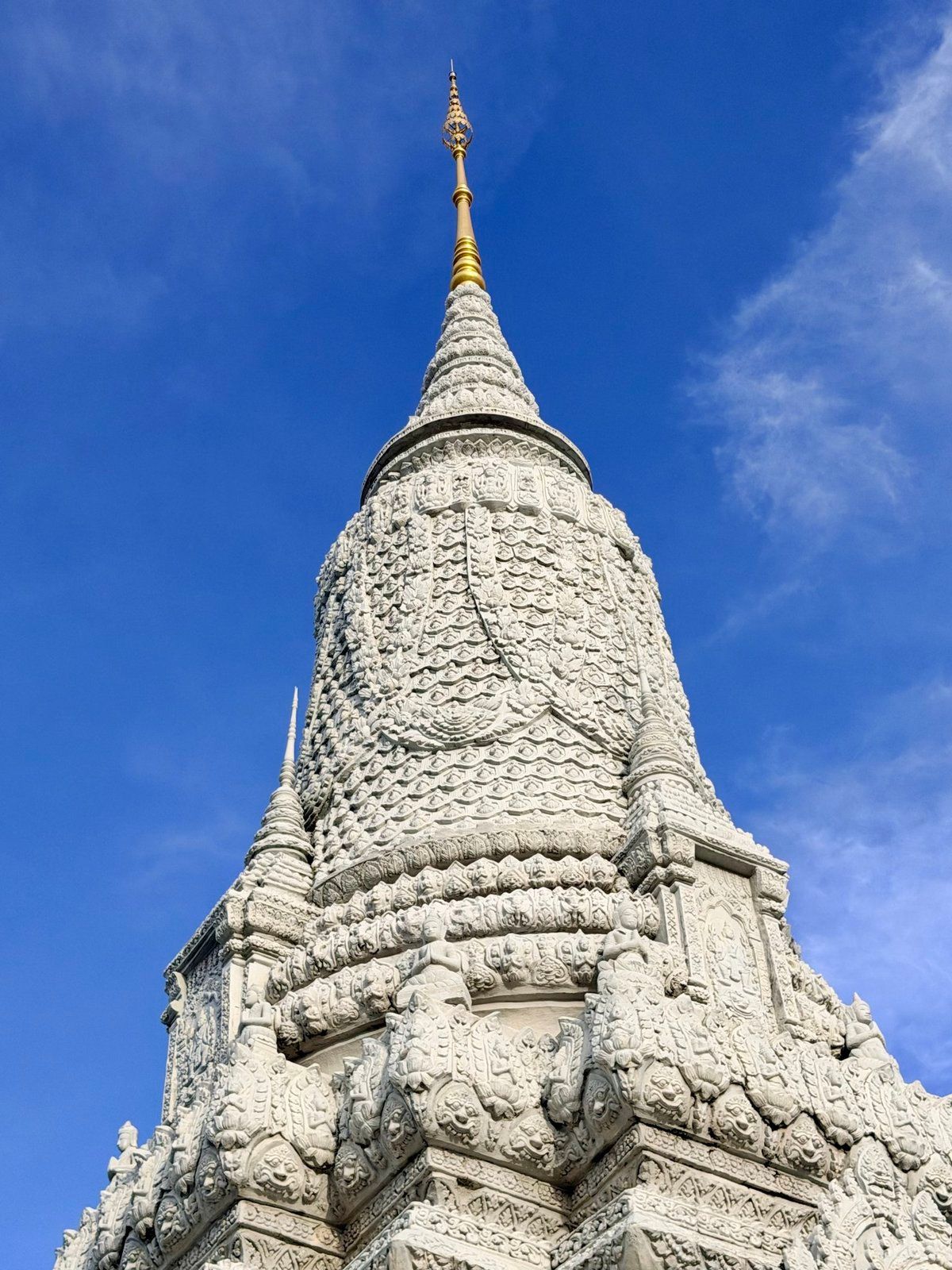
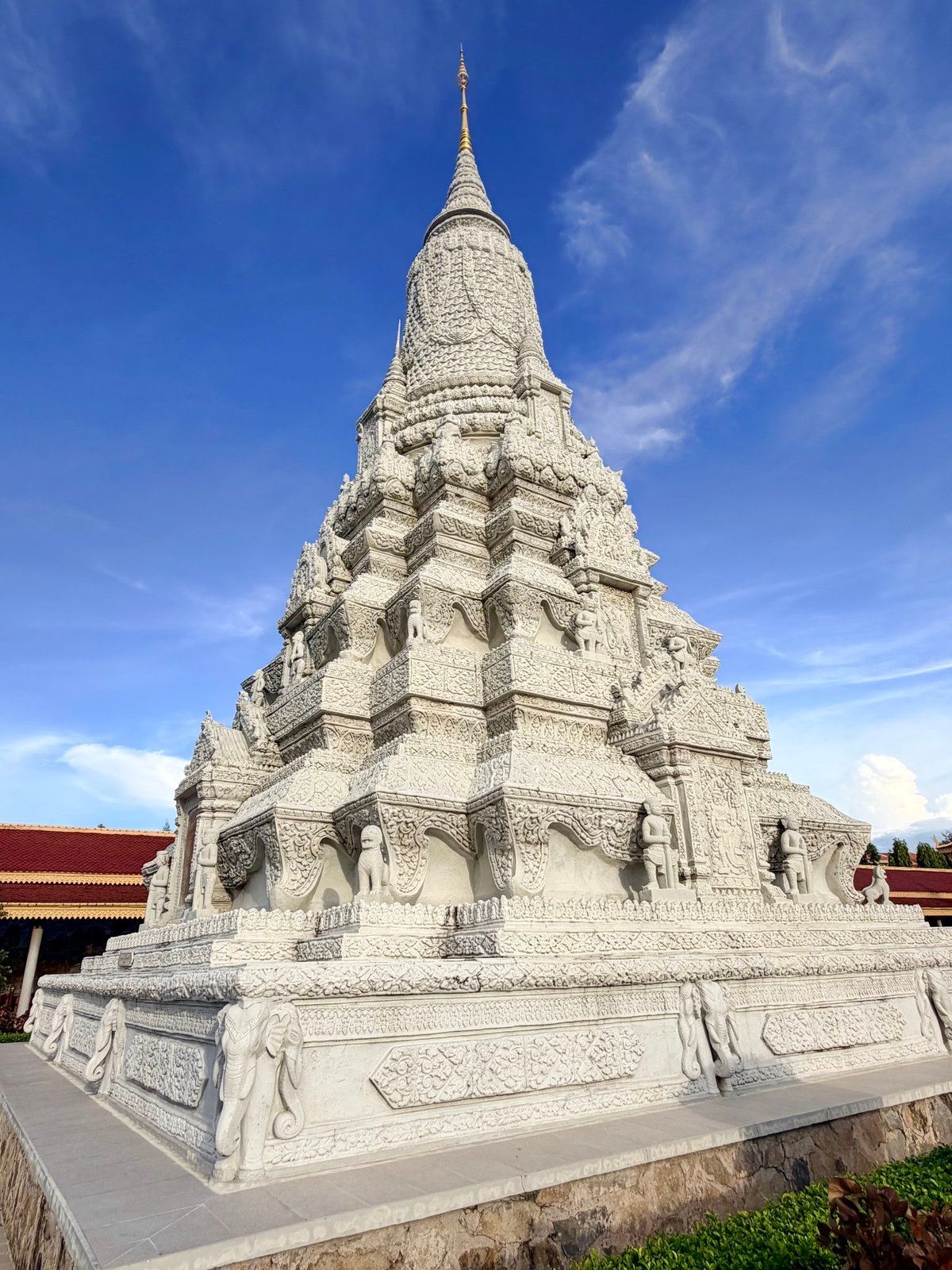
Detail of a carved white stupa against a blue sky, Phnom Penh
Stupa. Against a clear sky.
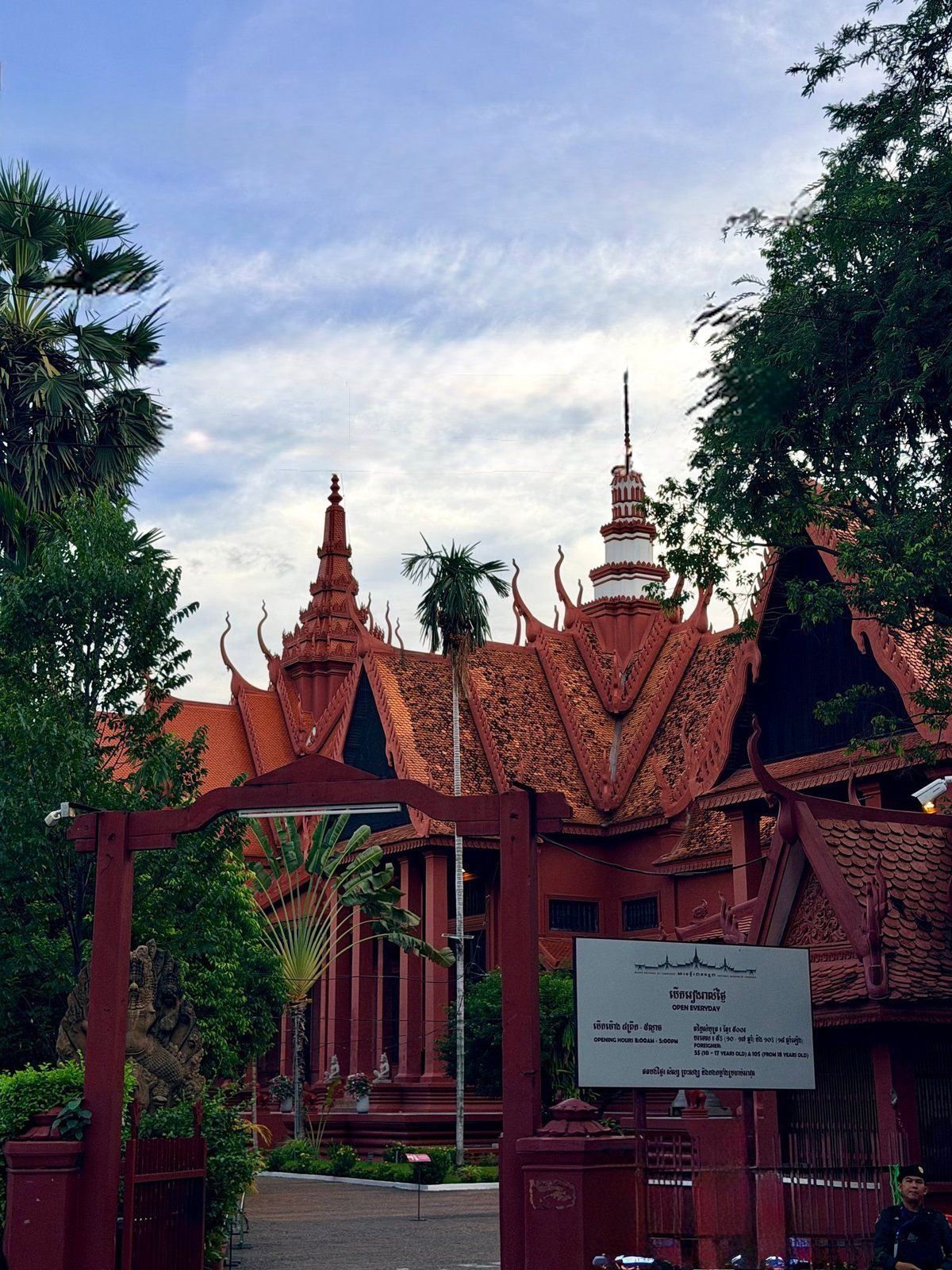
The red National Museum of Cambodia building
National Museum. Khmer art from Angkor and earlier.
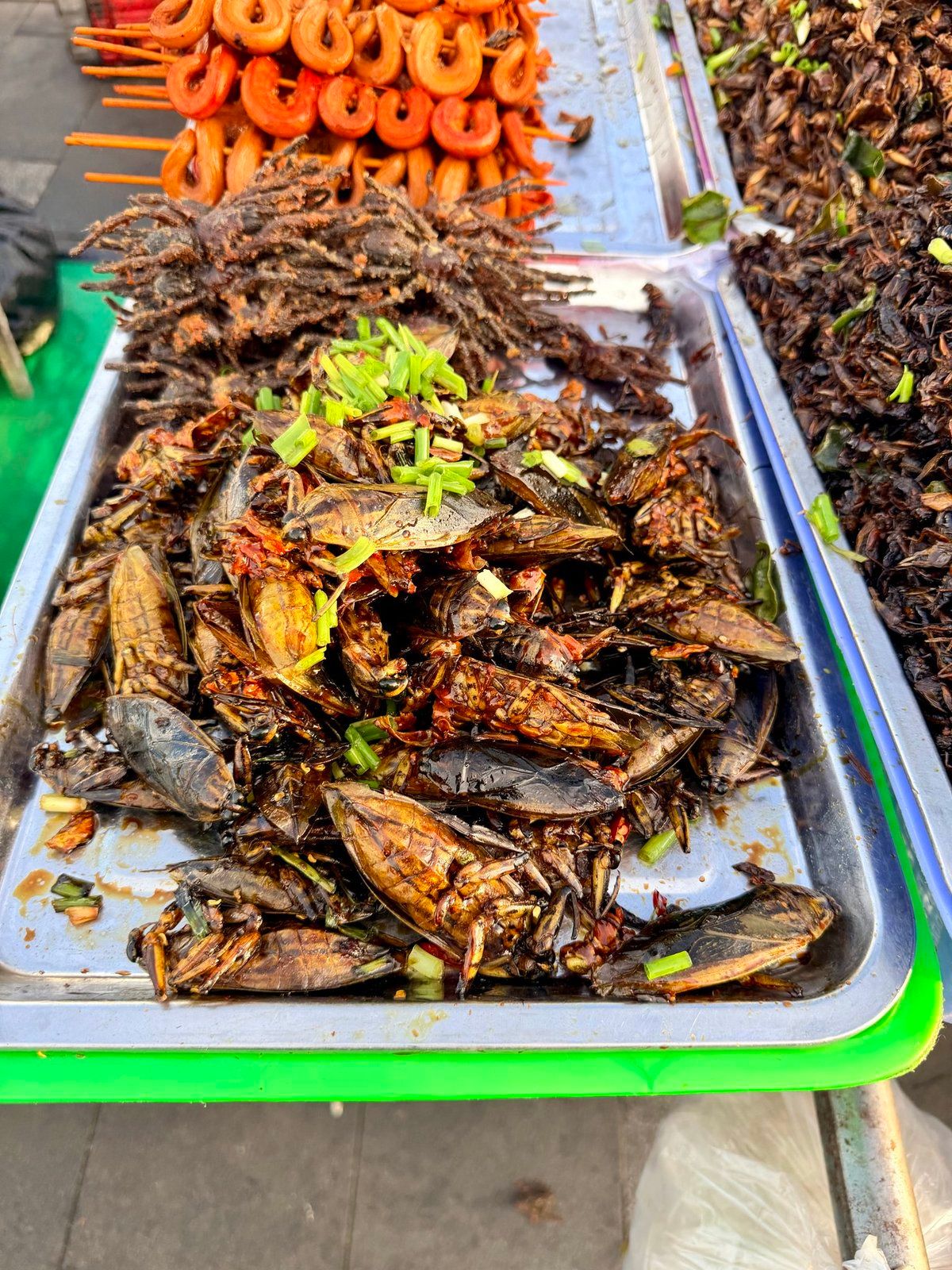
Trays of fried insects for sale at a stall in Phnom Penh
Street snacks. Fried insects near the palace.
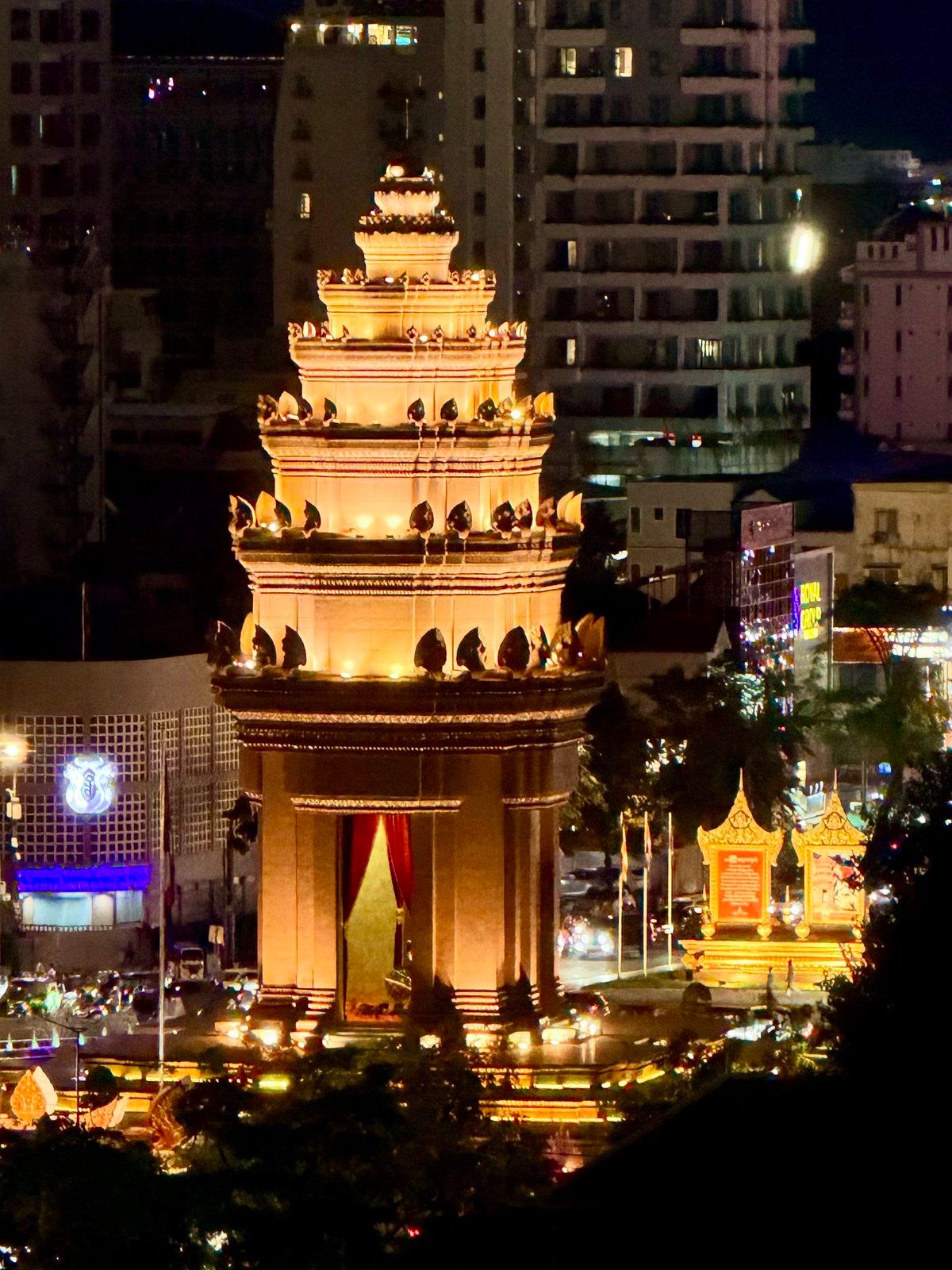
Independence Monument in Phnom Penh lit up at night
Independence Monument. Lit up after dark.
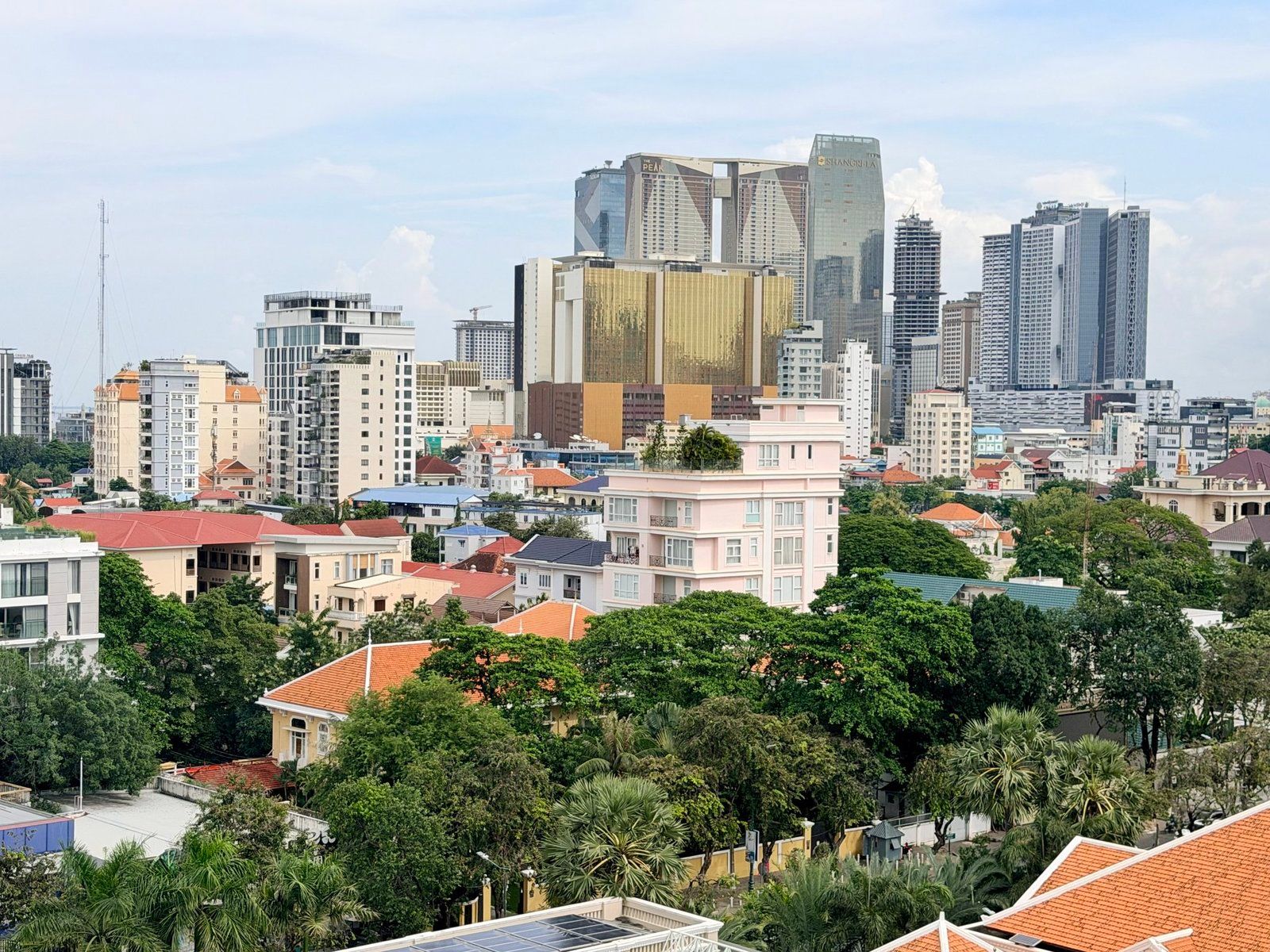
The Phnom Penh skyline from above
The skyline. A fast-growing capital.
Gilded pavilions and lawns of the Royal Palace, Phnom Penh
Royal Palace. The palace grounds.
A white carved stupa in the Silver Pagoda compound
White stupa. Silver Pagoda compound.
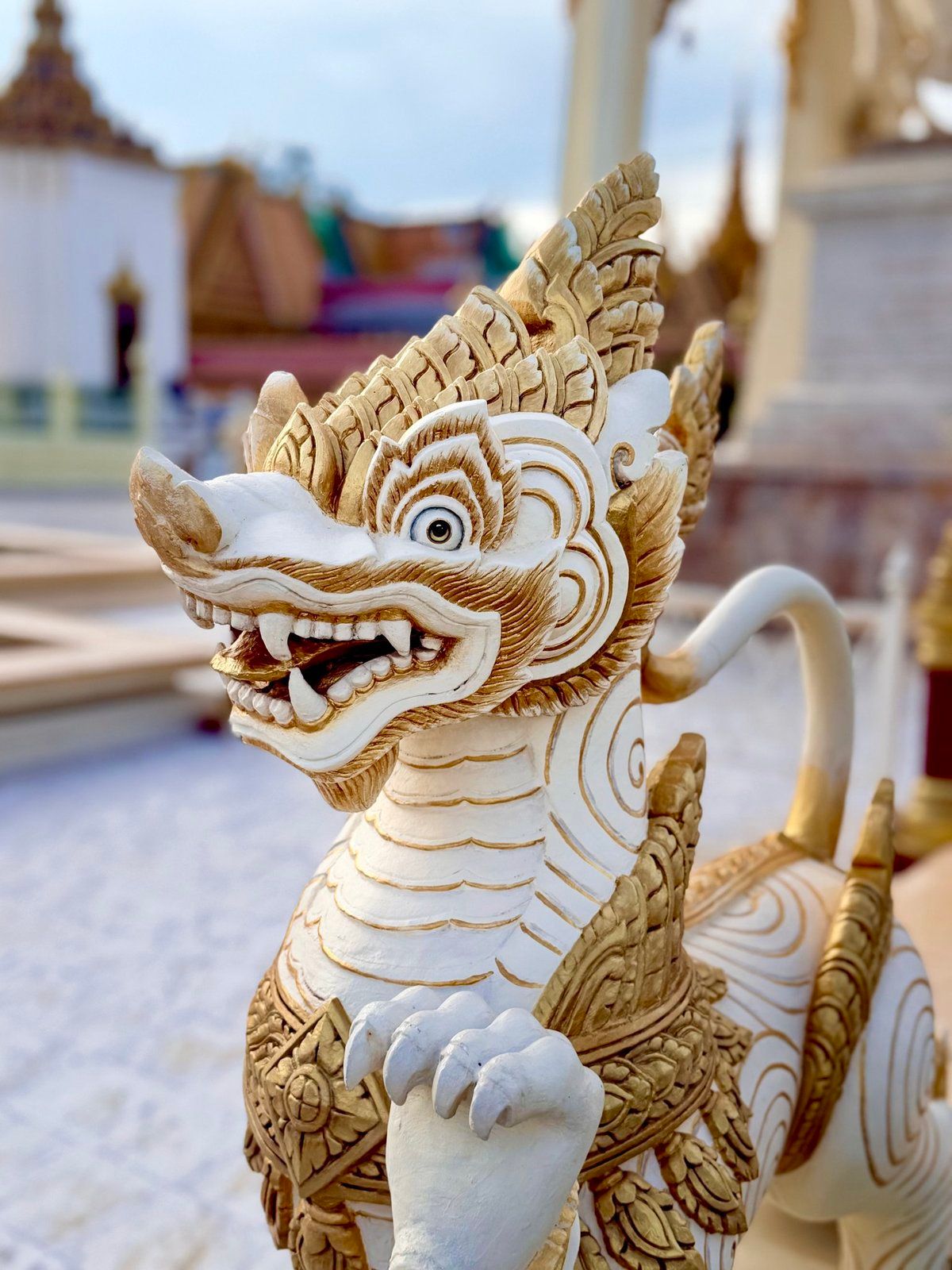
A golden mythical guardian statue at the Royal Palace, Phnom Penh
Guardian. Gold and white.
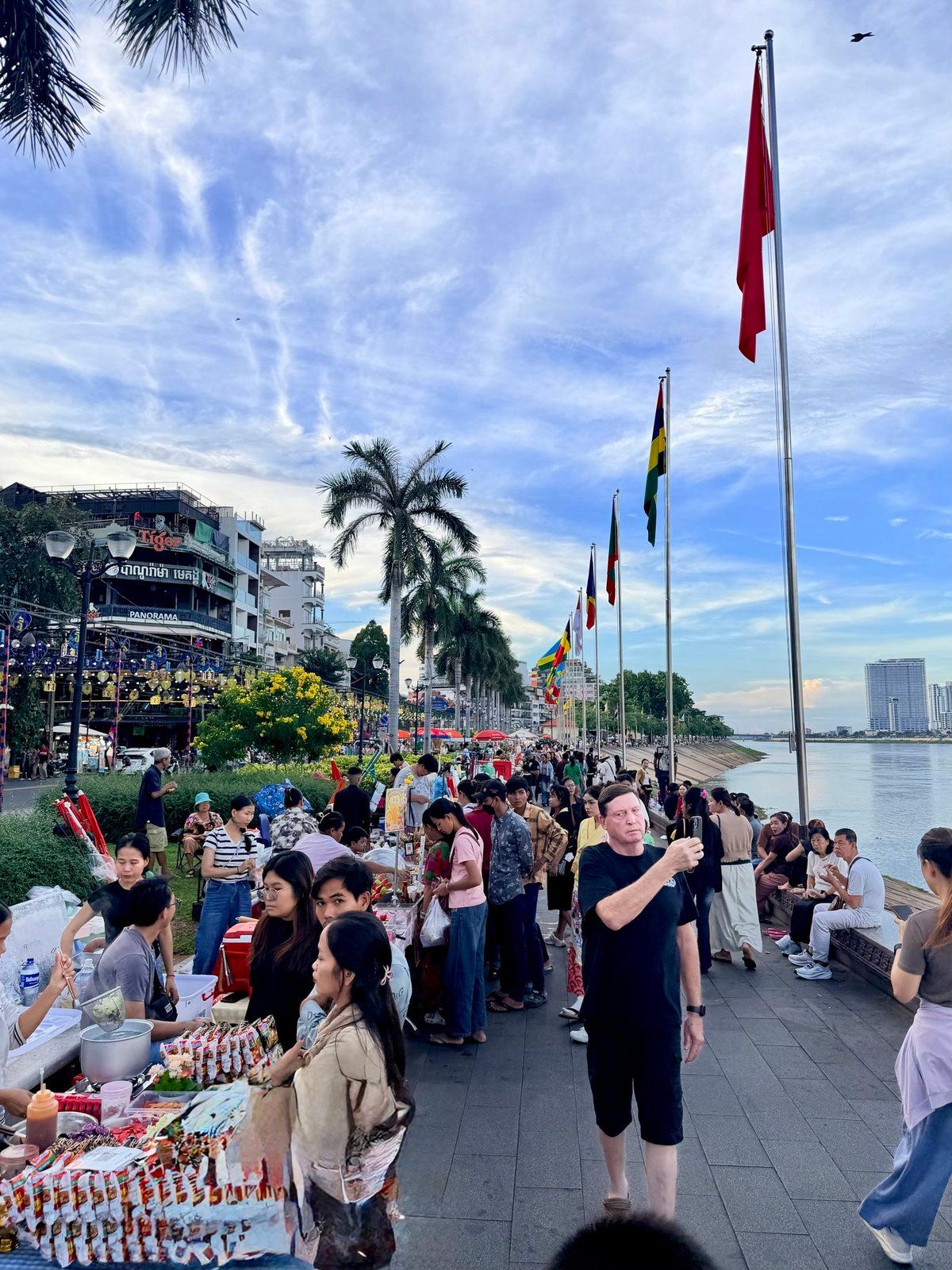
Crowds and flags along Sisowath Quay on the Phnom Penh riverfront
Sisowath Quay. The riverfront in the evening.
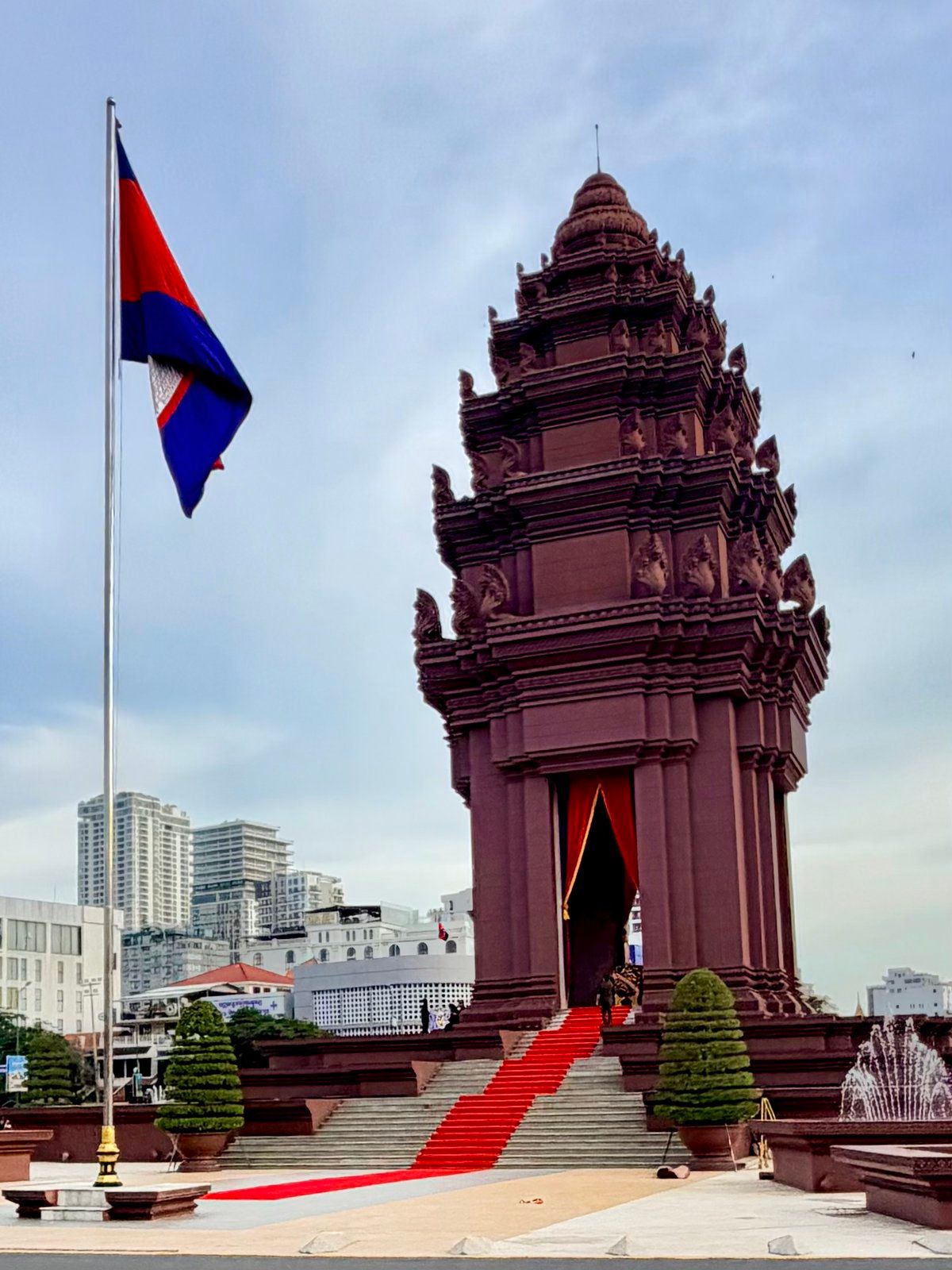
Independence Monument in Phnom Penh by day with a Cambodian flag
Independence Monument. By day.
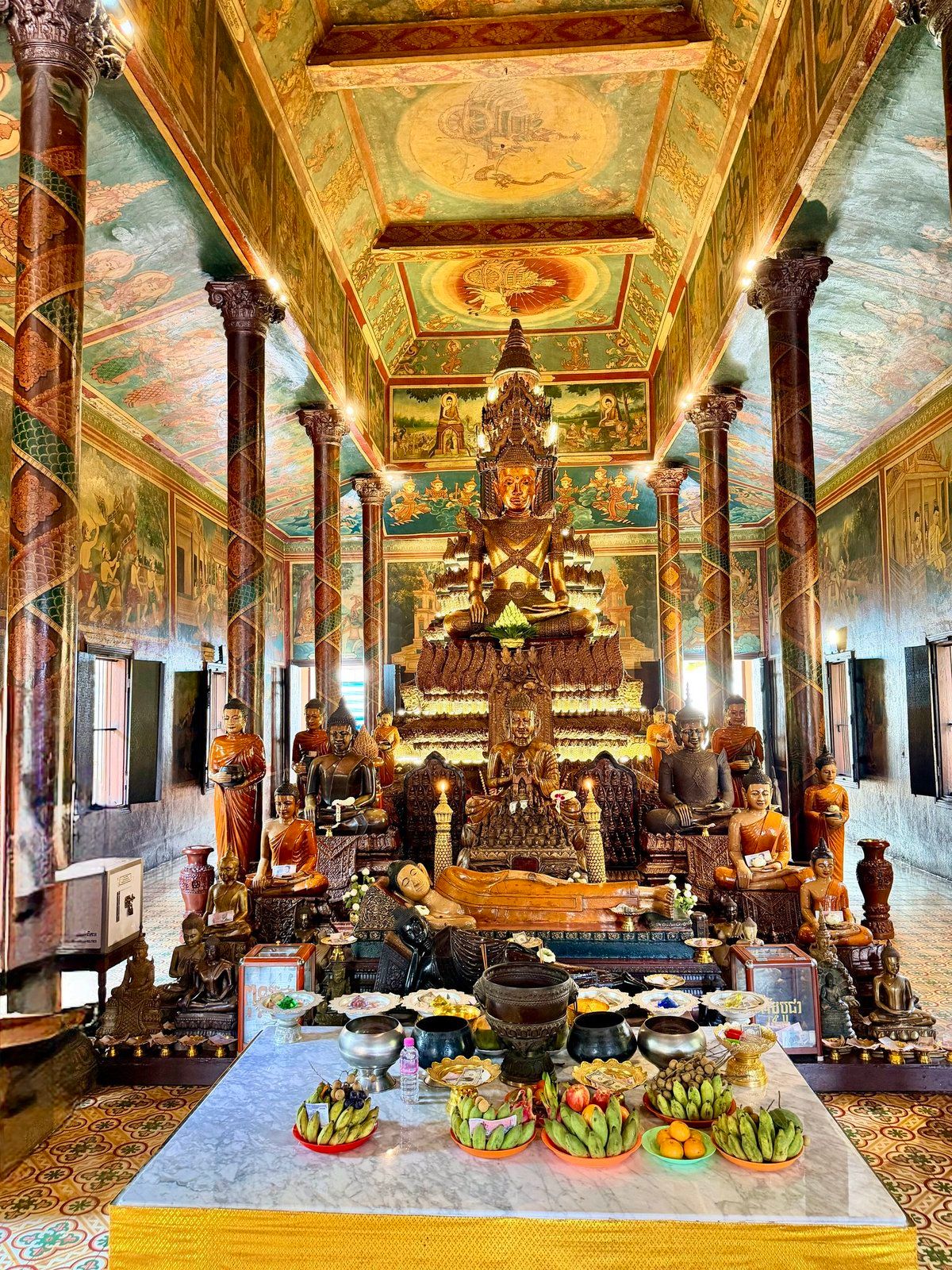
The gilded shrine inside Wat Phnom
Wat Phnom. The hilltop temple, 17 Nov 2026.

Tuol Sleng and Choeung Ek

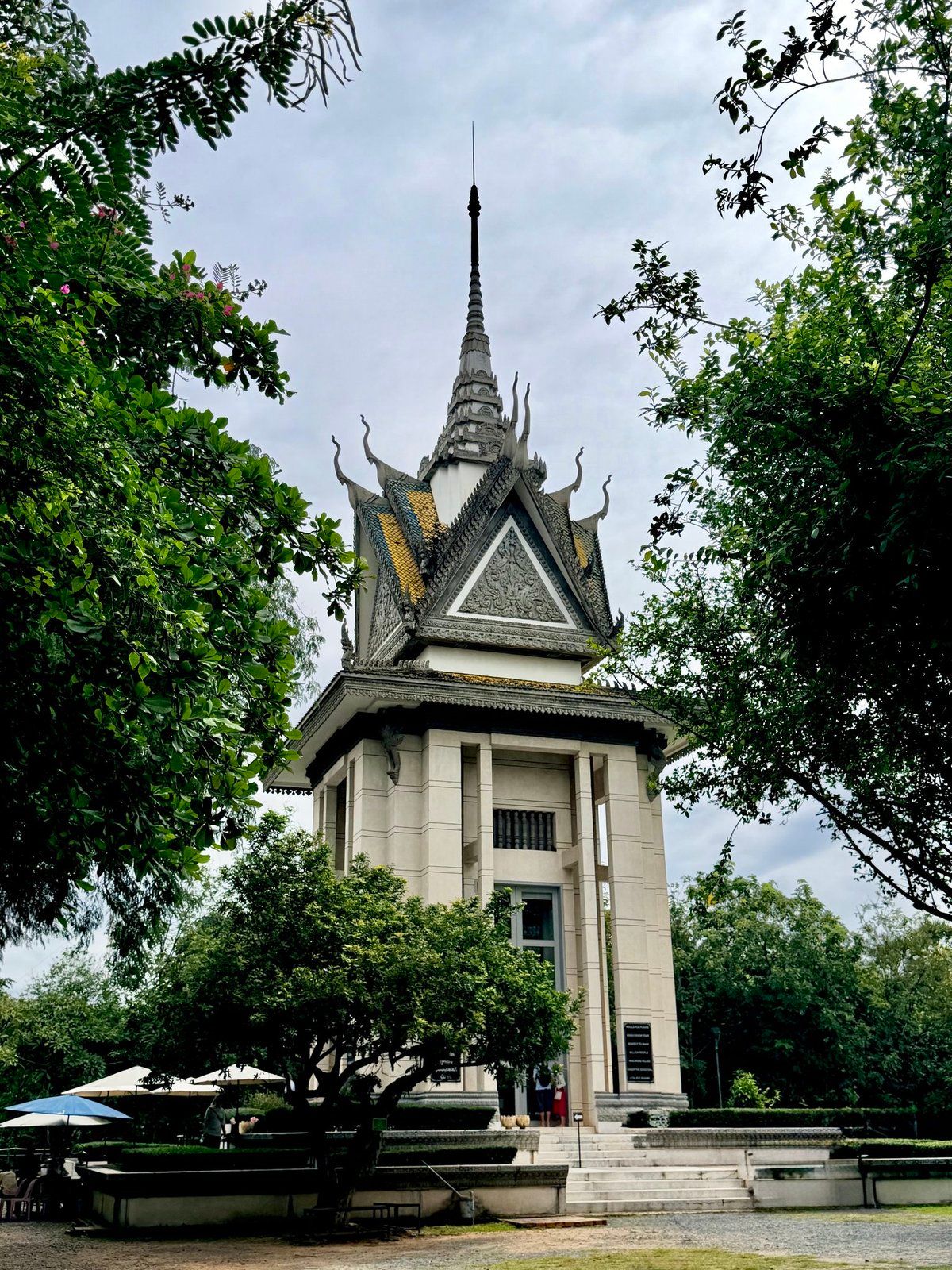
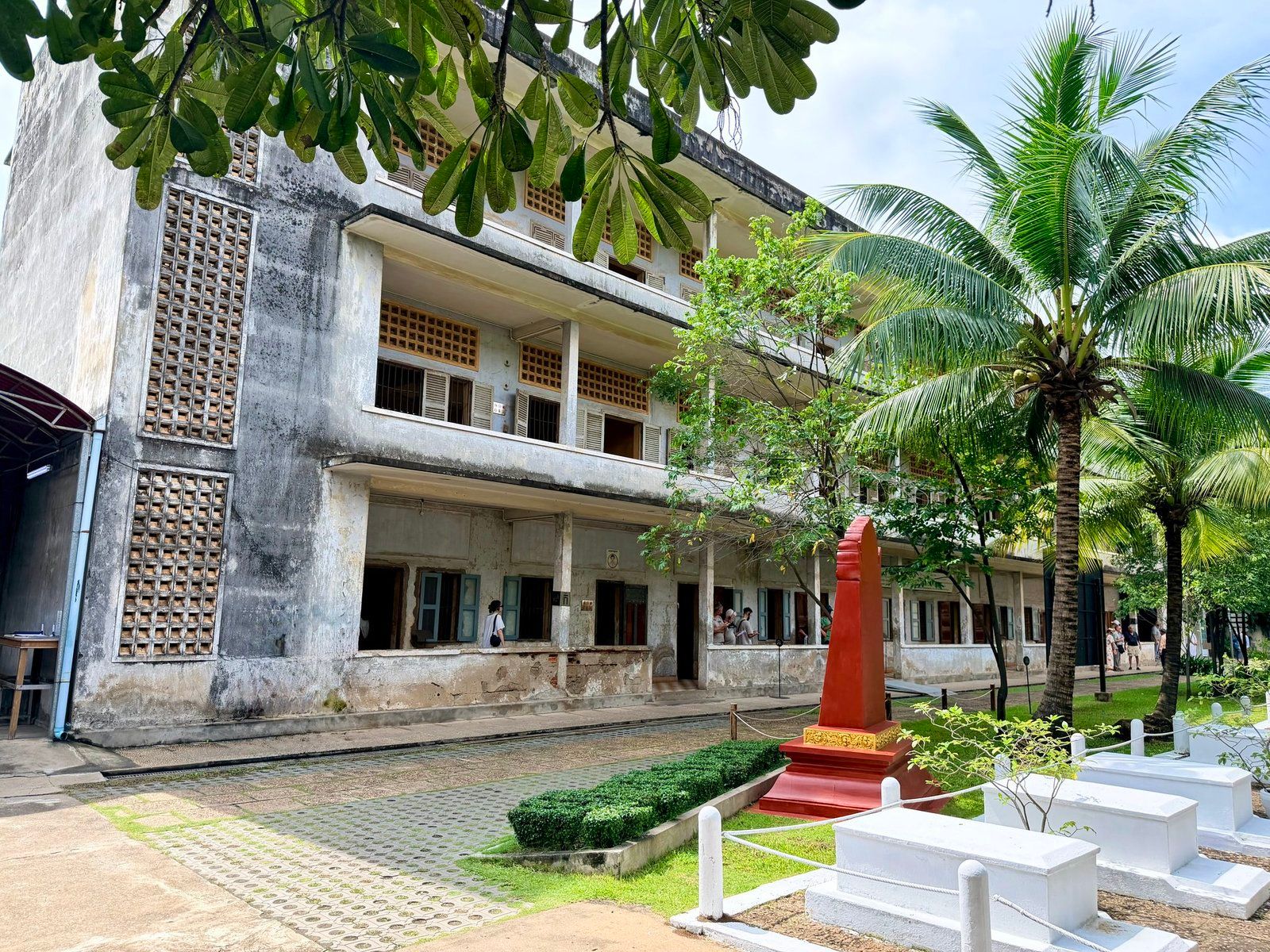
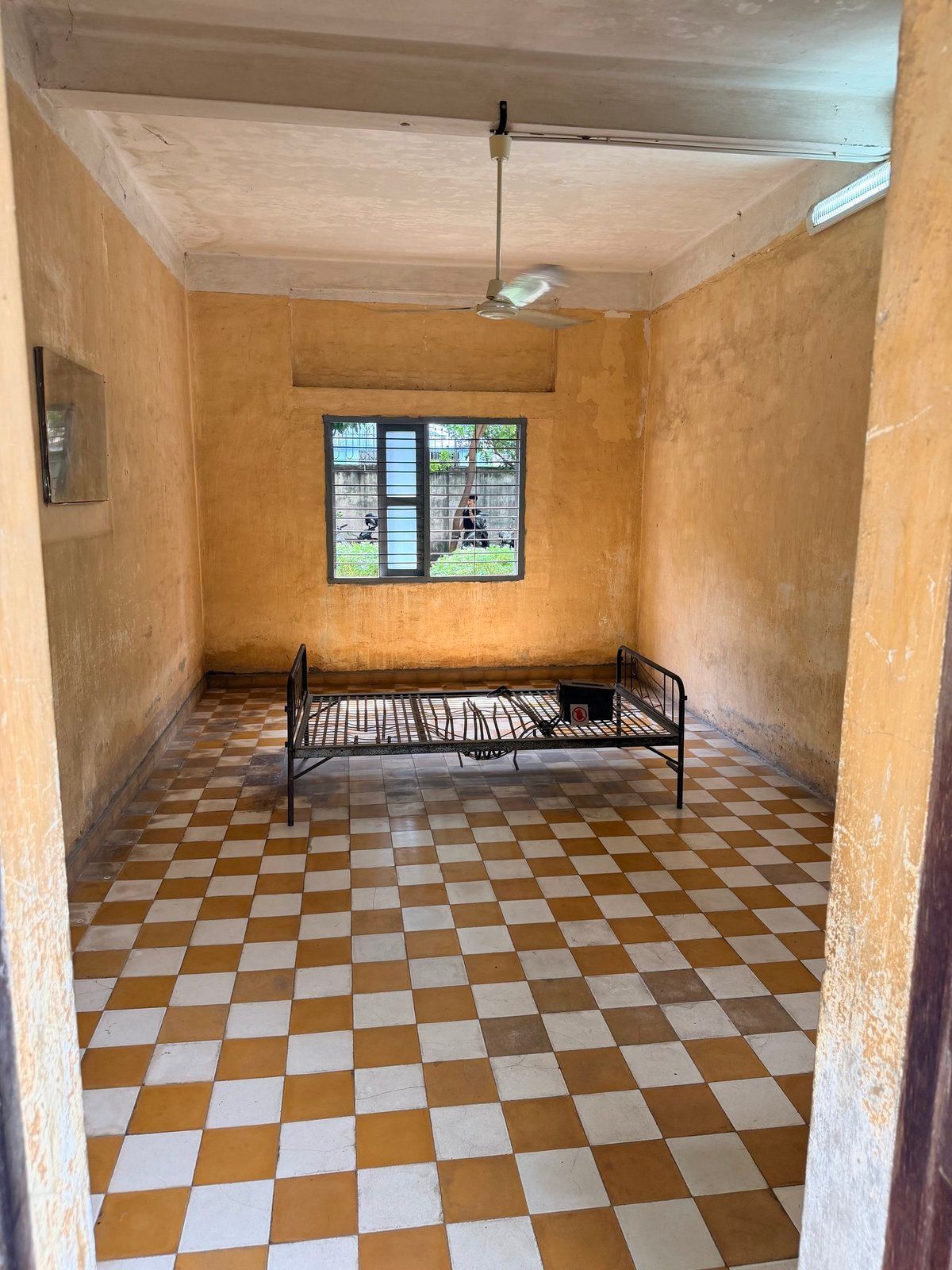
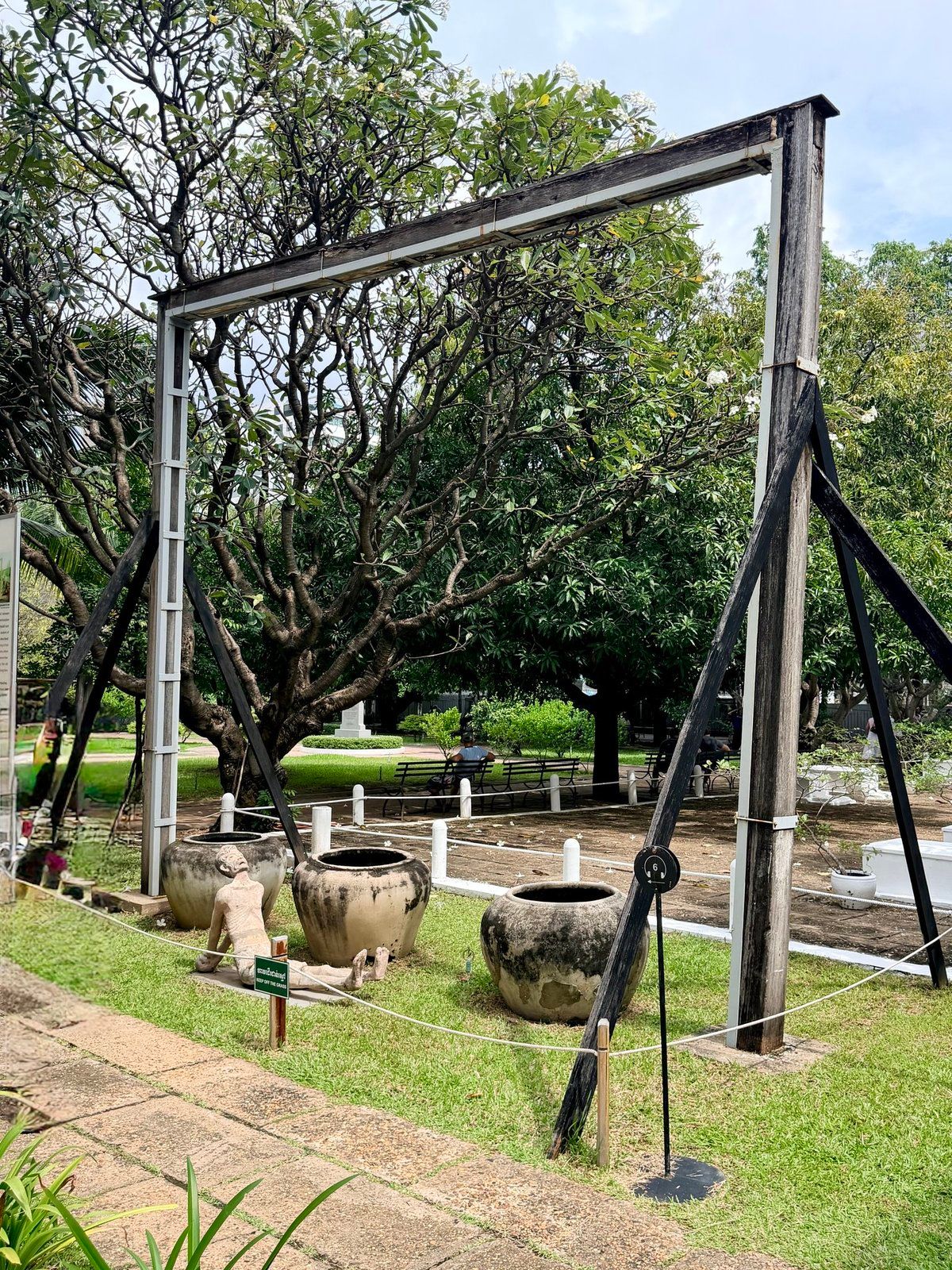
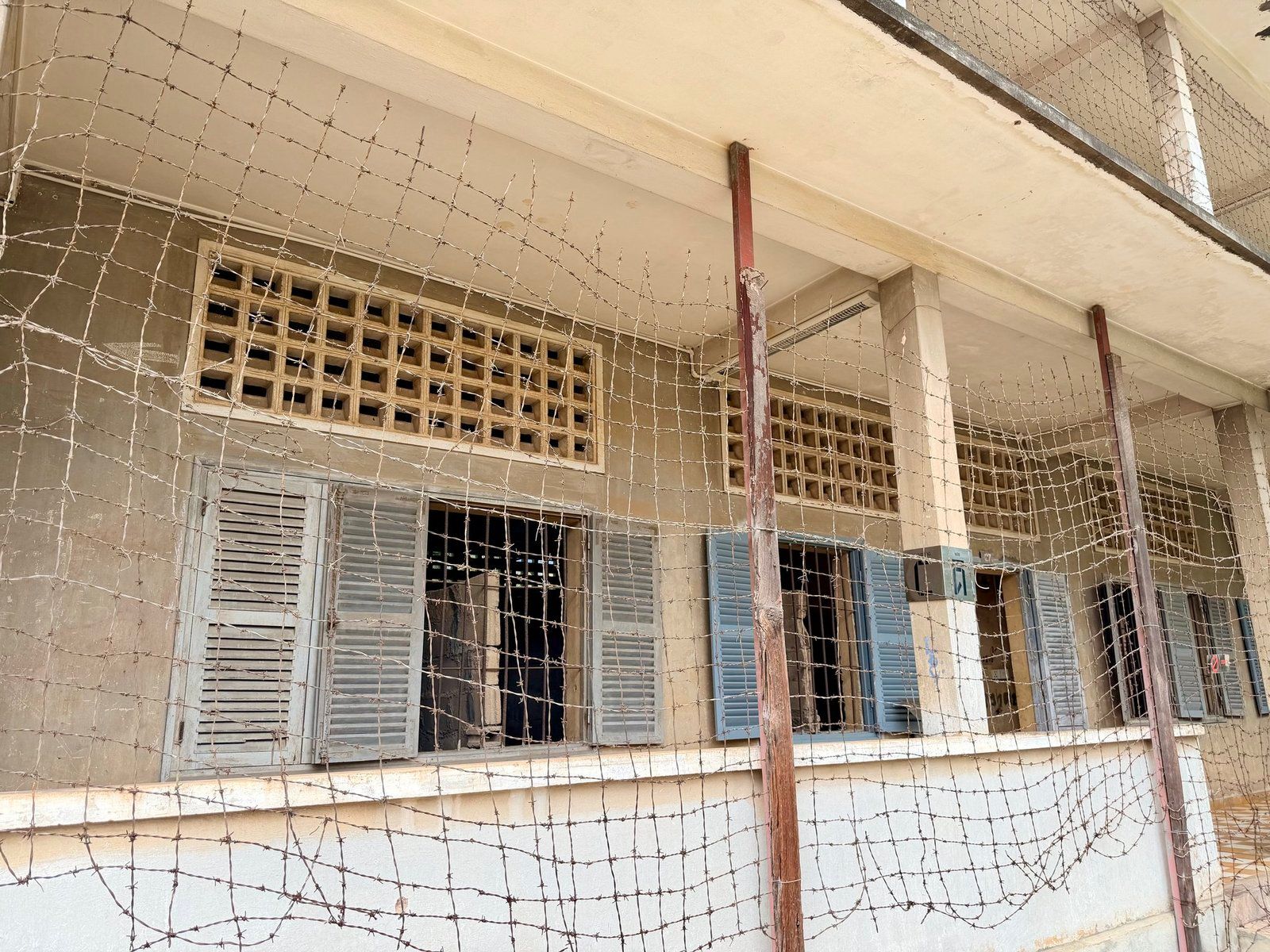
Between 1975 and 1979 the Khmer Rouge killed or starved to death an estimated 1.5 to 2 million Cambodians. In Phnom Penh they turned a high school into the S-21 prison, where thousands were held and tortured. It is now the Tuol Sleng Genocide Museum. The same morning I went out to Choeung Ek, the best known of the killing fields, where a memorial stupa holds the remains of thousands of victims. Together they are the hardest stops in the country.
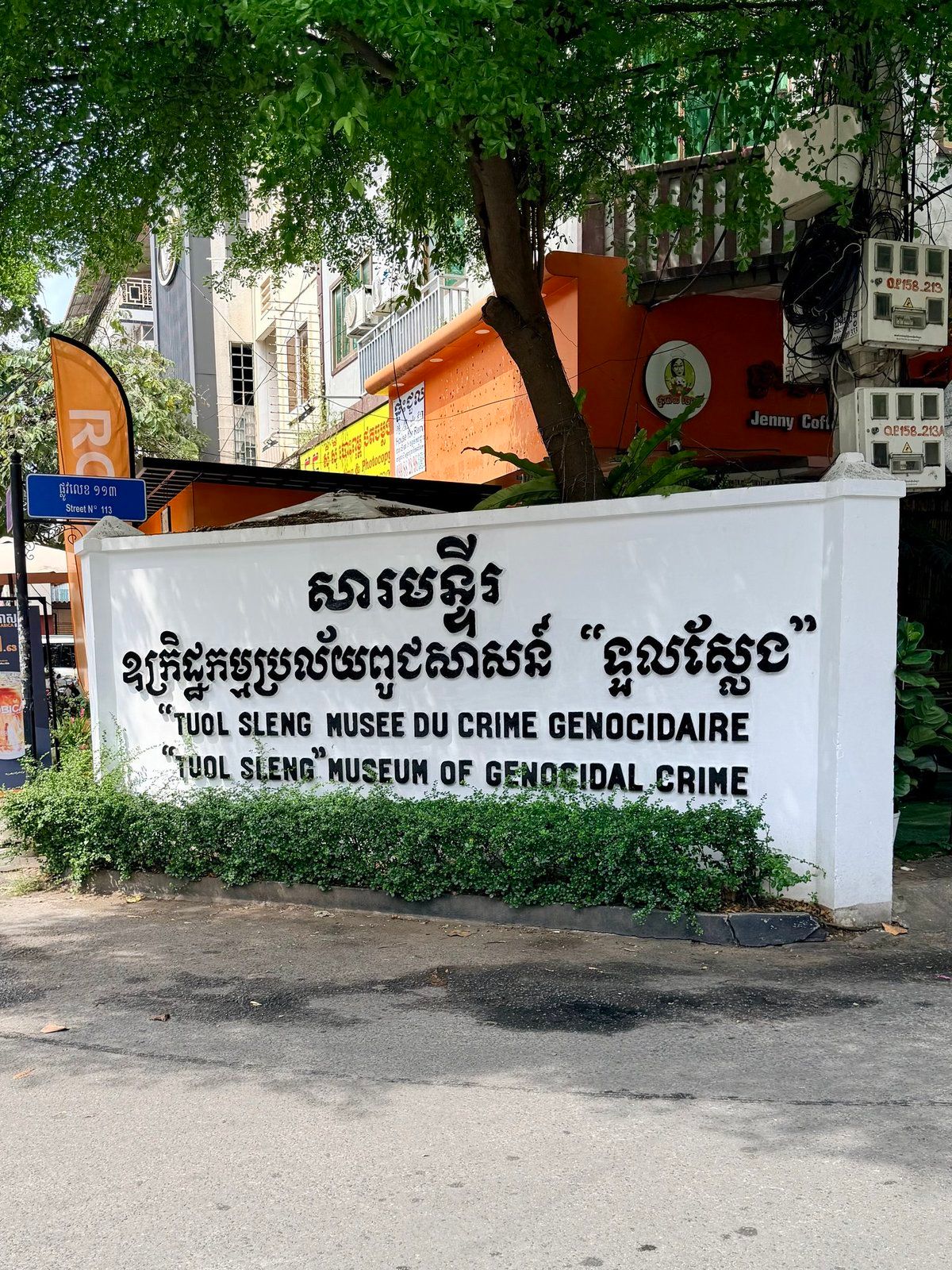
The entrance sign of the Tuol Sleng Genocide Museum, Phnom Penh
Tuol Sleng. The former S-21 prison, 16 Nov 2026.
Former classroom building at Tuol Sleng with wire netting across the balcony
Wire netting. Still across the old school balconies.
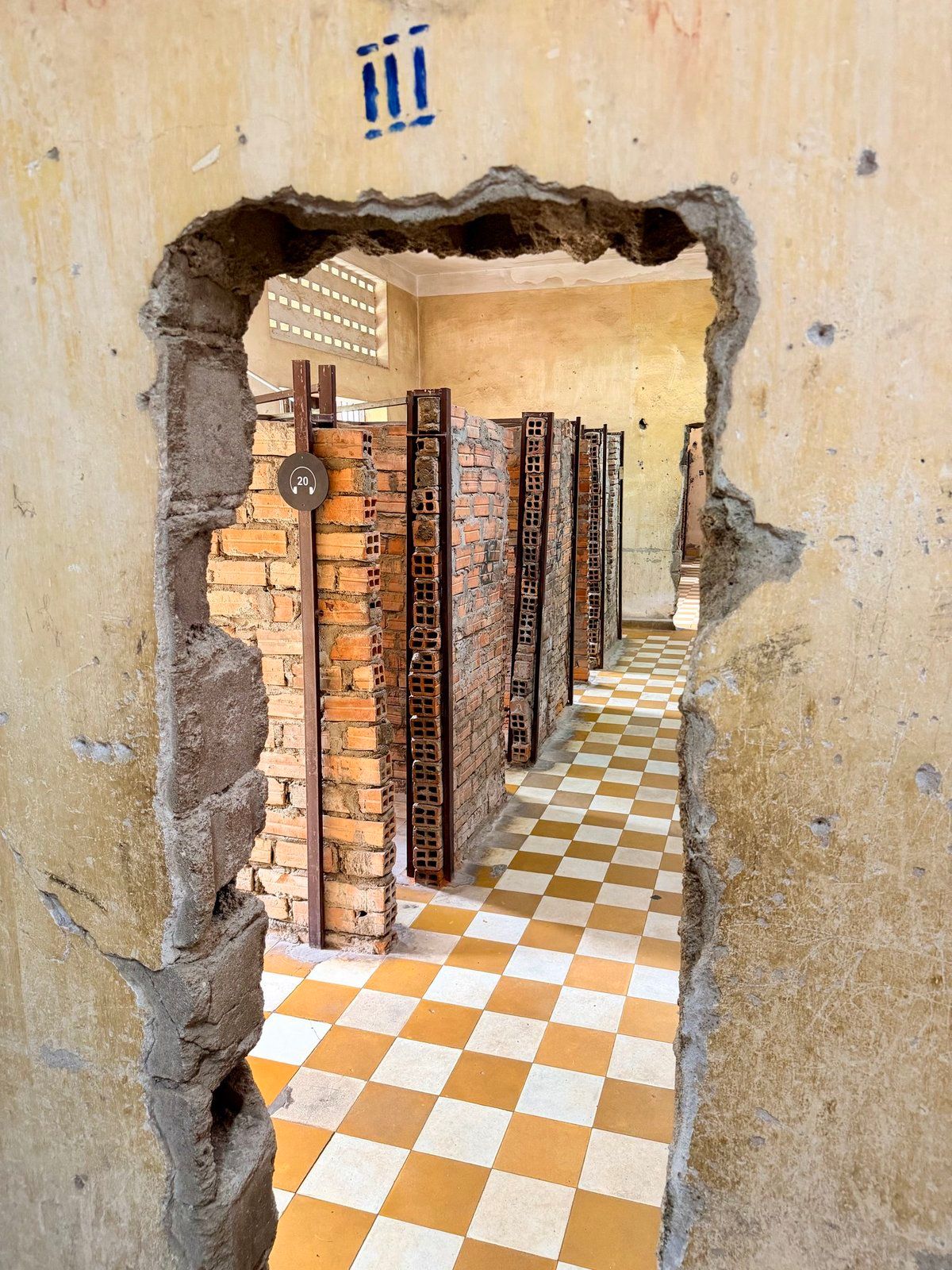
A narrow brick cell inside Tuol Sleng
A cell. Classrooms were divided into cells.
The memorial stupa at Choeung Ek
Choeung Ek. The memorial stupa, 16 Nov 2026.
Former school buildings around the courtyard at Tuol Sleng
The school. Classrooms became cells.
A bare room with an iron bed frame at Tuol Sleng
A room. Iron bed frames left as they were.
The wooden frame in the courtyard at Tuol Sleng
The frame. Once school exercise bars; then used for torture.
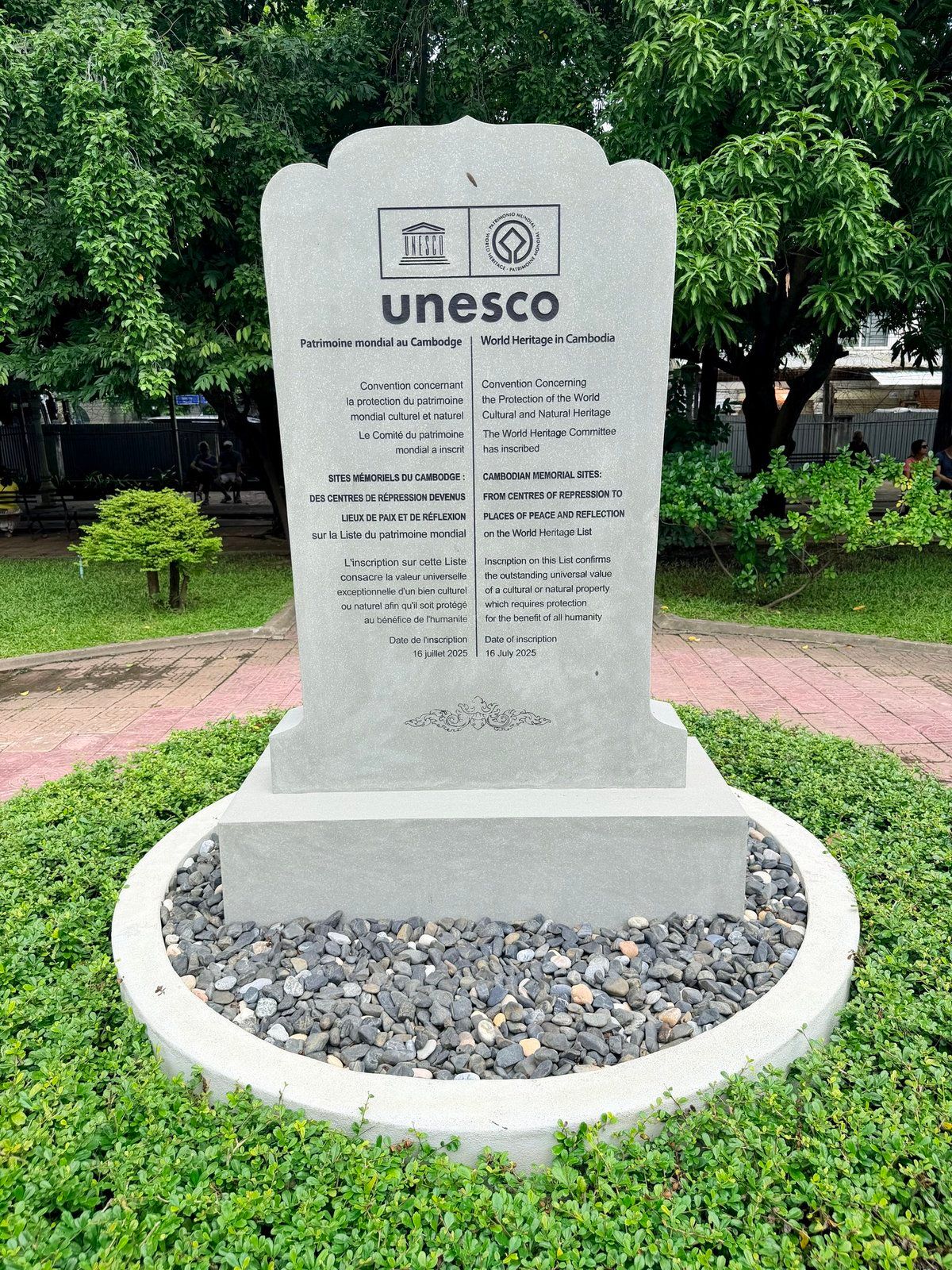
UNESCO plaque at Tuol Sleng
UNESCO. The site is recognized by UNESCO.

2016: the southern coast

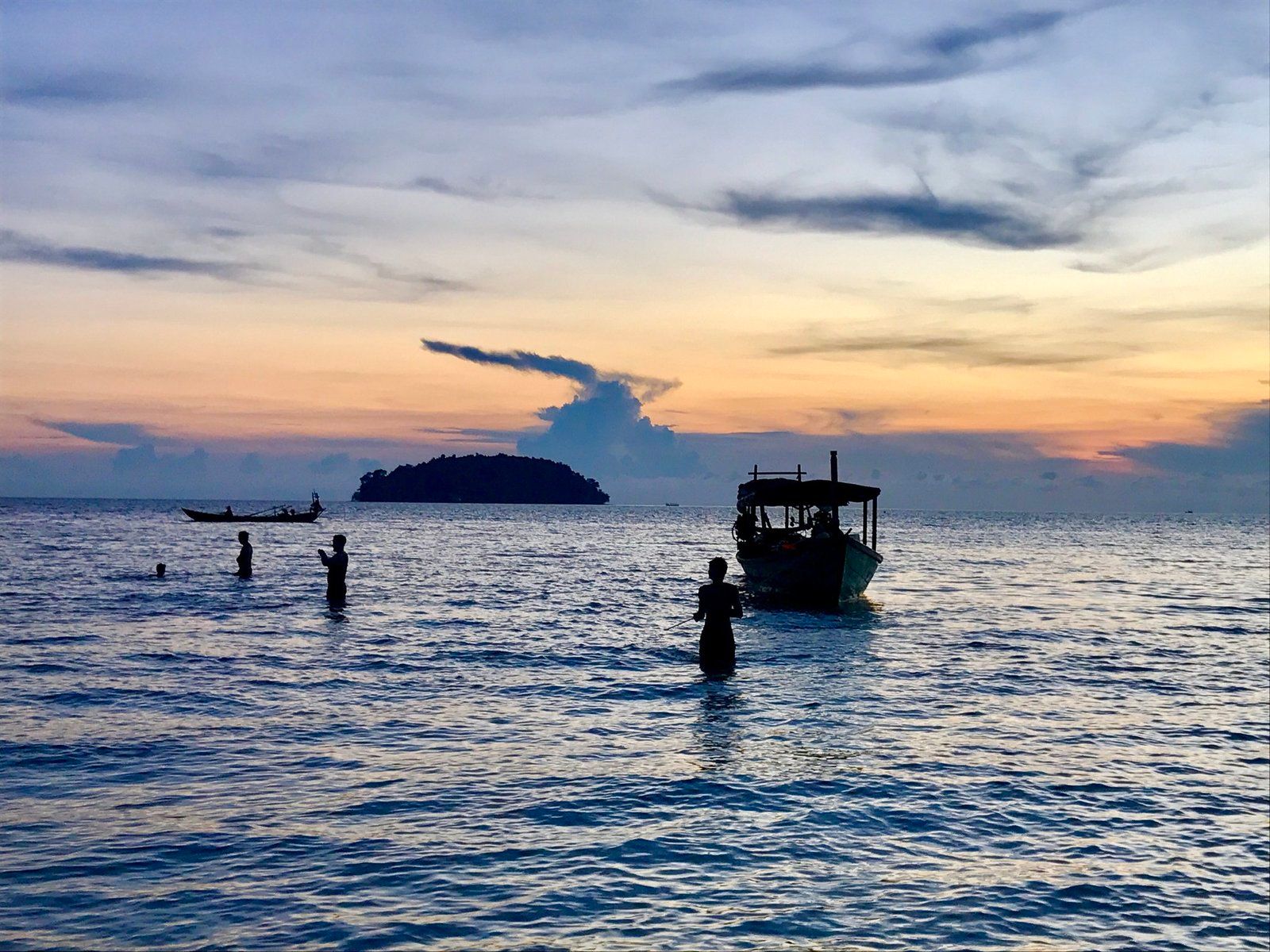
My first trip to Cambodia, 23–25 November 2016, was a few quiet days on the Gulf of Thailand, at Otres Beach south of Sihanoukville and on the coast near Ream.
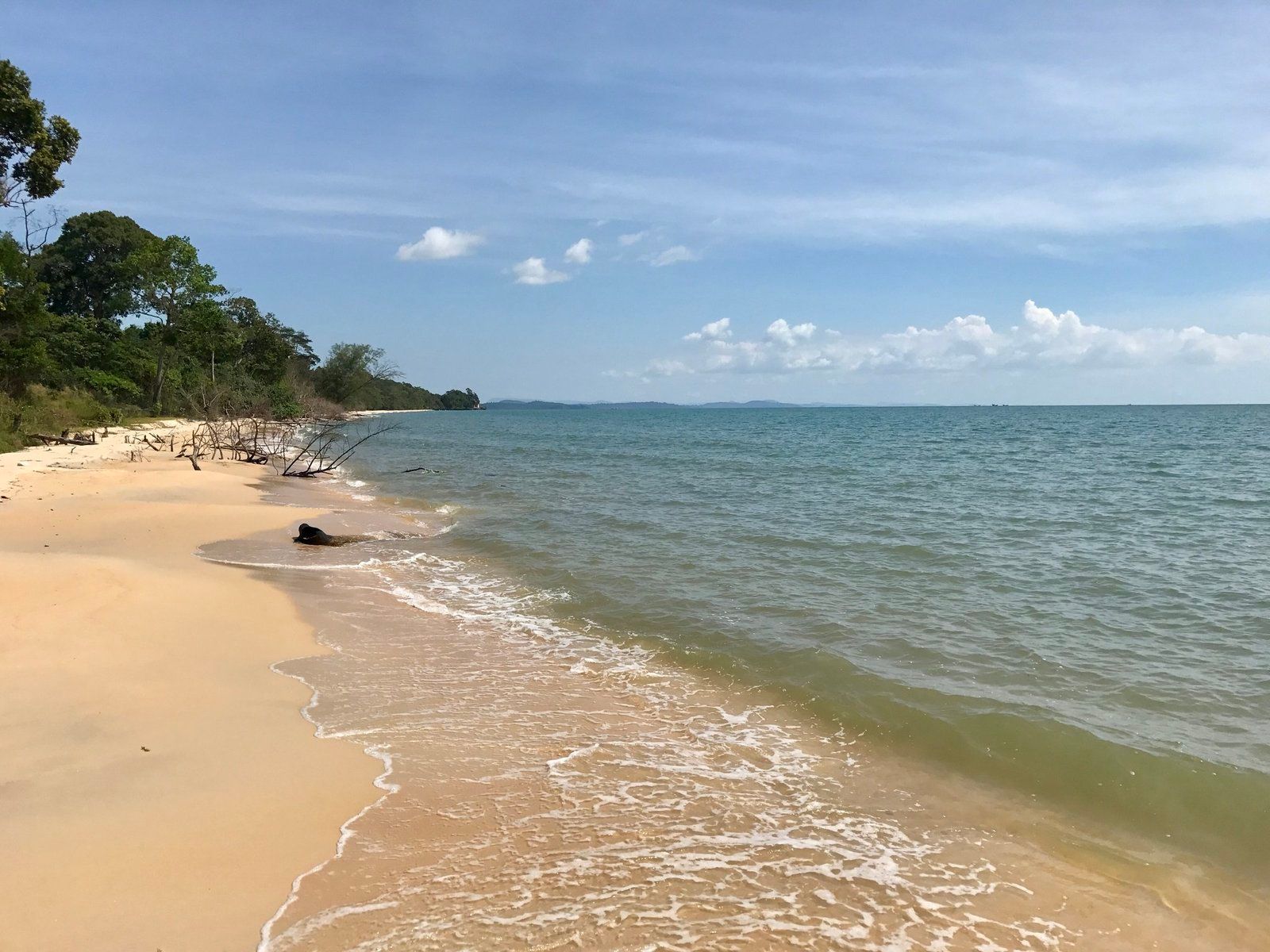
Sandy beach and calm sea on the Cambodian coast near Ream, 2016
The coast. Near Ream, 25 Nov 2016.
Fishing boats and swimmers off Otres Beach at dusk, Sihanoukville, 2016
Otres Beach. Boats at dusk, 23 Nov 2016.
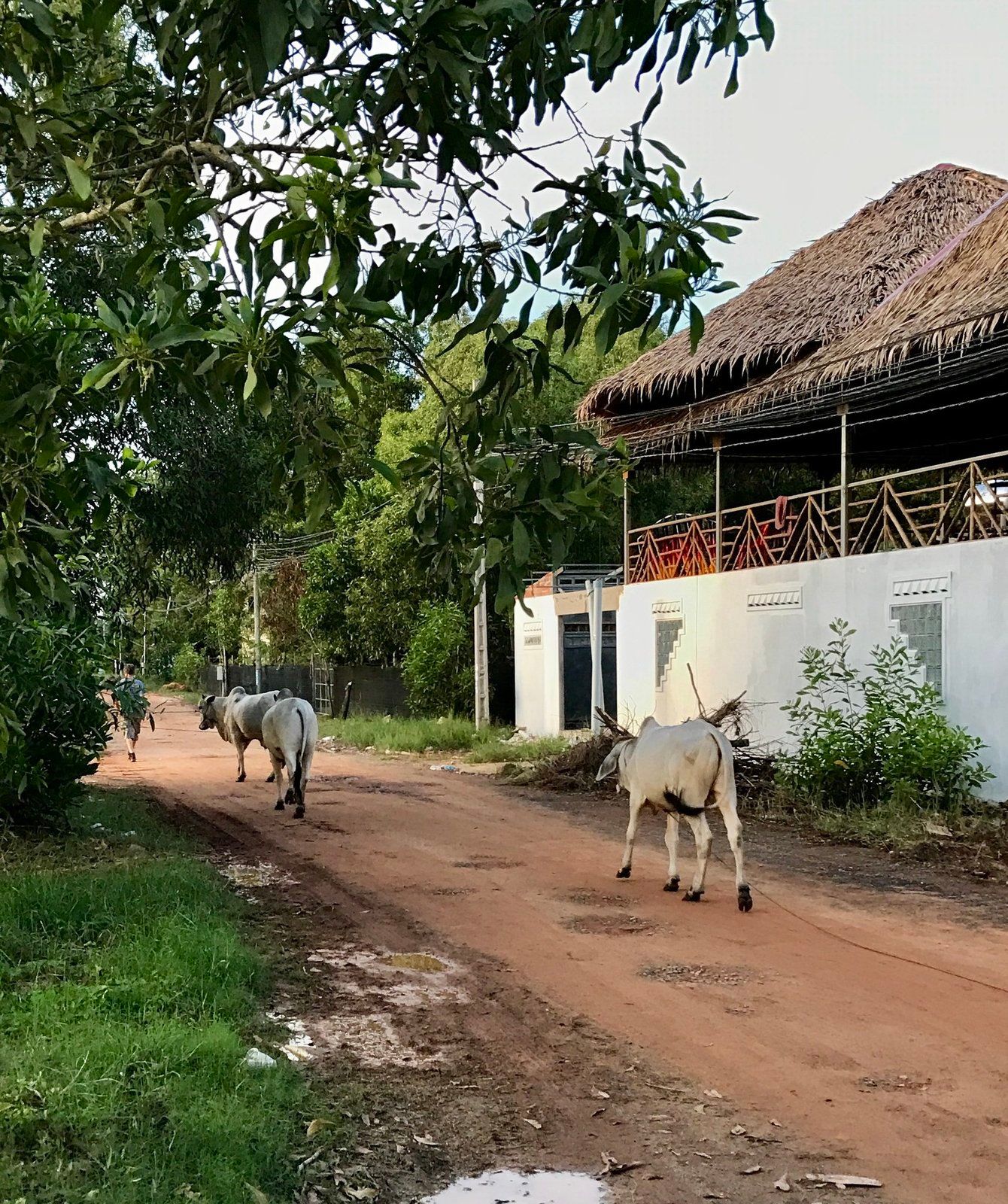
A sandy road with grazing cattle near Otres Beach, Cambodia
Back roads. Cattle on the beach road.
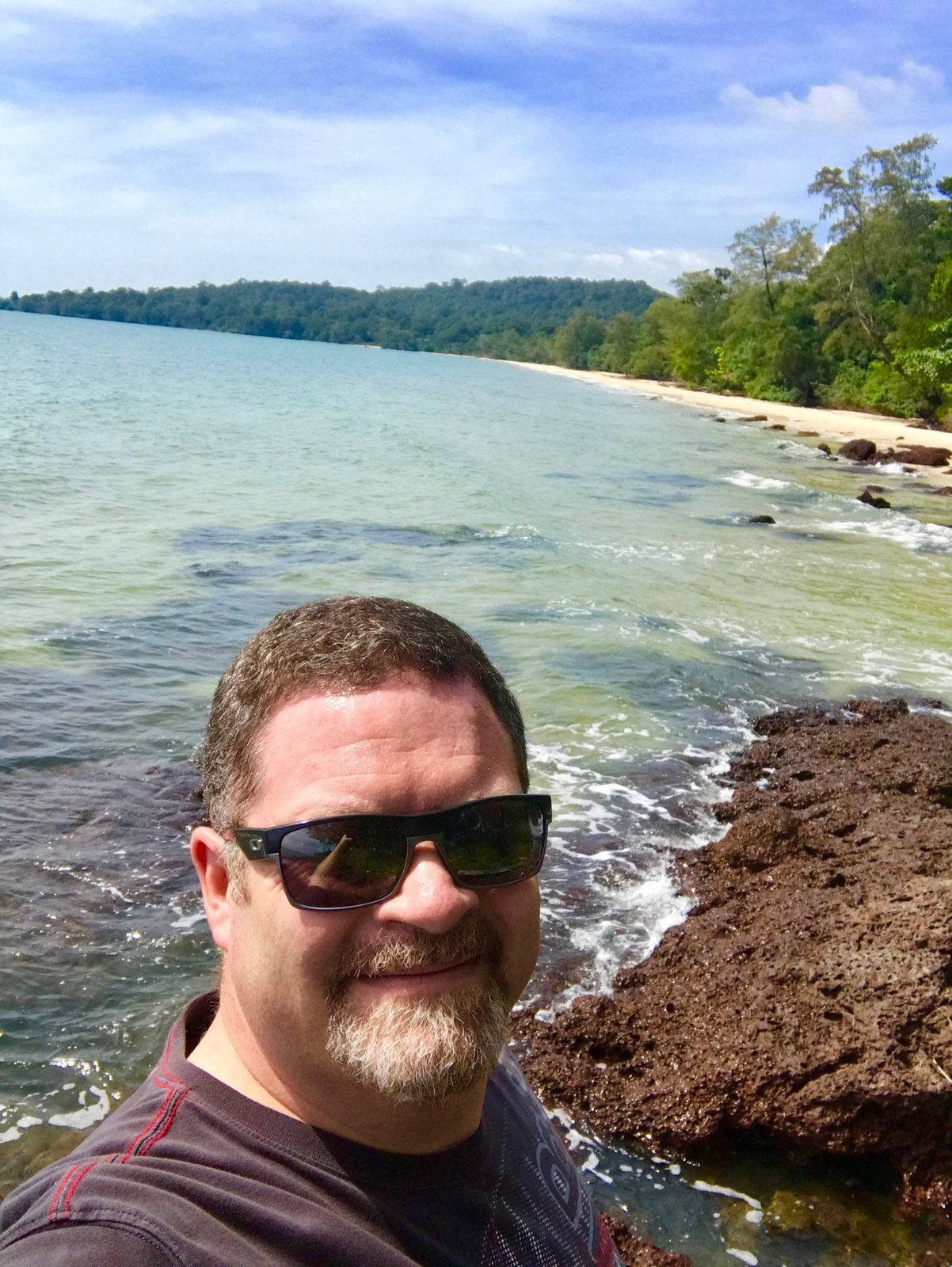
Darrell Seale by the rocks on the Cambodian coast, 2016
Darrell Seale. Near Ream, Nov 2016.
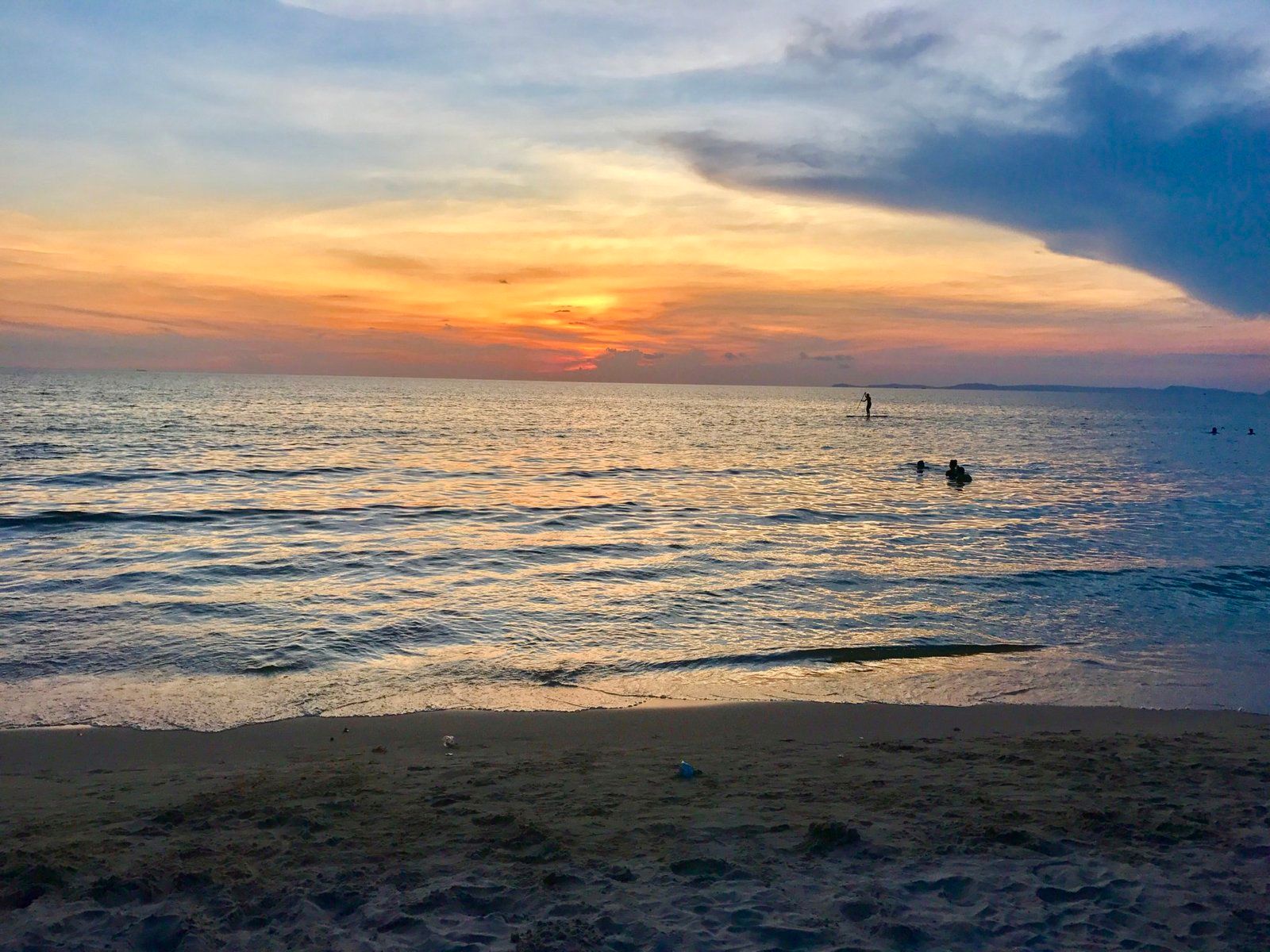
Sunset over the Gulf of Thailand from Otres Beach
Sunset. Over the Gulf of Thailand, 24 Nov 2016.
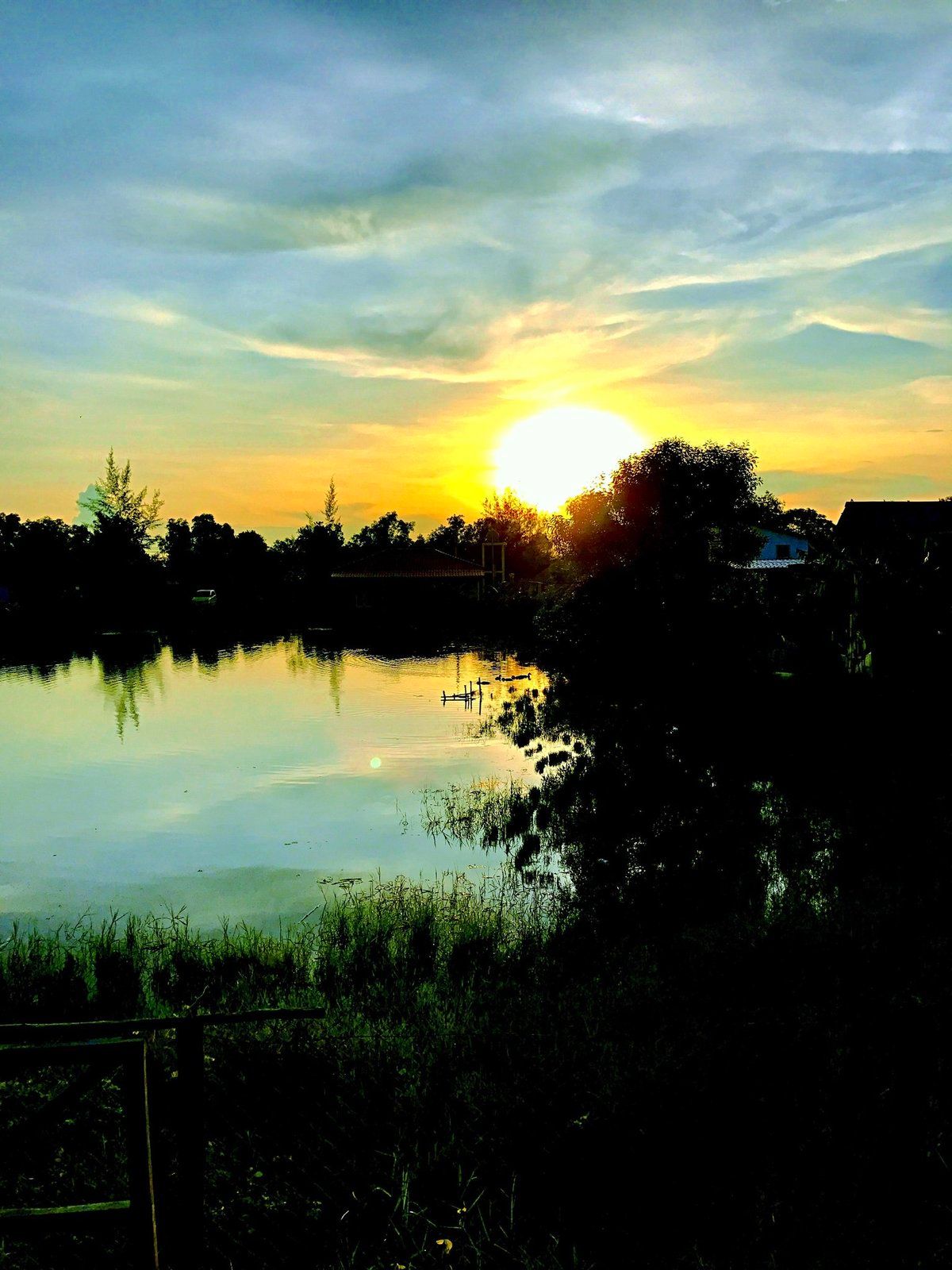
The sun setting over a still lagoon near Otres Beach, Cambodia
Last light. Near Otres Beach, 23 Nov 2016.

Good to know

  • WhenFirst visit 23–25 Nov 2016; second trip 12–17 Nov 2026
  • Where2016: Otres Beach and Ream, near Sihanoukville. 2026: Siem Reap and Angkor, then Phnom Penh
  • AngkorTemples spread over about 400 km² north of Siem Reap; a multi-day Angkor Pass covers them
  • Getting thereSiem Reap Angkor International Airport (SAI) and Techo International Airport, Phnom Penh (KTI)
  • EntryVisa on arrival or e-visa for many passports (check current rules for yours)
  • MoneyCambodian riel; US dollars are widely used

Official sites and sources