Beijing was the first stop, and I landed at Daxing airport early on a Friday morning with a free afternoon before the tour started. I spent it at the Lama Temple and the Confucius Temple, which sit almost next to each other in the old northeast of the city and are an easy metro ride on Line 2.
The next three days were the big ones: Tiananmen Square and the Forbidden City in the morning, the Temple of Heaven in the afternoon, then a day out to the Great Wall at Mutianyu with stops at the Olympic Park and the old hutong lanes, and finally the Summer Palace before the afternoon train to Xi'an.
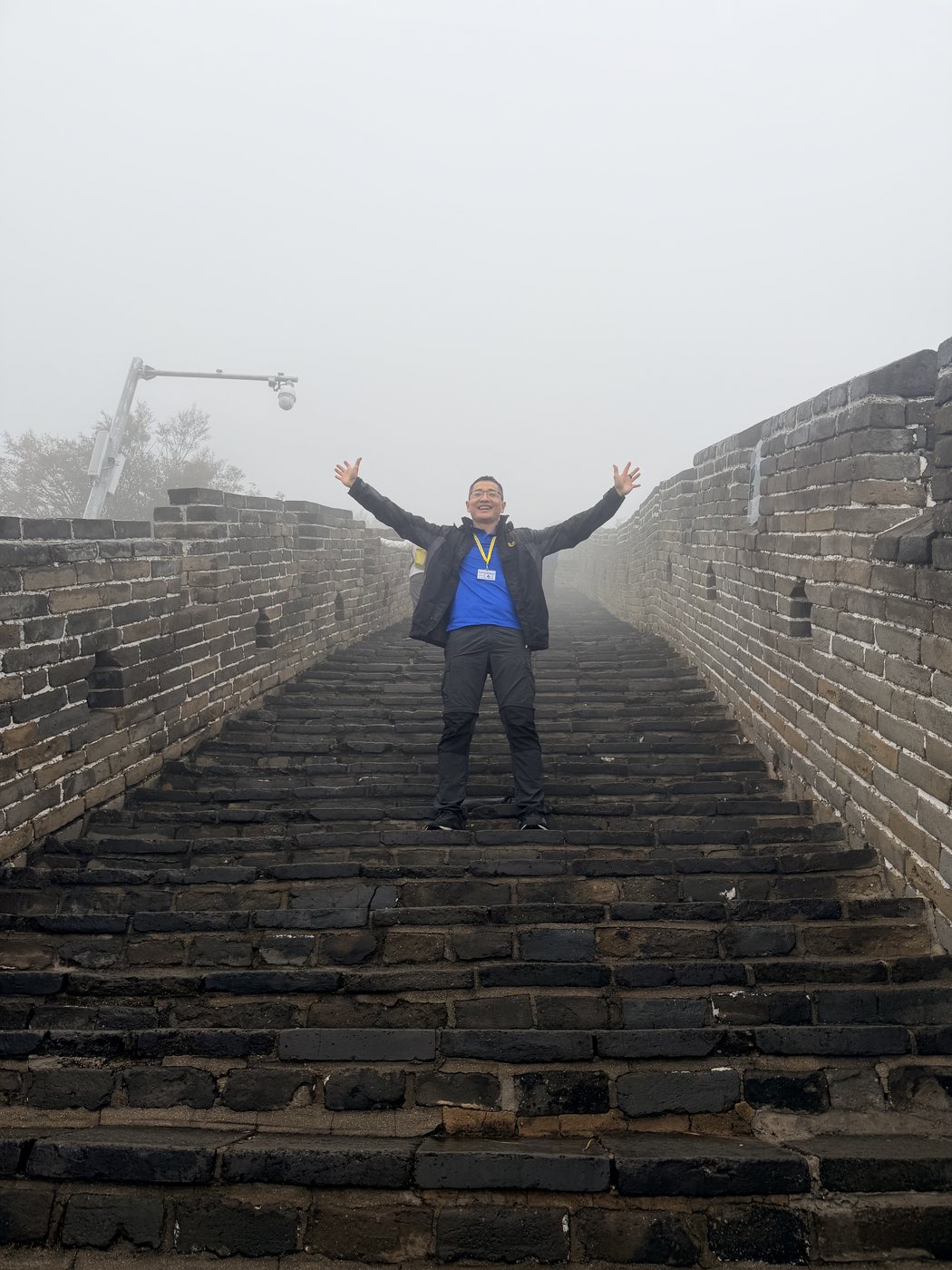
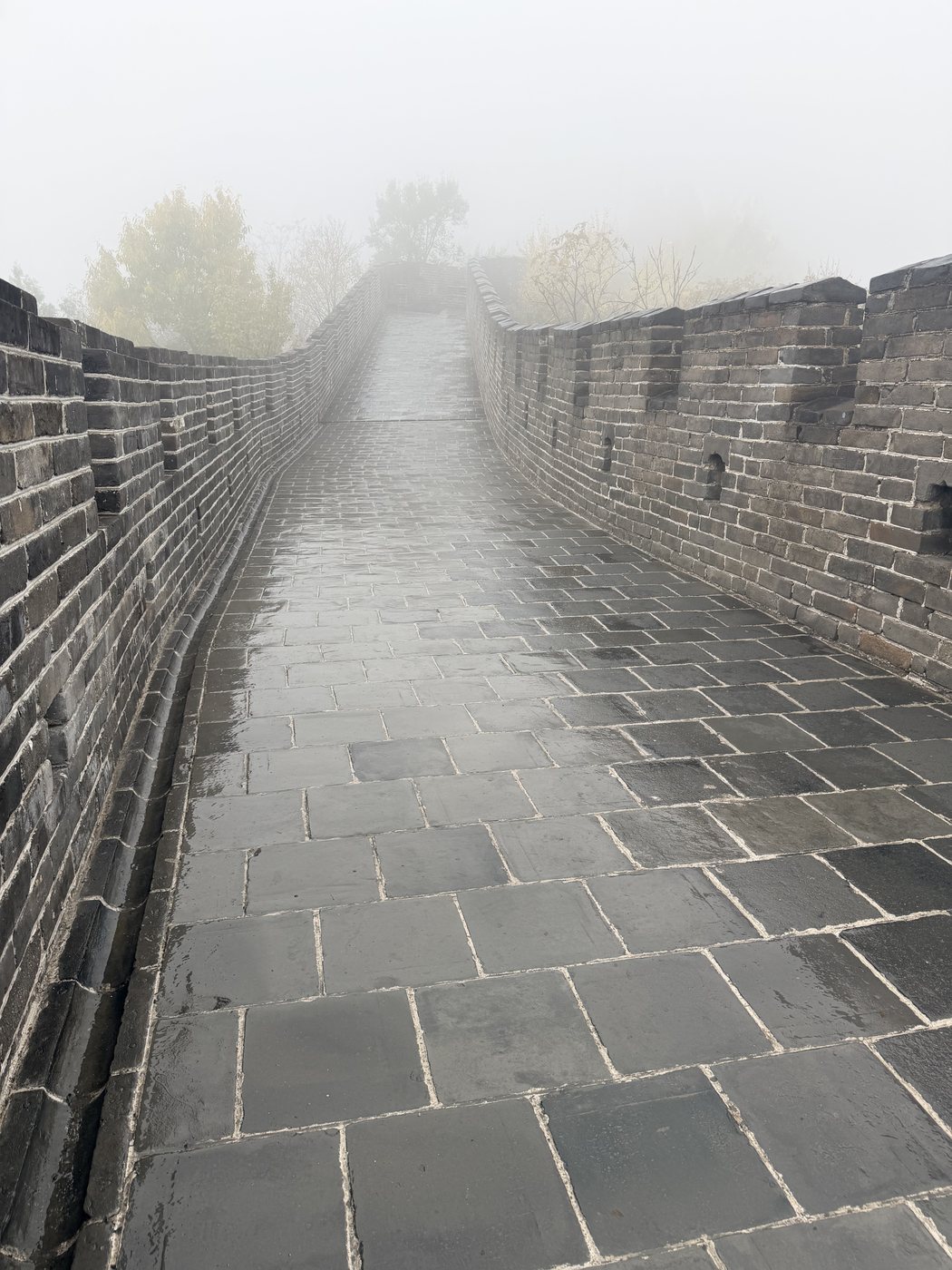
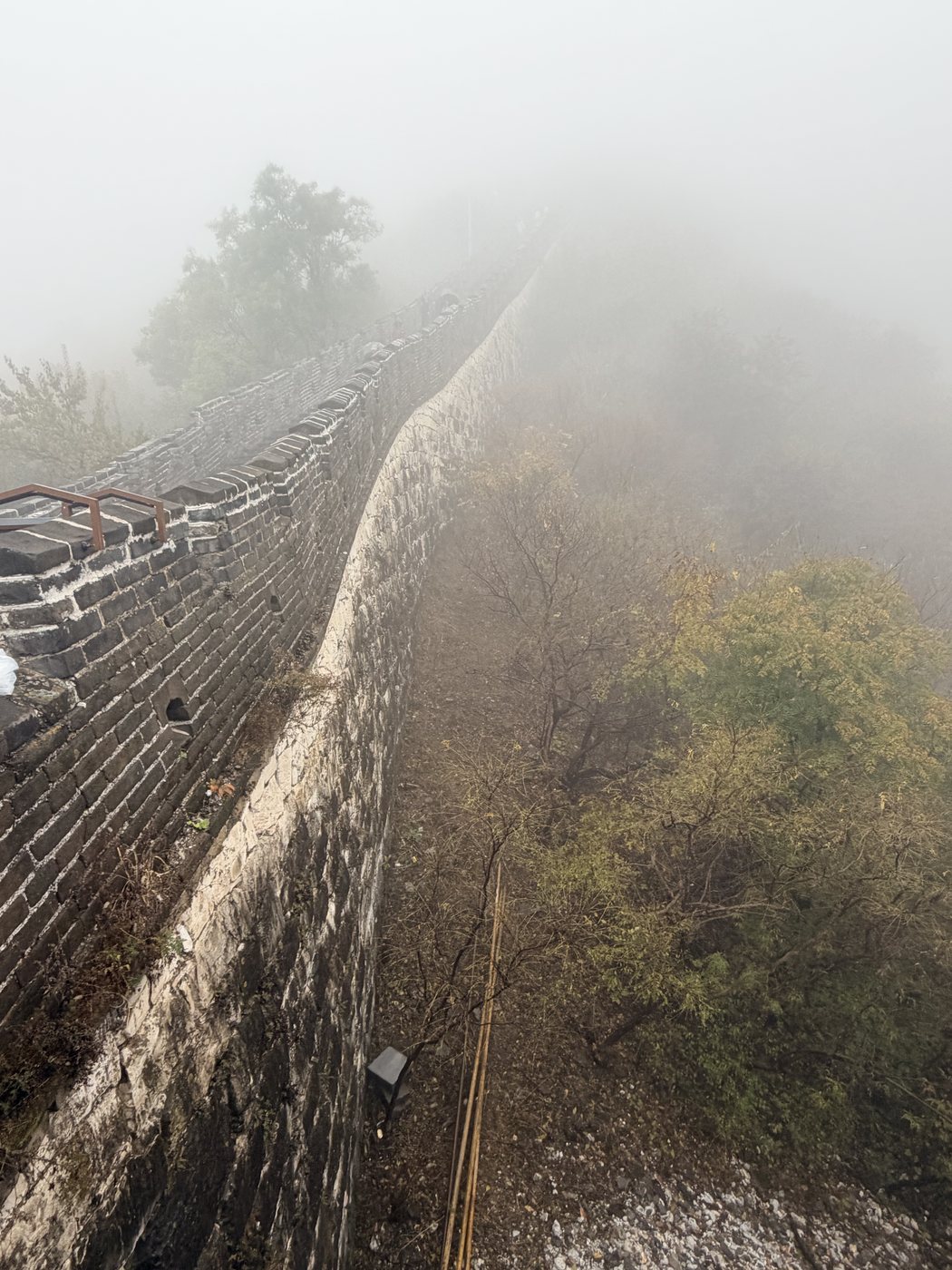
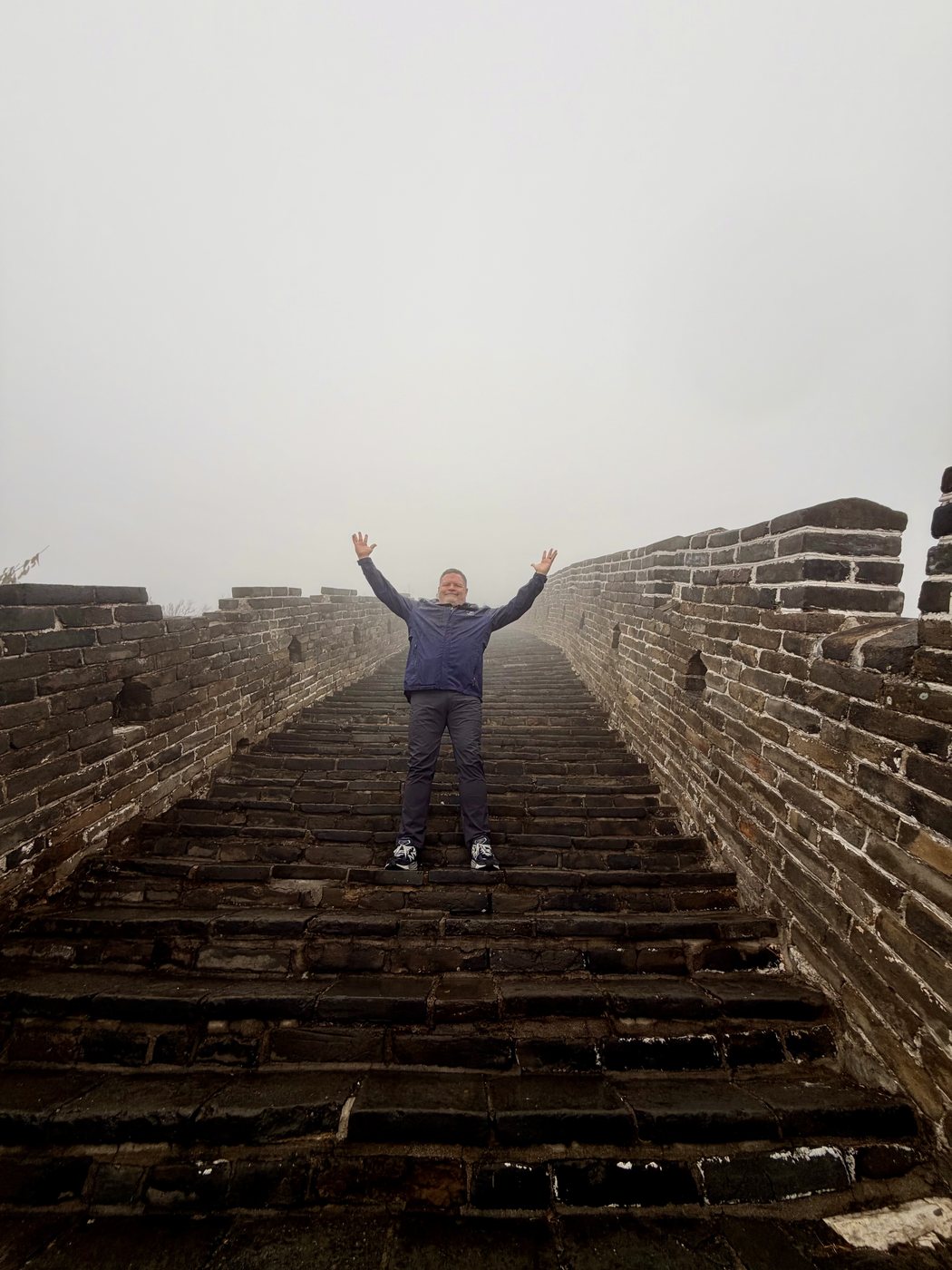
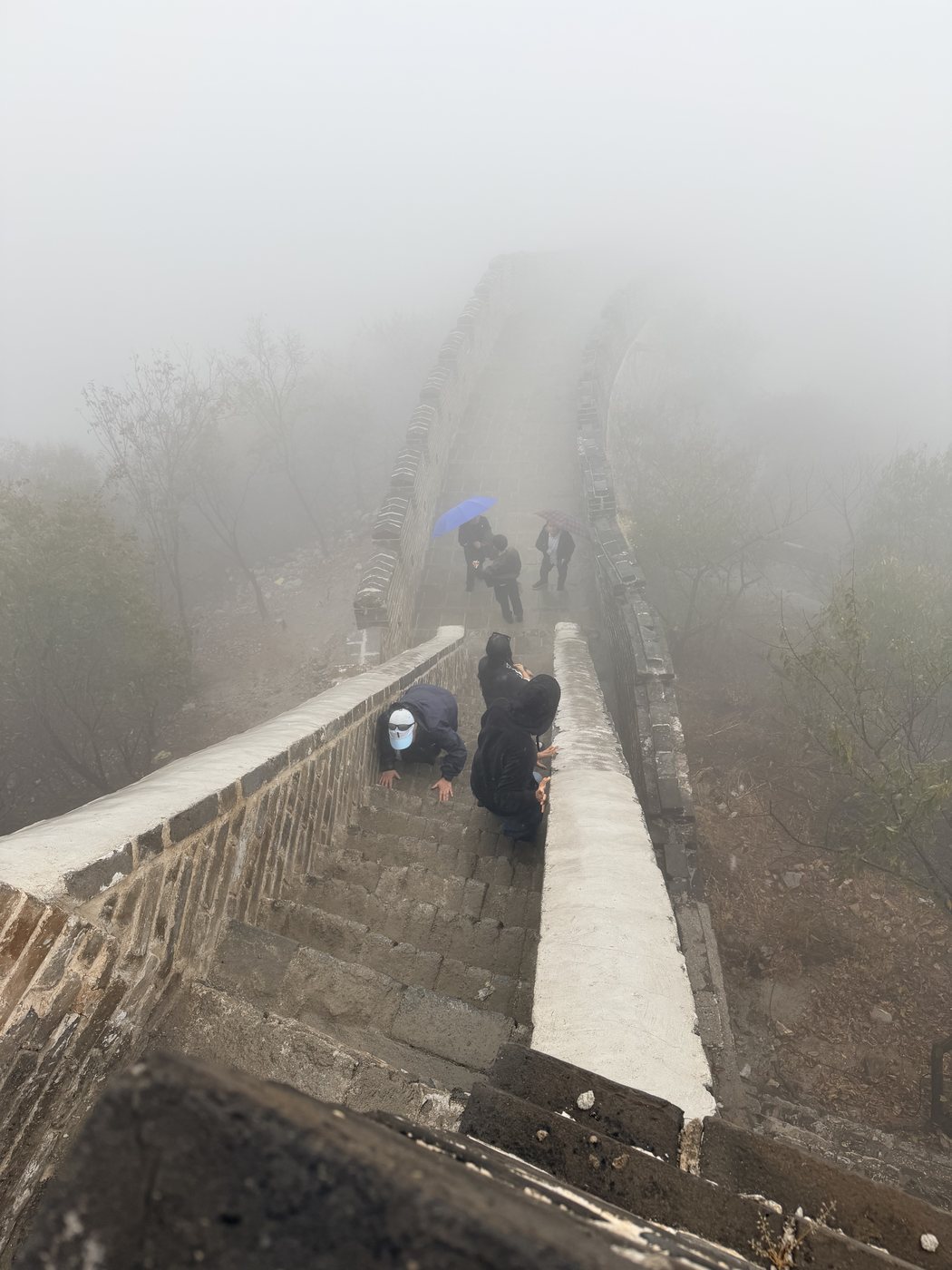
The Great Wall day was the most atmospheric. The fog was so thick on the wall that the watchtowers disappeared a short way off in each direction. The Mutianyu section dates mostly from the Ming dynasty and is one of the best-restored stretches close to Beijing, with a cable car up from the valley.
Beijing runs on timed entry. The Forbidden City, the Temple of Heaven and the Summer Palace all want a reservation tied to your passport, and the morning slots go first. Our guide handled the bookings.
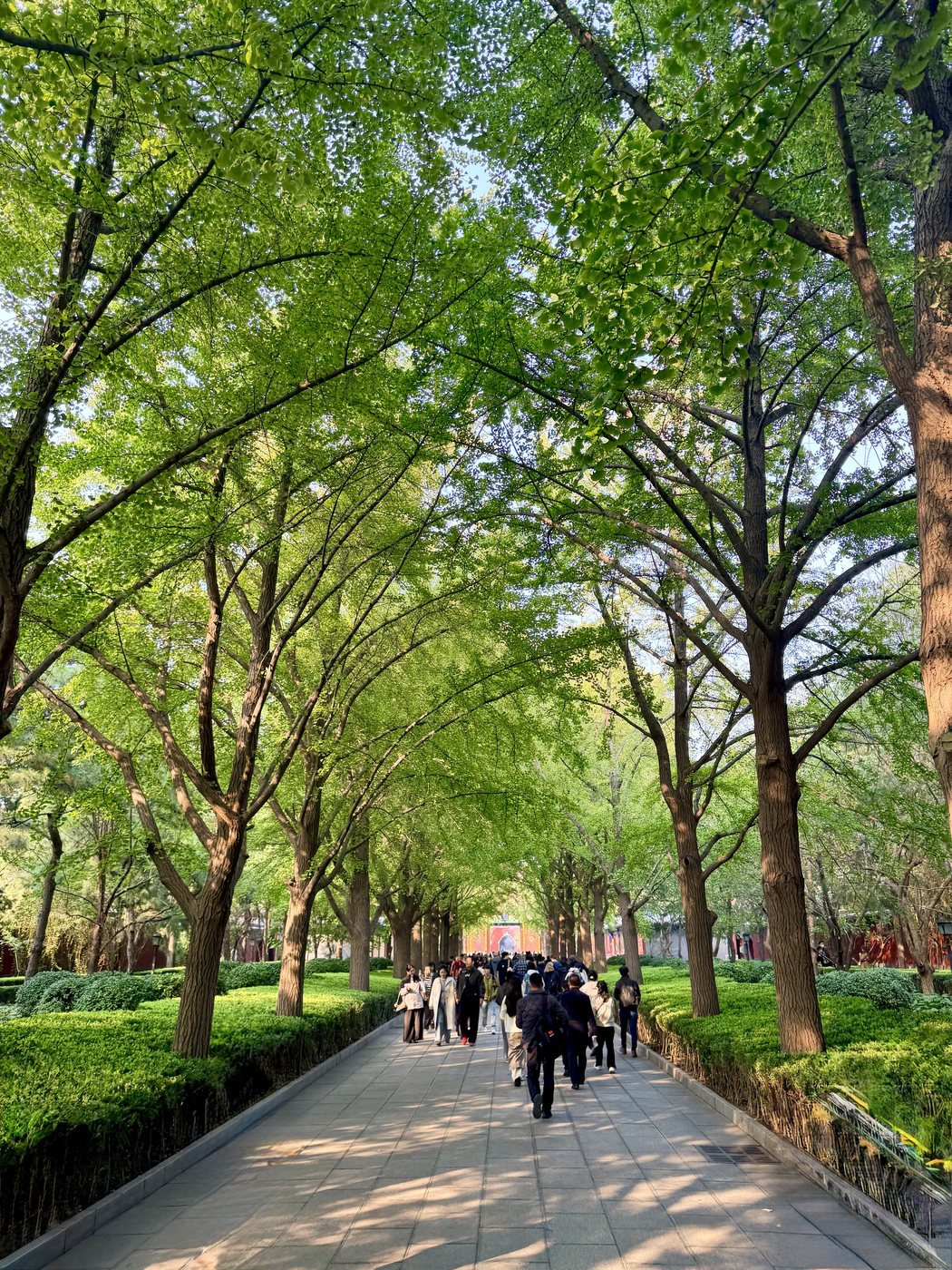
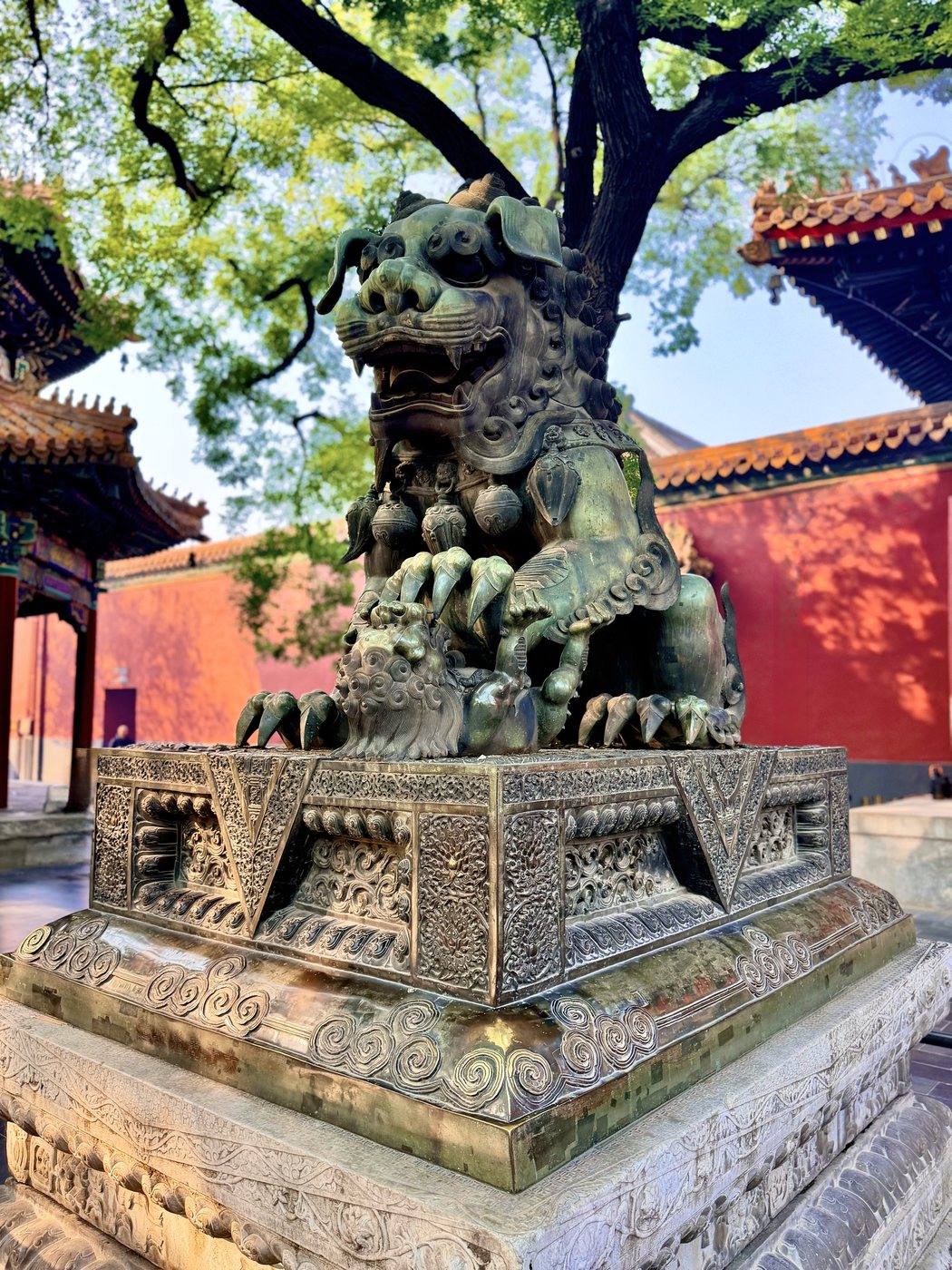
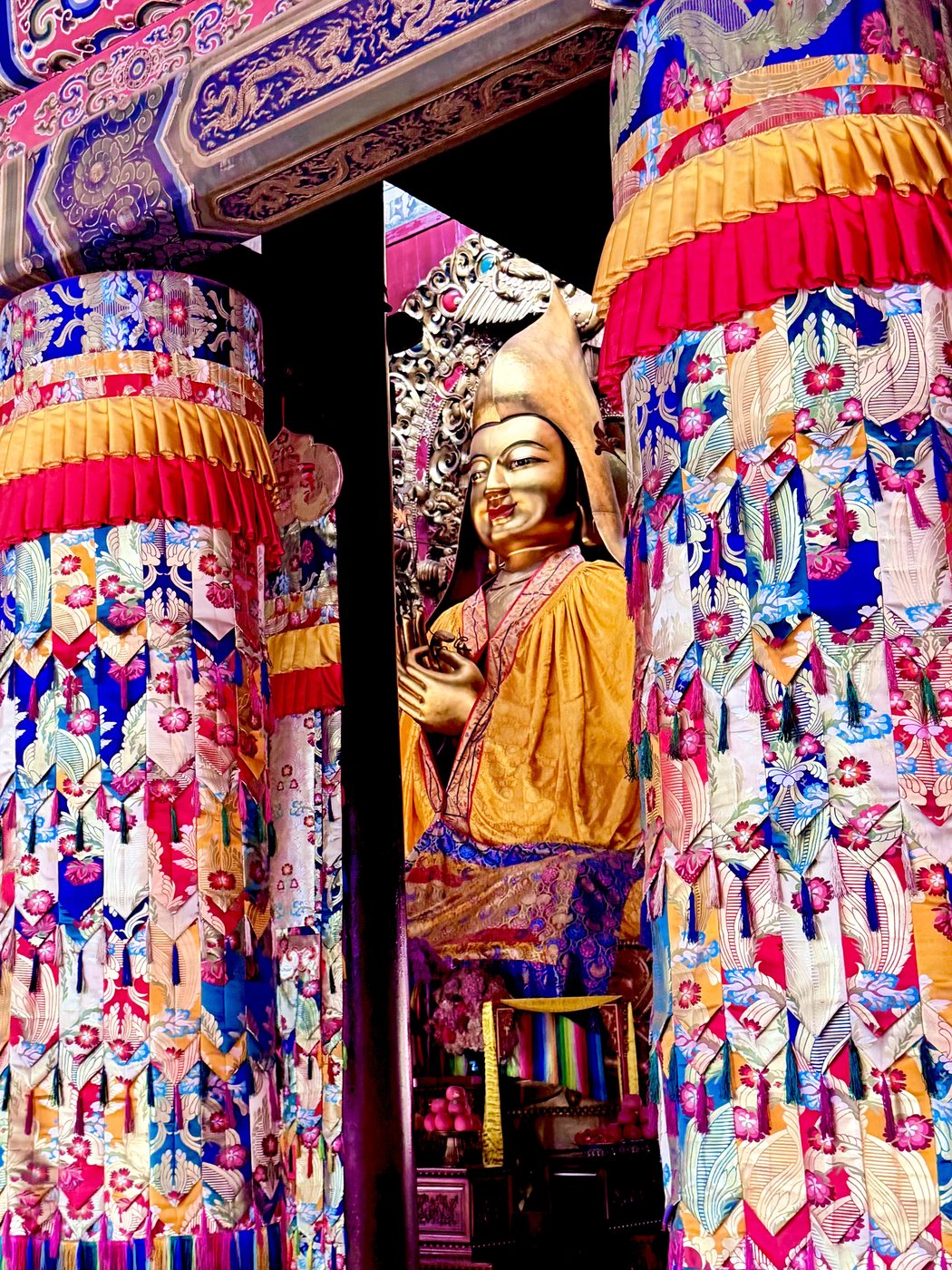
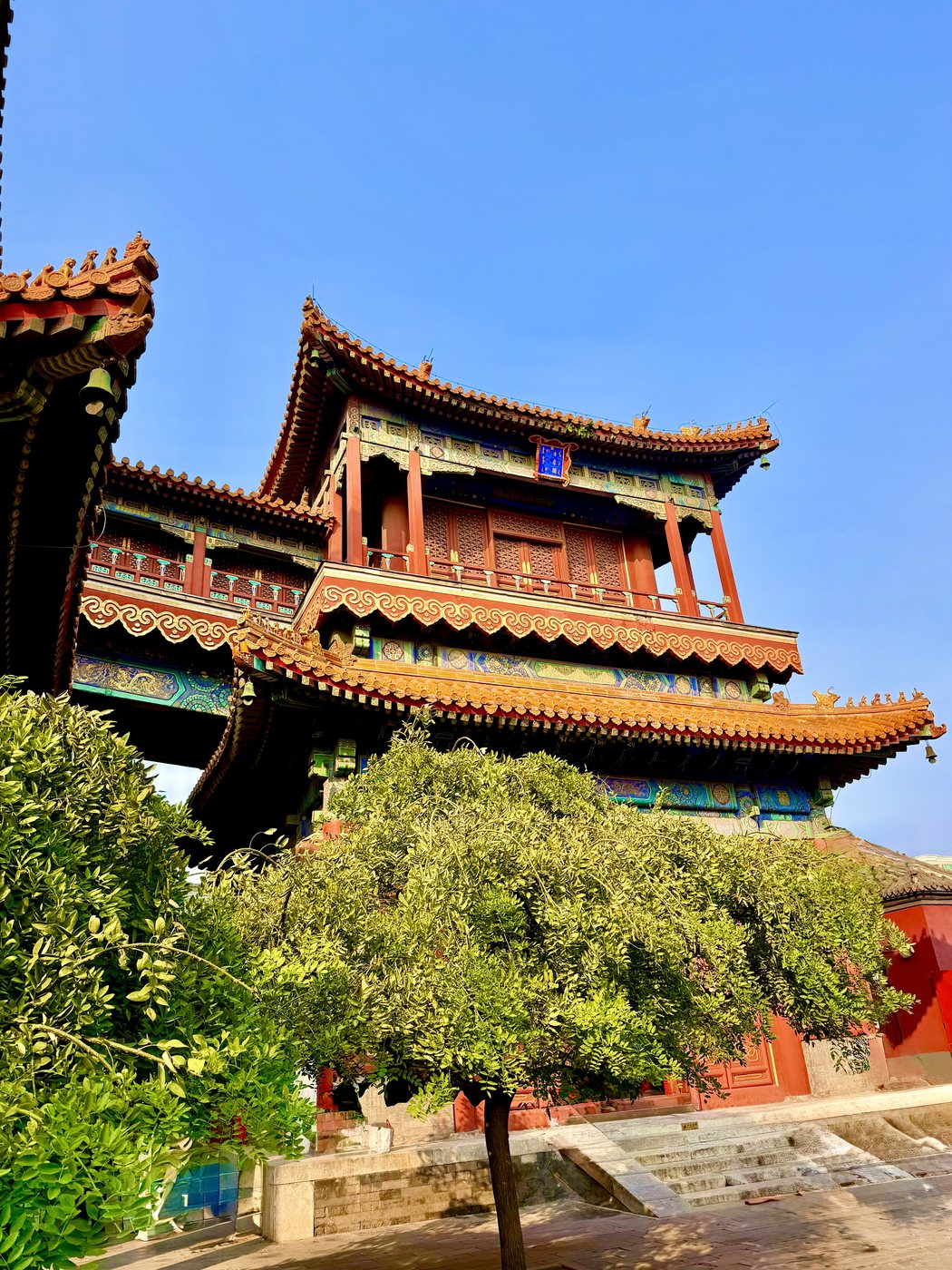
The Lama Temple and the Confucius Temple
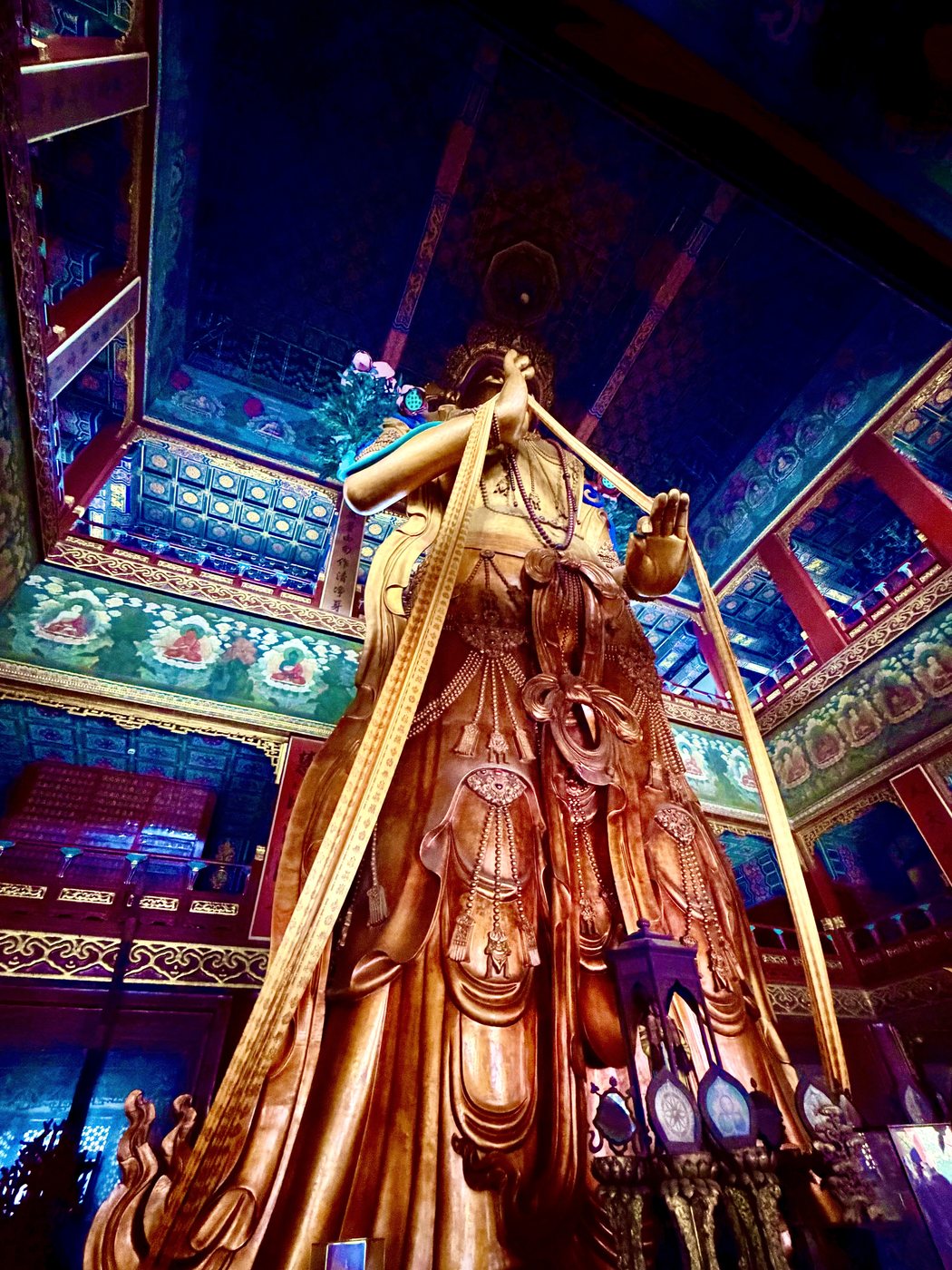
The Yonghe Temple, better known as the Lama Temple, started life in 1694 as the residence of the prince who became the Yongzheng Emperor and was turned into a Tibetan Buddhist monastery in 1744. Its tallest hall, the Wanfu Pavilion, holds a standing Maitreya Buddha carved from a single piece of sandalwood, about 18 m tall above ground.
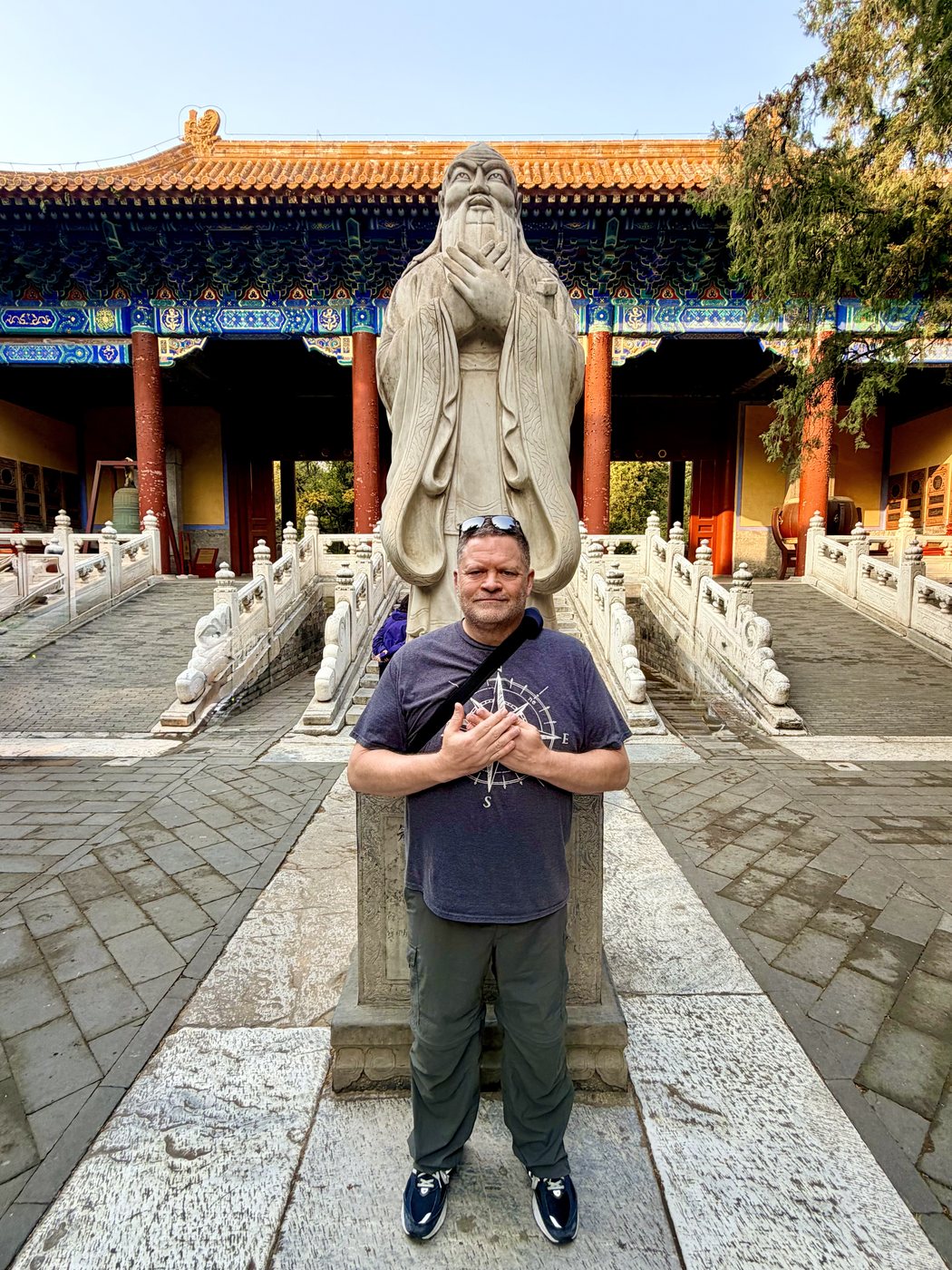
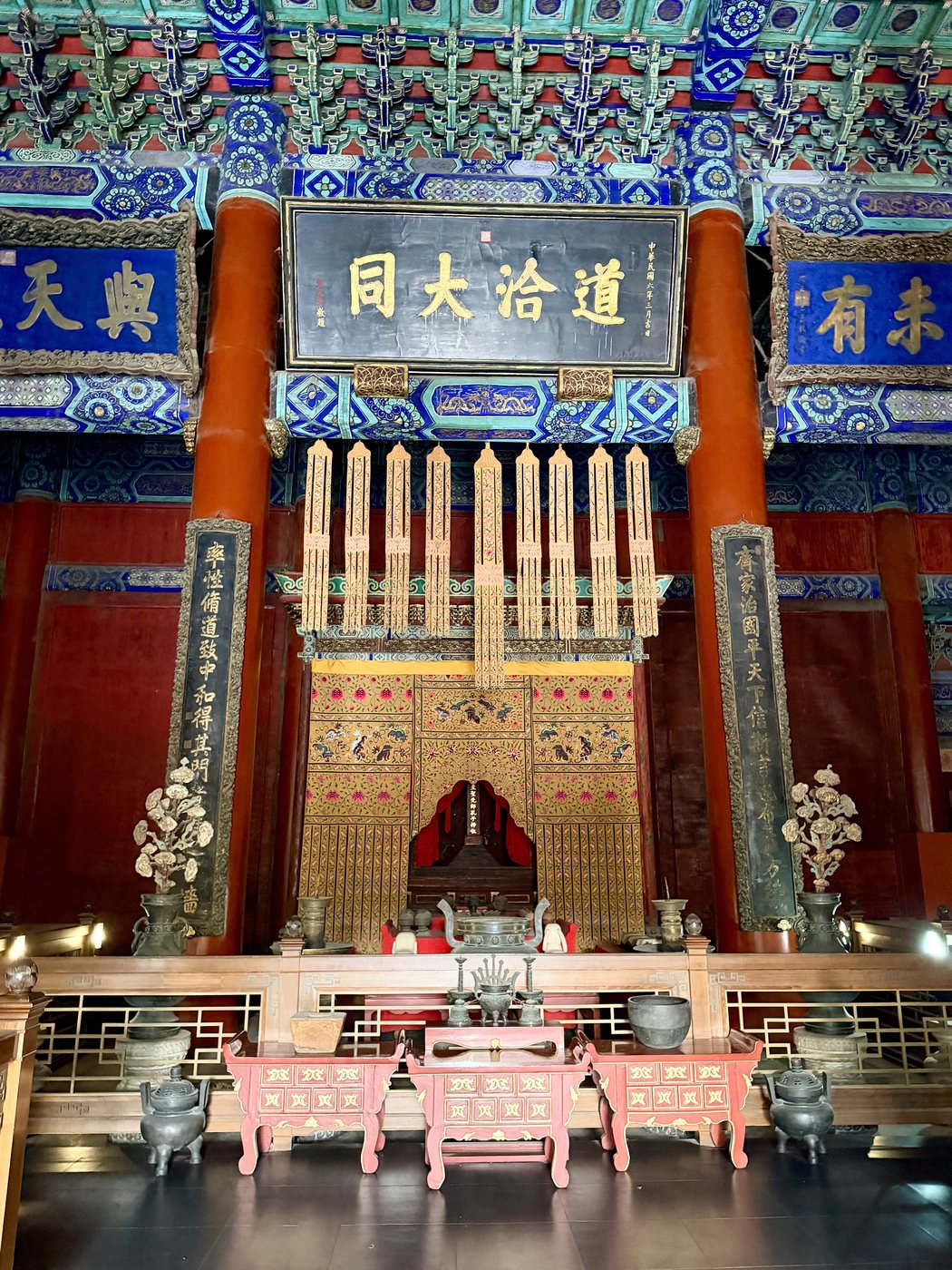
A short walk west, the Confucius Temple dates from 1302 and was where scholars and officials honored Confucius for some seven centuries. It is quiet, shaded by old cypress trees, and a good contrast to the incense and crowds next door.
Tiananmen Square
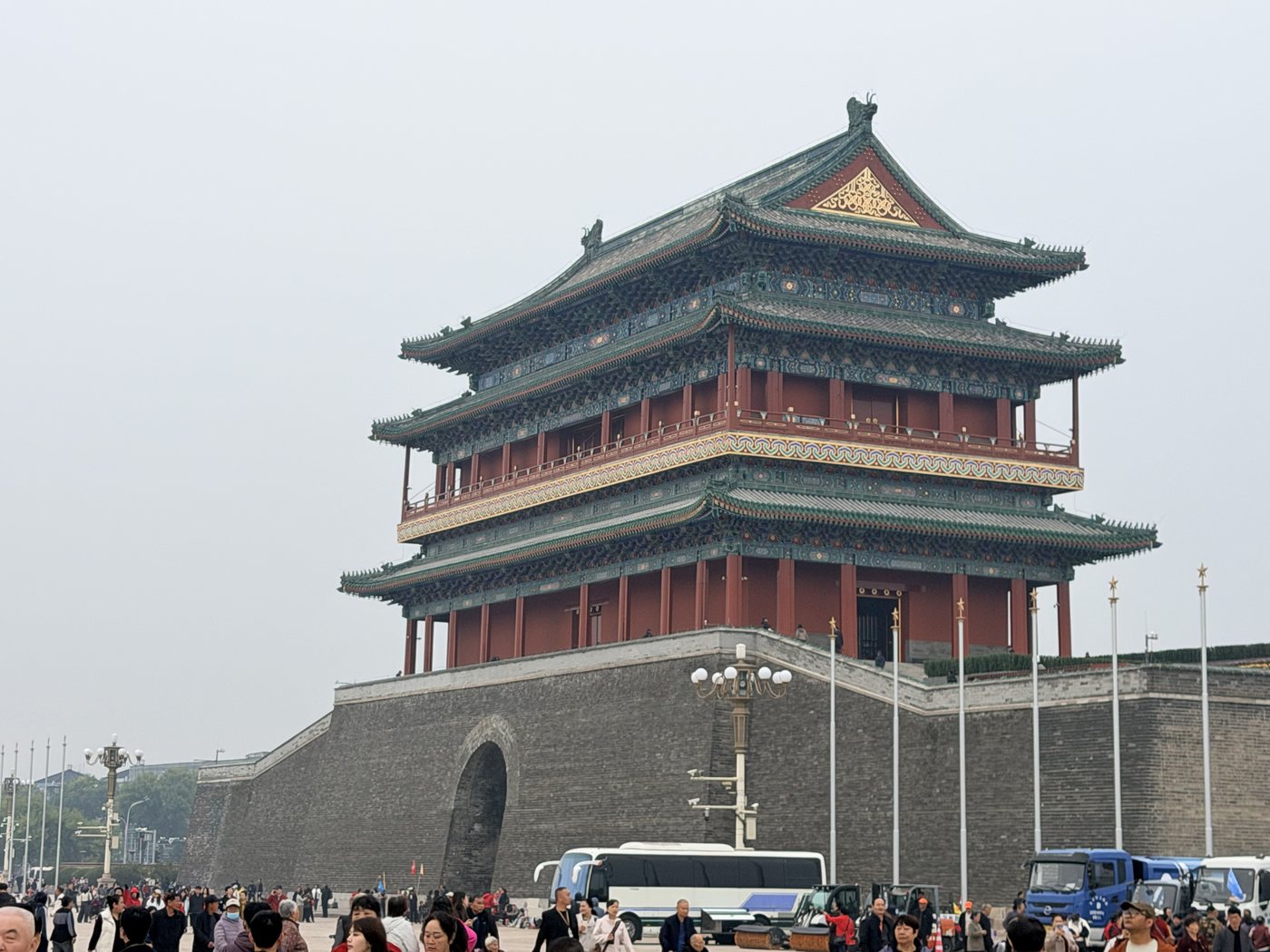
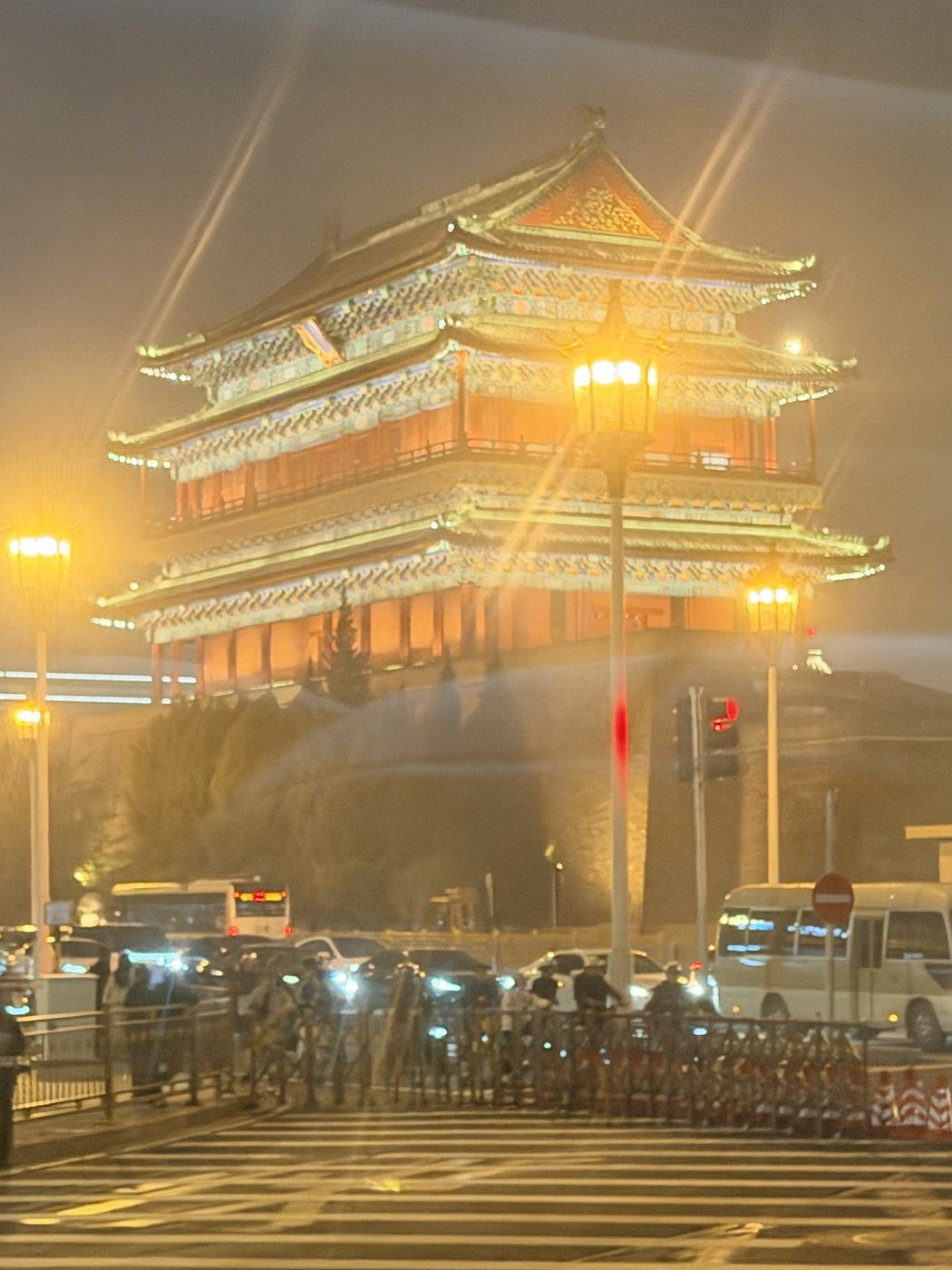
Tiananmen Square is one of the largest city squares in the world. At its south end stands Zhengyangmen, the old "front gate" of the inner city wall, and at the north end Tiananmen, the Gate of Heavenly Peace, which leads into the Forbidden City.
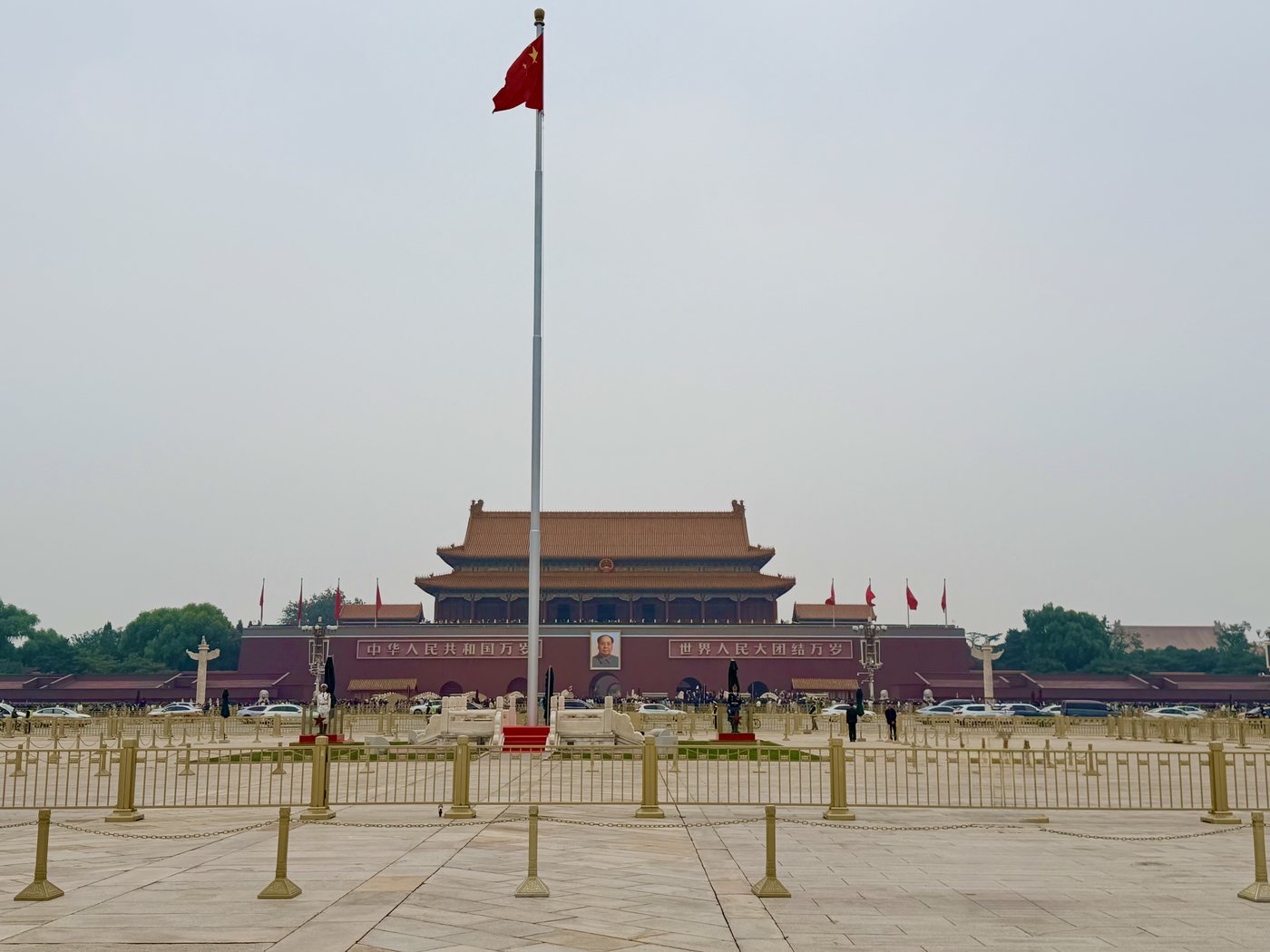
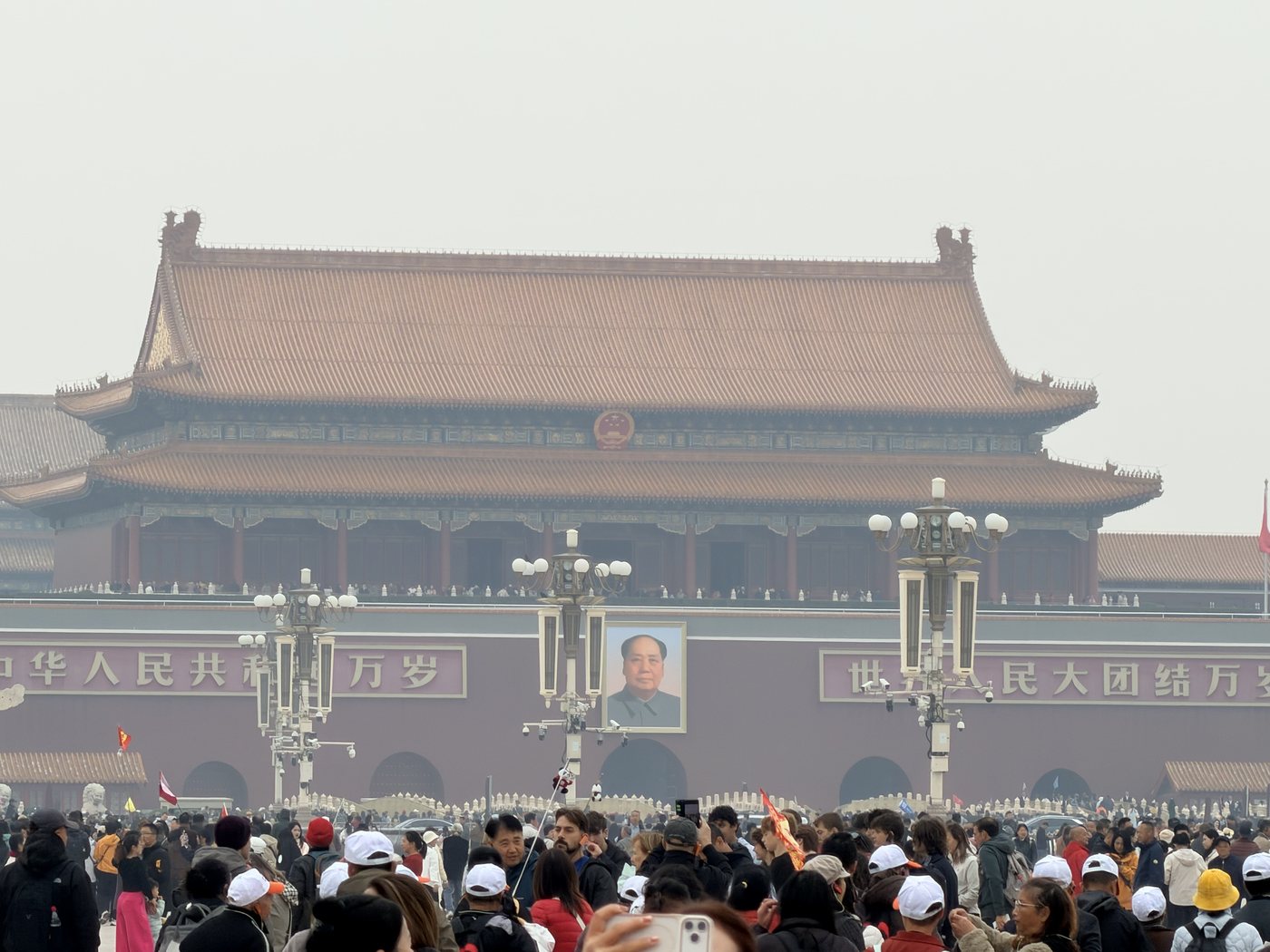
The Forbidden City
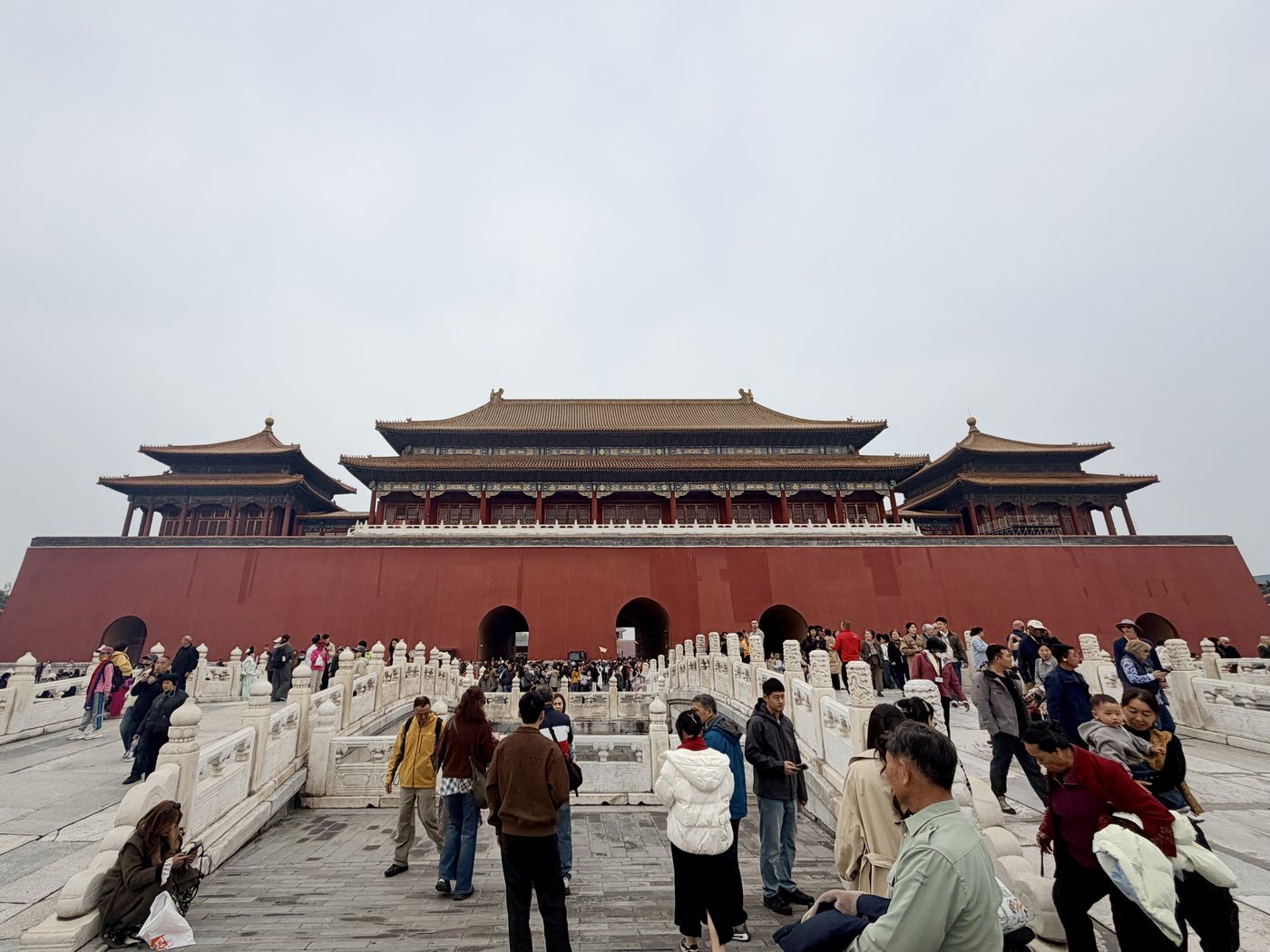
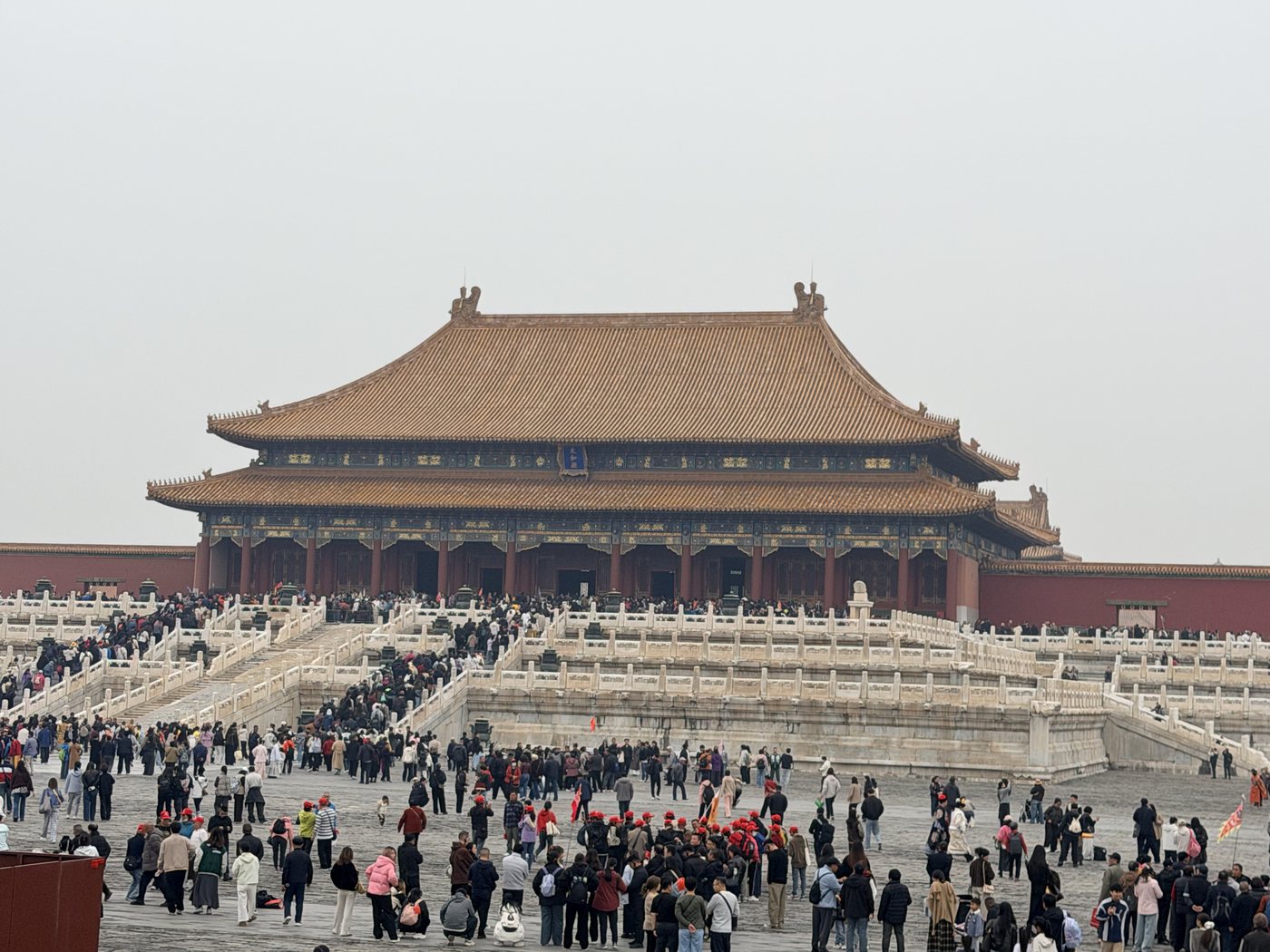
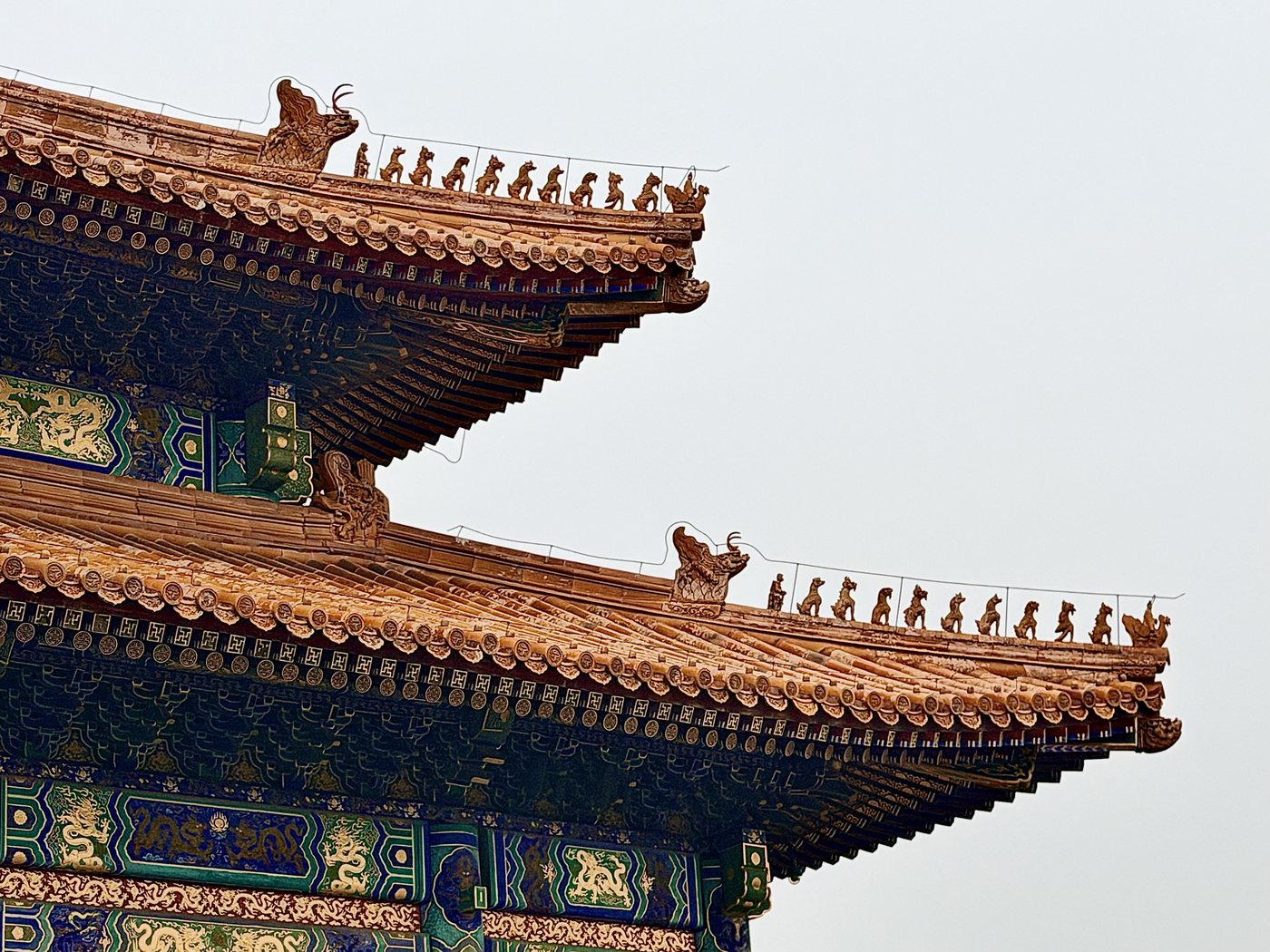
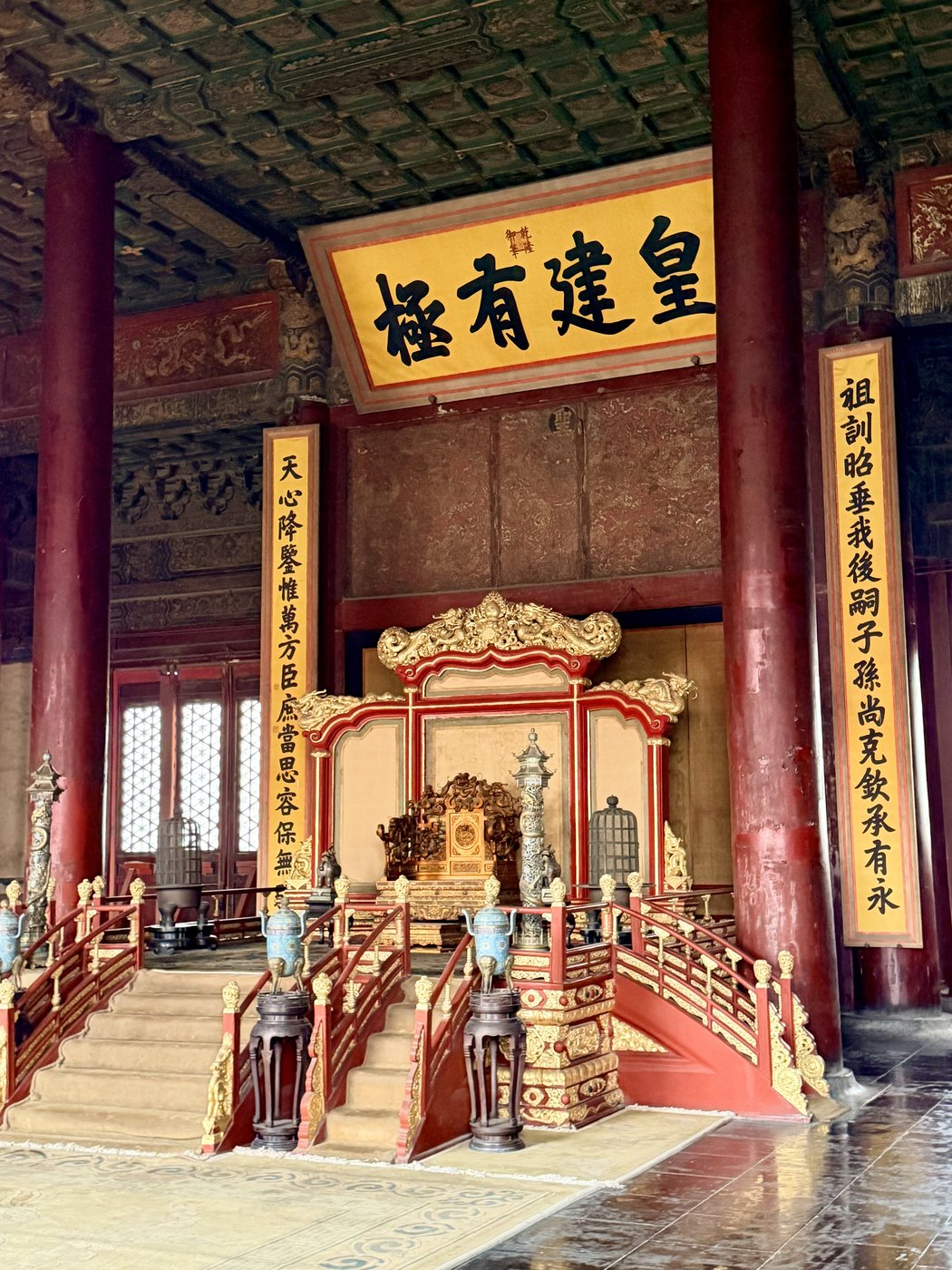
Built between 1406 and 1420, the Forbidden City was the palace of 24 Ming and Qing emperors until the last emperor left in 1924. It has been the Palace Museum since 1925 and a UNESCO World Heritage site since 1987. You enter from the south through the Meridian Gate and exit through the Gate of Divine Might at the north end; it is about a kilometer in a straight line and a lot more if you wander.
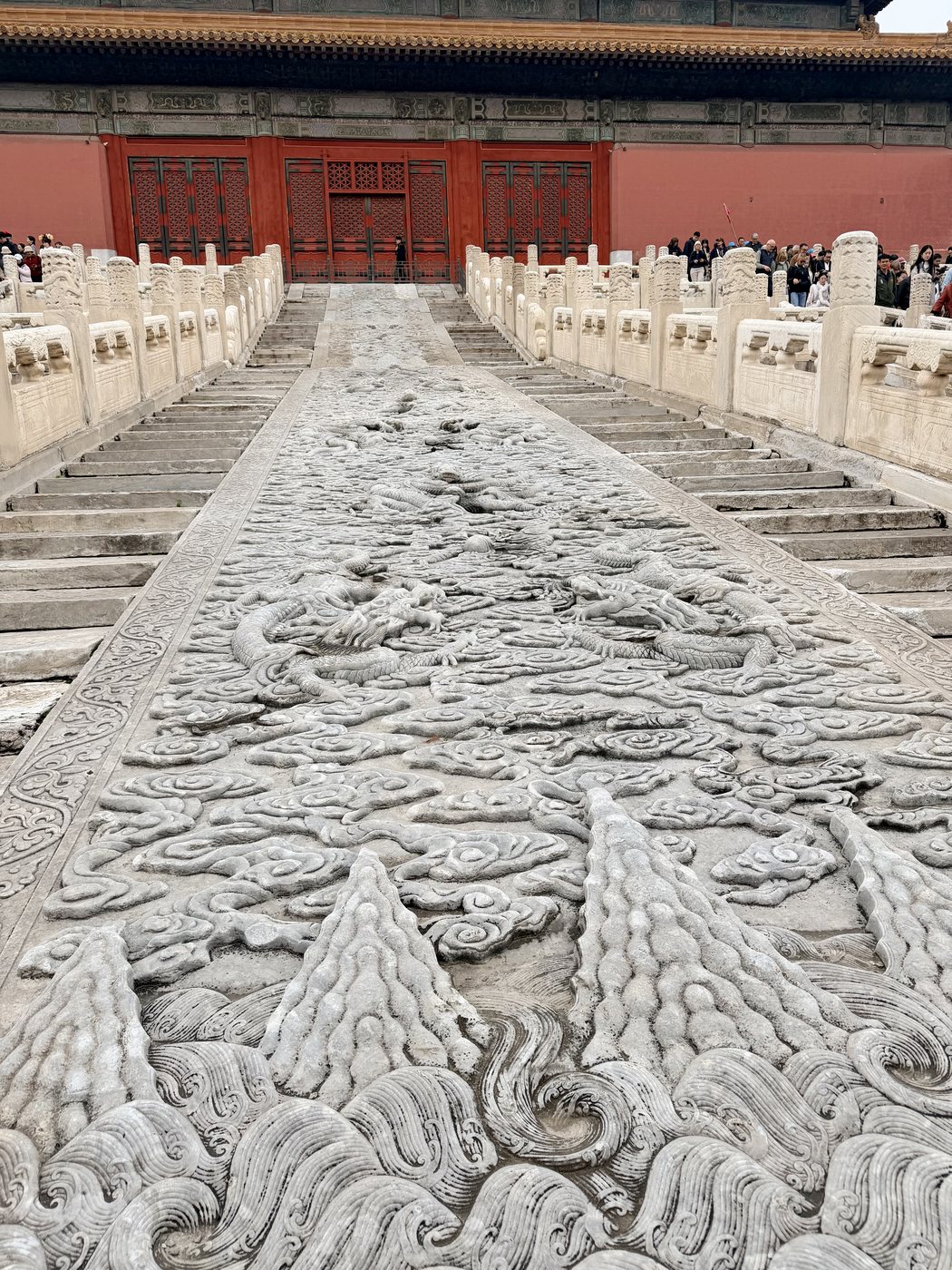
The scale is the point: the three great ceremonial halls stand on tiers of white marble, and behind the Hall of Preserving Harmony a single carved marble ramp of dragons and clouds runs down the stairs, the largest stone carving in the palace.
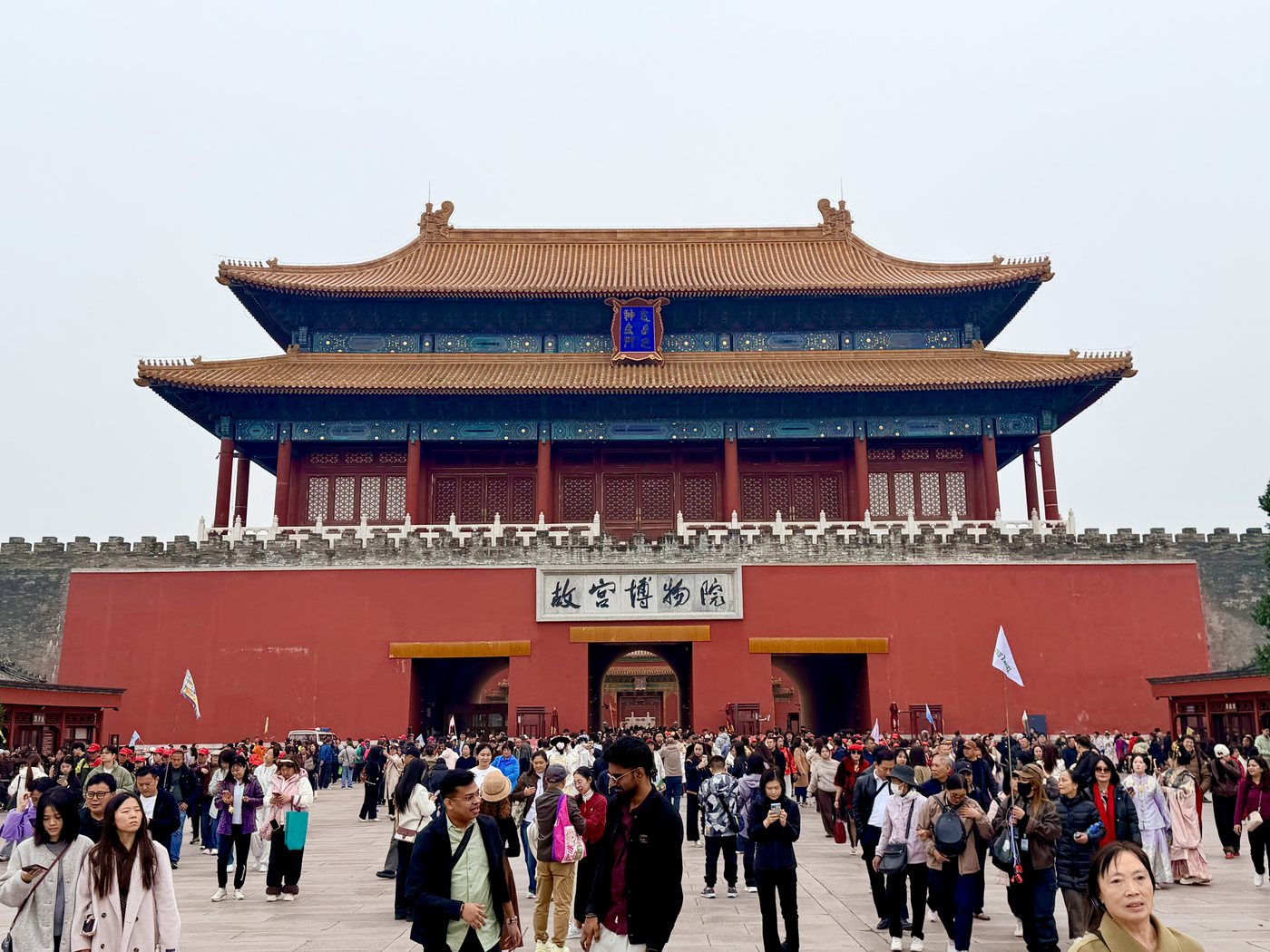
The Temple of Heaven
The emperors came here to pray for good harvests. The round, triple-roofed Hall of Prayer for Good Harvests is the building everyone pictures; it stands on a three-tier marble terrace and was rebuilt in the 1890s after lightning burned the original. The temple complex dates from 1420 and became a UNESCO site in 1998.
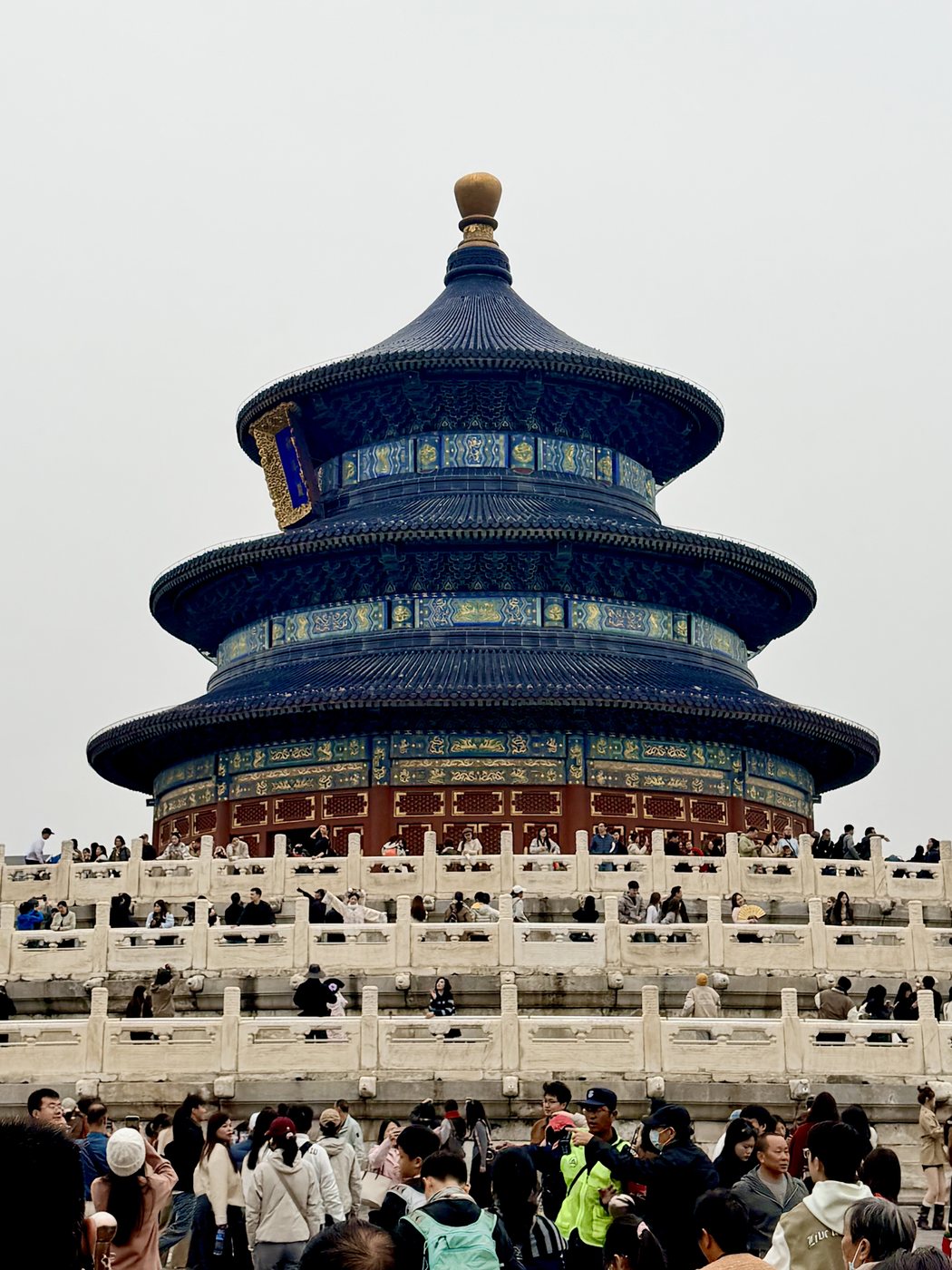
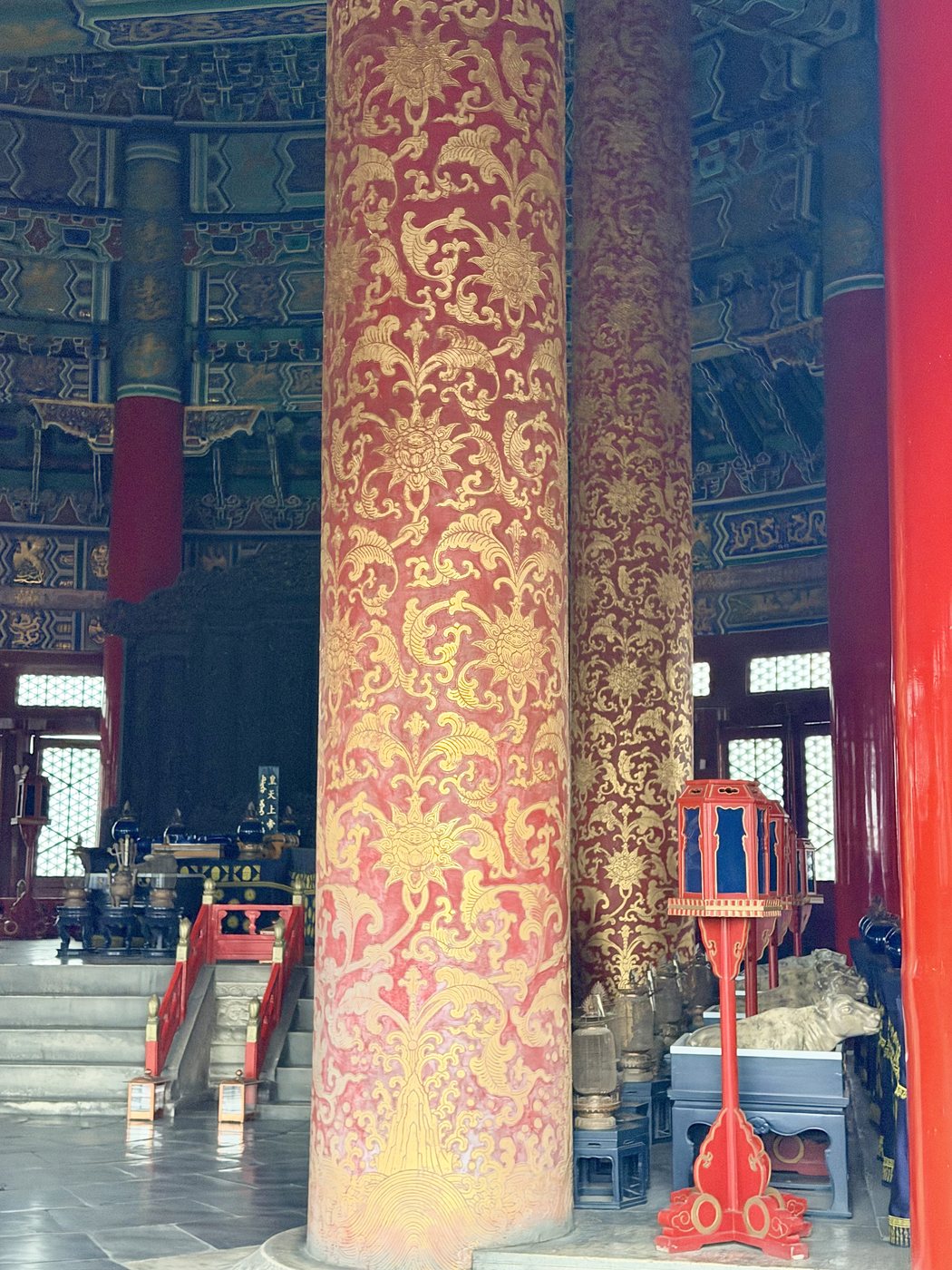
The Olympic Park and the hutongs
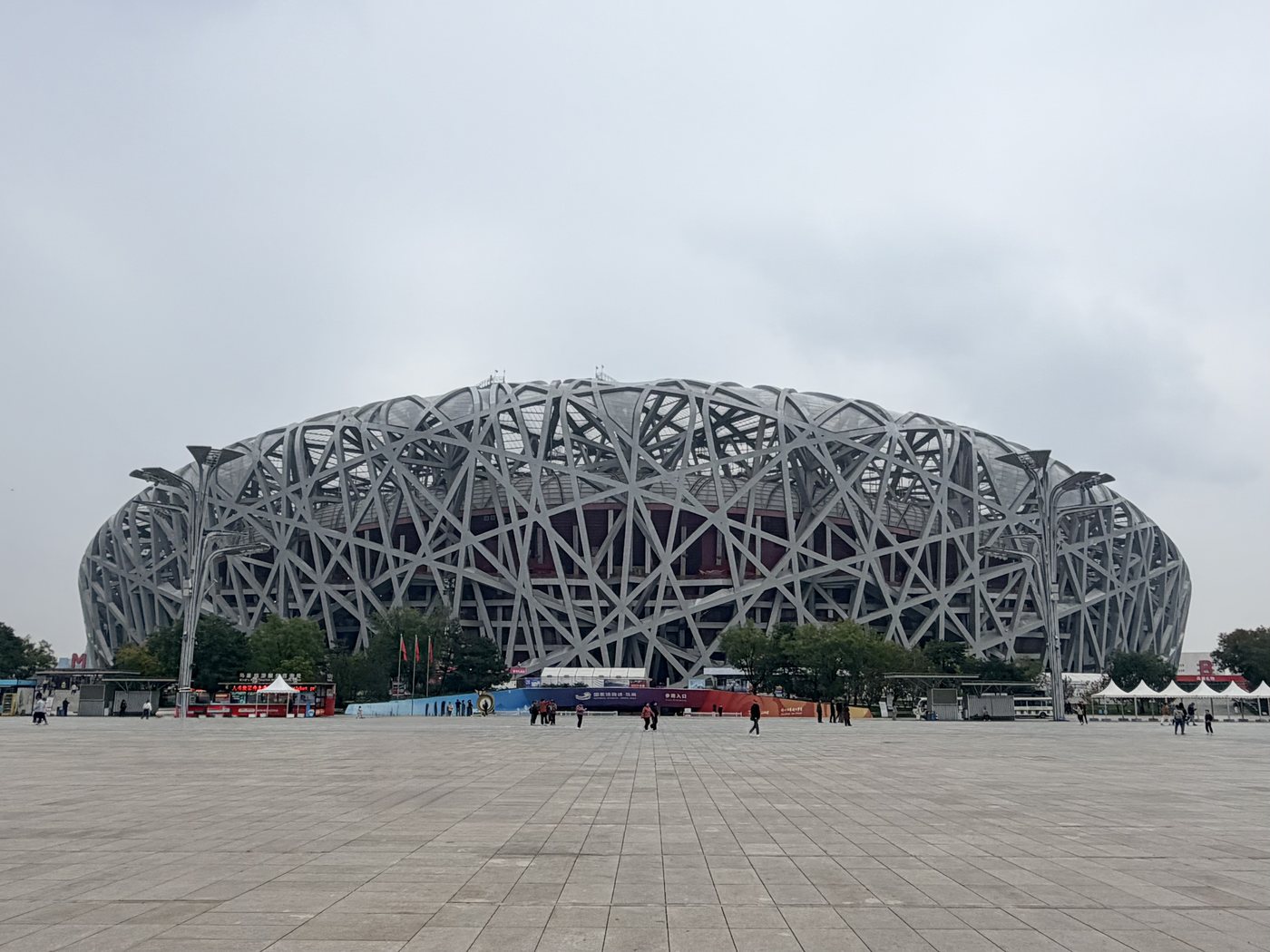
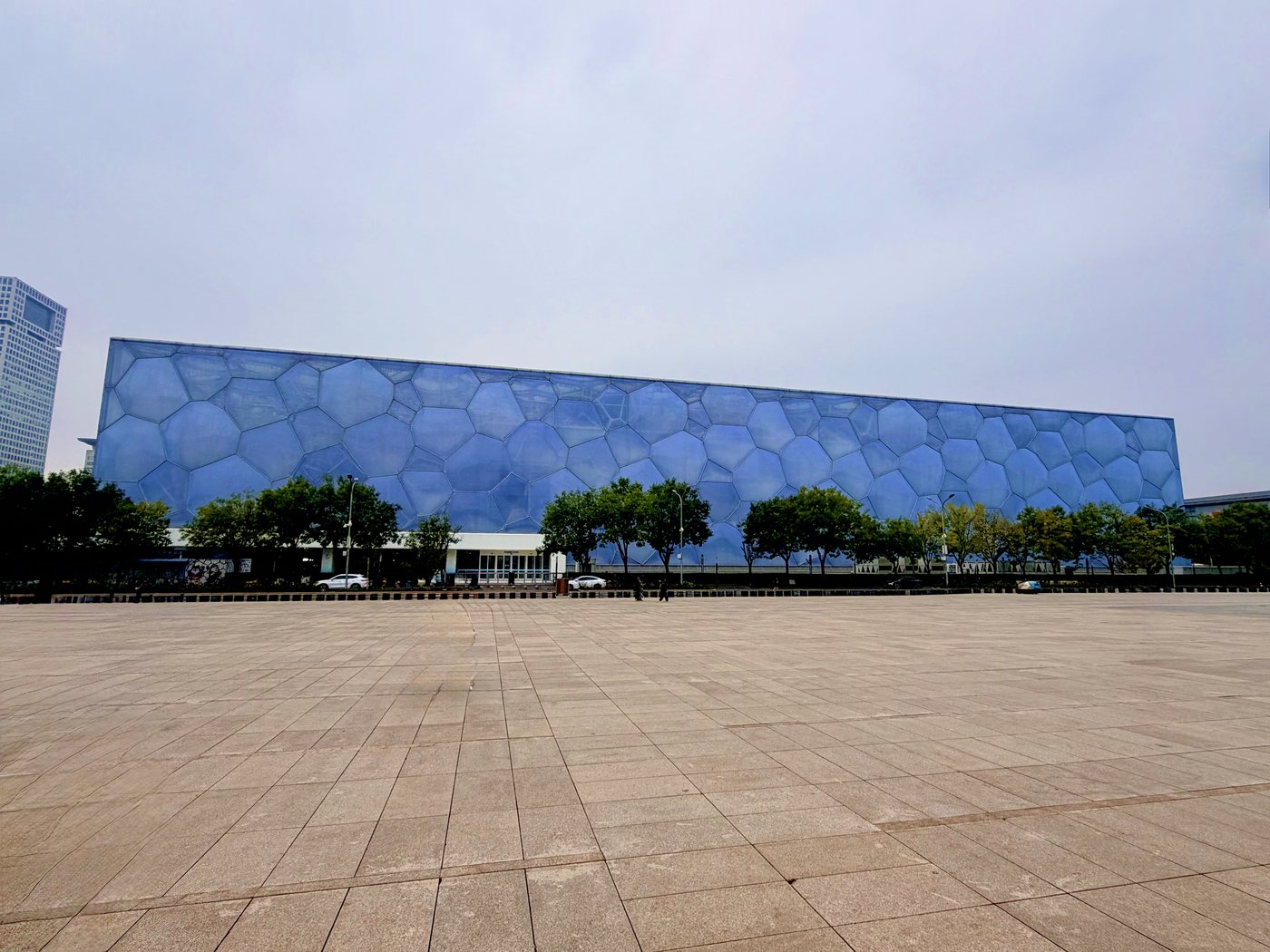
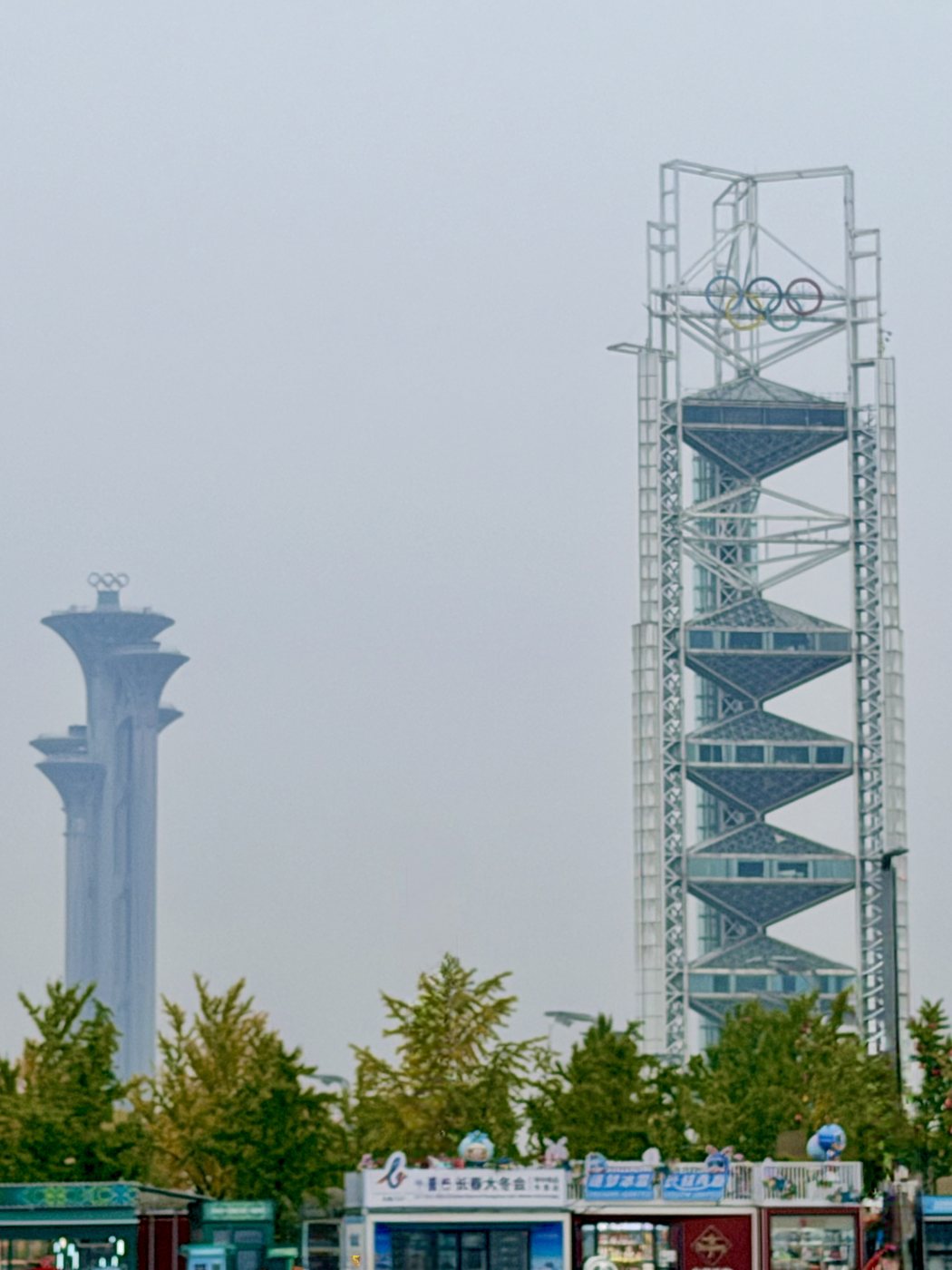
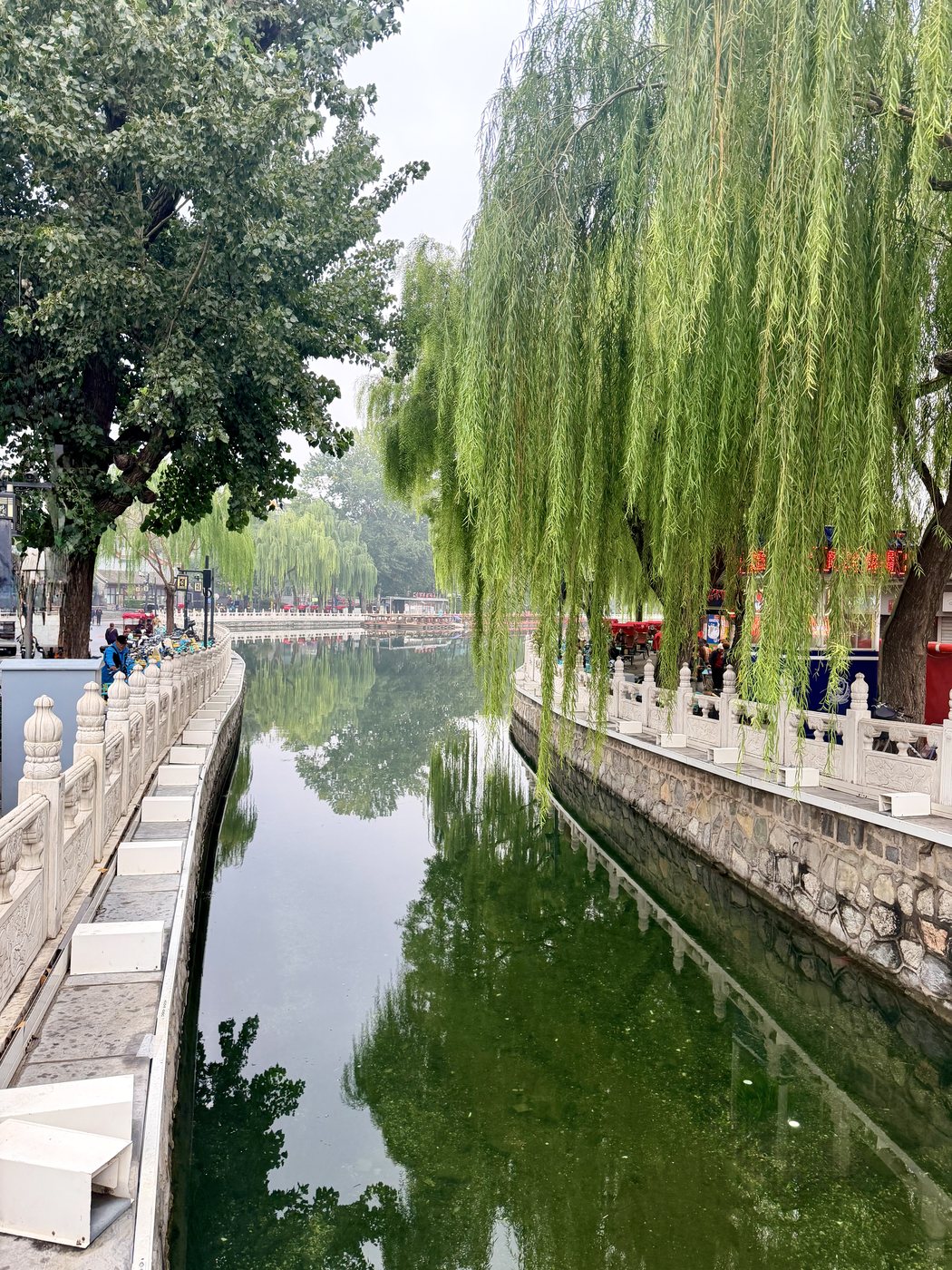
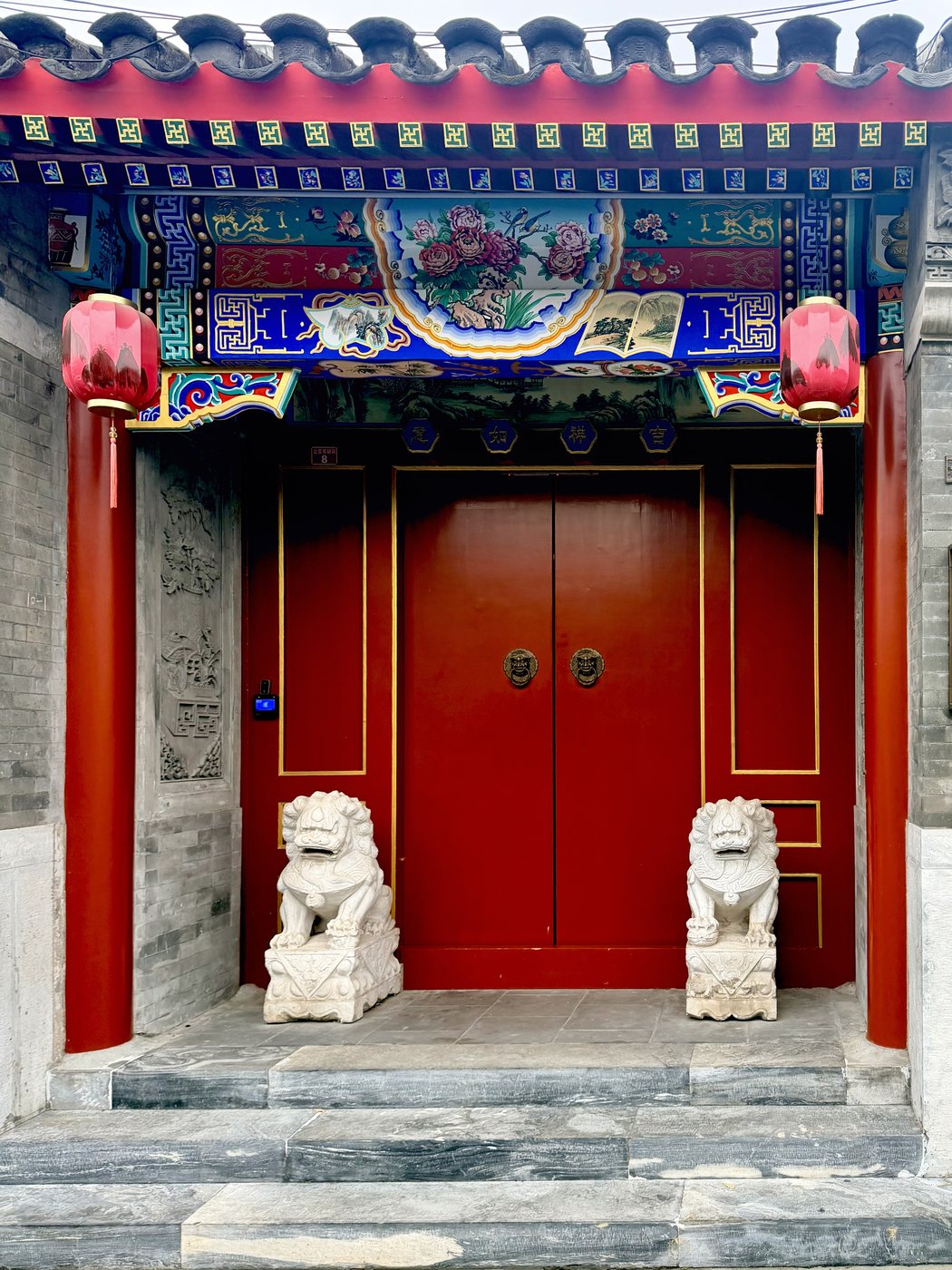
On the way out to the Great Wall we stopped at the Olympic Park, where the Bird's Nest (the National Stadium) hosted the opening ceremonies of both the 2008 Summer Olympics and the 2022 Winter Olympics, with the Water Cube aquatics center beside it. Earlier that morning I walked the willow-lined canals of Shichahai, in the old hutong lanes north of the Forbidden City.
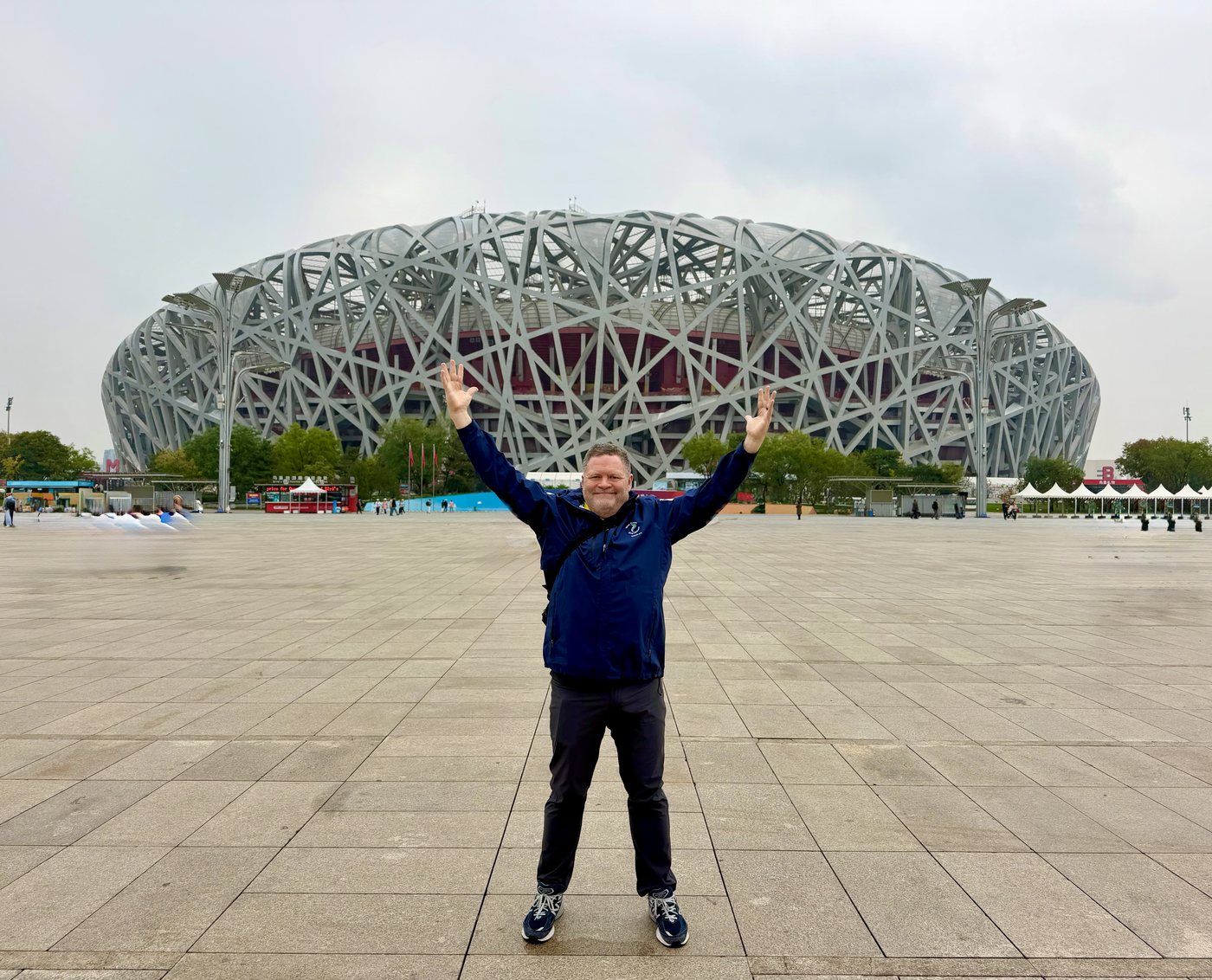
The Great Wall at Mutianyu
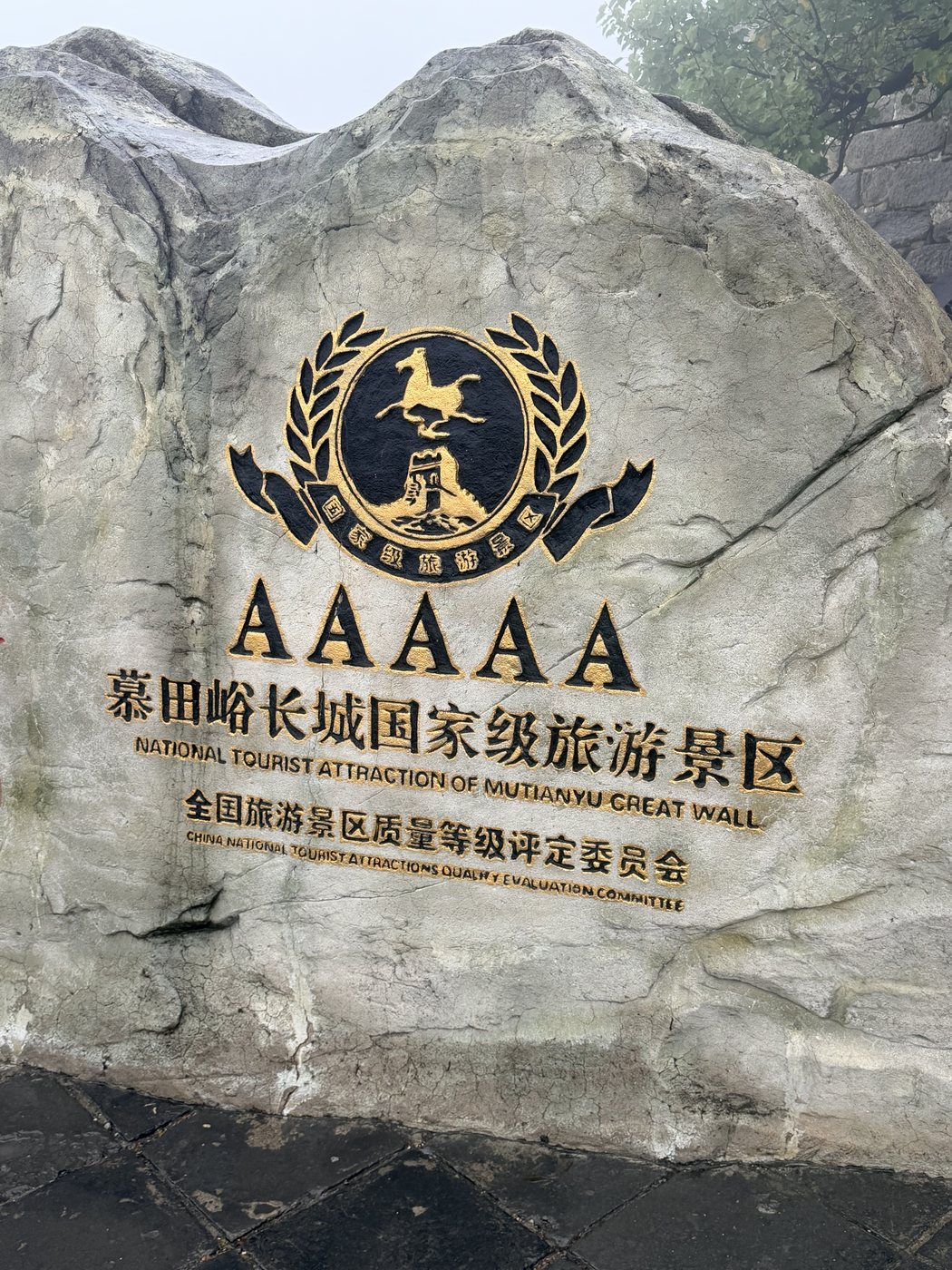
Mutianyu is about 70 km northeast of central Beijing. A wall was first built here in the 6th century, but what you walk on today is mostly Ming-dynasty work from the 1500s, restored, with dense watchtowers along a forested ridge. A cable car takes you up from the valley.
The day I went, the fog sat right on the wall, and the steps vanished into white a few towers away in each direction.
The Summer Palace
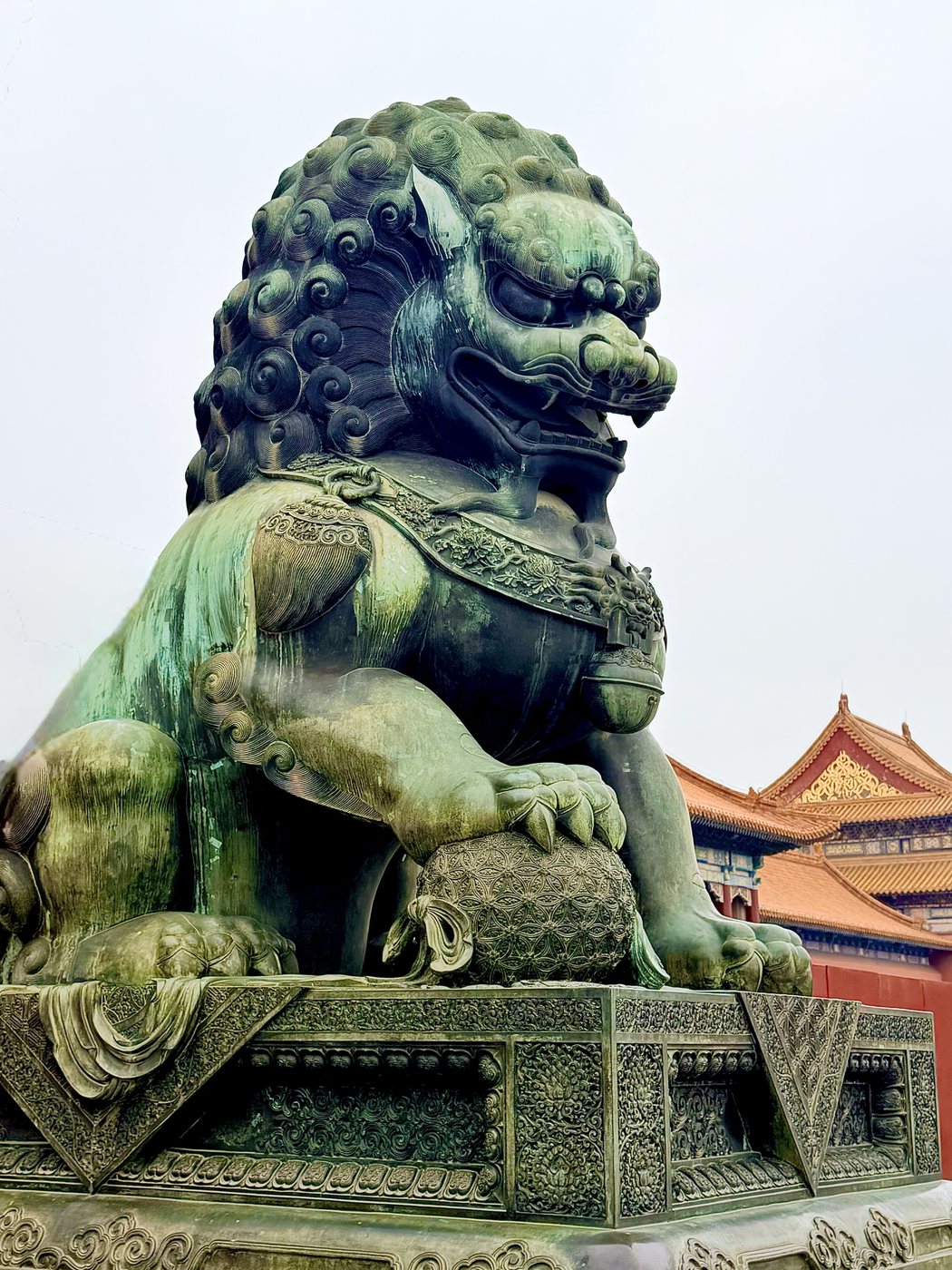
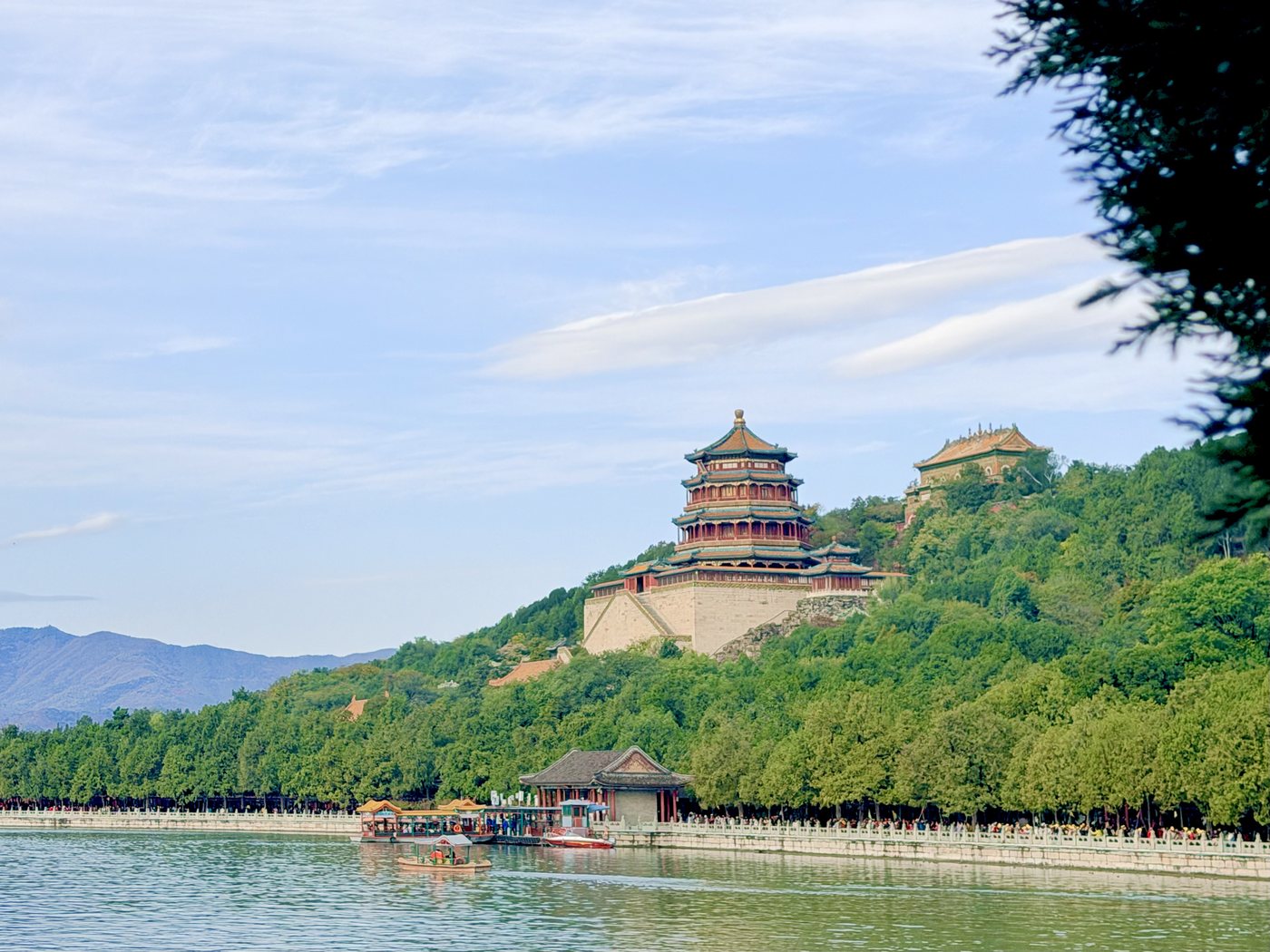
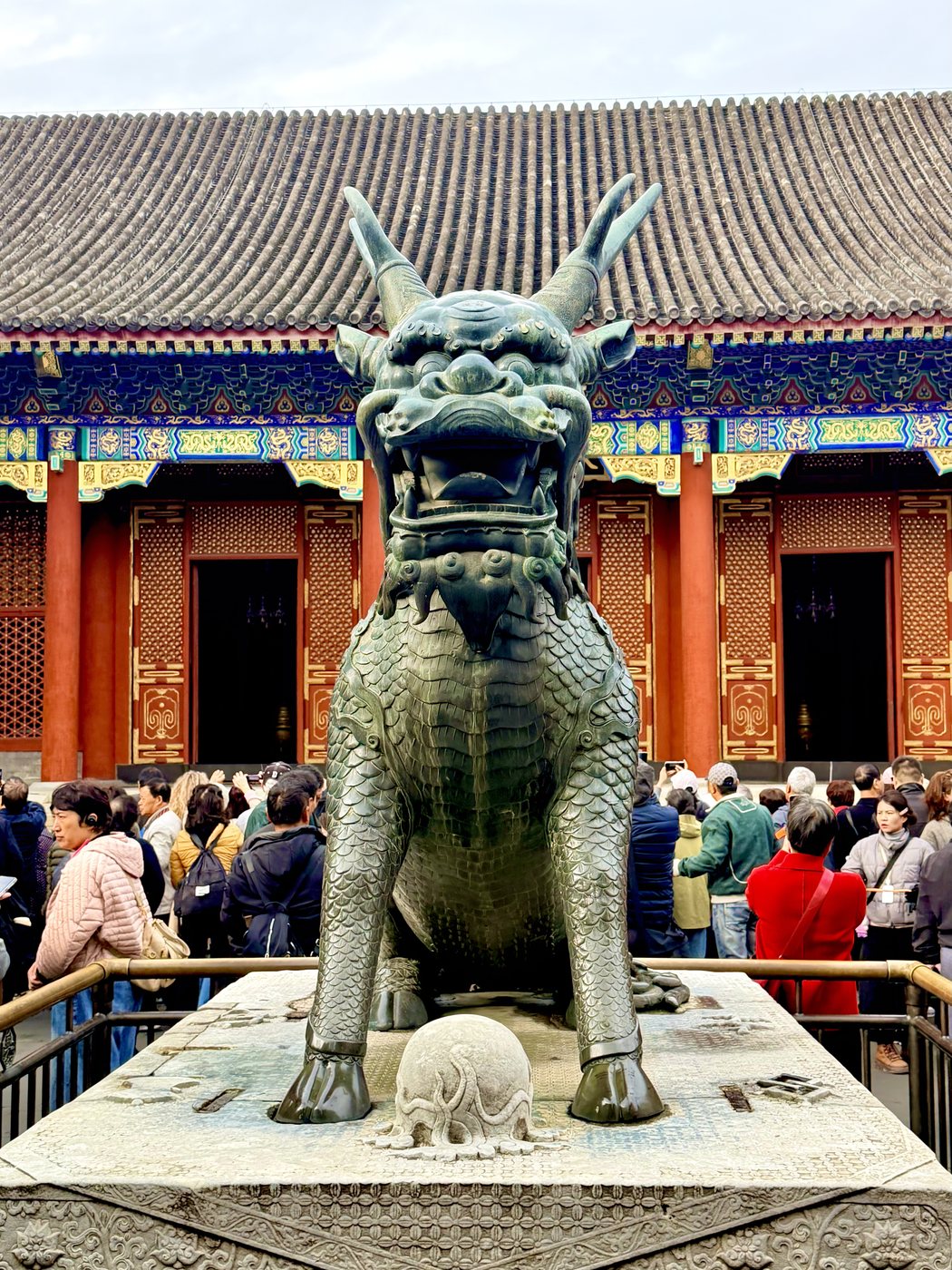
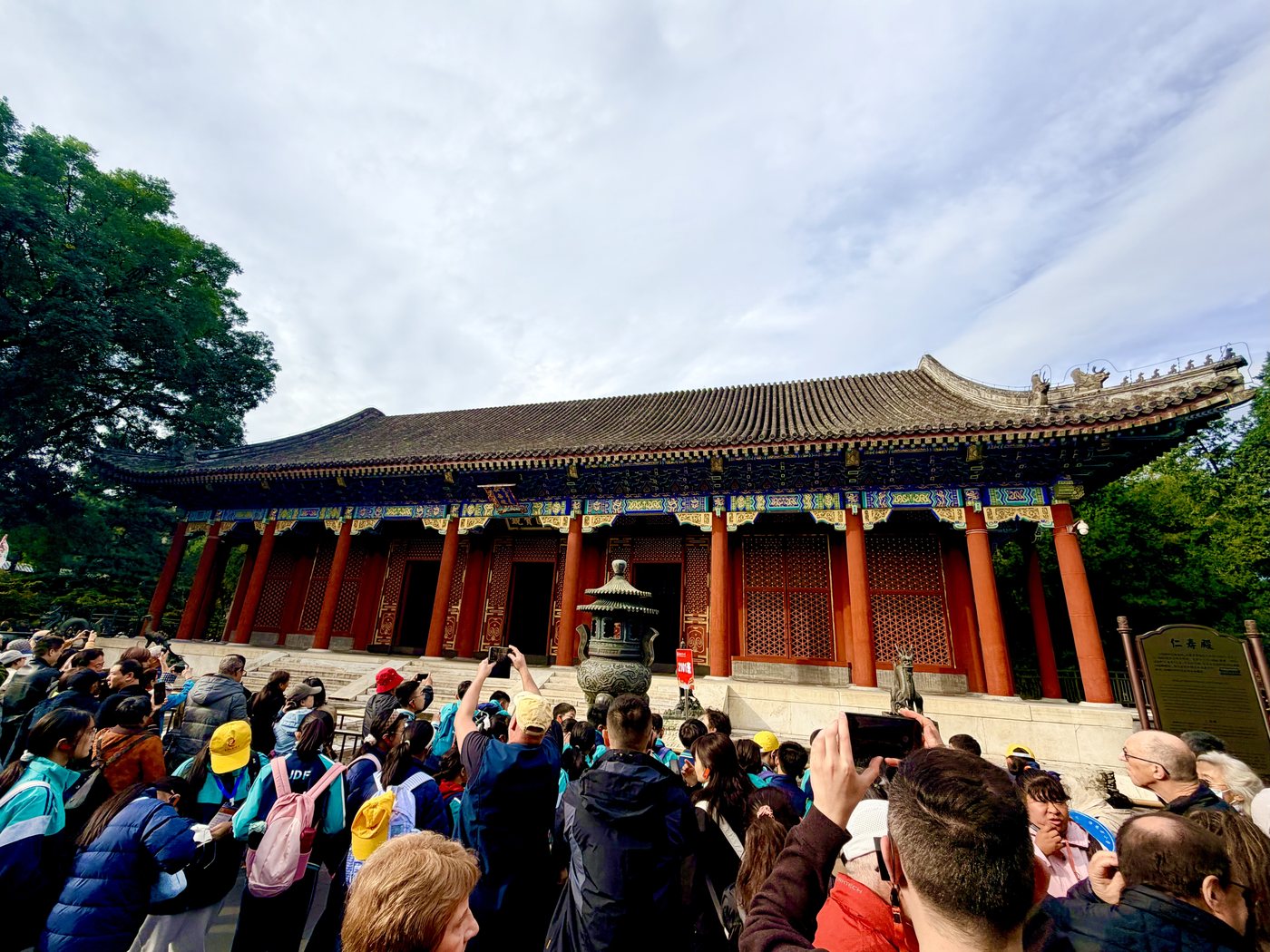
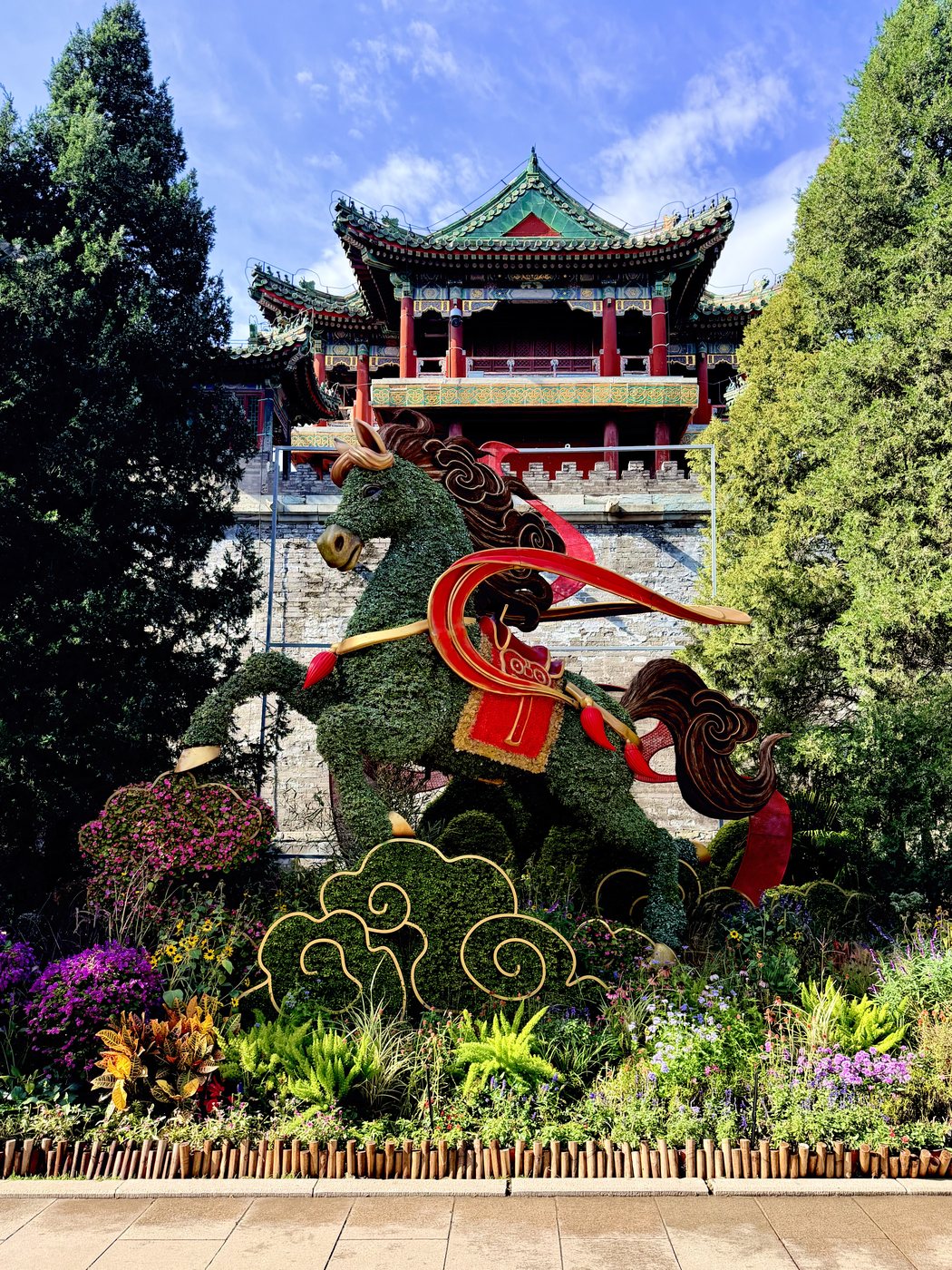
Our last Beijing morning was the Summer Palace, the imperial retreat on Kunming Lake laid out in 1750, burned in 1860 and rebuilt by the Empress Dowager Cixi in the 1880s. The bronze qilin in front of the Hall of Benevolence and Longevity is one of its best-known pieces; across the lake, the Tower of Buddhist Incense crowns Longevity Hill.
Beijing at night
Good to know
- When23–26 Oct 2026
- Getting thereBeijing Daxing airport; about an hour into the city
- Getting aroundThe metro is fast and cheap; DiDi for rides
- TicketsForbidden City, Temple of Heaven and Summer Palace use timed, passport-linked reservations; book early
- Great WallMutianyu is about 1.5 hours each way; the cable car makes the climb easy
- Next stopHigh-speed train to Xi'an, about 4.5 hours
Official sites and sources
- UNESCO: Imperial Palaces of the Ming and Qing Dynasties — the Forbidden City
- UNESCO: The Great Wall —
- UNESCO: Temple of Heaven — an Imperial Sacrificial Altar in Beijing
- UNESCO: Summer Palace — an Imperial Garden in Beijing
- Visit Beijing — Beijing's official tourism site
More from Darrell Seale
- China: the whole tripOverview of 23 Oct – 6 Nov 2026
- Xi'anTerracotta Army and Big Wild Goose Pagoda
- ShanghaiThe Bund, the tunnel and Yu Garden
- ZhangjiajieSandstone pillars, glass bridge, Tianmen Mountain
- TibetLhasa: the Potala, the Jokhang and Sera
- Countries visitedAll 143 countries and territories, by region
- About Darrell SealeAir Force veteran, retired executive, scuba instructor
- Scuba diving with Darrell SealeDive trips, photos and video
- Darrell Seale on YouTubeTravel and dive videos