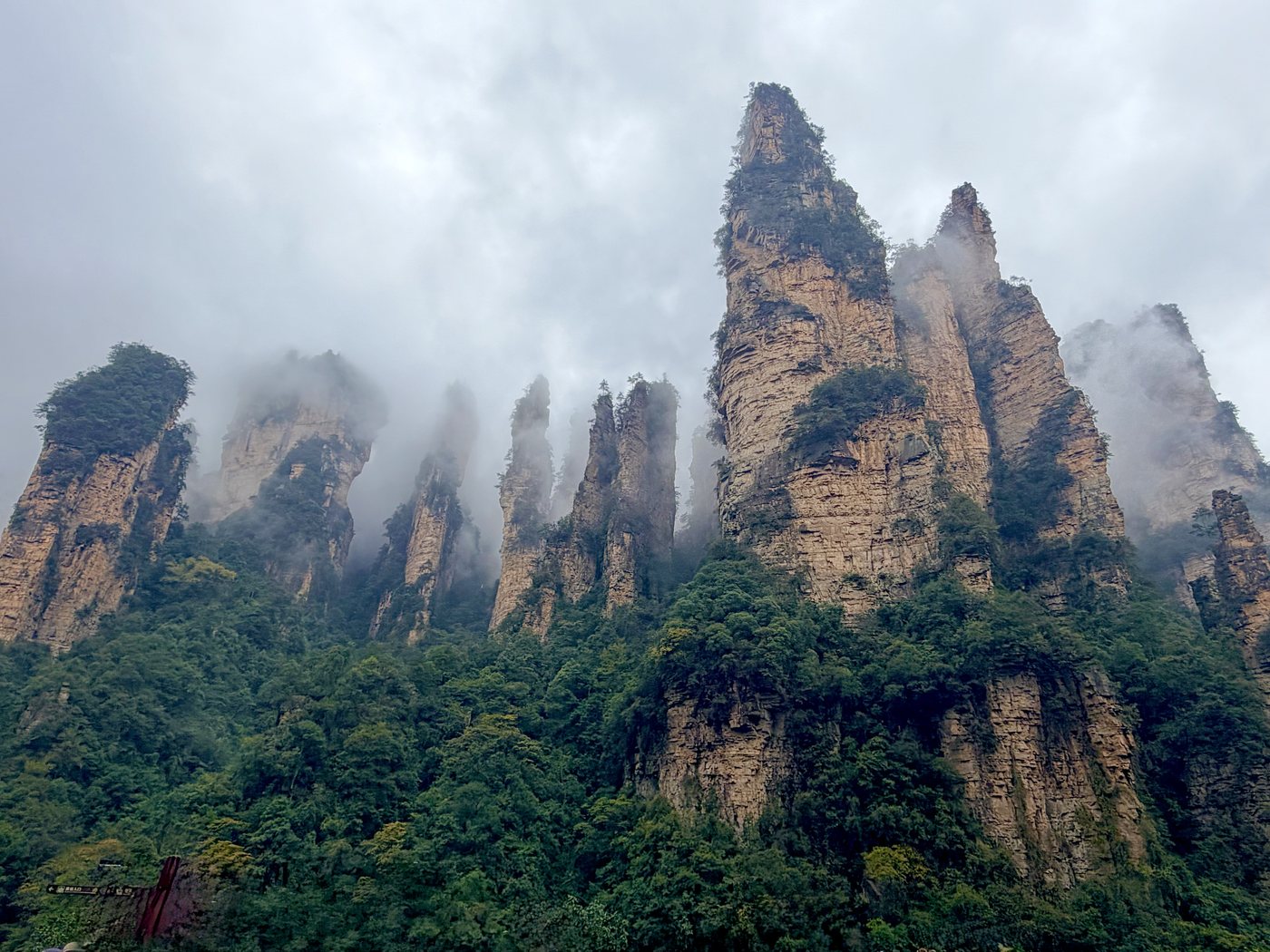
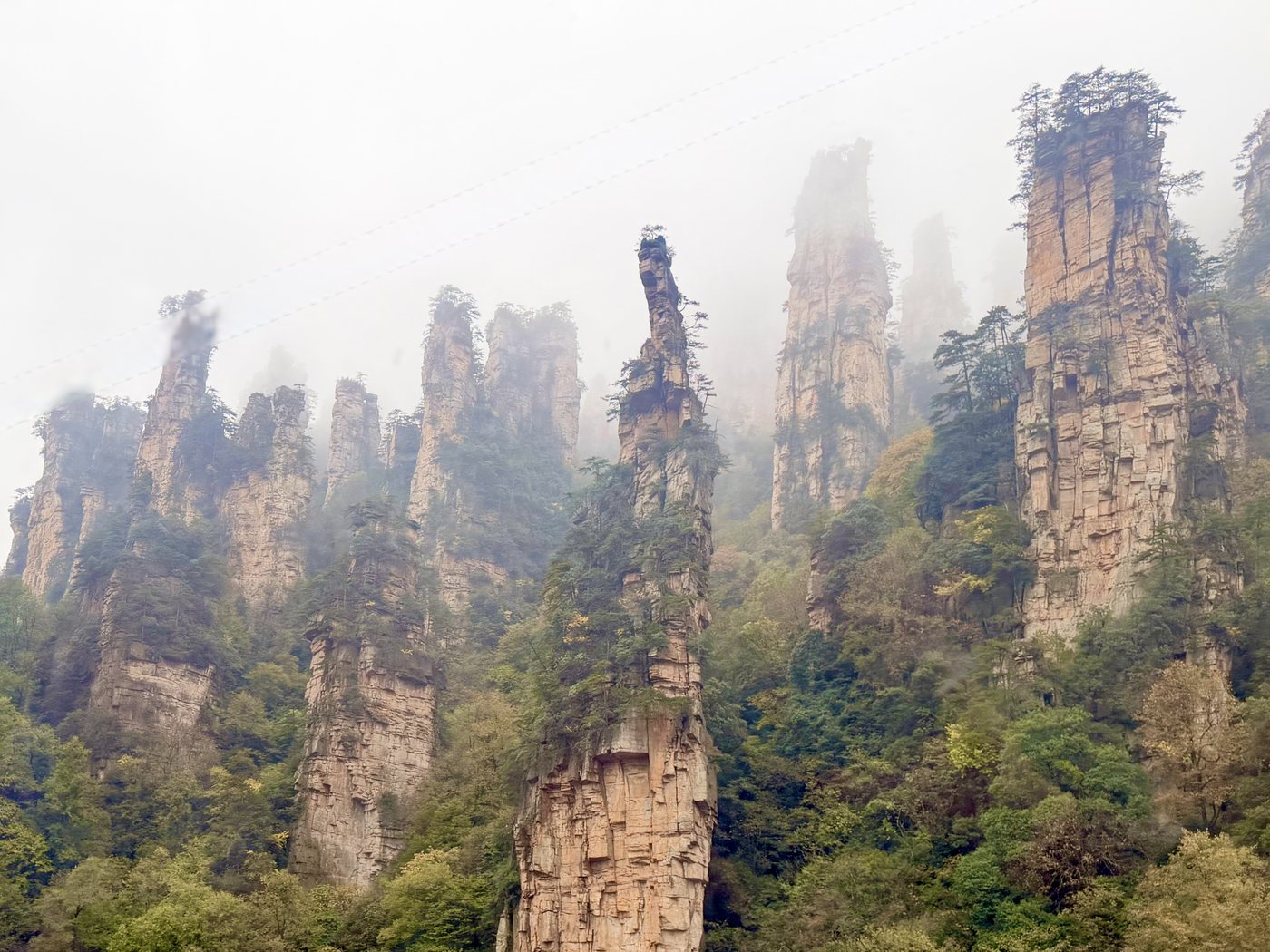
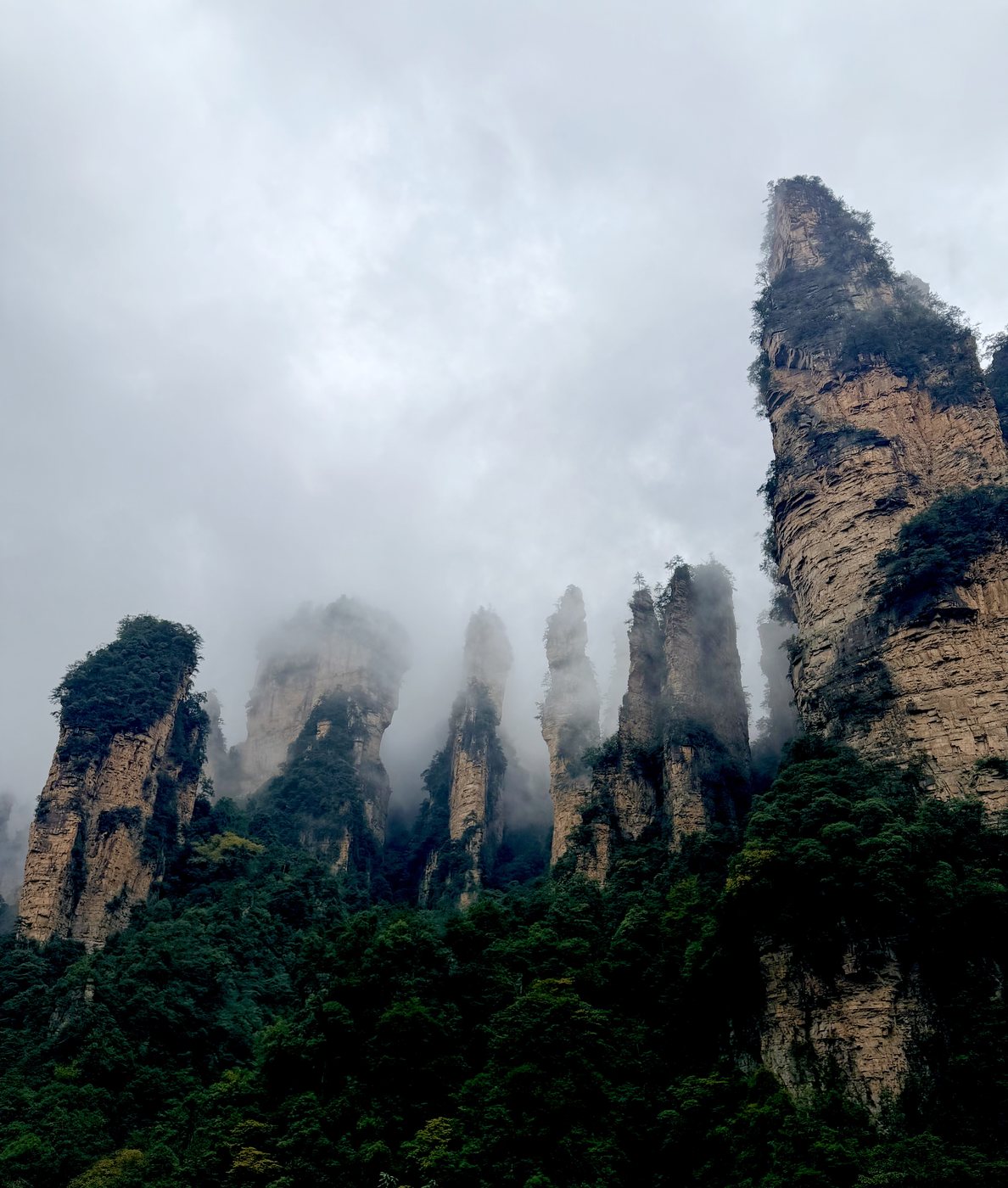
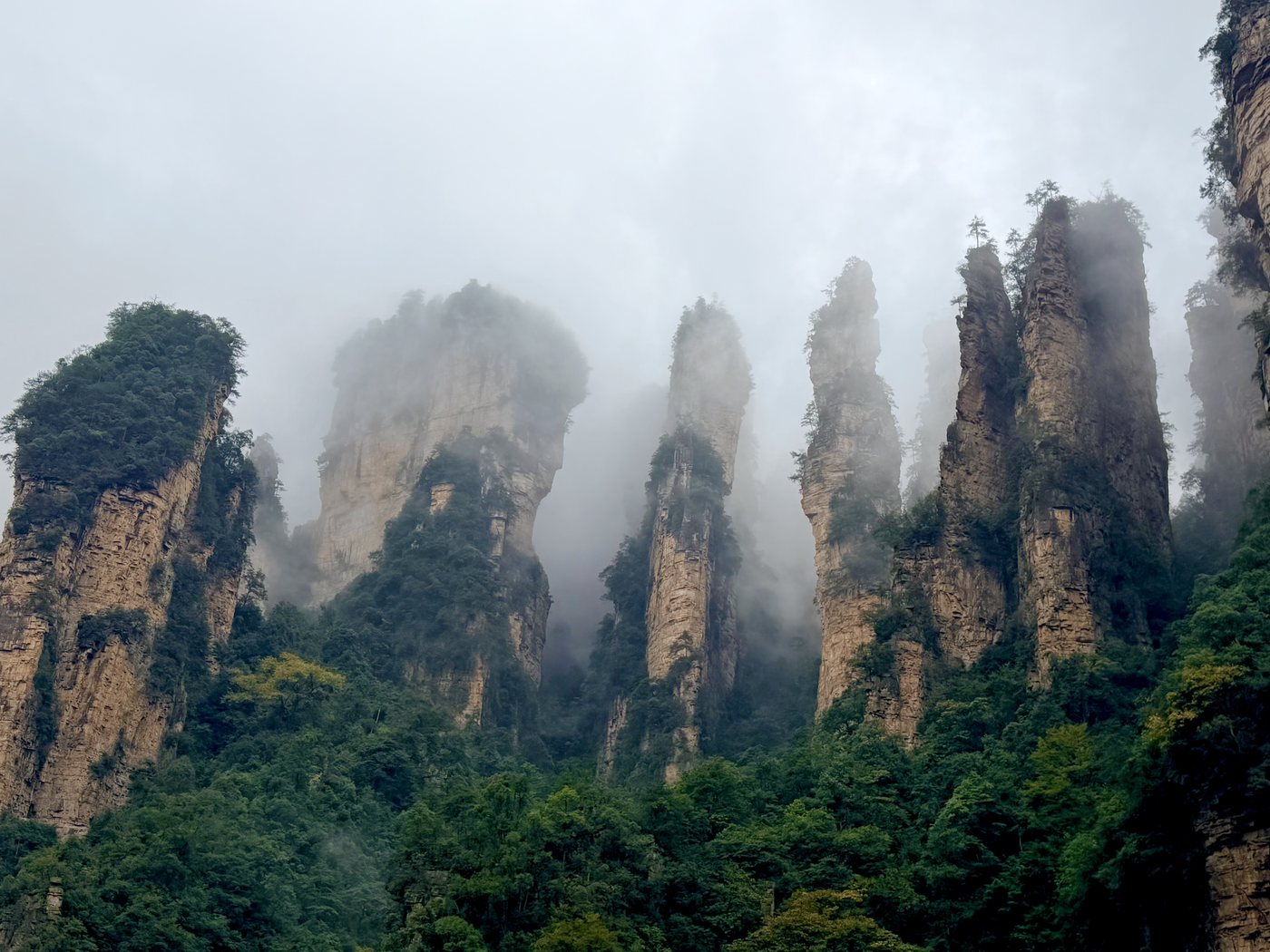
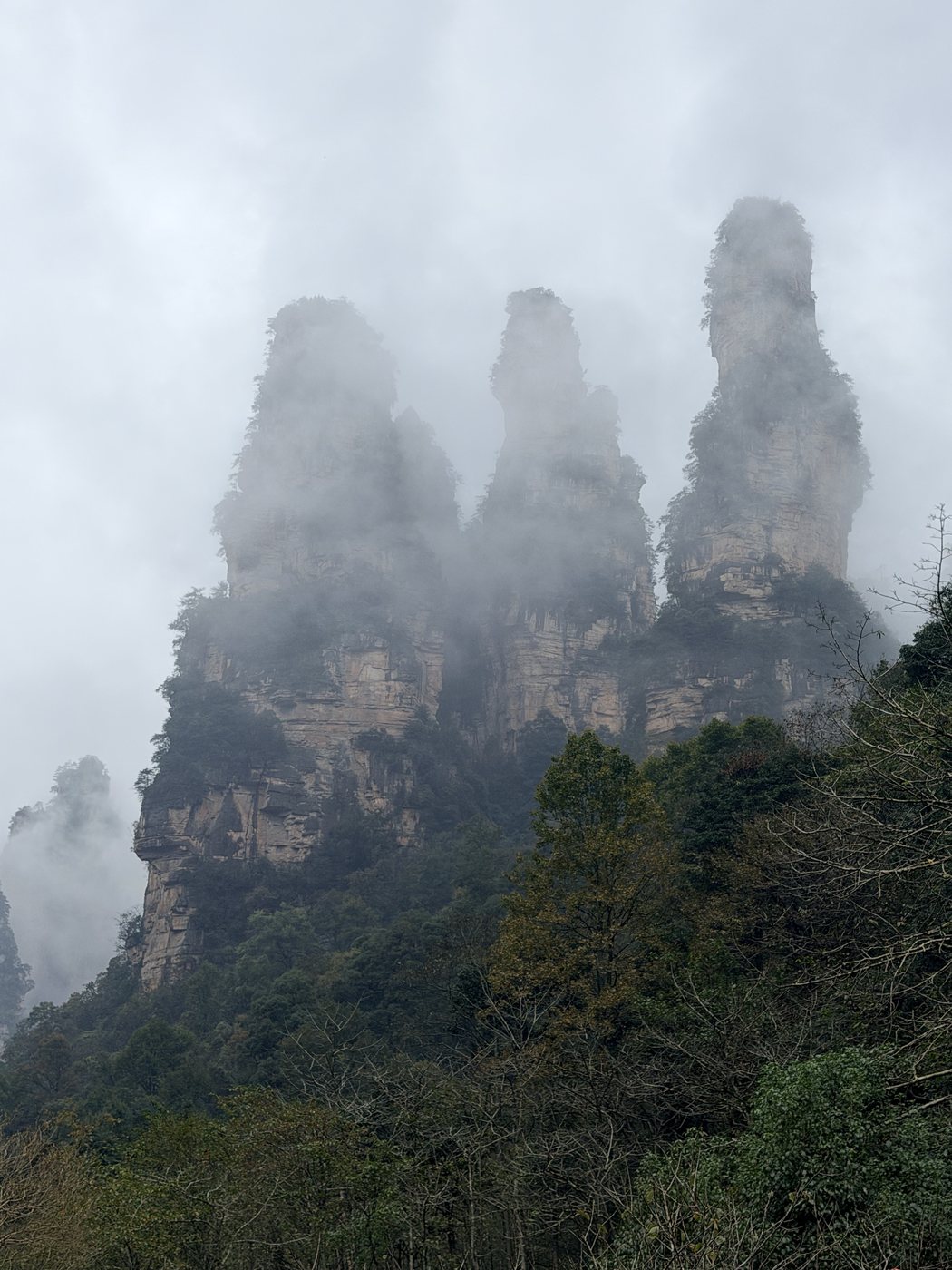
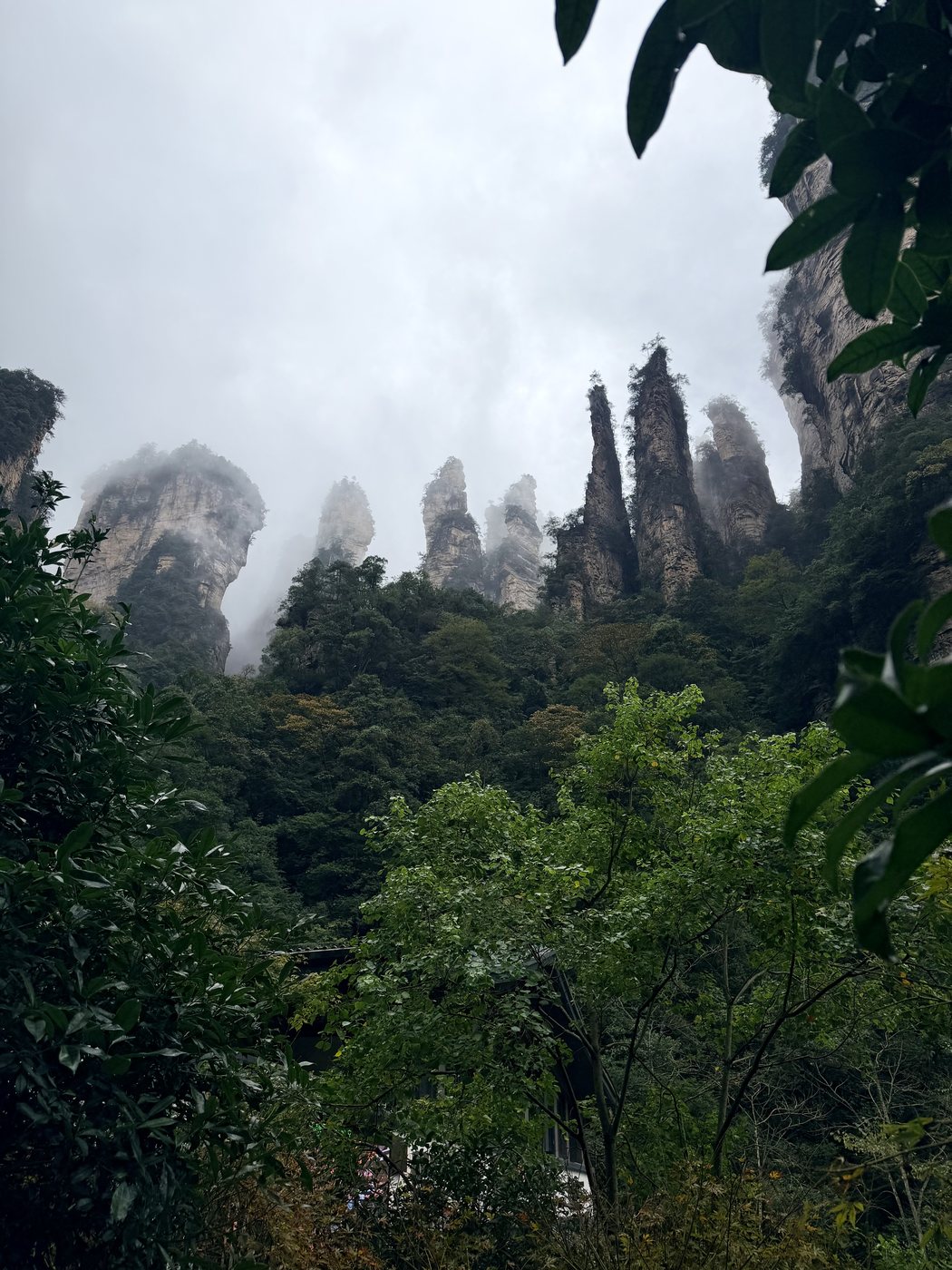
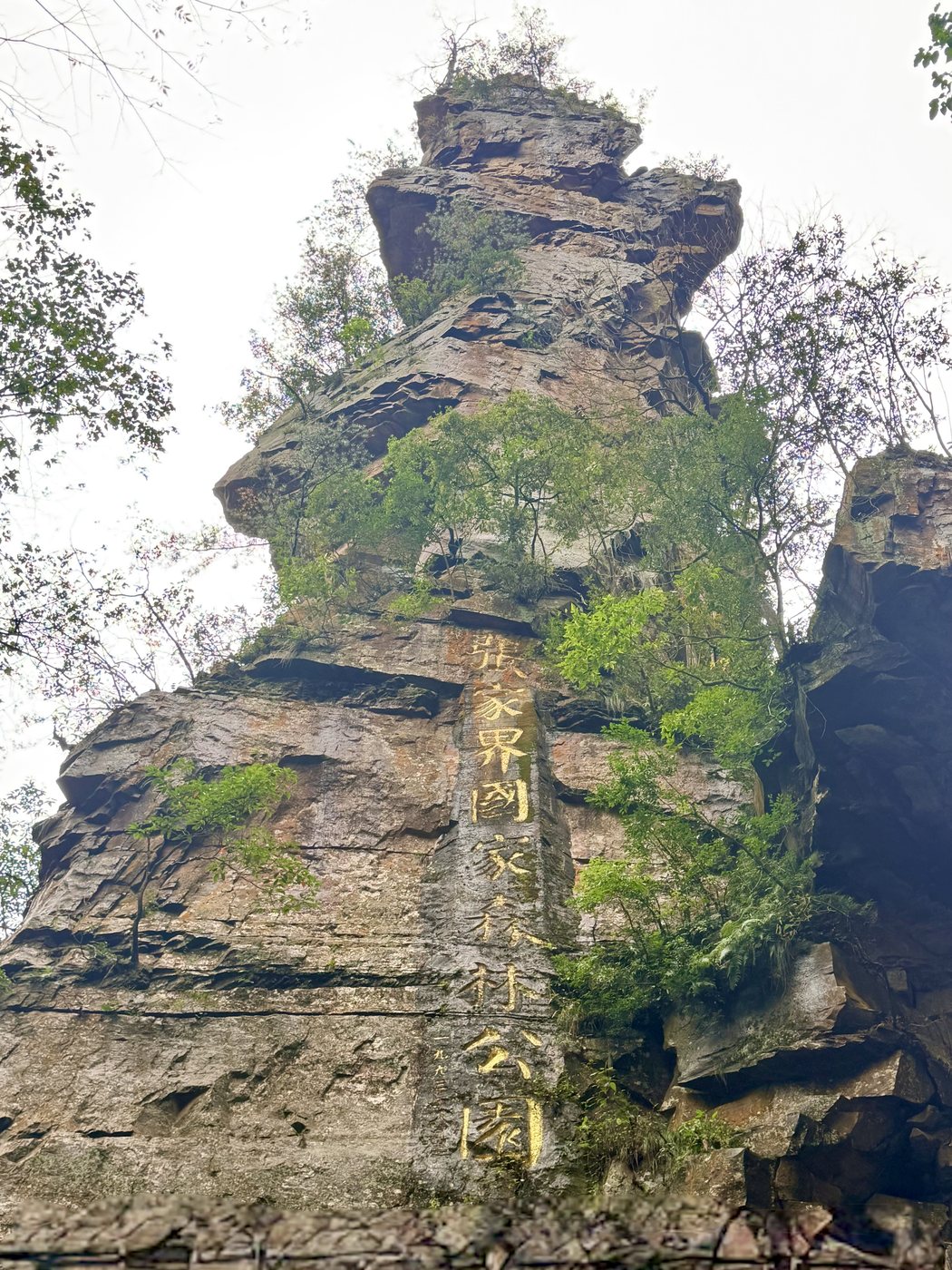
Zhangjiajie, in the mountains of northwest Hunan Province, was the part of the trip I'd looked forward to most. The Wulingyuan Scenic Area here has more than 3,000 quartz-sandstone pillars and peaks, many over 200 m tall, standing in a forest of their own. It became a UNESCO World Heritage site in 1992, and Zhangjiajie National Forest Park, inside it, was China's first national forest park, in 1982. The film Avatar used this landscape as the model for its floating mountains, and one of the pillars has since been renamed after it.
This part of the trip was private, with a guide and driver for four days. The rule was early: the Bailong Elevator and the cable cars queue up through the morning, and the fog that fills the valleys usually lifts between nine and ten. We got both the fog and the views.
Day by day it went like this: the old town of Dayong and the Seventy-Two Strange Buildings on the first evening; Yuanjiajie and the pillars, the Bailong Elevator and the cable cars the next day; Huangshizhai, Golden Whip Stream and Baofeng Lake after that; then the Grand Canyon Glass Bridge and Yellow Dragon Cave; and finally Tianmen Mountain, where I climbed the 999 steps to its natural arch, before an evening train to Changsha and the overnight flight home.
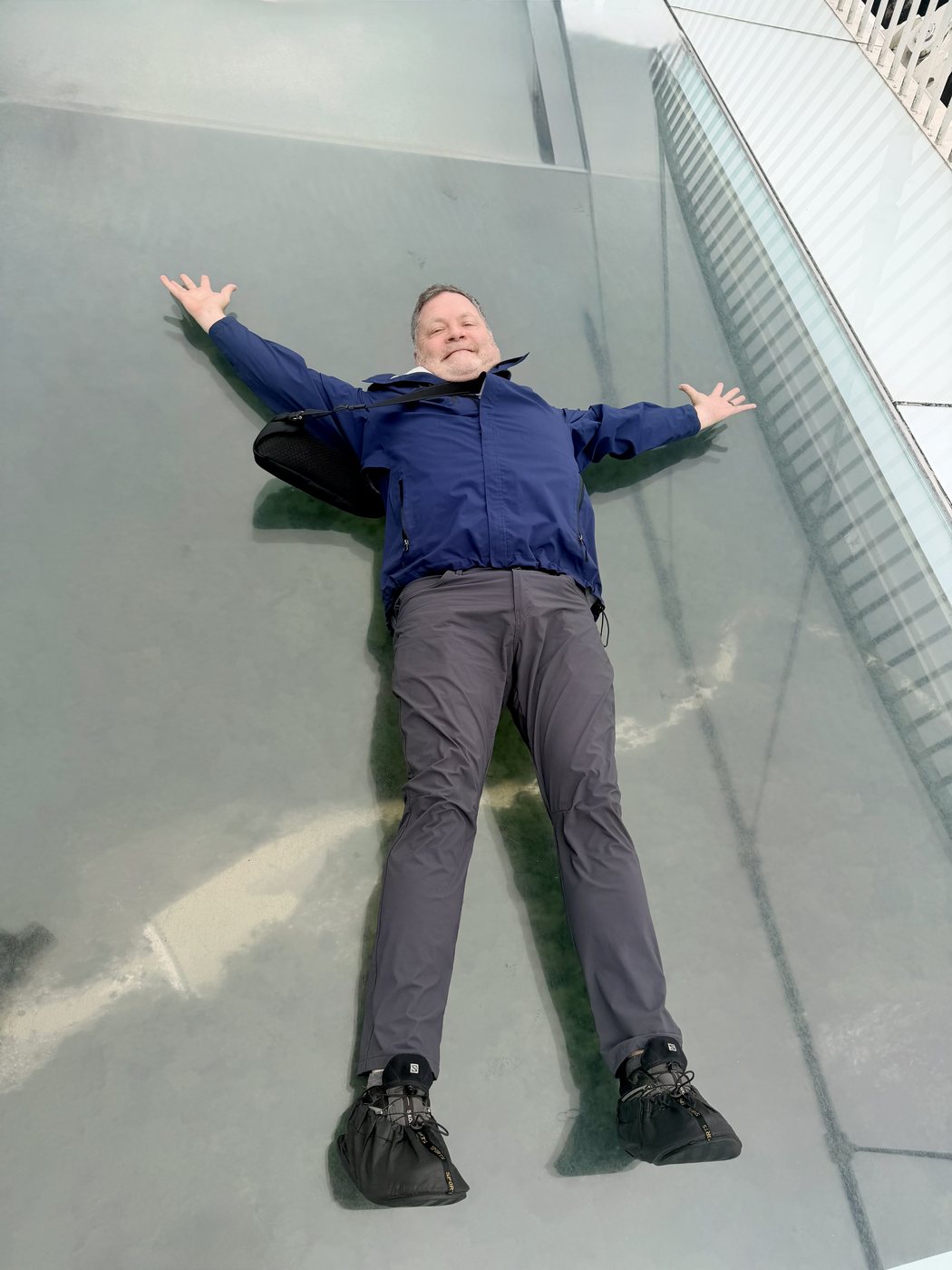
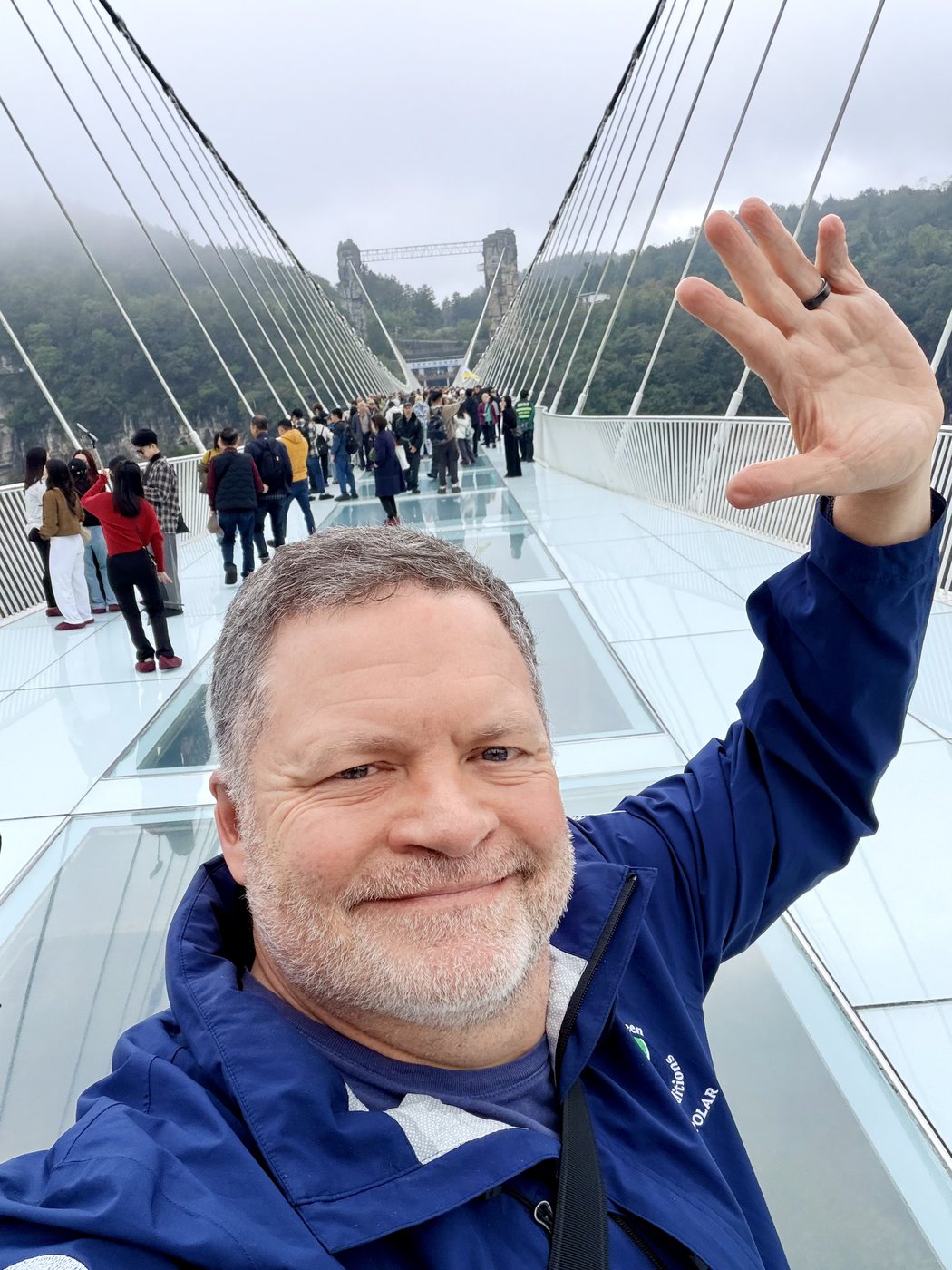
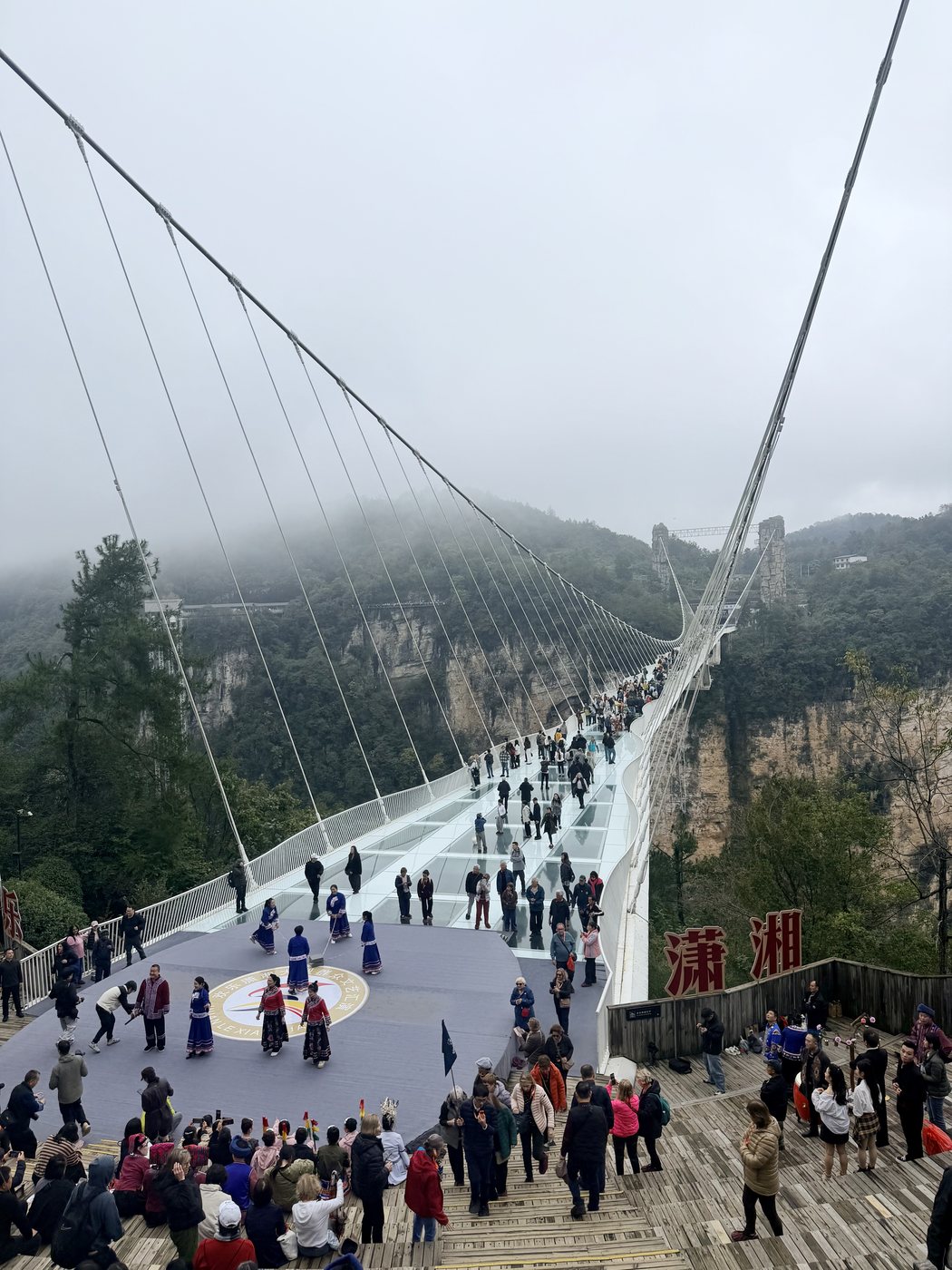
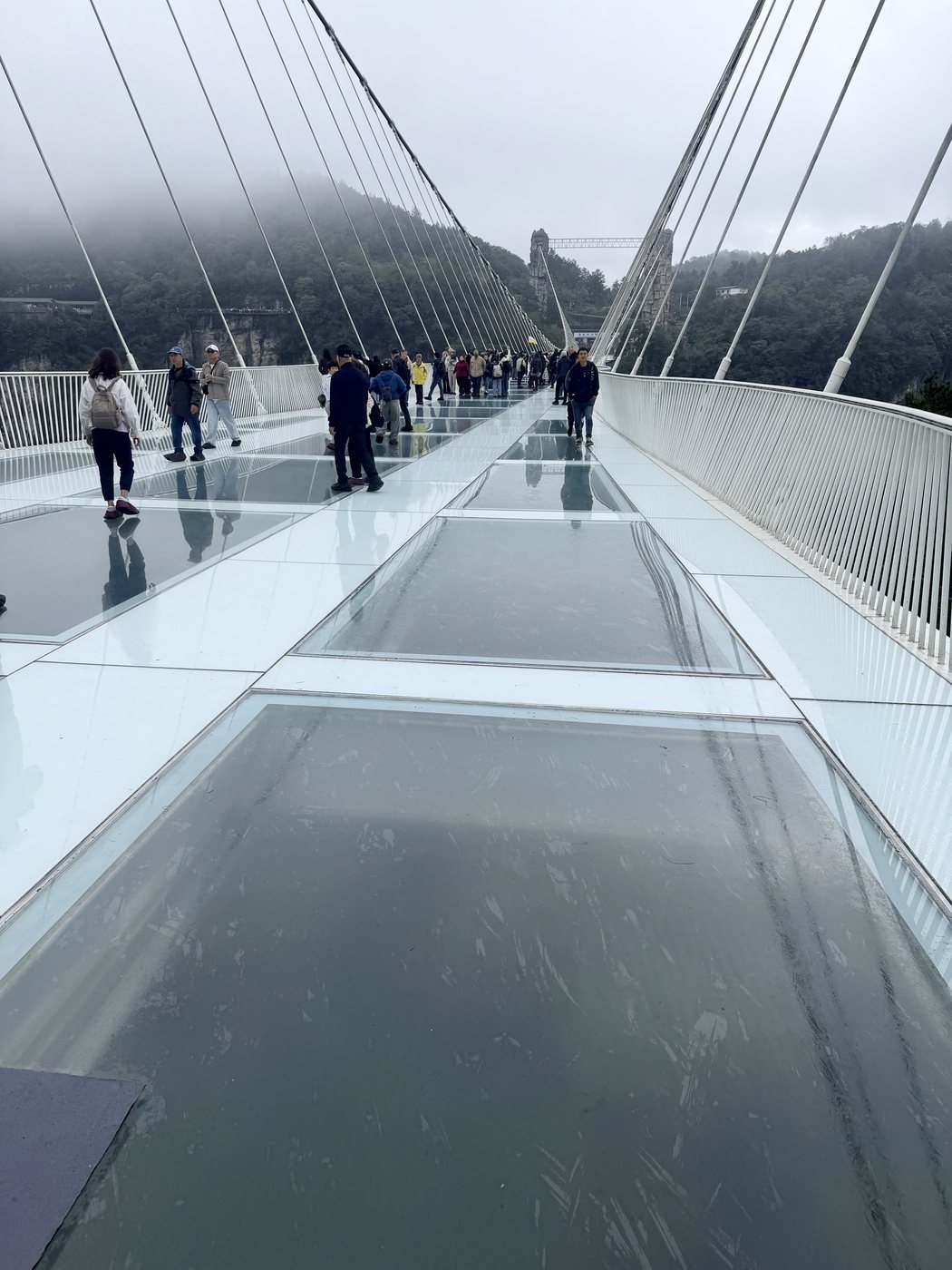
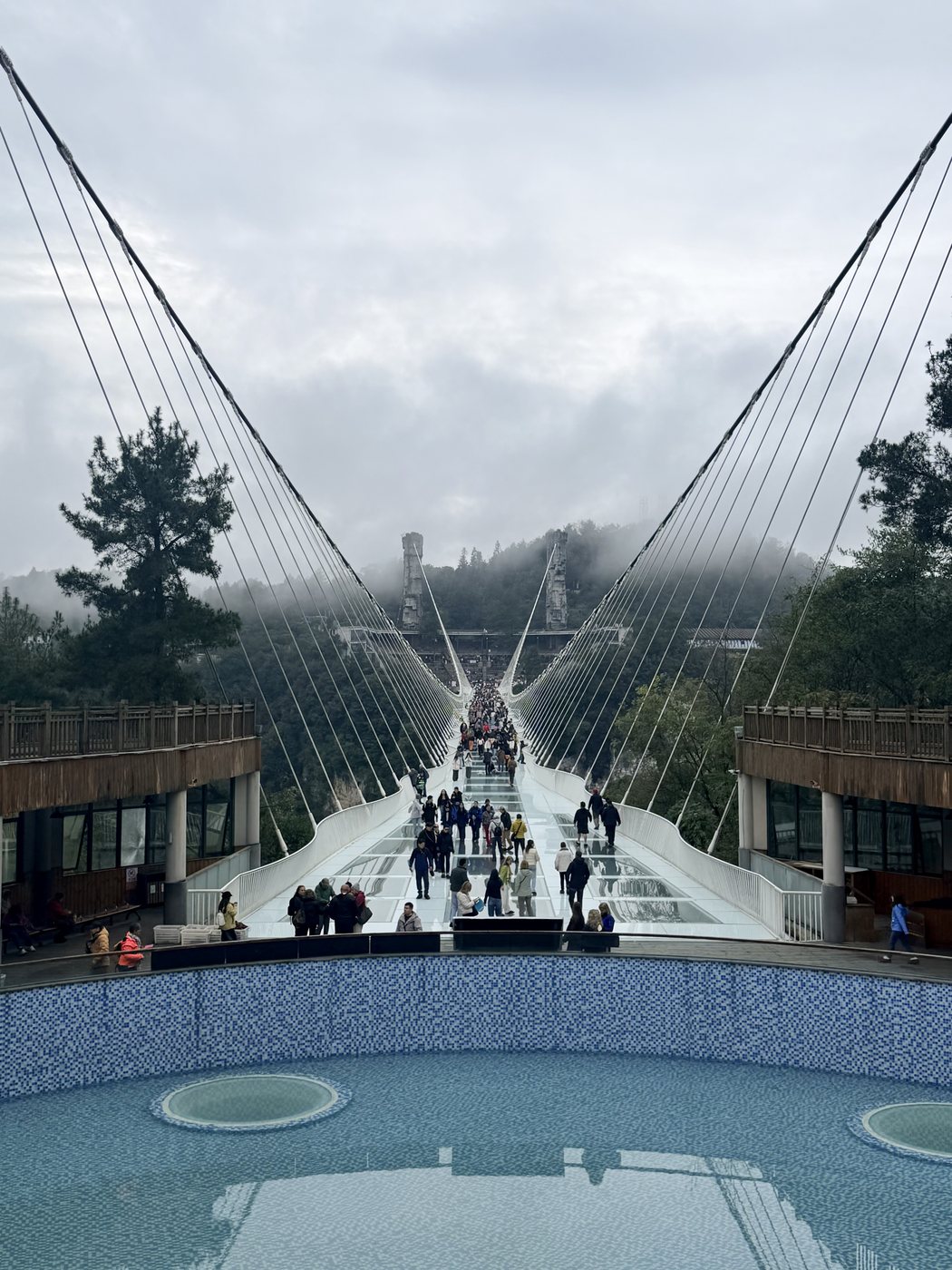
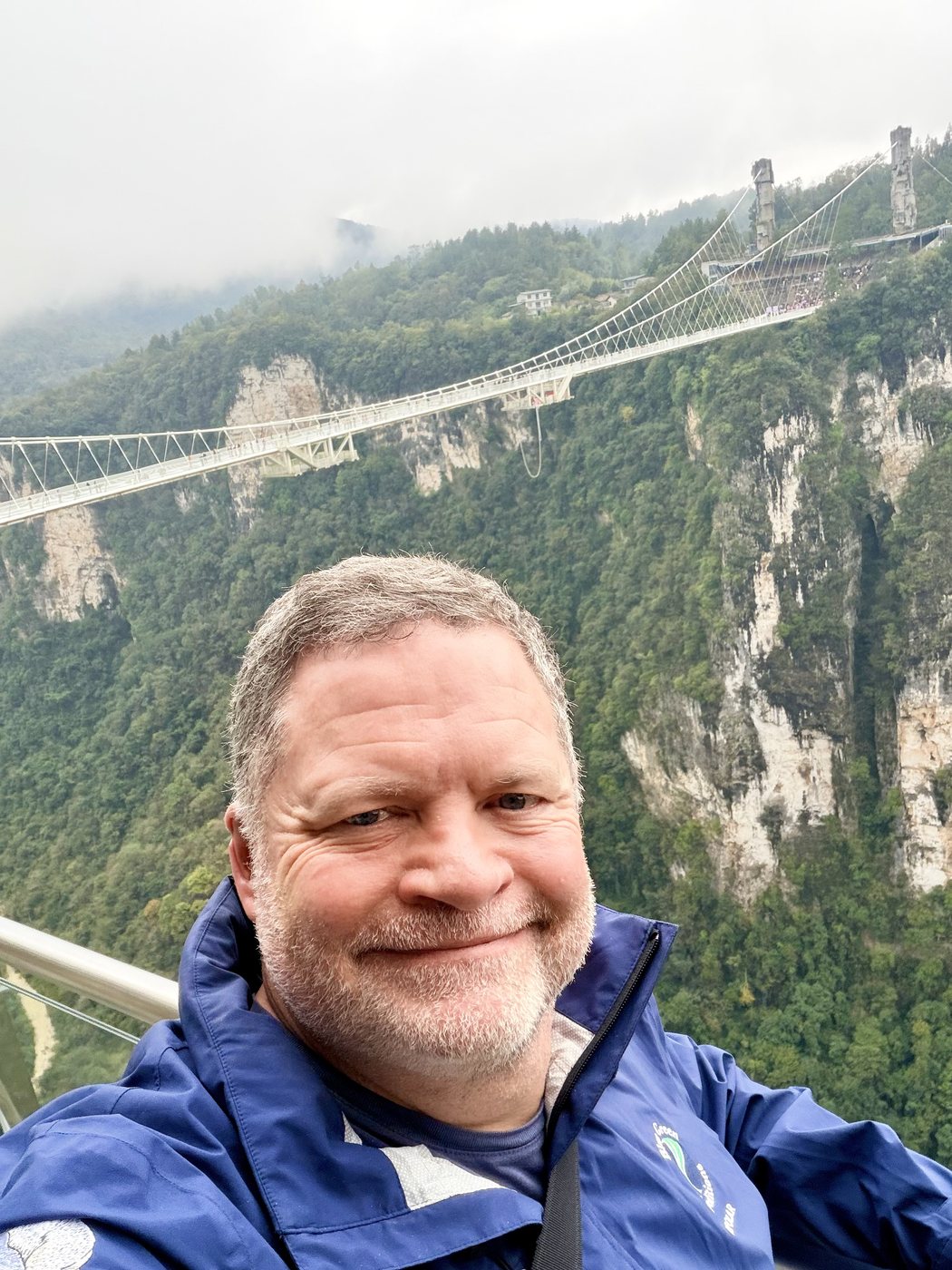
Walking out onto the glass bridge was the moment. You see straight down through the deck to the canyon floor, roughly 300 m below. I ended up lying flat on it.
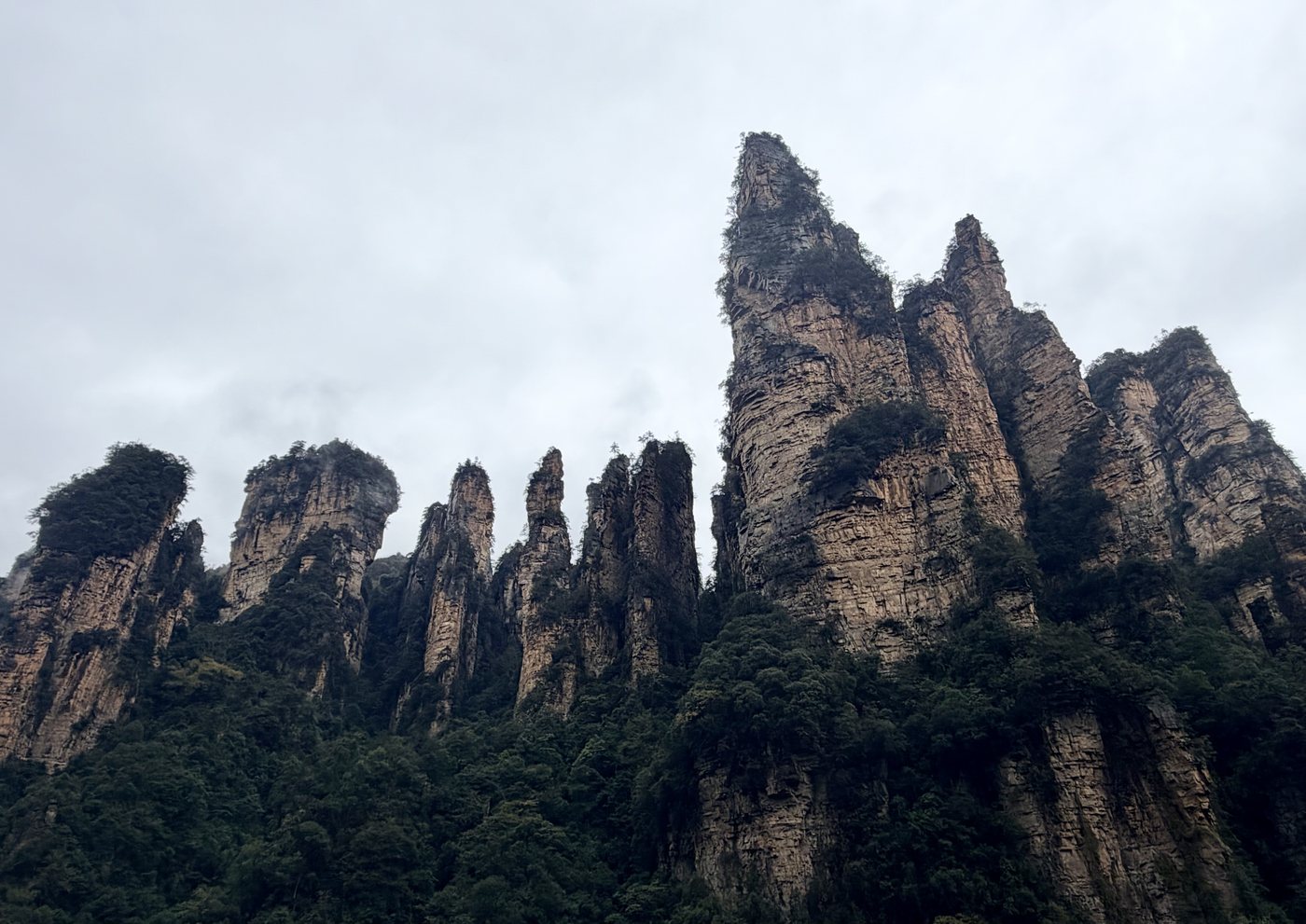
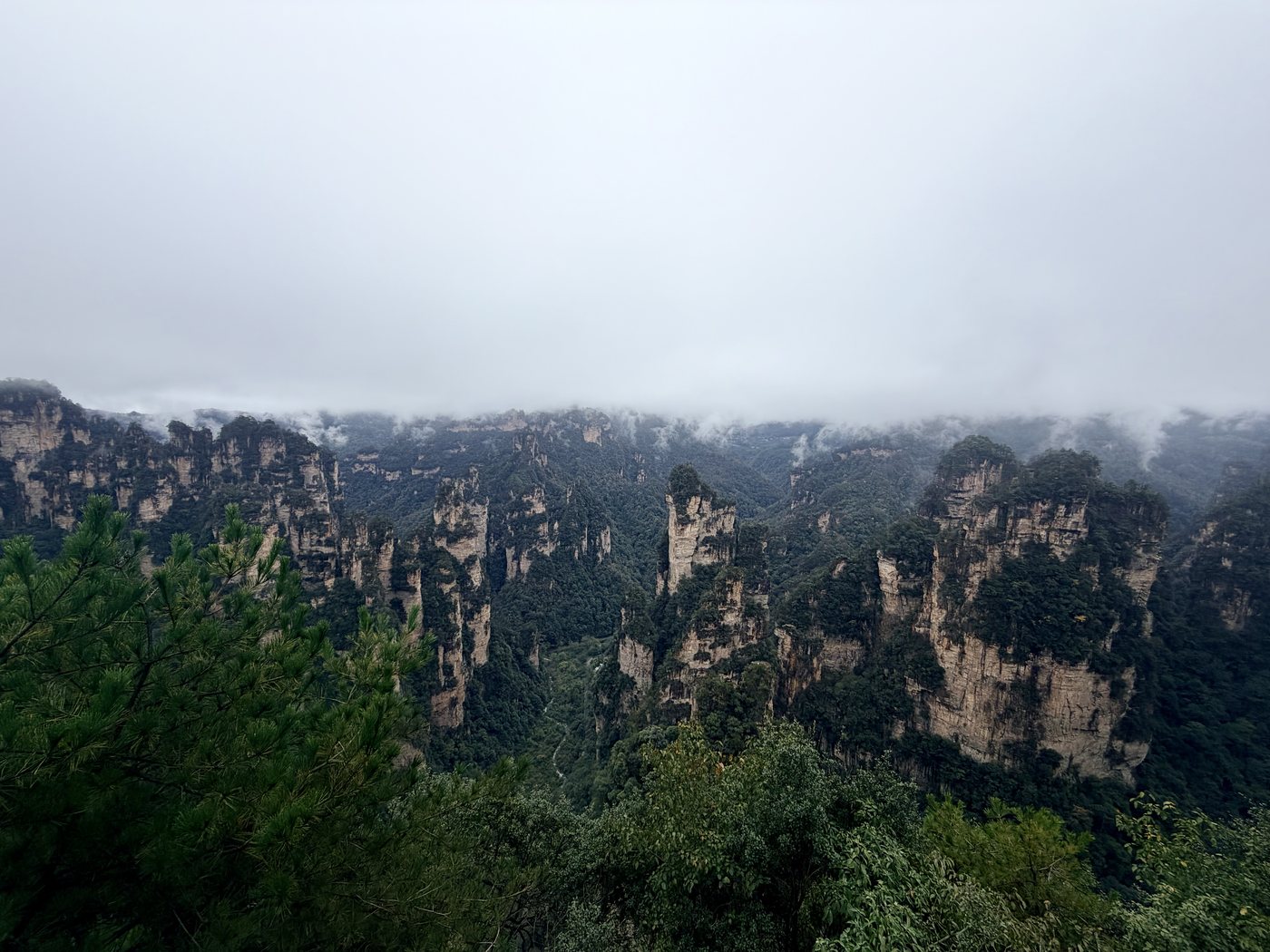
The Wulingyuan pillars
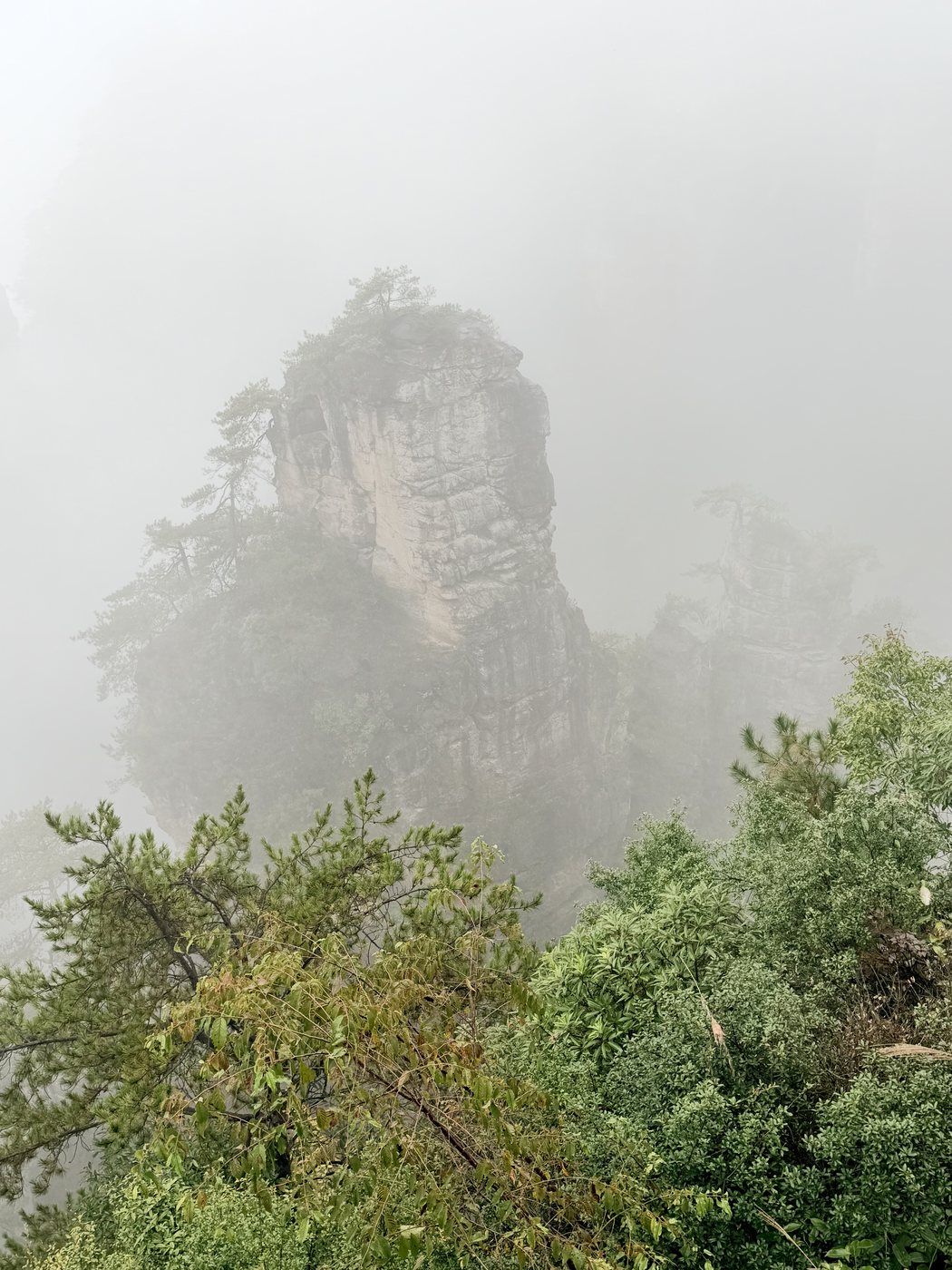
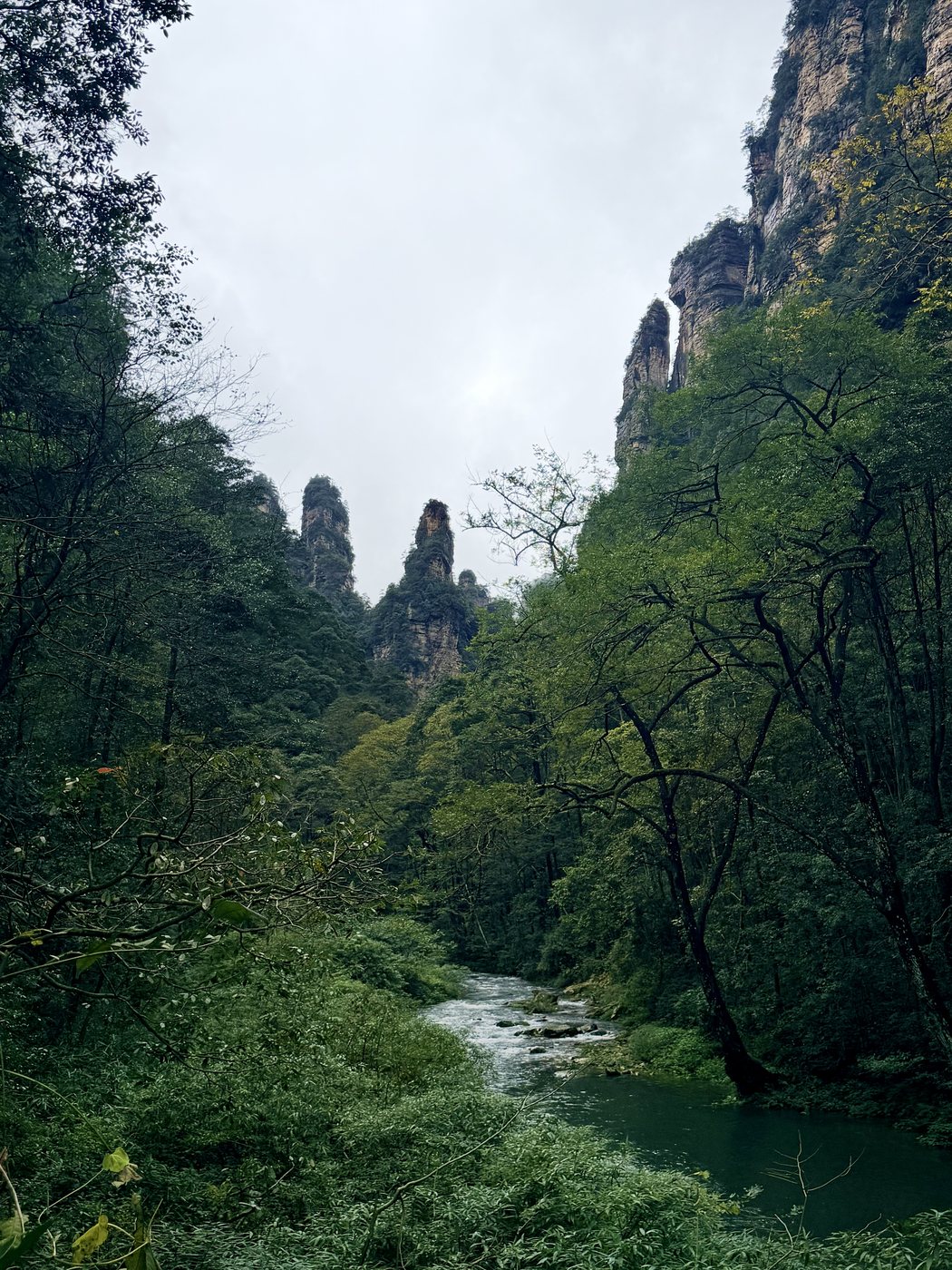
The pillars are quartz sandstone, worn by water and weather into towers and walls with trees growing out of every ledge. On a foggy morning they appear and disappear as the clouds move through.
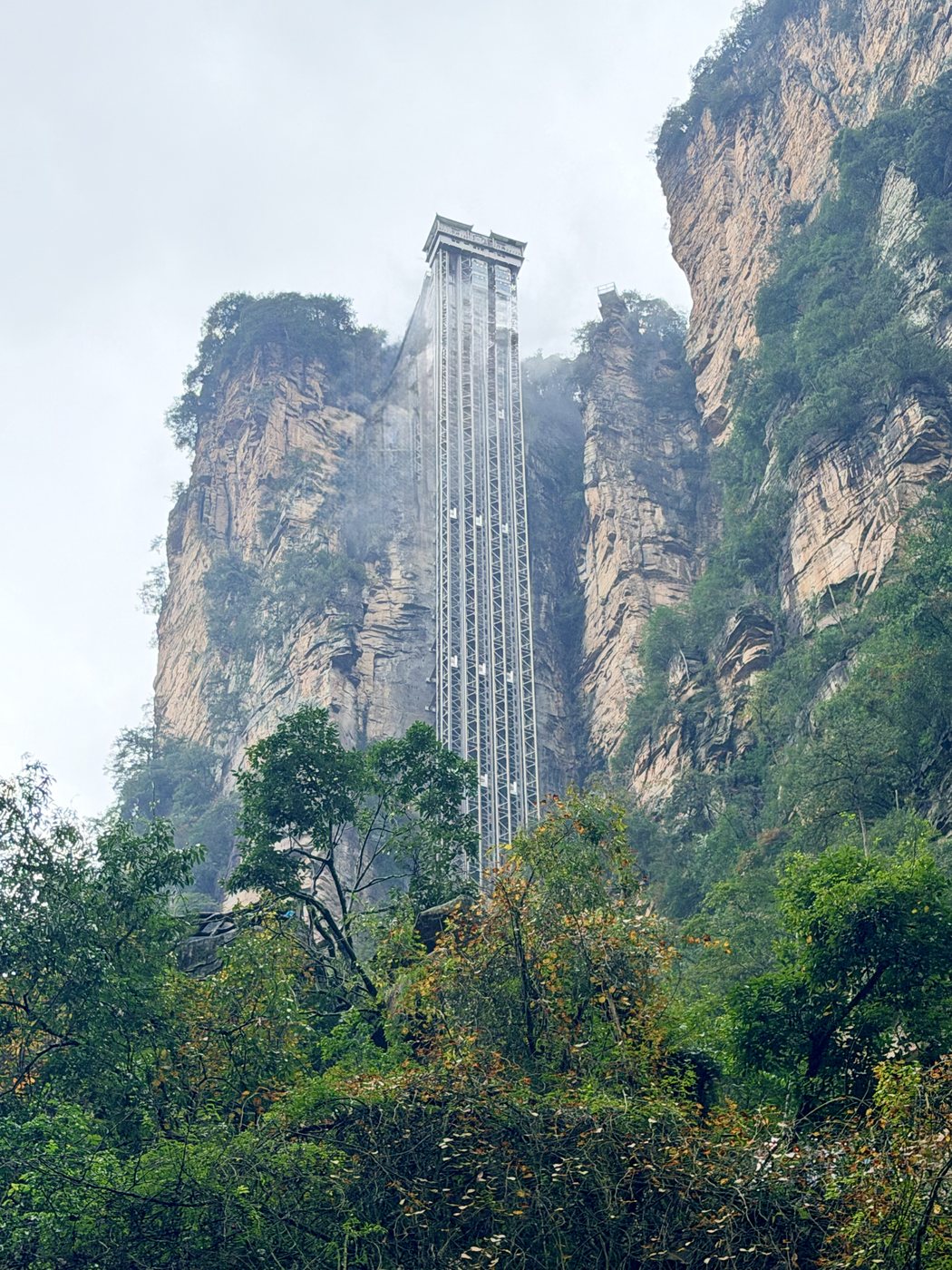
The Bailong Elevator
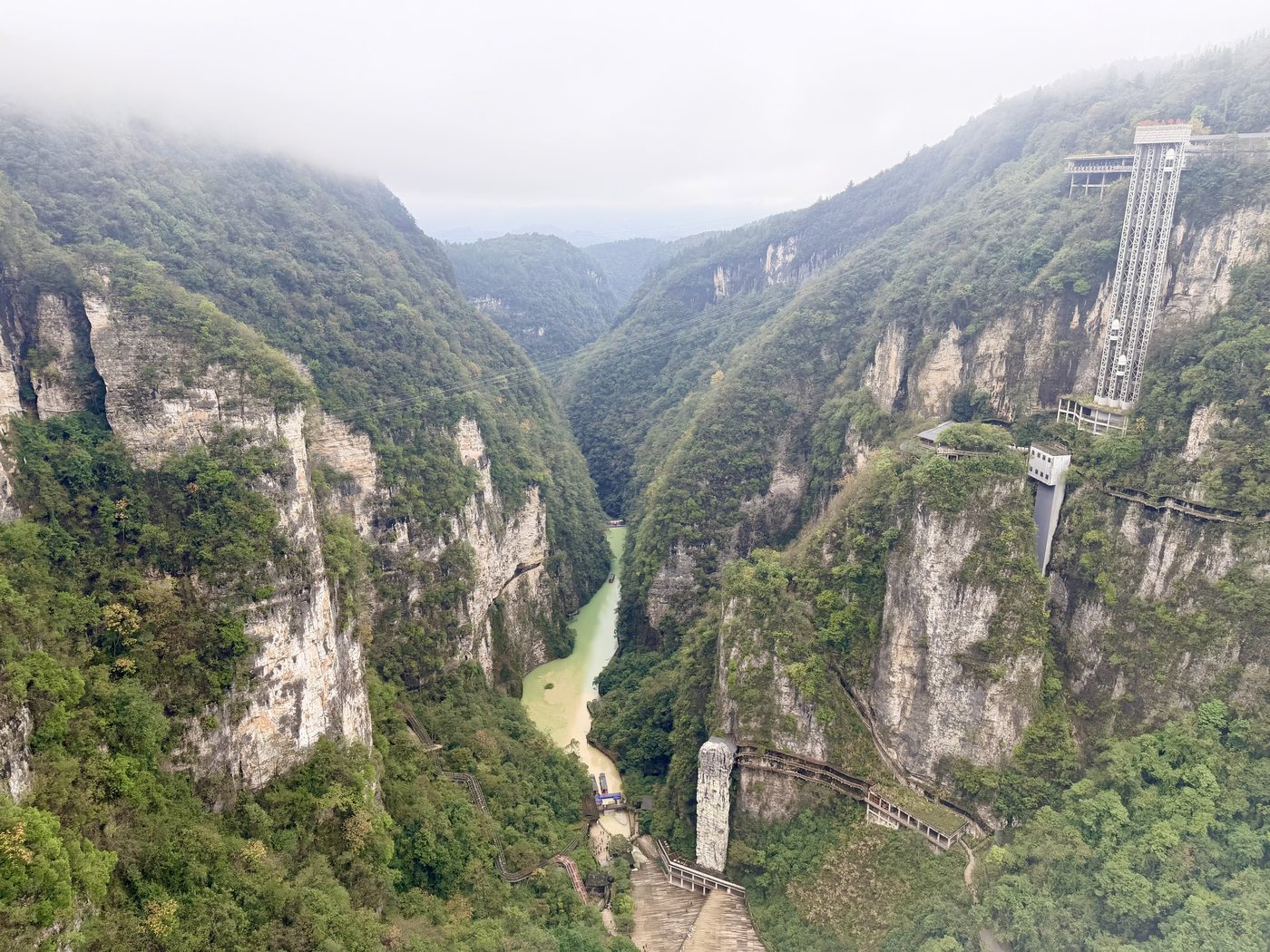
The Bailong Elevator runs about 326 m up the face of a cliff, partly through a shaft in the rock and partly in a glass-sided tower, and it is billed as the highest outdoor elevator in the world. It saves a long climb up to the Yuanjiajie plateau, and the queue is the reason to start early.
Huangshizhai, Golden Whip Stream and Baofeng Lake
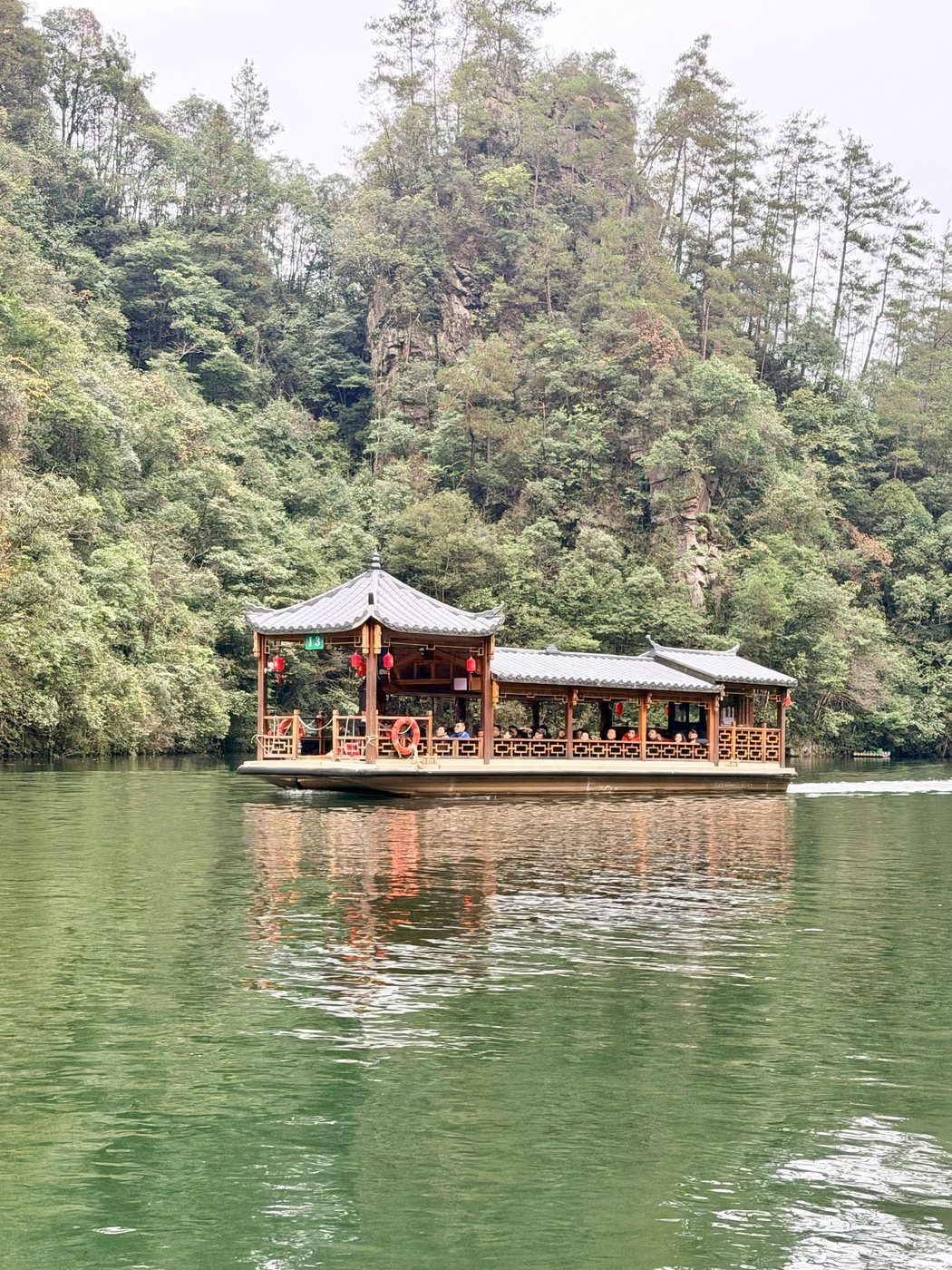
Huangshizhai is a high viewing platform reached by cable car, with views across a whole field of pillars. Below, Golden Whip Stream is a flat, paved walk of about 7.5 km along a clear stream on the valley floor. Baofeng Lake, a reservoir between the karst peaks, is crossed by boat.
The Grand Canyon Glass Bridge
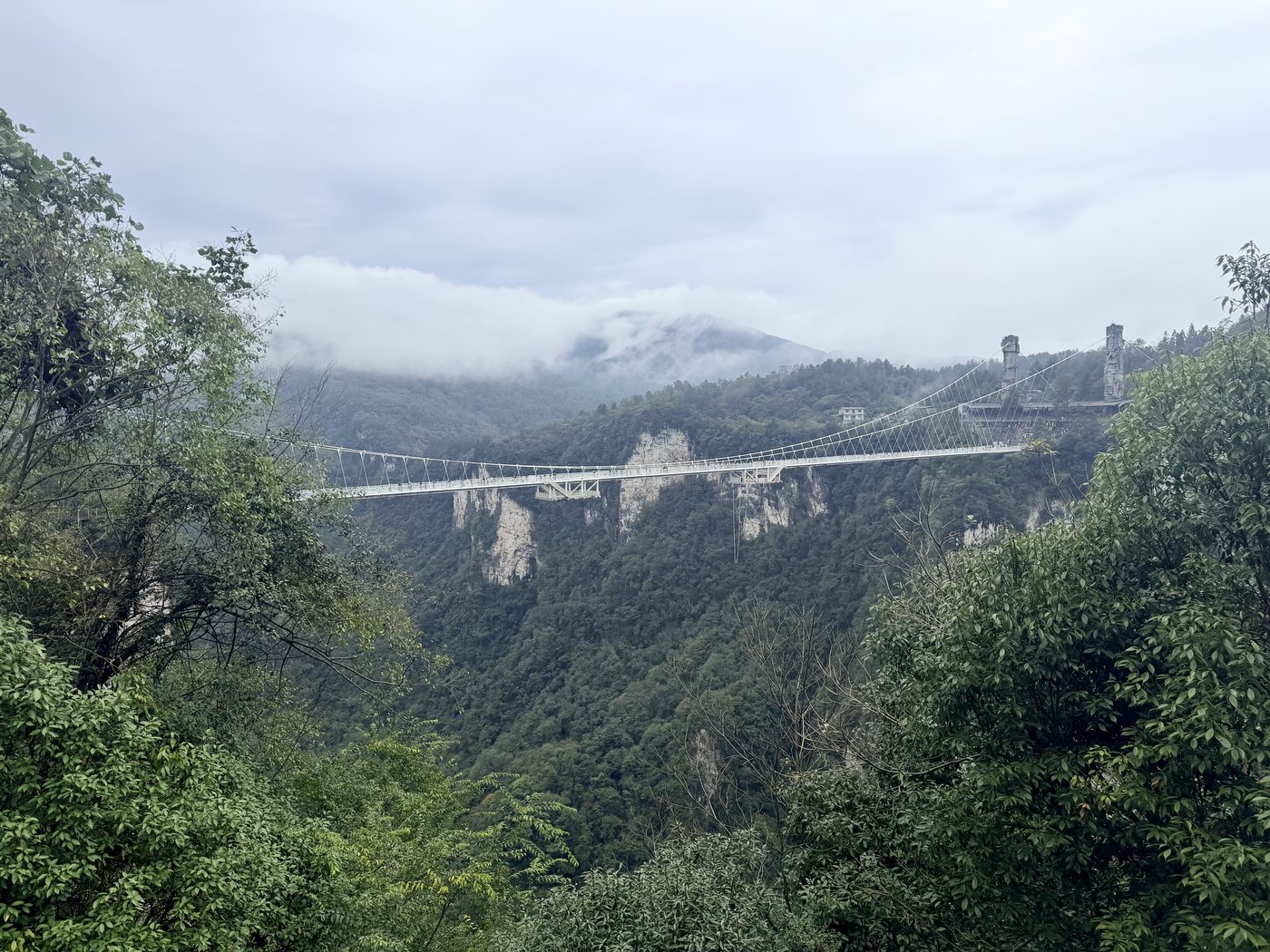
The Zhangjiajie Grand Canyon Glass Bridge, designed by the Israeli architect Haim Dotan, is 430 m long and hangs about 300 m above the canyon floor. When it opened in August 2016 it was the longest and highest glass-bottomed bridge in the world. You put cloth covers over your shoes and walk straight across.
Yellow Dragon Cave
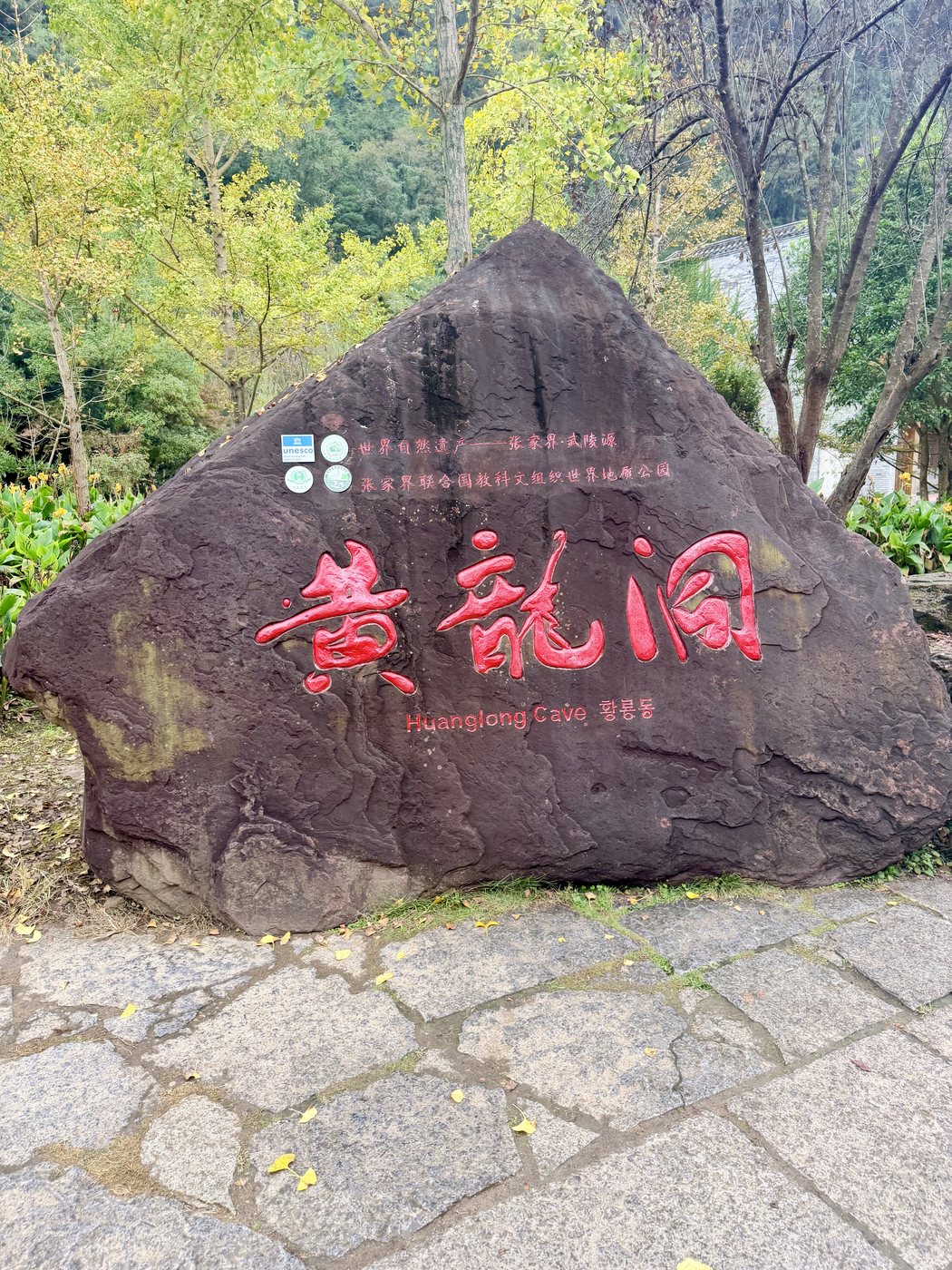
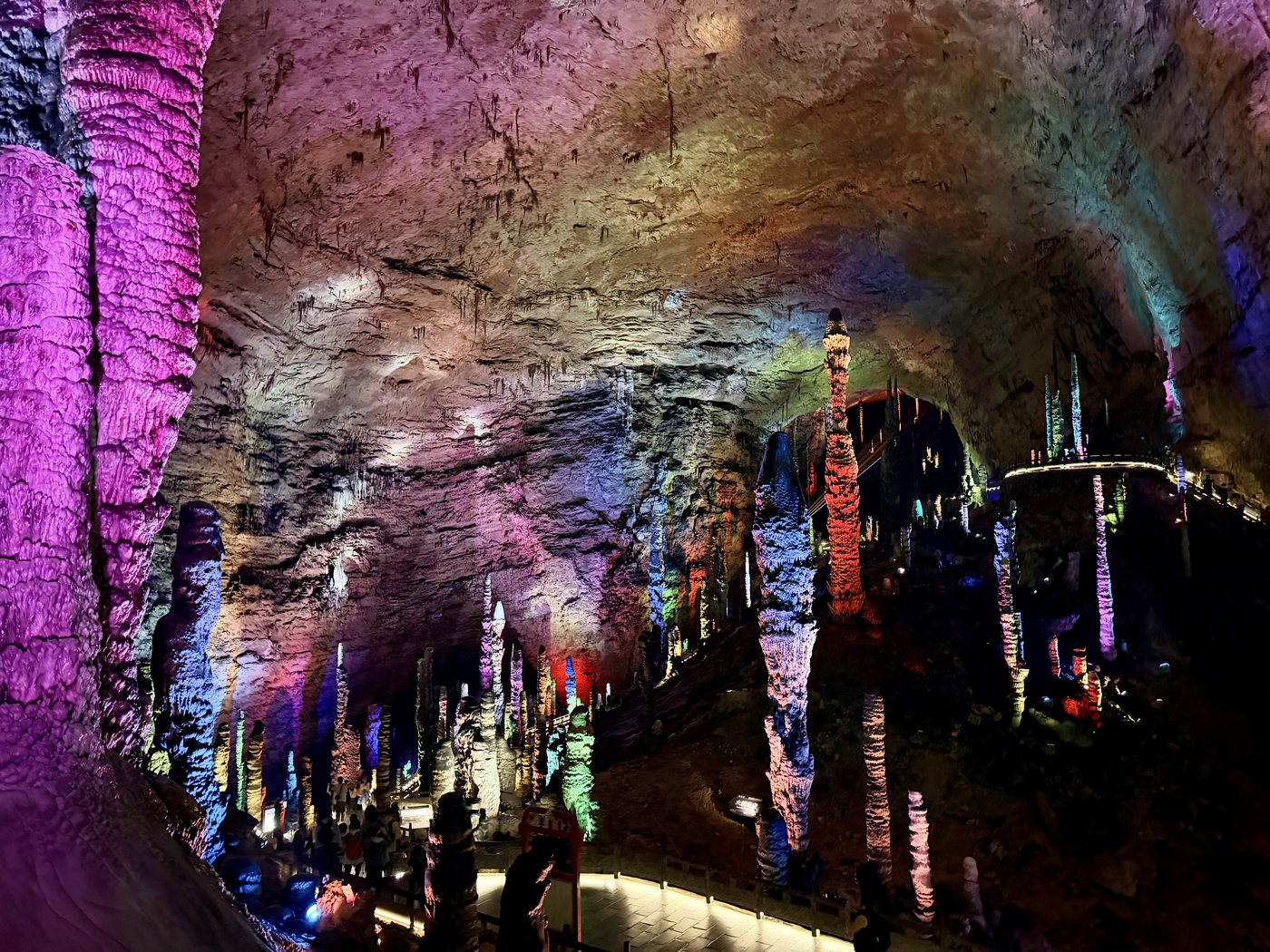
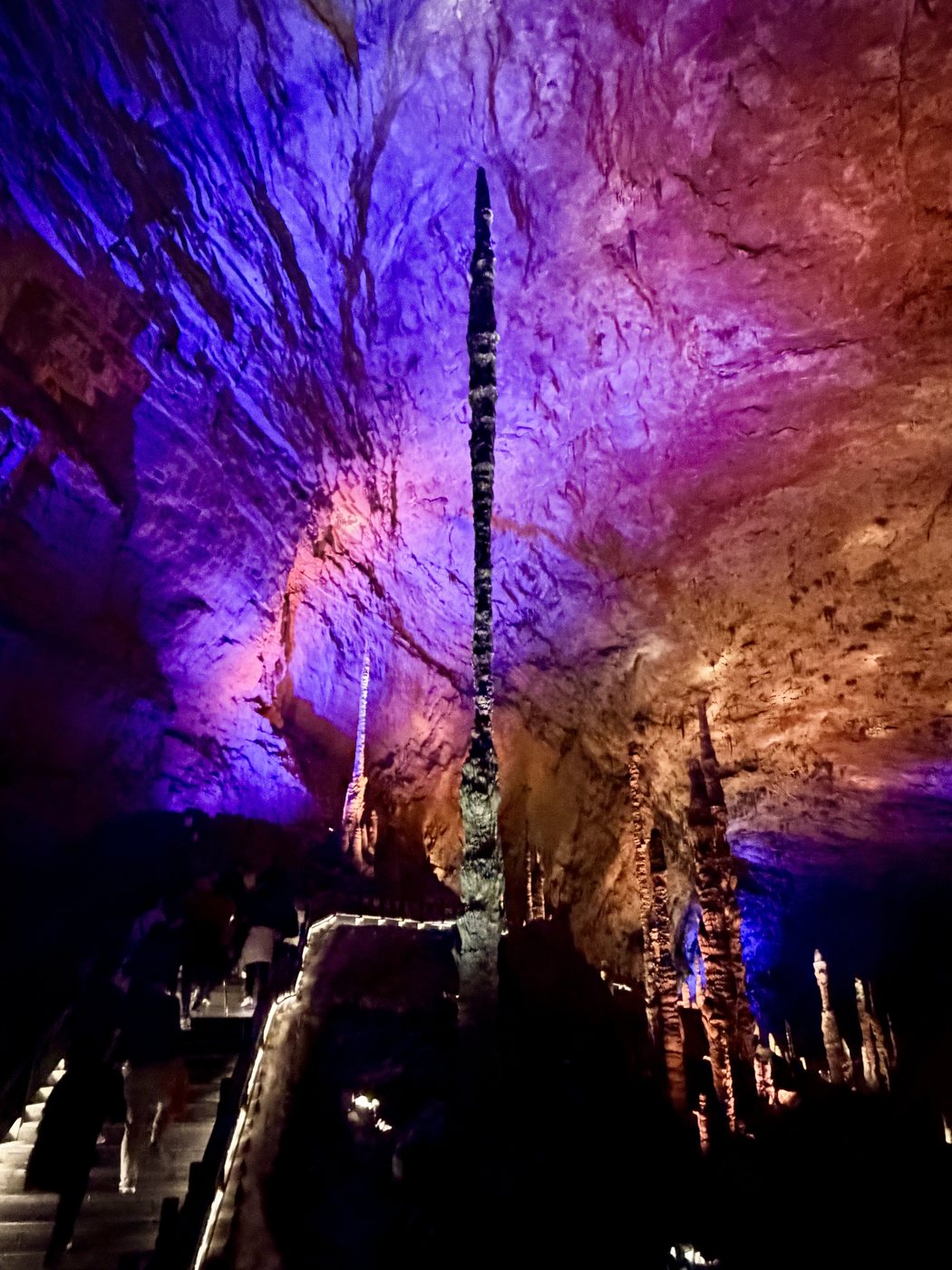
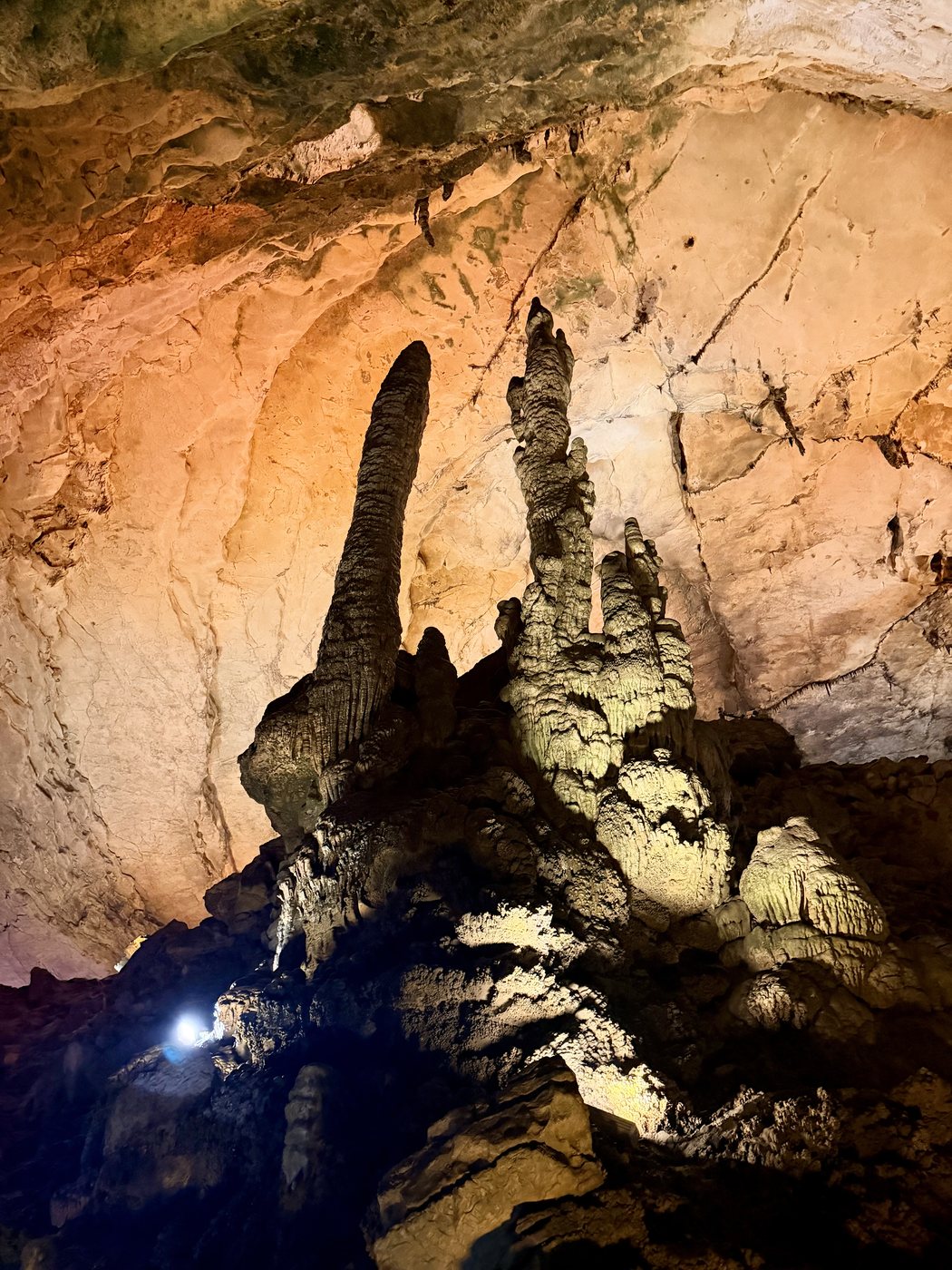
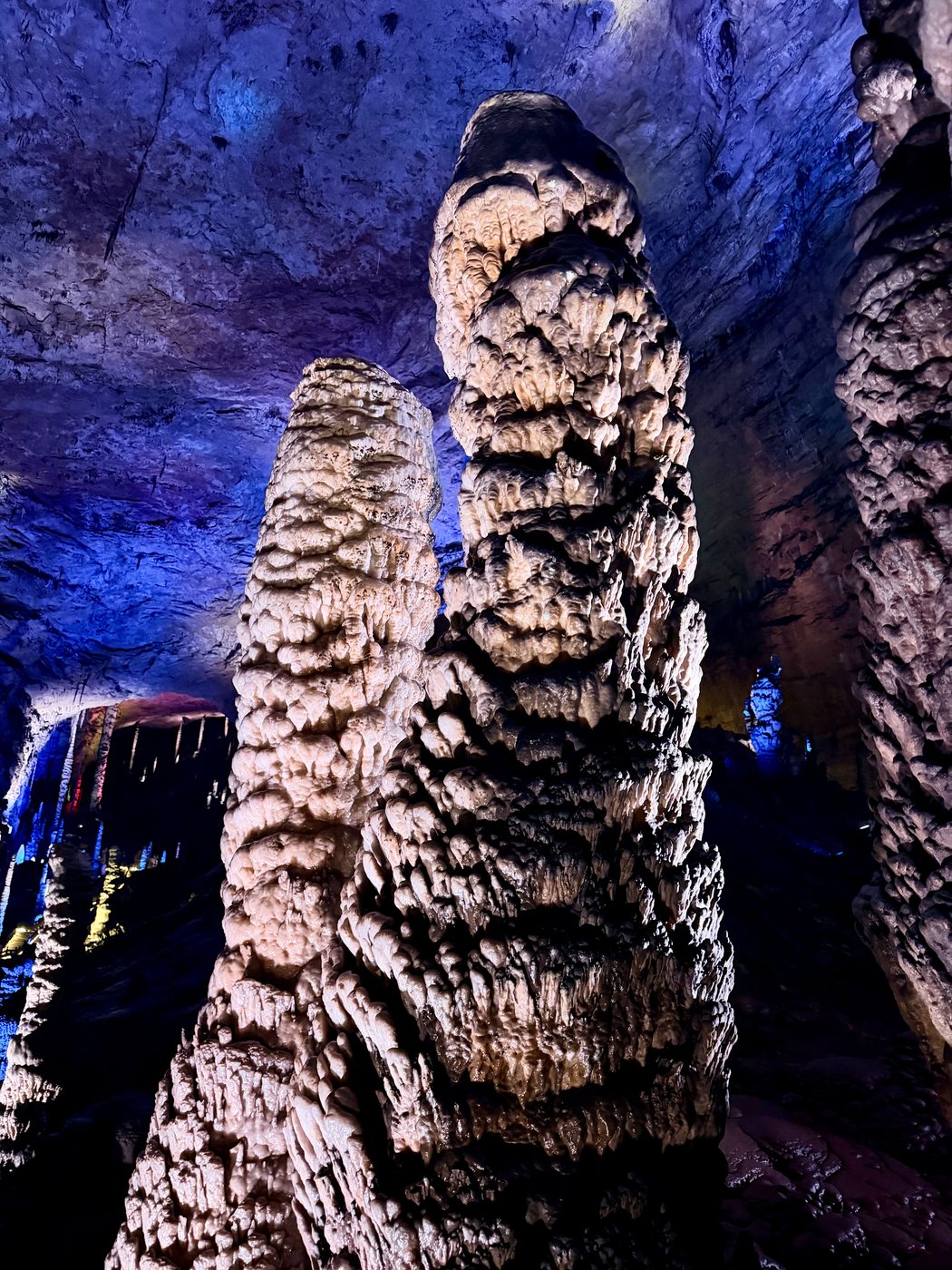
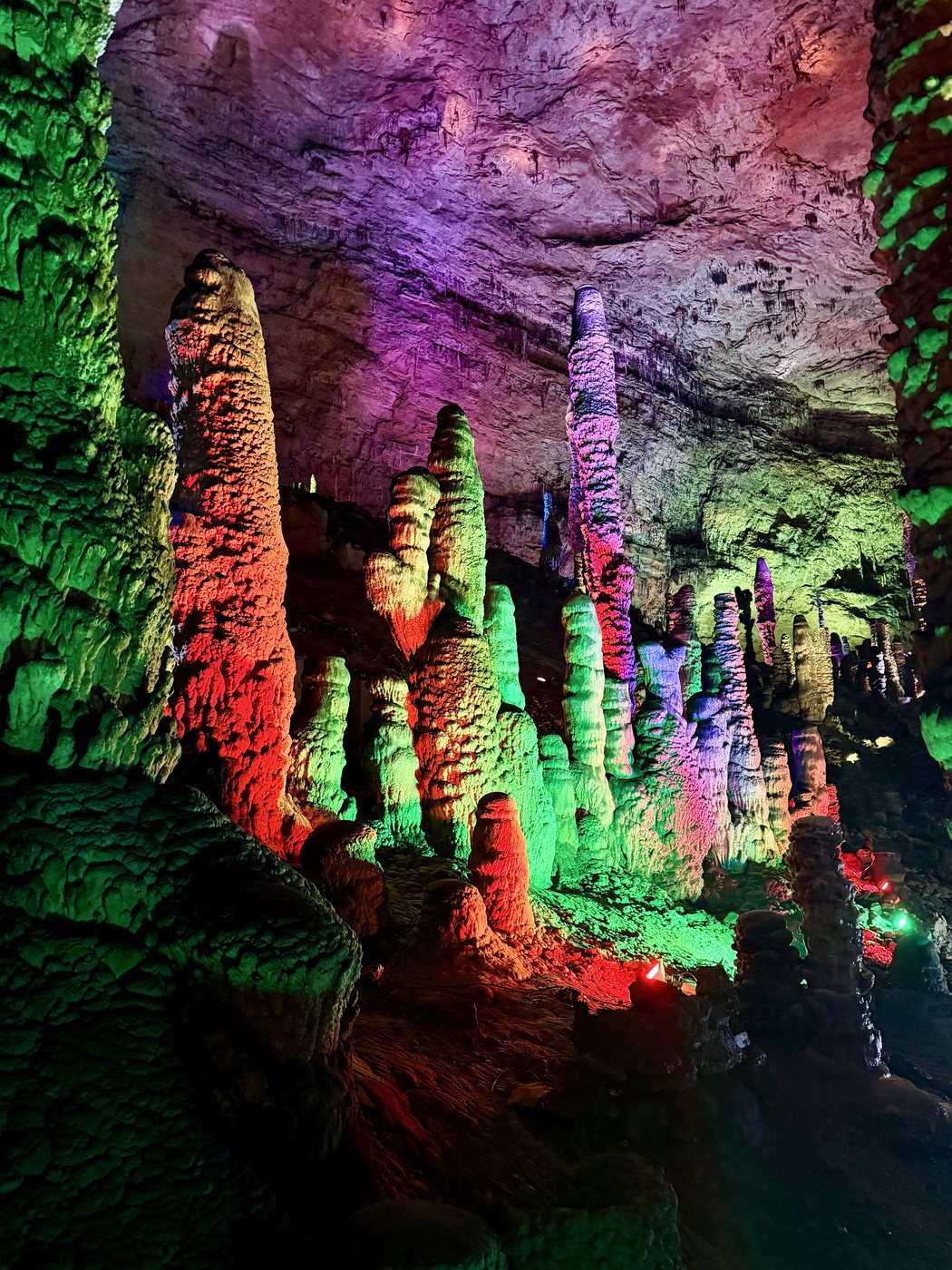
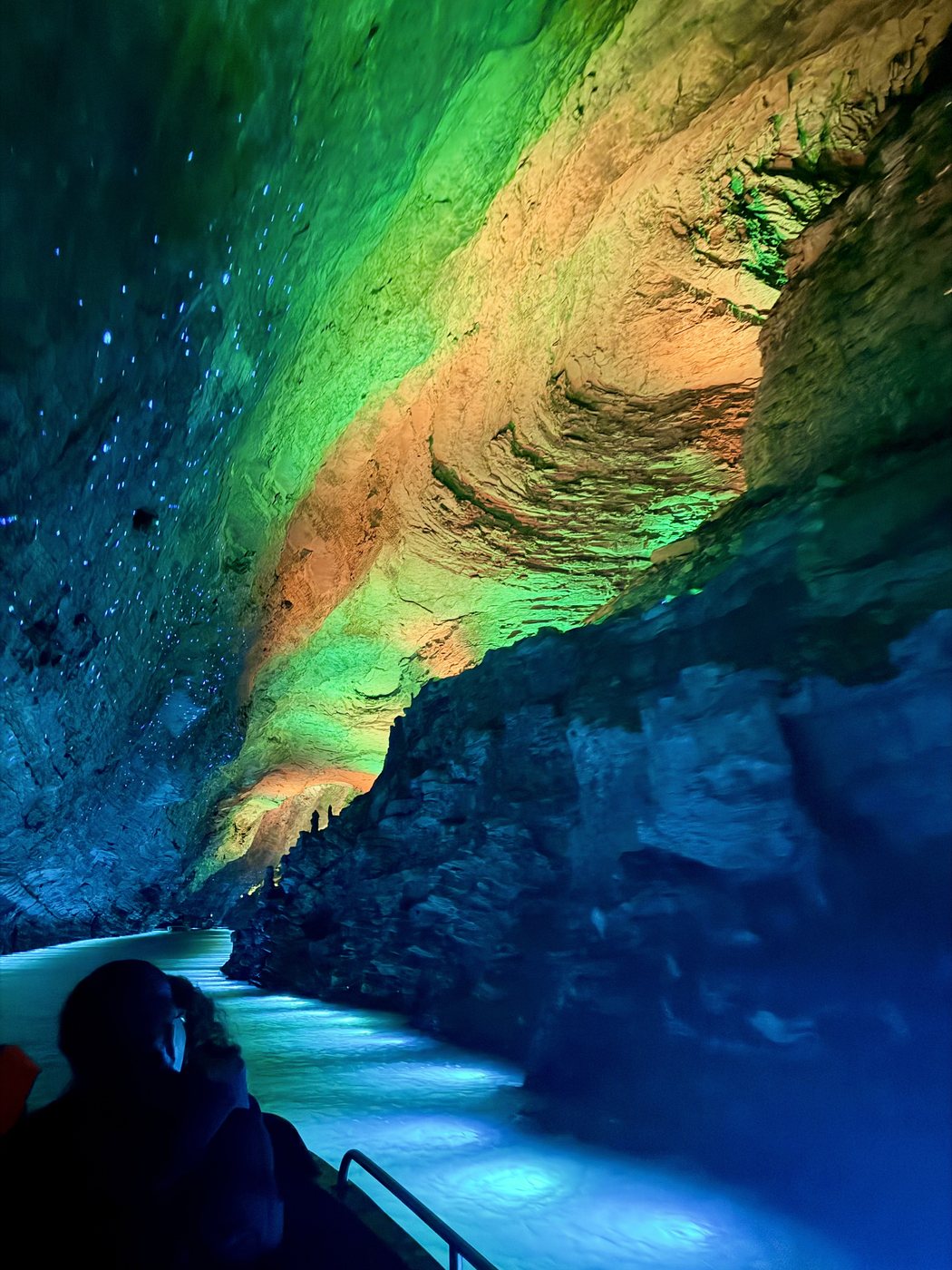
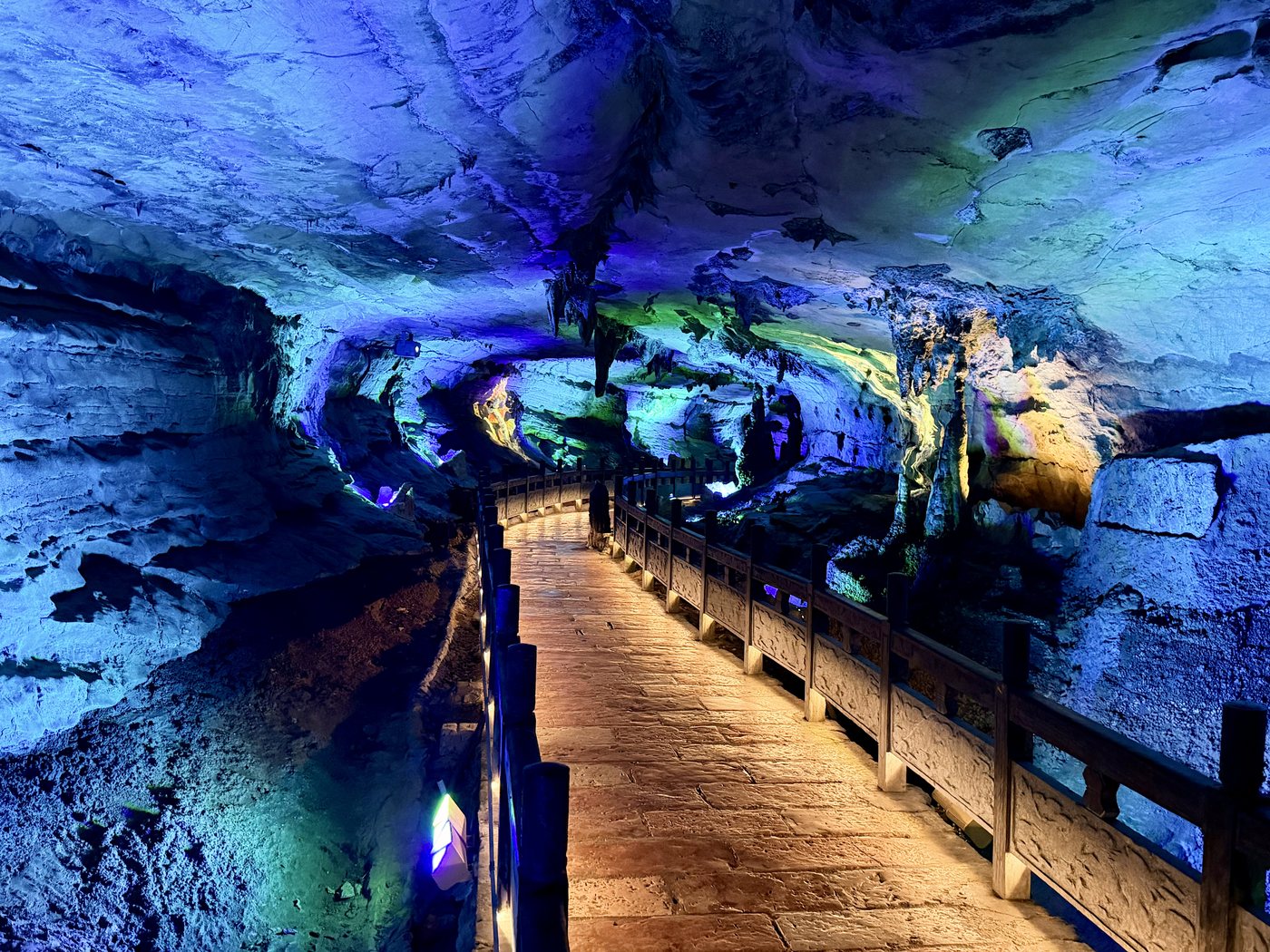
Yellow Dragon Cave (Huanglong Cave) is a large limestone cave system in Wulingyuan with chambers of stalactites and stalagmites, lit in colors, and an underground river you travel by boat. Its most famous formation is a slender stalagmite about 19 m tall called the Sea-Calming Needle.
Tianmen Mountain and Heaven's Gate
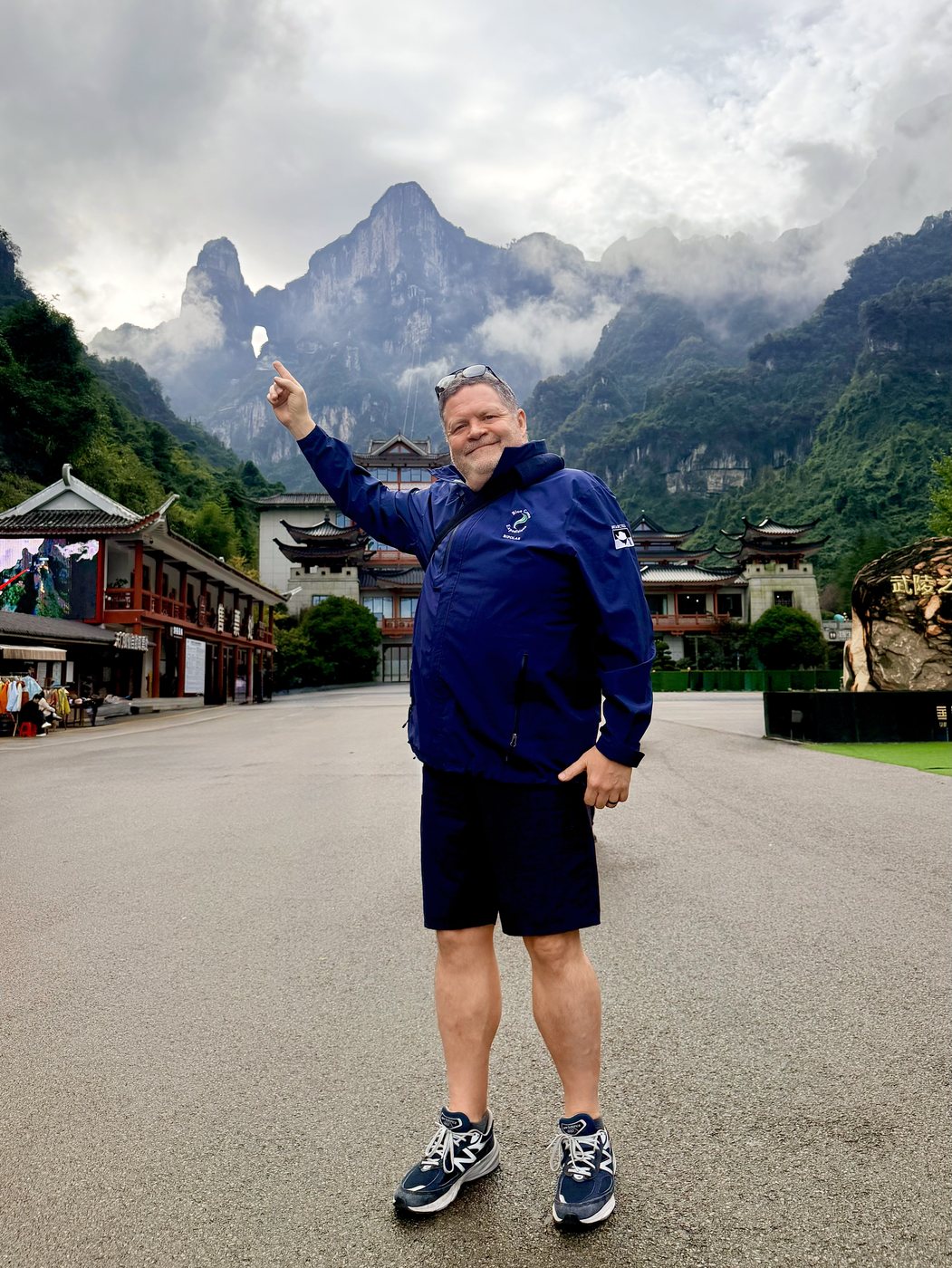
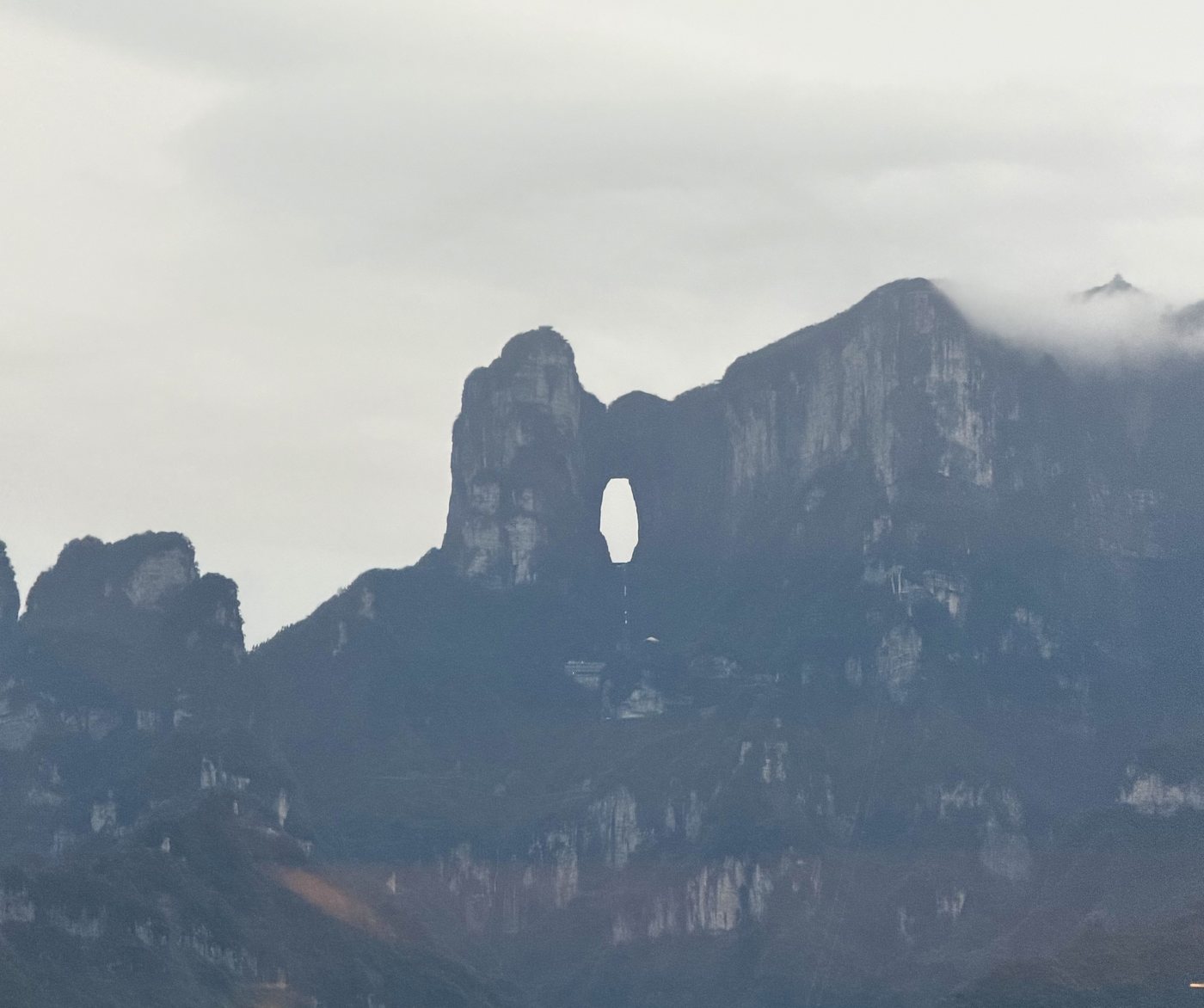
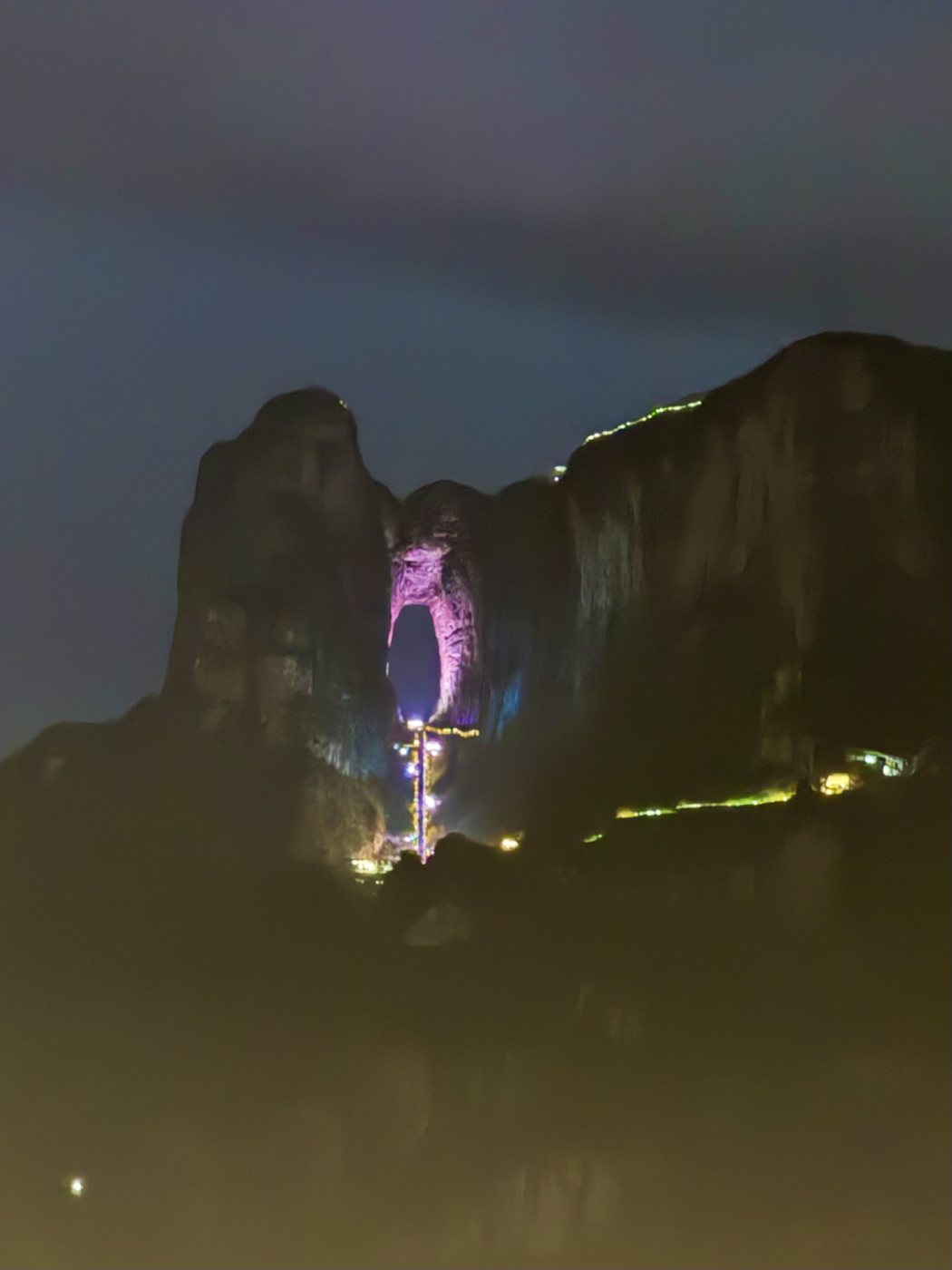
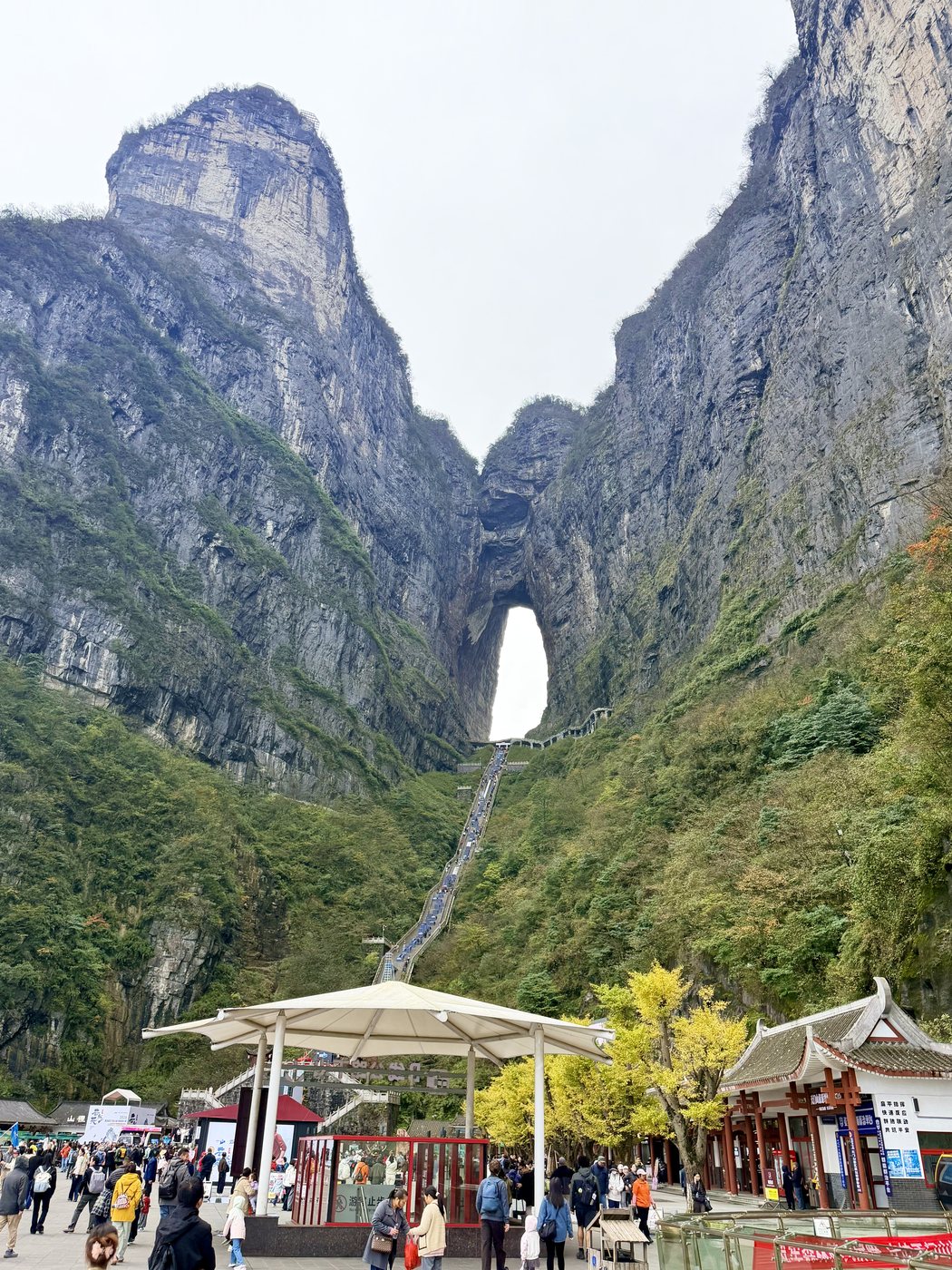
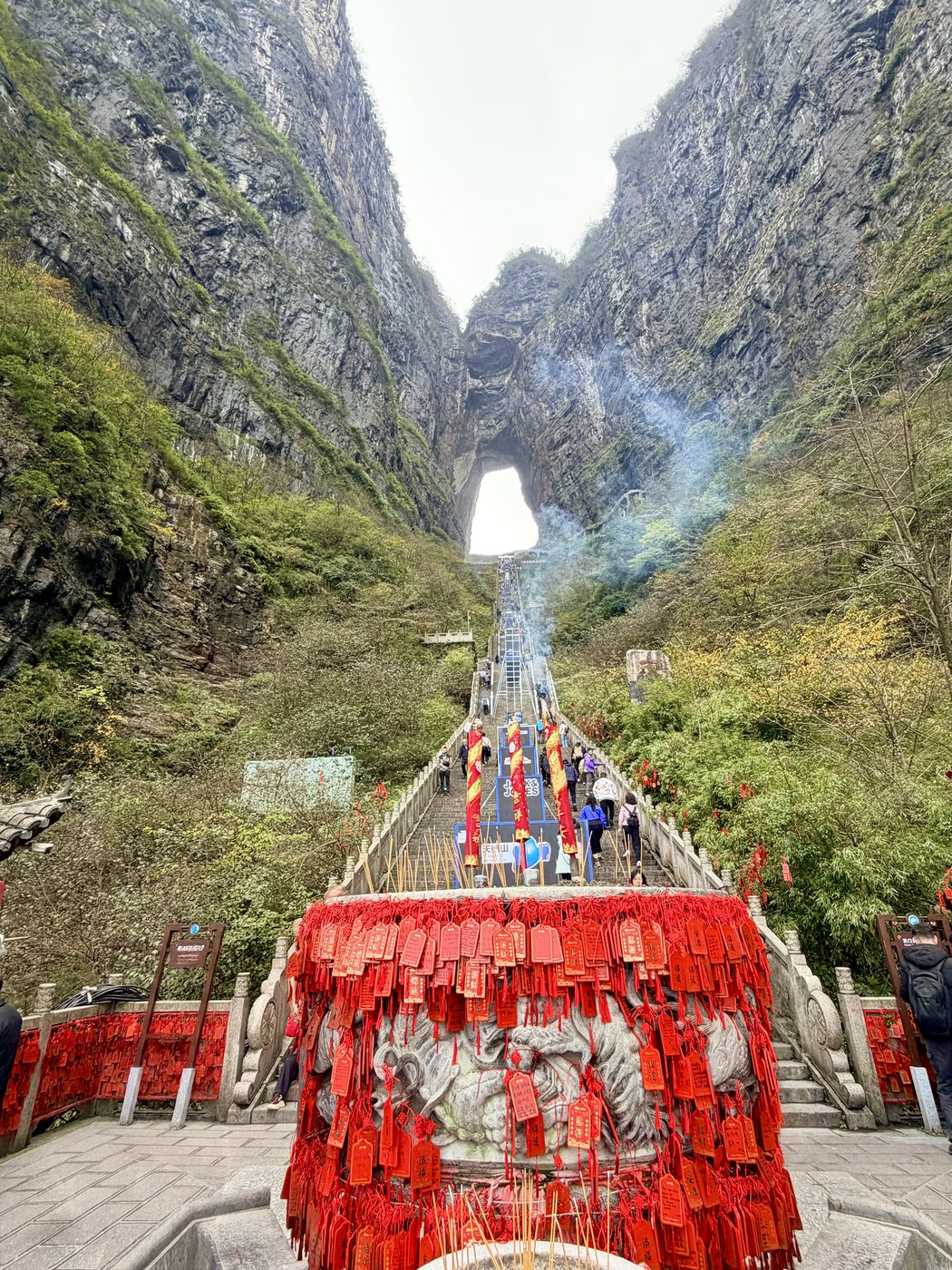
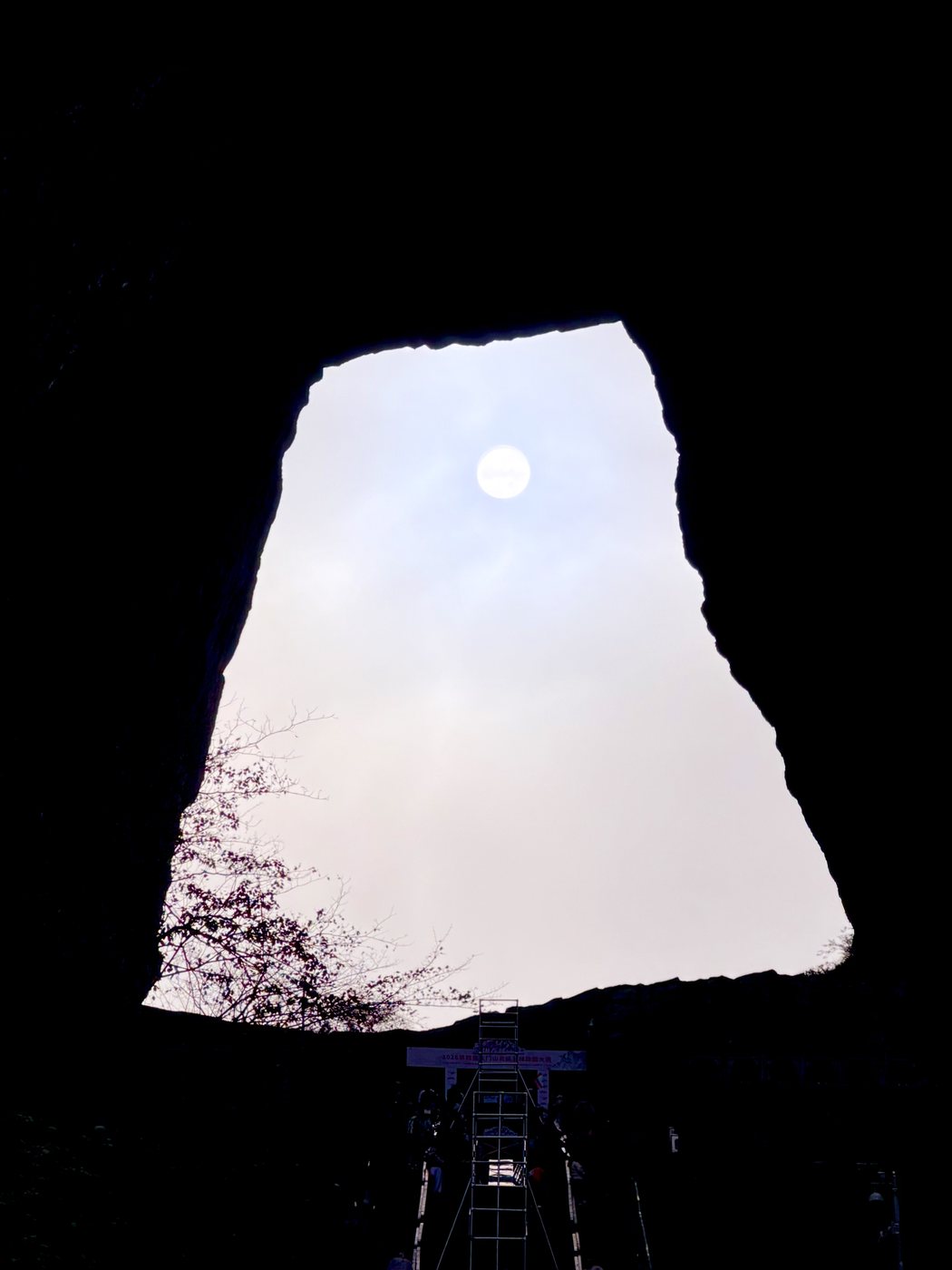
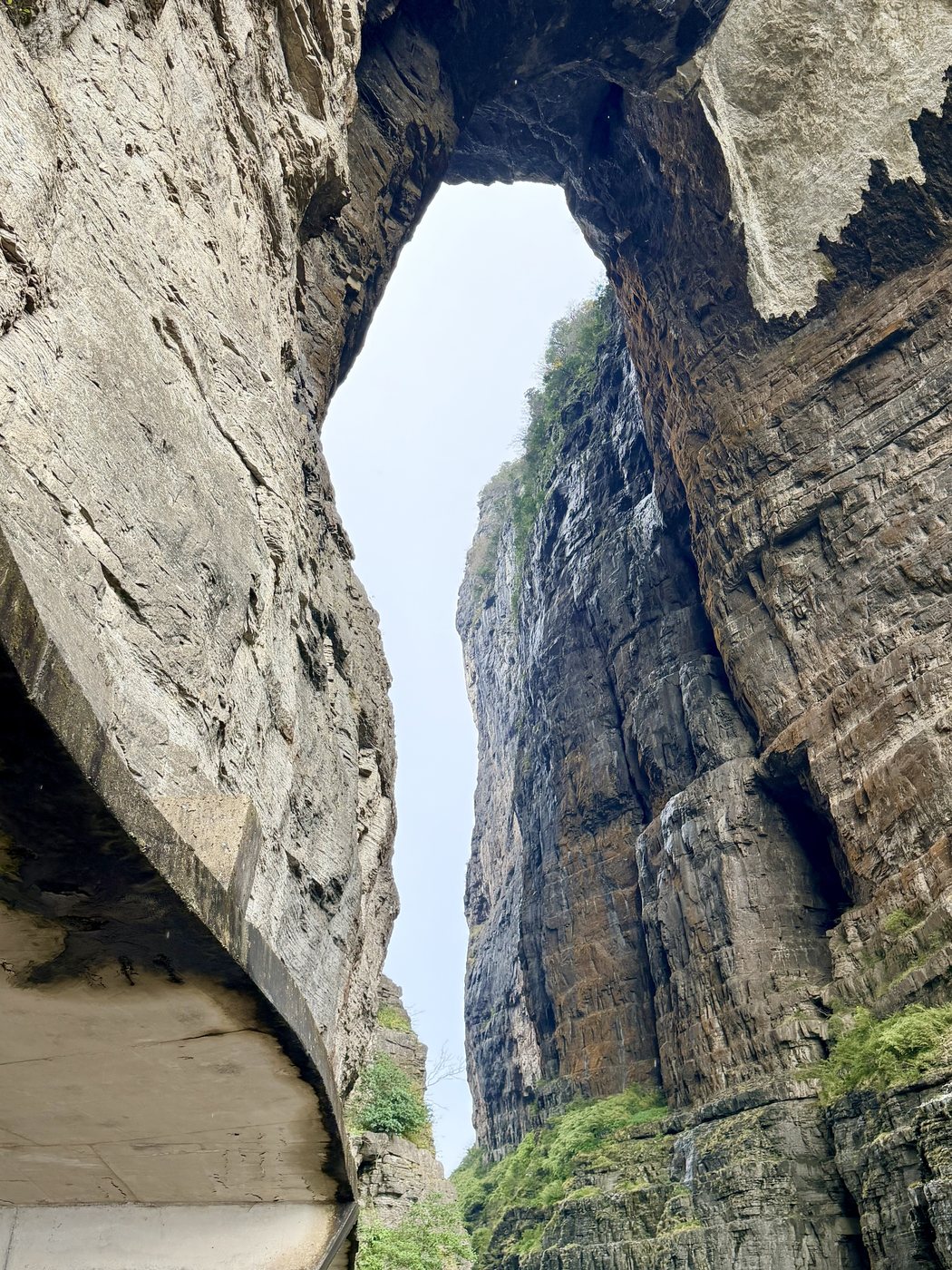
Tianmen Mountain rises right behind the city, and near its top is Tianmen Cave, a natural arch roughly 130 m high straight through the mountain, known as Heaven's Gate. From the city you can see daylight through it.
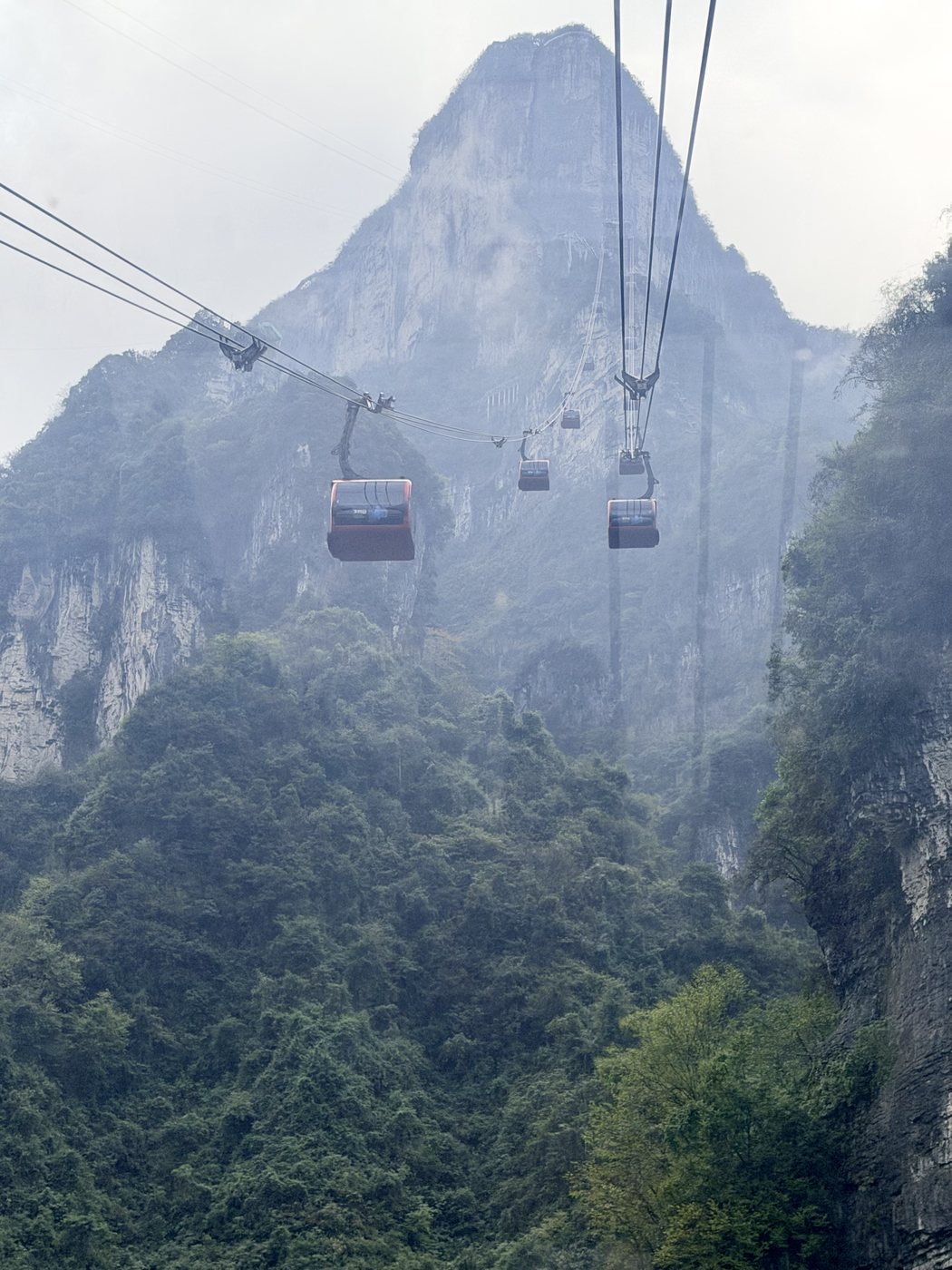
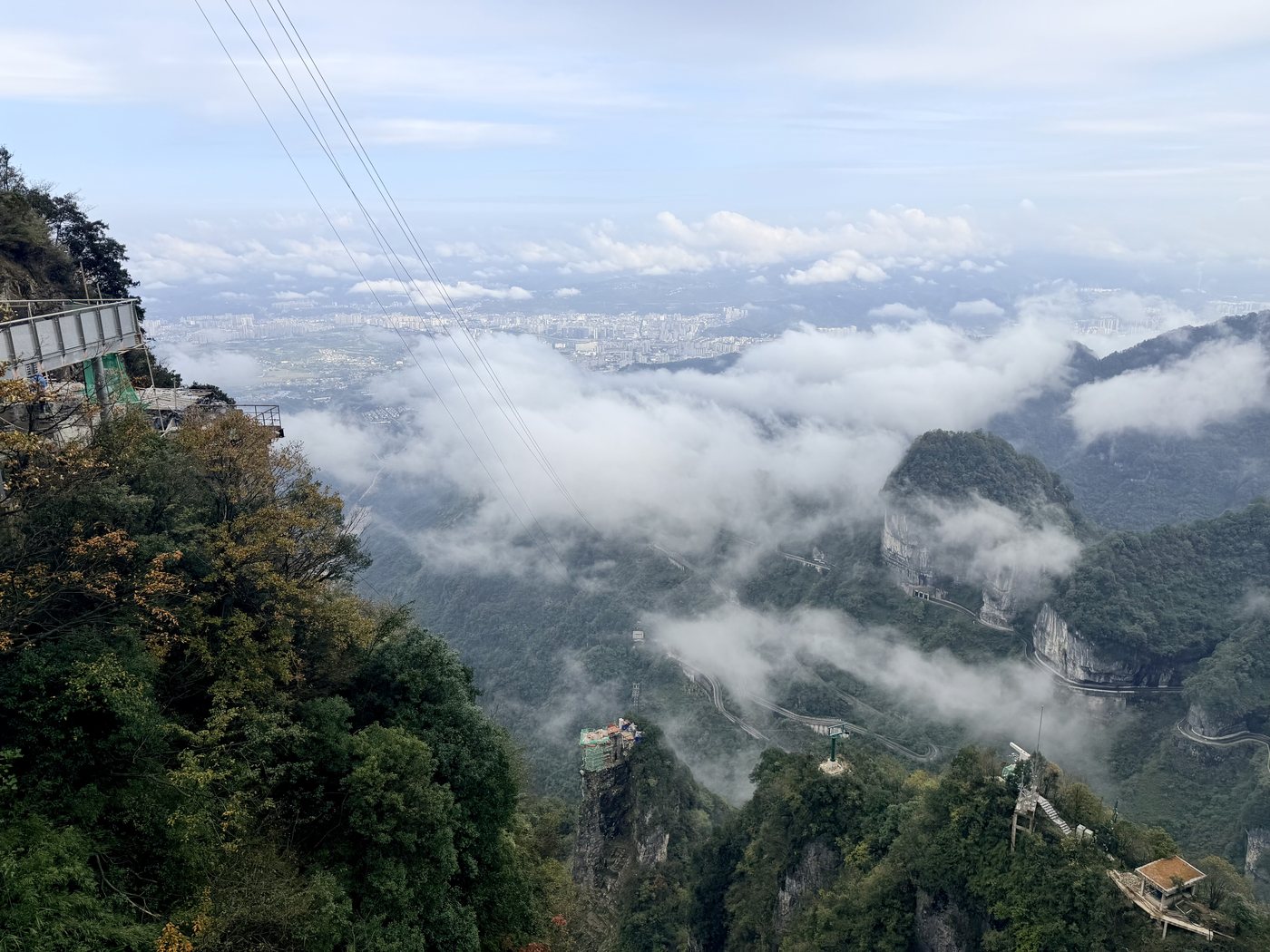
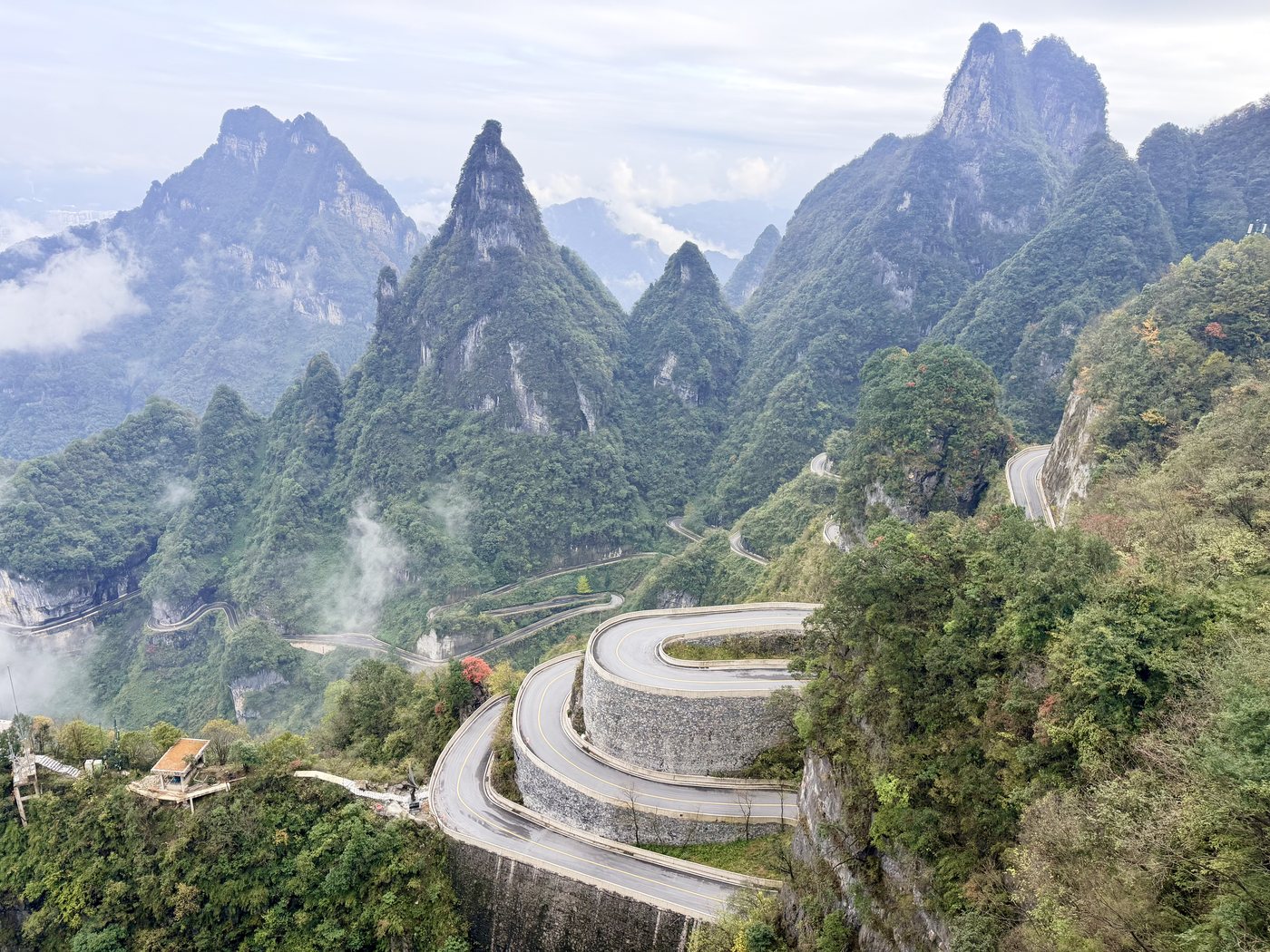
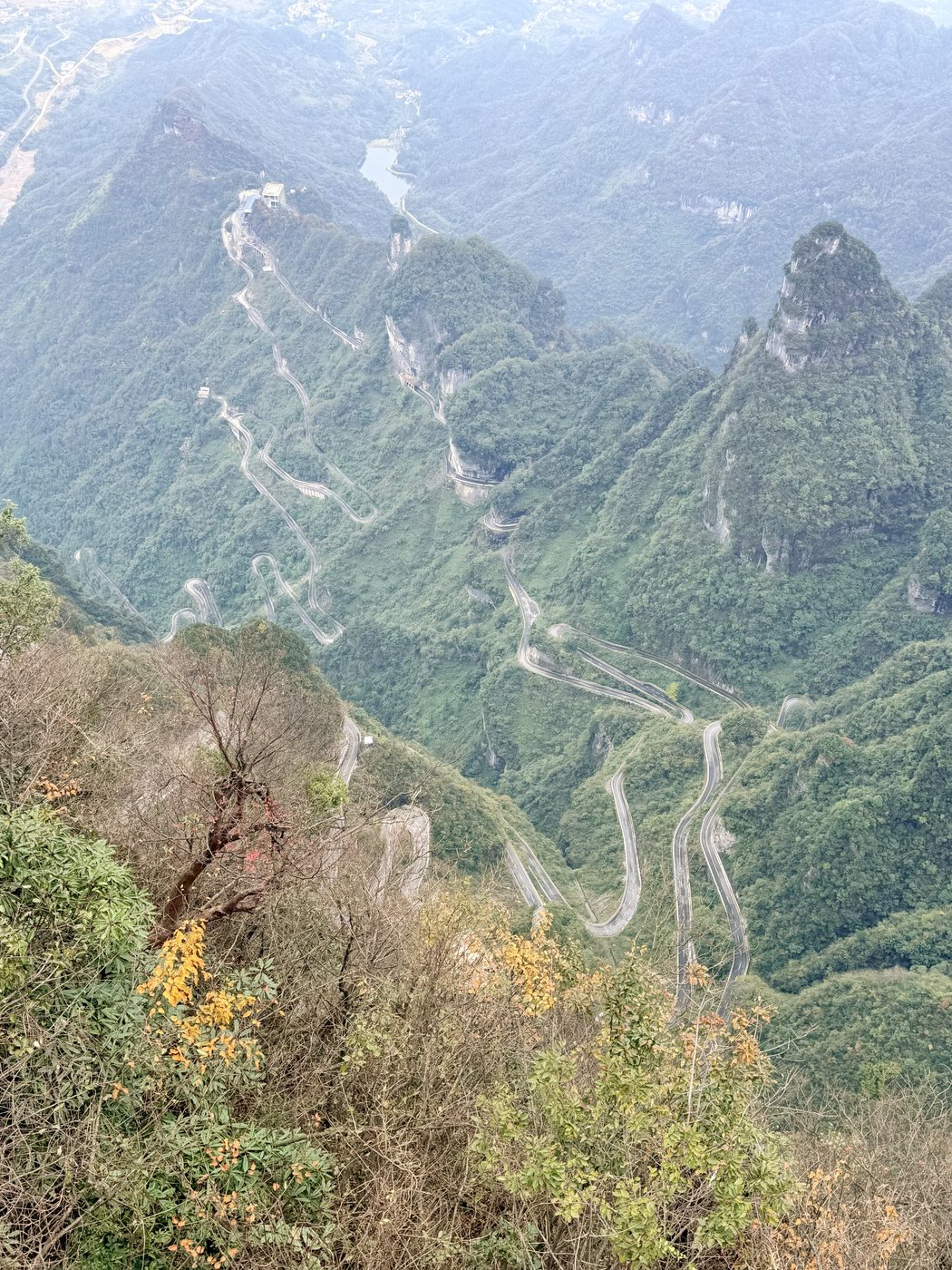
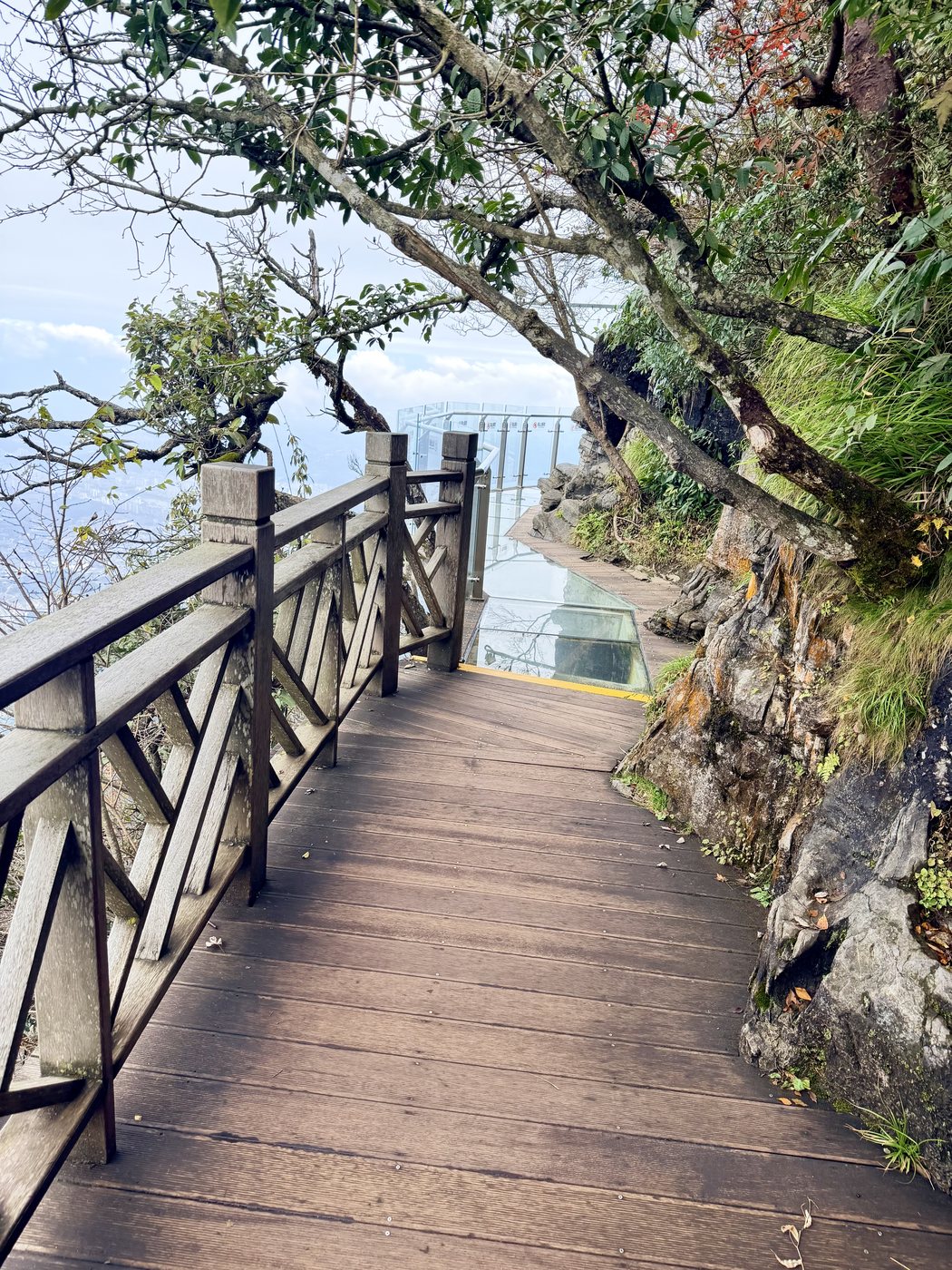
The famous 7.5 km cable car from town was closed for rebuilding when I was there, so we went in at the mountain gate and up by the express cableway to the foot of the cave. From there I climbed the 999 steps to the arch itself, then went on through the mountain to the summit, where cliffside walkways look down on Tongtian Avenue, the road that climbs the mountain in 99 hairpin bends.
Dayong and the Seventy-Two Strange Buildings
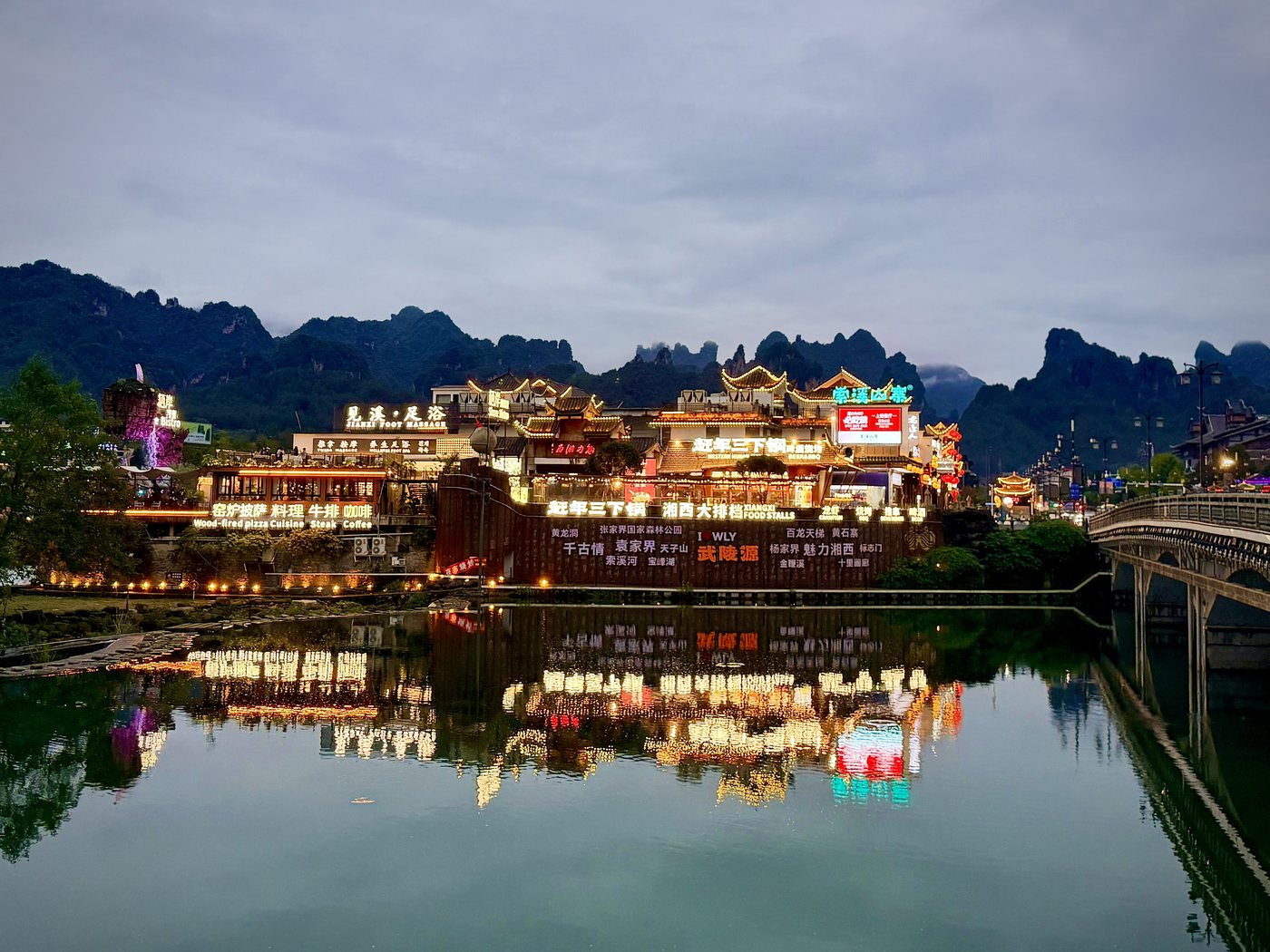
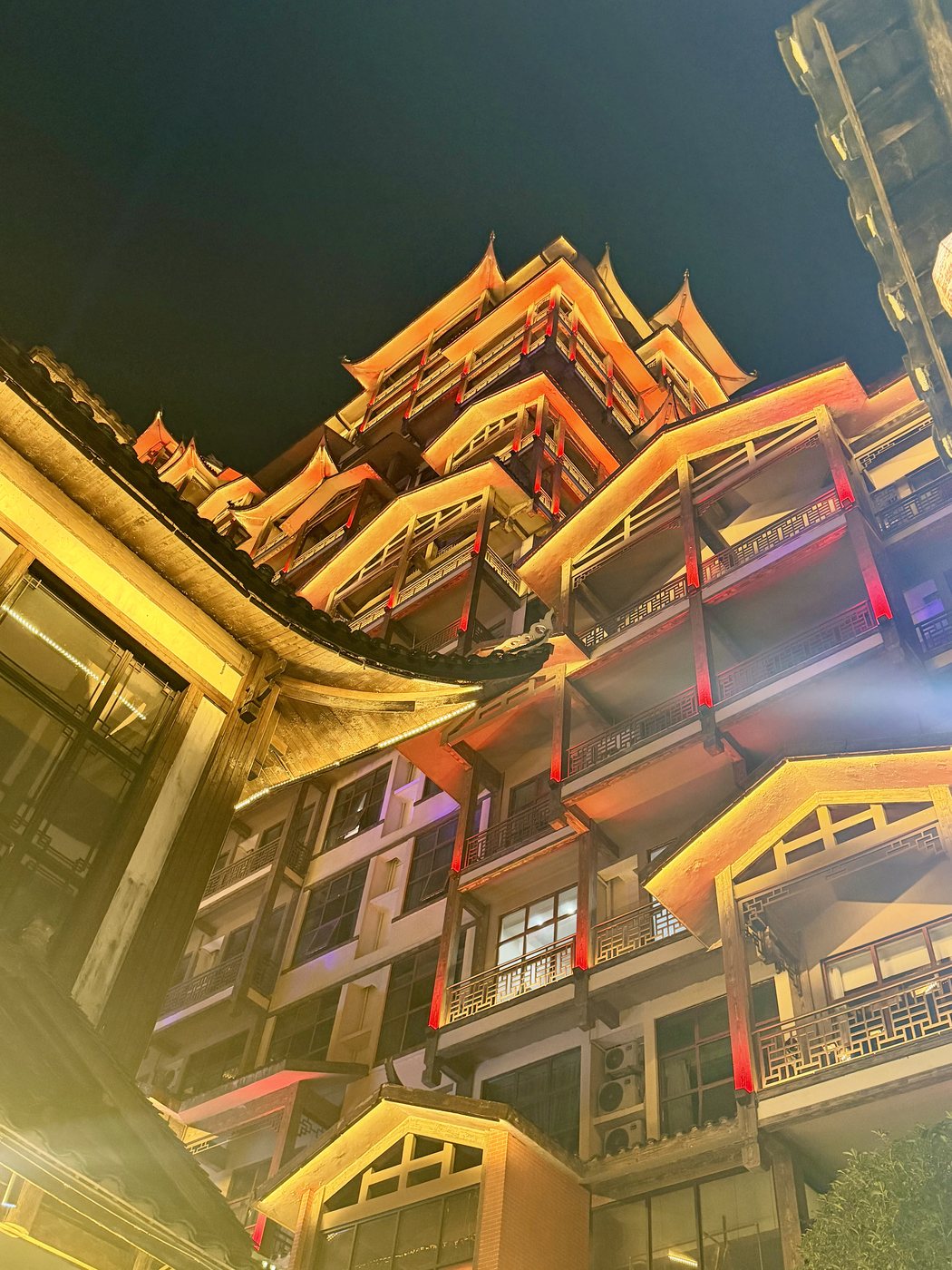
On the first evening we walked Dayong Ancient Town along the river and then went out to the Seventy-Two Strange Buildings, a complex of tall, stacked stilt-house style buildings in Tujia style, lit up after dark.
Good to know
- When2–6 Nov 2026
- Getting thereFlight from Shanghai Pudong to Zhangjiajie Hehua airport
- BasesZhangjiajie city for Tianmen Mountain; Wulingyuan town for the national forest park
- Best tipStart early: the Bailong Elevator and cable cars queue all morning, and the fog lifts around 9–10
- FoodHunan and Tujia cooking is very spicy; ask for wēi là, mild
- LeavingTrain to Changsha, then a flight
Official sites and sources
- UNESCO: Wulingyuan Scenic and Historic Interest Area — Zhangjiajie's sandstone pillars
- Zhangjiajie Glass Bridge — Wikipedia
- Bailong Elevator — Wikipedia
More from Darrell Seale
- China: the whole tripOverview of 23 Oct – 6 Nov 2026
- BeijingForbidden City, Great Wall, Summer Palace
- Xi'anTerracotta Army and Big Wild Goose Pagoda
- ShanghaiThe Bund, the tunnel and Yu Garden
- TibetLhasa: the Potala, the Jokhang and Sera
- Countries visitedAll 143 countries and territories, by region
- About Darrell SealeAir Force veteran, retired executive, scuba instructor
- Scuba diving with Darrell SealeDive trips, photos and video
- Darrell Seale on YouTubeTravel and dive videos